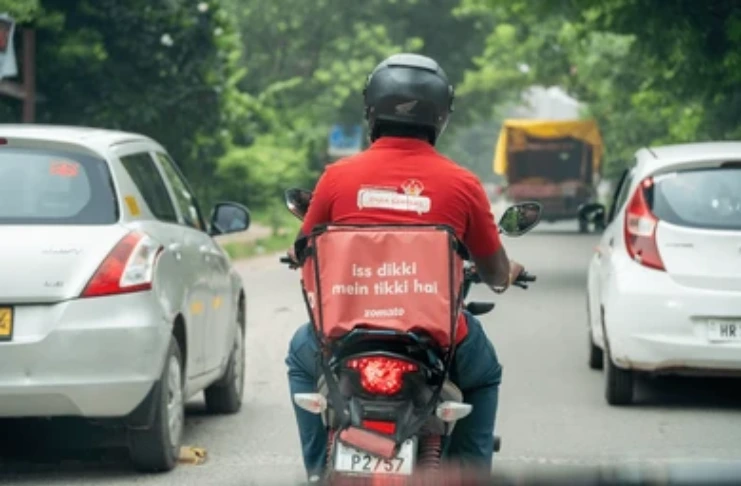

The major online shopping and food delivery companies working in India saw record orders on December 31, 2025, even though many gig workers across the country were protesting. This extraordinary performance demonstrates the ongoing strong demand for app-based delivery services and the high level of logistics preparedness these companies had in place to address labour law issues amid ongoing labour unrest.
According to Deepinder Goyal, co-founder and CEO of Eternal, the parent company of Zomato and quick-commerce unit Blinkit, the two platforms together delivered an all-time high of 75 lakh (7.5 million) orders on New Year’s Eve, serving more than 63 lakh customers across India. Goyal said the record volume was achieved despite strike calls from sections of delivery partners protesting low wages and working conditions.
“Zomato and Blinkit delivered at a record pace … unaffected by calls for strikes that many of us heard over the past few days,” Goyal wrote on X, adding that support from local law enforcement helped maintain operational continuity.
Other platforms, including Swiggy, its quick-commerce arm Instamart, Zepto, Bigbasket, Flipkart Minutes, and Amazon Now, also recorded significant spikes in volumes, illustrating that consumer reliance on digital delivery, particularly during peak celebrations, remains robust.
Industry analysts and restaurant operators reported strong performance across several food brands and cloud kitchens.
- Rebel Foods, which operates concepts like Faasos and Oven Story Pizza, saw double-digit year-on-year growth in orders.
- Curefoods, parent to Eatfit, Krispy Kreme, and Sharief Bhai Biryani, also reported substantial increases in demand.
- Quick-service brand Boba Bhai said its orders doubled compared with December 31, 2024, with peak demand observed in metros such as Bengaluru, Mumbai, Delhi-NCR, and Hyderabad.
Although seasonal variation and categories were evident at some restaurants, with declines in specific segments based on cultural observances (such as Ekadashi) and travel activity, it was felt that these declines were insignificant compared to the overall high order volume for each restaurant.
There was a record high order volume despite gig worker protest activity from the delivery business that stemmed from demand for more income, stable job opportunities, and stable algorithmic pressures in the gig-based market. In addition to planned labour strikes on Christmas Day and New Year’s Eve, which focused on raising awareness of delivery partners’ working conditions, the labour unions did not believe these strikes had any significant operational impact because the delivery drivers completed orders during these periods.
Recent attention has been given to the growing debate surrounding consumer expectations delivery, with particular focus on the emerging ultra-fast delivery model. Although executives of on-demand delivery and Quick-Commerce companies defend their business models and operations, Concerns raised by critics include workplace safety, workers’ working conditions, etc.
The fact that these delivery and quick-commerce companies were able to set a record for delivery volumes on the country’s busiest day last year, despite a national strike, shows how heavily consumers are becoming reliant on digital platforms to deliver food products.