In a city where tradition reigns supreme, and Michelin stars are earned through decades of devotion, a 29-year-old Venezuelan chef has done the unthinkable: he’s taken Peru’s ancient cooking wisdom, married it to Japan’s meticulous precision, and created something so powerful it’s forcing the world’s most celebrated chefs to rethink everything they know about fine dining.
MAZ isn’t playing by the rules. It’s rewriting them. And in less than two years, this 20-seat temple to culinary disruption has achieved what many thought impossible. It has made Tokyo yield to Latin American cuisine.
This is the story of how Santiago Fernández turned MAZ restaurant into a cultural phenomenon that’s still sending waves through the global dining scene.
The Mission
When Virgilio Martínez, the architect behind Lima’s Central (the restaurant that won the world’s palate to claim the #1 spot among the 50 Best Restaurants), decided to expand to Tokyo, it wasn’t just about opening a new restaurant.
He aimed to translate Peru’s unique geography, from 20 meters below sea level to over 4,000 meters above, into a dining experience in a country that had never encountered it.
The mission was handed to Fernández, a chef shaped by some of the world’s most demanding kitchens: Spain’s three-Michelin-starred Aponiente, Cocina Hermanos Torres, and five years as Creative Chief at Central.
His new mission: to help Japanese diners grasp the depth of Peruvian cuisine without ever leaving Tokyo.
The Art of Culinary Alchemy
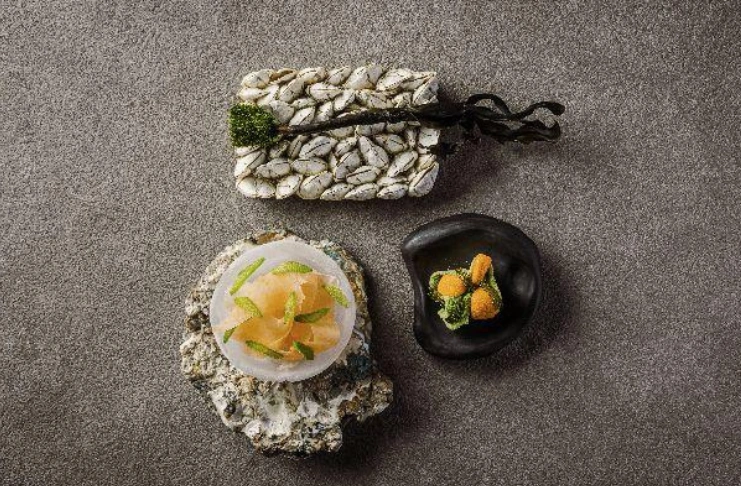
What happens when you combine millennia-old Peruvian techniques with Japanese ingredients sourced with careful precision? You get something that shouldn’t work but does, with remarkable effectiveness.
Take the bamboo shoot dish that arrives at your table in a cooking vessel, carved tableside with ceremonial precision. You expect a potato (Peru’s gift to the world). Instead, you get six weeks of seasonality captured in a single bite, dressed with Peruvian sauces perfected over generations.
It’s a moment of pure theater that makes seasoned diners question everything they thought they knew about surprise.
“The comments I hear the most are that [people] feel as though they’ve been on a journey without leaving Japan,” Fernández said in his interview with The Japan Times. “When they come here, it opens a little window in their minds. We want them to feel inspired, even if they’re not cooks.”
The Michelin Breakthrough
In December 2023, MAZ debuted with two Michelin stars, making it the first Latin American restaurant in Tokyo to receive such recognition.
The culinary establishment didn’t just take notice; it was forced to acknowledge that the rules of the game had fundamentally changed.
“I was truly happy to feel that each and every work I had done in such a short period of time was recognized,” Fernández recalls about the moment his name was called on stage. “I am proud to have visited Japan from far away, South America as my next place of activity, and received a two-Michelin rating.”
But this wasn’t just about stars or recognition. This was about proving that Latin American cuisine could stand toe-to-toe with the world’s most technical, most respected culinary traditions and not just compete, but dominate.
The Science of Precision
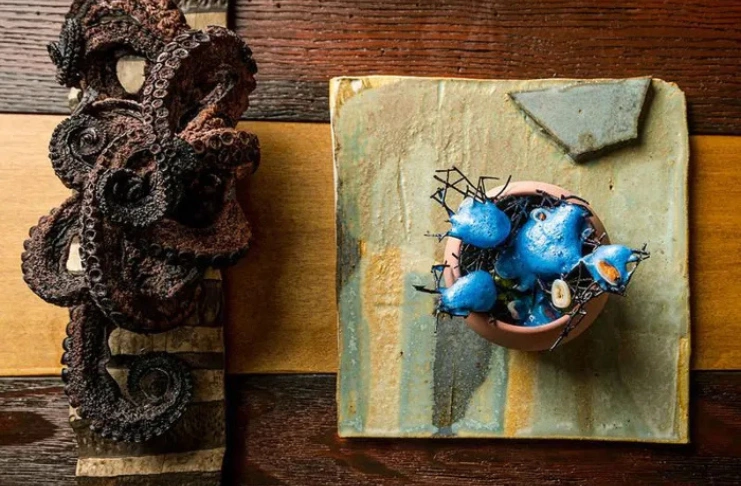
With only 20 covers per service, MAZ operates like a laboratory where each dish is an experiment in pushing boundaries. The attention to detail is psychotic in its precision.
The 48-hour short rib arrives with dehydrated mushroom sticks and truffle, but it’s the technique (the rigorous dedication to perfection) that makes food critics marvel.
The non-alcoholic pairings alone represent a level of investment and creativity that surpasses establishments like Geranium or Maaemo.
It’s molecular gastronomy meets ancient wisdom, and it’s absolutely unhinged in the best possible way.
Beyond the Plate
But here’s where MAZ transcends mere dining and becomes something more powerful: a cultural bridge.
Through their “Vertical World” concept, they’re not just serving food; they’re educating, inspiring, and fundamentally changing how people think about biodiversity, sustainability, and the relationship between food and the environment.
“We talk about biodiversity, identity, and our impact on communities in Peru,” Fernández explains. “MAZ is more than a restaurant where you can eat tasty food and have fun; it’s a place for contemplation.”
The restaurant works with Mater Iniciativa, a food research institute that investigates and preserves Peru’s mega-diversity of food, nature, and culture.
They develop their own spirits, like the herbal liquor Q’AQE, created using 28 botanicals collected from hill tribes near MIL, their research restaurant in Cusco.
The Cultural Navigator
What makes Fernández particularly formidable is his ability to navigate between worlds. As a Venezuelan chef representing Peruvian cuisine in Japanese culture, he’s mastered the art of translation. Not just of flavors, but of entire philosophical approaches to food.
“As a foreign chef, it’s challenging because you need to be open-minded to adapt to the culture,” he admits. “Japanese prioritize the individual flavor of each ingredient. Although we have a lot of high-quality products in Peru, the approach is more about imparting flavor with sauces. Understanding this difference has led us to refine our dishes.”
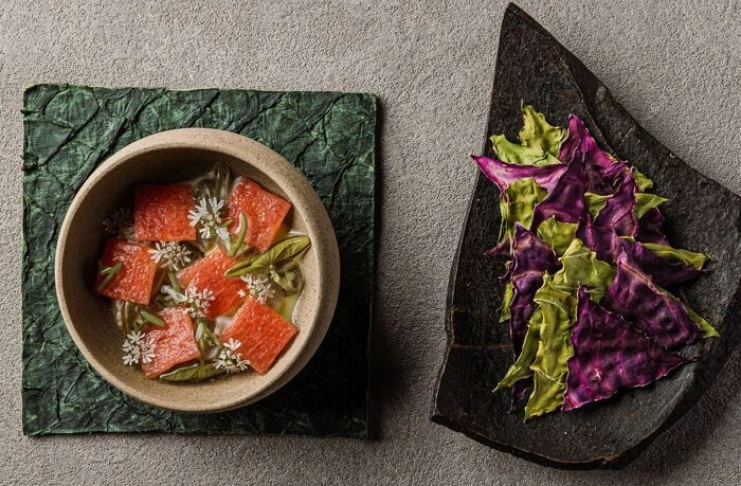
The result? Techniques like kobujime (marinating seafood between kelp blades) are applied to enhance raw scallops served with citrus and chile sauce. It’s cultural fusion at its most sophisticated, where each element maintains its integrity while contributing to something entirely new.
The Future of Food
MAZ isn’t just changing how we think about Latin American cuisine. It’s redefining what fine dining can be.
The restaurant plans to embrace Japan’s traditional microseasons, introducing new dishes monthly instead of following the conventional four-season model. It’s an approach that honors both cultures while creating something unprecedented.
“We’re going to embrace seasonality in a more precise way,” Fernández teases. “I can’t reveal much more at this time, but let’s just say there will be some big changes coming up at MAZ.”
The Revolutionary Impact
In less than two years, MAZ has positioned itself not just as Tokyo’s only two-Michelin-starred Latin American restaurant, but as a fundamental challenge to the global culinary order.
And that’s exactly what revolution looks like: 20 seats, countless techniques perfected over millennia, and a Venezuelan chef in Tokyo proving that the future of fine dining isn’t about following rules. It’s about rewriting them entirely.
Santiago Fernández has, in simplest words, opened a portal between worlds, and once you step through it, you’ll never see food the same way again.
MAZ isn’t just the best restaurant you’ve ever heard of. It’s the restaurant that’s going to make you question everything you thought you knew about what’s possible when tradition meets innovation, and when passion meets precision.
The revolution has begun. And it tastes like the future.