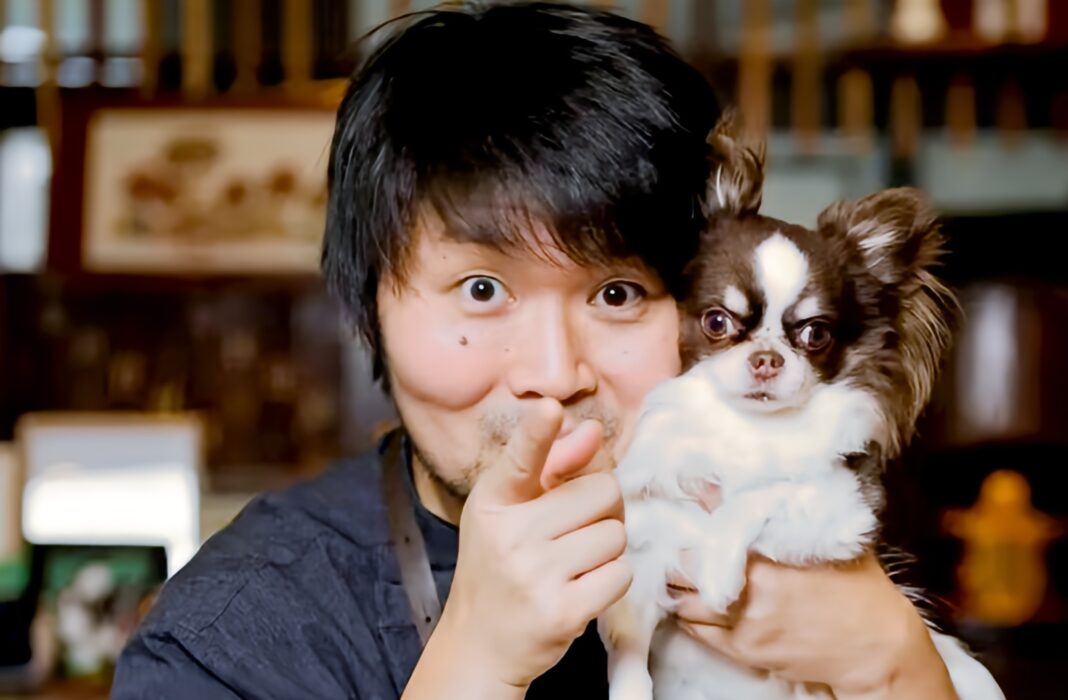

In Tokyo’s Jimbocho district, Chef Zaiyu Hasegawa serves ants with his salad, prints his face on takeout boxes, and lets his Chihuahua greet guests Arigatou in multiple languages.
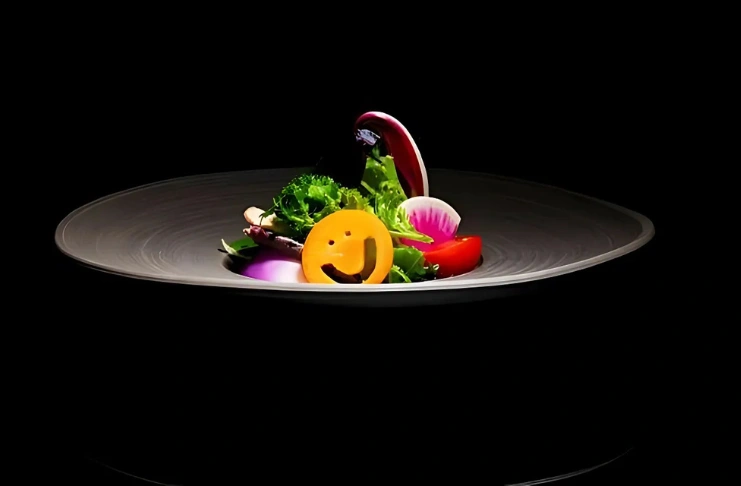
Even weirder, here, a carrot smiles back at you.
Carved into a perfect emoji face, it sits atop what Chef Zaiyu Hasegawa calls his 20-ingredient salad: a dish that includes everything from pesticide-free vegetables to, yes, actual ants.
Around the table at Den, first-time diners pause mid-bite, unsure whether to laugh or photograph their plate.
At 44, Hasegawa turned his two-Michelin-starred restaurant into something the Japanese fine dining didn’t know it needed: a place where excellence wears a smile.
This is kaiseki with a sense of humor. Traditional Japanese fine dining, reimagined by a chef who first learned love and then techniques to express it.
The Mother’s Lesson
Hasegawa’s culinary education began at dawn, alone in a small Tokyo apartment. His mother, a geisha, would return from the high-end ryōtei restaurants where she worked, carrying small packages of leftover delicacies (usually sushi rolls worth more than most families’ weekly grocery budget).
“I used to eat sushi rolls which cost about five thousand yen,” Hasegawa recalls during his conversation with Japan TWO. “From there, my interest in food grew.”
But the real lesson wasn’t in the expensive ingredients. It was in watching his mother transform exhaustion into care, bringing home not just food, but love made tangible.
“To think about the person I’m cooking for while making food is the most important thing I learned from her,” he says. It’s a philosophy that would later turn the formal world of Japanese fine dining on its head.
Breaking the Sacred Rules
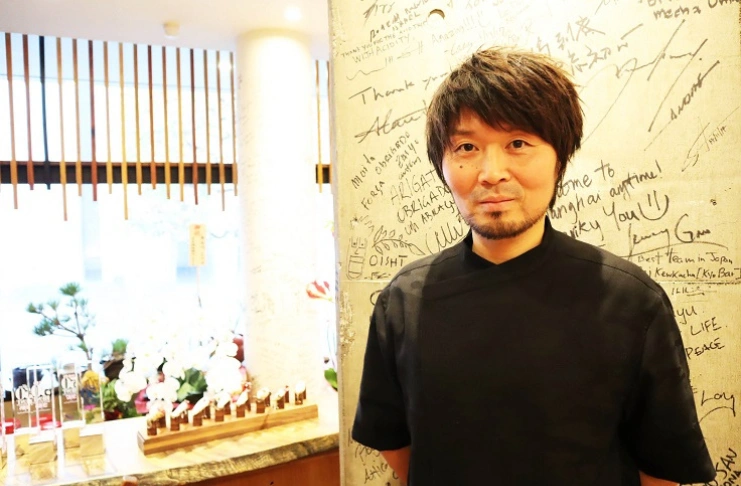
At 29, Hasegawa opened Den with a radical proposition: what if fine dining could be approachable without sacrificing excellence?
Traditional kaiseki operates on centuries-old principles of seasonal perfection and rigid formality. Guests eat what they’re served, in the prescribed order, with appropriate reverence. Personal preferences are secondary to tradition.
Hasegawa saw something troubling in this approach. “Japanese cuisine lacks range,” he explains. “If you go to a ryōtei, a course from about 10,000 yen to 50,000 yen is prepared for each customer. Though the customers range from children to the elderly, portion sizes are the same for everyone.”
His solution was deceptively simple: cook for the person, not the tradition.
“It is like making a child wear free-sized clothing,” he says. “I didn’t want to be like that. Instead, I want to cook something for every customer.”
The Art of Serious Play
Den’s menu reads like a conversation between tradition and rebellion. The monaka (traditionally a sweet confection) arrives savory, filled with surprises that challenge expectations. The famous “Dentucky Fried Chicken” comes in a custom takeout box adorned with Hasegawa’s smiling face, a playful nod to American fast food culture that somehow elevates both cuisines.
But make no mistake: the playfulness masks serious skill. Every whimsical element is executed with precision, which earned Den its Michelin stars. The ants in the salad aren’t gimmicky; they’re sourced from specific regions for their unique flavor profile. The emoji carrot requires knife skills that most chefs spend years perfecting.
“I don’t think about creativity,” Hasegawa shared with Food and Wine Gazette. “I don’t have to think a lot to come up with something new. An idea normally just springs up.”
The casualness of that statement belies the depth of knowledge behind it. Innovation comes naturally when you’ve mastered the fundamentals so thoroughly that you can deconstruct them at will.
The Family Business
Emi Hasegawa manages Den’s front of house with the same philosophy her husband brings to the kitchen: genuine care over rigid protocol. Under her leadership, the restaurant received the Art of Hospitality Award at The World’s 50 Best Restaurants.
“I consider the entire Den team my family,” Hasegawa said during his conversation with Fine Dining Lovers. The staff eats together daily in a ritual called ‘makanai,’ sharing not just meals but the emotional rhythms of restaurant life. It’s this genuine connection that guests sense the moment they enter.
And then there’s Puchi Jr., the Chihuahua who may be Den’s most effective ambassador. The small dog greets guests in multiple languages – a feat that sounds absurd until you witness the genuine delight it brings to diners’ faces.
“He is our best service staff, because he can say Arigatou (thank you) in many languages to our customers.”
In a world where fine dining often feels performative, this dog’s authentic enthusiasm cuts through pretense like nothing else can.
The Philosophy of Enough
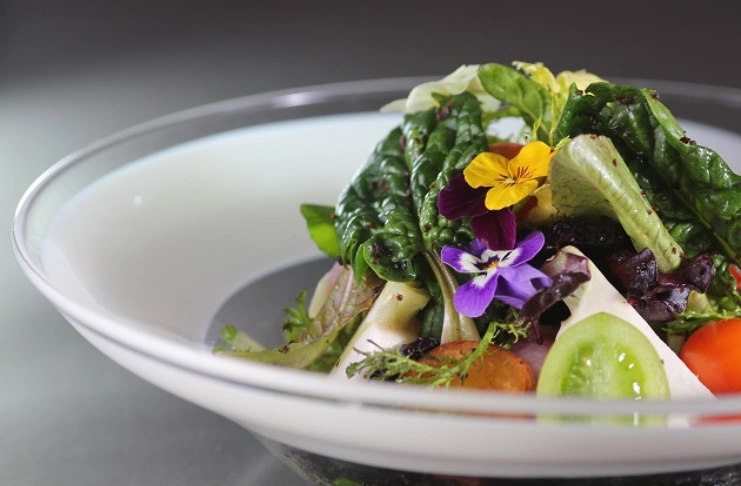
Hasegawa’s approach extends beyond the dining room. Den sources vegetables grown without pesticides, works with producers who share their environmental values, and practices conscious consumption that reflects traditional Japanese principles of mottainai, i.e., using everything, wasting nothing.
“Thanks to the support of producers, the vegetables we use are grown without pesticides or chemical fertilizers,” he explains. “We source fish without specifying the kind so as to reduce the burden on fishing grounds.”
The restaurant’s interior tells this story too. Lacquerware is repainted rather than replaced, chipped ceramics receive the kintsugi treatment, and the building materials include salvaged elements from the previous occupant.
Global Ambitions, Local Heart
While many successful chefs expand through replication, Hasegawa thinks differently. His collaboration with chef Hiroyasu Kawate of Florilège produced Denkushiflori, a restaurant that bears both chefs’ influences while maintaining its own identity. His Taiwan location adapts Den’s philosophy to local ingredients and tastes.
“I’ve always told people overseas that Japanese cuisine can be made with ingredients from that region,” he says. “I want to build fans all over the world.”
It’s not cultural imperialism but cultural exchange, showing that the principles behind great Japanese cuisine can transcend specific ingredients or locations.
The Measured Revolution
Hasegawa’s influence extends beyond his own restaurants. Across Japan and internationally, young chefs are discovering they don’t have to choose between honoring tradition and expressing personality. The success of Den has given permission for a more human approach to fine dining.
“Tradition continues to transmit new things, and over time it becomes history,” Hasegawa reflects. “If you narrow it down to only those who know, especially young people, they will not be able to keep up.”
His kaiseki maintains the essential structure and seasonal awareness of the tradition while allowing for personal expression and guest interaction.
The Deeper Recipe
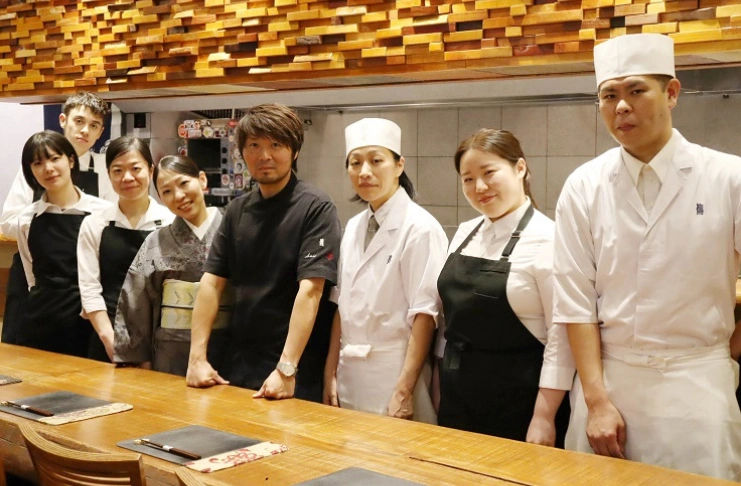
Strip away the accolades and media attention, and Den’s success comes down to something remarkably simple: treating guests like people rather than customers. Every dish emerges from genuine curiosity about what will bring joy to the person eating it. Every service decision prioritizes comfort over ceremony.
“I’m just always thinking about how we can make our guests happy, how my dish will be received, and how they will most enjoy their time at Den,” Hasegawa shared with Travel + Leisure.
In an industry often obsessed with chef ego and critical acclaim, this guest-first philosophy feels almost subversive. But it works. Den’s reservation book stays full not because diners chase status, but because they chase the feeling of being genuinely cared for.
The Lasting Impact
As evening service begins at Den, Hasegawa moves through his kitchen with quiet efficiency. There’s no shouting, no drama. Just focused attention on the details that transform ingredients into experiences.
Emi orchestrates the dining room with similar calm, reading guests’ needs and adjusting service accordingly. Puchi Jr. makes his rounds, dispensing multilingual greetings that never fail to surprise and delight.
This is what revolution looks like when it’s rooted in love. Hasegawa didn’t tear down Japanese fine dining; he reminded it of its heart. In doing so, he created something rarer: a restaurant that feels like home, even when it’s serving food you’ve never imagined.