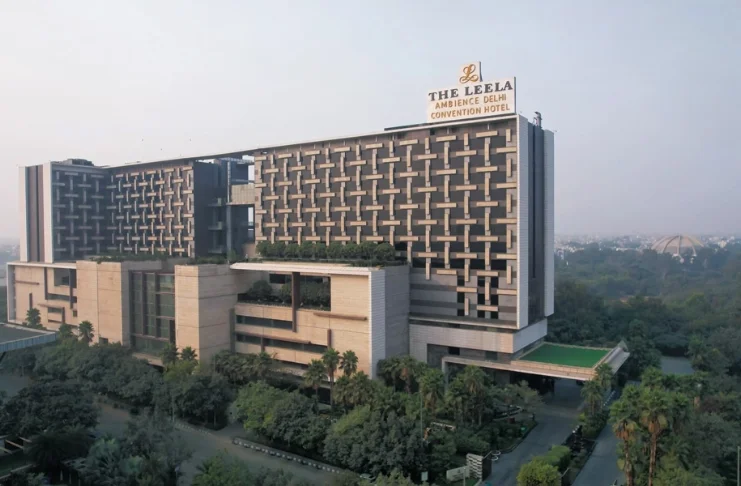

The Leela Palaces, Hotels and Resorts has reported its strongest-ever financial performance for FY26, underscoring the continued resilience and pricing power of the global luxury hospitality segment.
The company recorded consolidated operating revenue of ₹1,527.3 crore, up 15% year-on-year, while operating EBITDA rose 19% to ₹742.9 crore, with margins expanding to 49%. Profit after tax surged to ₹403 crore, marking a sharp increase and highlighting a step-change in profitability.
The performance was supported by strong gains in revenue per available room (RevPAR), which grew 14% year-on-year to ₹17,460, alongside an increase in average daily rates (ADR) and occupancy levels.
In the fourth quarter alone, the company reported revenue of ₹488.4 crore (up 12%), with EBITDA margins reaching 55%, reflecting sustained operating leverage.
The results point to a broader trend shaping global hospitality: premium operators are benefiting from robust high-end travel demand, even amid macroeconomic and geopolitical uncertainties.
According to the company, performance in FY26 was driven by a combination of higher room rates, strong food and beverage growth, and resilient domestic travel demand.
This diversified revenue mix has become increasingly important for luxury hotel operators worldwide, as they balance traditional room revenues with experiential and dining-led income streams.
Beyond financial performance, the company also highlighted its fastest pace of expansion, with multiple projects across business and leisure destinations contributing to a growing pipeline.
The group currently operates a portfolio spanning luxury hotels and resorts, with additional properties under development, reflecting a dual strategy of owned and managed assets to scale efficiently.
The company noted a significantly improved financial position, supported by debt reduction and stronger operating leverage, providing greater headroom for future expansion.
Even as broader travel demand fluctuates, the upper end of the market has shown consistent resilience, positioning luxury operators as key beneficiaries of evolving consumption patterns.