In today’s competitive restaurant industry, margins are often slim, and owners are constantly looking for ways to maximize profitability without compromising the guest’s experience. One of the most effective and customer-friendly strategies is the use of upselling techniques in restaurants. Upselling refers to the practice of encouraging guests to order high-margin items, premium upgrades, or additional items that enhance their dining experience. When done thoughtfully, these techniques not only boost sales but also leave guests more satisfied with their meal, leading to repeat visits and stronger brand loyalty.
Upselling can increase a restaurant’s average order value by up to 30%. It is also noted that restaurants with structured upselling programs experience an overall revenue increase of up to 10–15%. This demonstrates the importance of integrating smart strategies into an operator’s service approach.
Why Restaurant Upselling Matters for Profitability

Effective restaurant upselling techniques go beyond simply pushing expensive food items. They focus on understanding customer psychology, reading the table, and utilizing customer data to provide tailored suggestions.
- Boost revenue: Even small increases in the average order translate to substantial gains across hundreds of tables.
- Higher tips: Servers who successfully upsell often earn more, creating motivation for the wait staff to do the same.
- Satisfied customers: A well-placed recommendation enhances the guest’s experience, making them feel cared for rather than sold to.
Restaurants that train staff in upselling report higher overall sales, stronger relationships with many customers, and better utilization of high-profit-margin items such as beverages, desserts, and sides.
Smart Upselling Techniques in Restaurants

Upselling works best when it feels natural, personalized, and beneficial to the customer’s meal. Below are proven strategies for creating successful upselling opportunities that align with the dining experience.
Suggesting High Margin Items
Encouraging guests to try high-margin items is a cornerstone of restaurant upselling. These are often beverages, sides, or premium items that cost little to prepare but add significantly to profit margins.
Examples include:
- A signature cocktail paired with a starter.
- Specialty coffee after the main course.
- Premium side dish upgrades, like truffle fries instead of regular fries.
By drawing attention to these high-profit-margin items, restaurants can increase profitability while elevating the overall dining experience.
Offering Dessert to Complete the Meal
One of the simplest yet most effective upselling techniques is to offer dessert. A well-designed dessert menu can tempt many guests into ordering an extra course.
- Staff can make thoughtful recommendations, such as suggesting cheesecake for a special occasion.
- Pairing desserts with beverage items, such as espresso or red wine, encourages additional purchases.
INDUSTRY INSIGHTS
| When you offer dessert, you tap into one of the most dependable upselling levers in the restaurant. According to Datassential, 53% of consumers reported having dessert within the past day, while only 18% say they eat desserts at least once a week. |
That data suggests two things:
- Many diners indulge in sweets more spontaneously than they admit or expect; there’s an appetite there to unlock.
- Because just 60% of restaurant operators already report that desserts help drive profit, there’s still room for improvement by tweaking menu design, training staff to suggest desserts, and making dessert options highly visible.
Train staff to suggest desserts at least twice during the dining experience (for example, once when guests are still ordering entrees, and again after clearing the main course). Use descriptive names, highlight flavors, and make the dessert menu visually appealing. Since many consumers already have dessert on their minds (53% had dessert in the past day), these suggestions can convert that impulse into extra revenue.
Combo Deals and Bundled Offers
Combo deals and bundled offers consist of grouping together two or more menu elements—such as a main dish, side dish, and a drink—into one package at a perceived better value than buying each separately. They work because people like convenience, perceive bundles as a good deal, and don’t want to spend a lot of time making choices. Bundles steer decision-making toward higher-value meals while reducing decision fatigue.
- Perception of value: When bundled, the separate cost of each item is abstracted. Guests see a combo price and think, “I’m getting more,” even if the restaurant’s margin is strong.
- Upselling without pressure: If a guest is about to order just the main dish, the bundle gently nudges them to add a side and a drink, boosting the average order value and restaurant sales.
- Online ordering advantage: Bundles are especially helpful when guests order via apps or online menus. Pre-set bundles avoid choice overload, speed up the order flow, and often reduce cart abandonment because the combo appears as a complete meal.
- Example elaborated: A “burger, fries, and beer” combo gives the guest everything they’d want for a standard casual meal. If priced just slightly lower than ordering each item separately, most guests will pick the combo. Similarly, a “family-style platter” that bundles shareable appetizers and a main course reduces hesitation (since people aren’t picking many separate things) and creates a social, value-oriented feel.
Free Samples to Drive Curiosity
Free samples (taster portions of new or premium items, cocktails, appetizers, seasonal specials) function as a low-risk trial. Guests try something they didn’t plan on, and if they like it, they are more likely to commit to the full version. It taps into curiosity, novelty, and the psychology of “If I like it, let me have more.”
A study by the W. P. Carey School of Business (ASU) found that when shoppers taste something pleasant, they not only tend to buy more of that thing, but also feel a greater desire for “other pleasing things” in that shopping session. In restaurant terms, that could mean someone who tried a free sample appetizer is more likely to also order a dessert or premium beverage item.
How to Use It Well:
- Offer samples of new menu items or seasonal specials at high-traffic moments (when guests arrive, or as part of an amuse-bouche).
- Ensure sample is high quality: taste, presentation, and relevance matter. A sample that is bland or small can backfire.
- Use samples to introduce premium items subtly. For example, offer a petite taste of a higher-cost seafood dish or a specialty sauce. If the guest enjoys, then recommend the full portion.
- Track the cost vs benefit. Since samples cost food, testing is required to see the increase in overall sales or in specific categories. If 25-30% convert, the margin on those converted sales usually more than offsets the sample cost.
Highlighting the Menu Inside the Experience
A study by Cornell University / Culinary Institute of America (CIA) shows that diners spend about 8.15% more when the menu removes overt monetary cues, i.e., the price listings don’t use the dollar sign (“$”) or the word “dollars.” Menus that use descriptive labels (rich language, sensory details) tend to increase the purchase frequency of those items. While I did not find a stat that states “20% increase in guest spending” linked to highlighting premium items in those studies, the “8.15% more” finding is solid.
- Strategic price formatting: Removing symbols like “$” or dropping “dollars” helps reduce the mental “pain of paying,” making guests less price-aware and more likely to order higher-priced items.
- Descriptive language & visual cues: Use adjectives (roasted, house-made, slow-cooked), mention origin or quality (aged, organic, local), highlight premium items.
- Menu item placement: Place high-margin items in “hot zones” of the menu (top right, first or last in each section). Icons, such as “Chef’s special”, “House favorite”, or “Recommended”, guide guests toward premium choices.
- Layout consistency: Keep price fonts the same size/style so attention is on the dish, not just the price. When price is de-emphasized visually, guests focus more on what they want.
Together, combo deals, free samples, body language, and strategic menu design illustrate that upselling is not about pushing more food but about creating value and enhancing the guest’s experience.
Restaurant Staff Training for Upselling Success
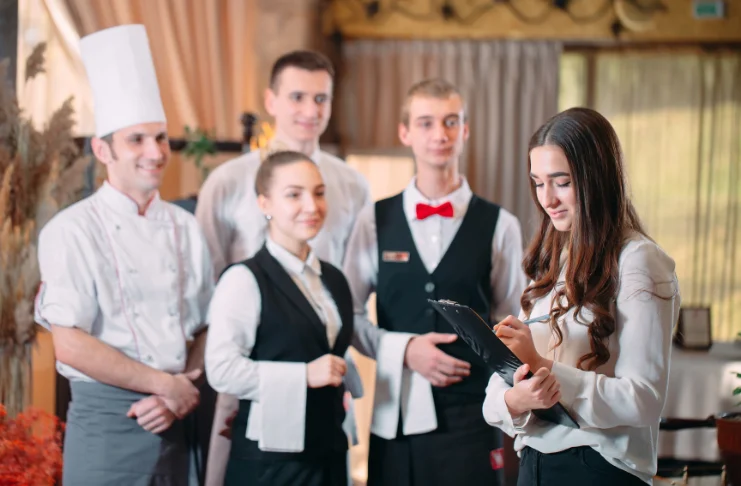
Well-executed upselling techniques rely heavily on the skills of restaurant staff. Training staff to upsell ensures consistency and improves overall sales.
Role Playing and Practice
Role-playing during staff meetings allows servers to rehearse scenarios, refine their suggestions, and become comfortable with upselling. Practicing how to recommend a dessert or wine pairings makes the real-world application seamless.
Teaching Customer Psychology
Training should cover customer psychology, helping staff understand triggers such as special occasions or group dining that encourage the purchase of additional items.
Building Confidence in Making Suggestions
When wait staff are trained to confidently recommend add-ons, such as a side salad or extra toppings, guests are more likely to accept. Training should also emphasize how to upsell subtly, focusing on enhancing the customer’s meal.
Technology and Data in Modern Upselling

The rise of digital tools has transformed how restaurants approach upselling techniques. What once relied solely on the instincts of wait staff can now be enhanced with technology that provides valuable insights into customer data and behavior.
For example, loyalty apps and POS systems track ordering history, enabling restaurants to recognize patterns. If a guest frequently orders pasta, the system can prompt servers—or even online ordering platforms—to suggest premium items, such as a truffle-infused pasta or a glass of red wine as a pairing. This kind of personalized recommendation feels less like a sales tactic and more like thoughtful suggestions designed to enhance the customer’s meal experience.
Online orders are another area where technology shines. Digital platforms enable operators to present add-ons, such as sides, desserts, or beverage items, at checkout. A customer ordering a burger might see a prompt for fries or a milkshake, making it convenient to upgrade while increasing the average order value. Research by Square shows that 51% of restaurants now rely on these digital touchpoints to personalize upselling, resulting in a significant rise in overall sales.
Upselling software also enables managers to highlight seasonal specials or promote high-profit-margin items during peak periods. For instance, if a restaurant has an excess of a certain appetizer, the POS can suggest it to servers as a recommended making suggestion, reducing waste while boosting profitability. These systems also integrate with online orders, ensuring that whether customers dine in or order remotely, opportunities to boost sales are consistently presented.
In essence, technology extends the role of the menu inside the restaurant into the digital space. It acts like a silent salesperson, strategically nudging guests toward premium ingredients, additional purchases, or combo deals that improve both the restaurant’s profit margins and the guest’s overall dining experience.
Balancing Upselling with Customer Experience

While upselling is an effective way to boost revenue, its long-term success depends on maintaining a positive guest experience. Guests want to feel valued, not pressured, so the art lies in striking the right balance between successful upselling and genuine hospitality.
One common mistake is overwhelming customers with too many suggestions. A server who lists half the menu as potential upgrades risks making the interaction feel transactional. Instead, recommendations should be selective and relevant. For example, suggesting a dessert after a main dish feels natural because it flows with the meal progression, whereas suggesting multiple unrelated add-ons can feel forced.
Another key principle is relevance to the customer’s meal. Upselling should always make sense within the context of the order. If a guest orders a seafood entrée, offering an expensive wine pairing feels like an enhancement, while suggesting a heavy meat-based appetizer might clash with the overall dining experience. In this way, the upsell complements the meal rather than disrupting it.
Authenticity is equally important. When restaurant staff frame up-selling as thoughtful recommendations rather than scripted pitches, guests are more receptive. A simple line like, “This dish pairs beautifully with our house-made sangria,” feels personal and elevates the interaction. Over time, this builds trust and leads to satisfied customers who are more likely to make repeat visits.
Ultimately, upselling should feel like part of the service, not a sales strategy. When restaurants prioritize the customer experience, they achieve both objectives: boosting sales through additional items and fostering loyalty by ensuring that guests leave happy, cared for, and excited to return.
Examples of Restaurant Upselling in Action

The following examples are illustrative scenarios. They are not tied to one specific restaurant but reflect common practices in the restaurant industry. They are supported by real-world reports and strategies observed in hospitality businesses.
A Steakhouse Suggesting Red Wine with the Main Course
At a steakhouse, servers may suggest pairing a glass of red wine with a ribeye steak. This adds a high-profit-margin item while enhancing the guest’s experience by complementing the flavors of the dish. Research highlights the impact of such strategies: Sommelier Business reports that training staff in wine pairings can significantly increase wine revenue, especially when promoting premium items or an expensive wine alongside a main course.
A Fine-Dining Restaurant Presenting Seasonal Special Appetizers
Fine-dining venues often introduce seasonal specials that showcase premium ingredients. For instance, a truffle starter or locally sourced seafood dish offered as a recommendation can spark additional purchases. Datassential’s research indicates that desserts and seasonal menu items comprise nearly 26.5% of limited-time offers (LTOs) in U.S. restaurants, underscoring the demand for exclusivity and novelty in menu design. Such offerings often appeal to many guests eager to experience something unique, reinforcing the idea of a curated dining experience.
A Café Pairing Coffee with a Fresh Pastry
In a café setting, upselling often comes in the form of add-ons. A barista might suggest pairing a morning latte with a freshly baked croissant. This pairing is not only convenient but also improves the average order value by combining food items and beverages into a quick meal solution. Over time, such small but consistent upsells build habits that lead to repeat visits.
Conclusion
Mastering upselling techniques in restaurants is about balance: enhancing the guest’s experience while strategically increasing restaurant sales. From highlighting high-margin items to creating combo deals and using body language effectively, every strategy must align with the customer’s meal.
By training restaurant staff, leveraging customer data, and designing a smart menu inside, operators can consistently boost revenue while cultivating satisfied customers who return for repeat visits. Ultimately, successful upselling isn’t about pushing more food items; it’s about creating a better, more memorable dining experience for every table.
Frequently Asked Questions
1. What are the 4 stages of upselling?
1. Awareness of opportunity
2. Making suggestions
3. Guest agreement
4. Delivery of the item and ensuring satisfaction
2. What techniques do you use to upsell?
Common techniques include combo deals, add-ons, wine pairings, offering dessert, free samples, highlighting high-margin items, and using positive body language.
3. How to train restaurant staff to upsell?
Focus on training staff through role playing, product knowledge, upselling scripts, and building rapport with guests. Encourage confidence and reward success.
4. What is an example of upselling food?
If a guest orders steak, the server suggests adding garlic butter or upgrading to a premium cut, and then offers a glass of red wine and the dessert menu. This increases the average order value and enhances the customer’s meal experience.