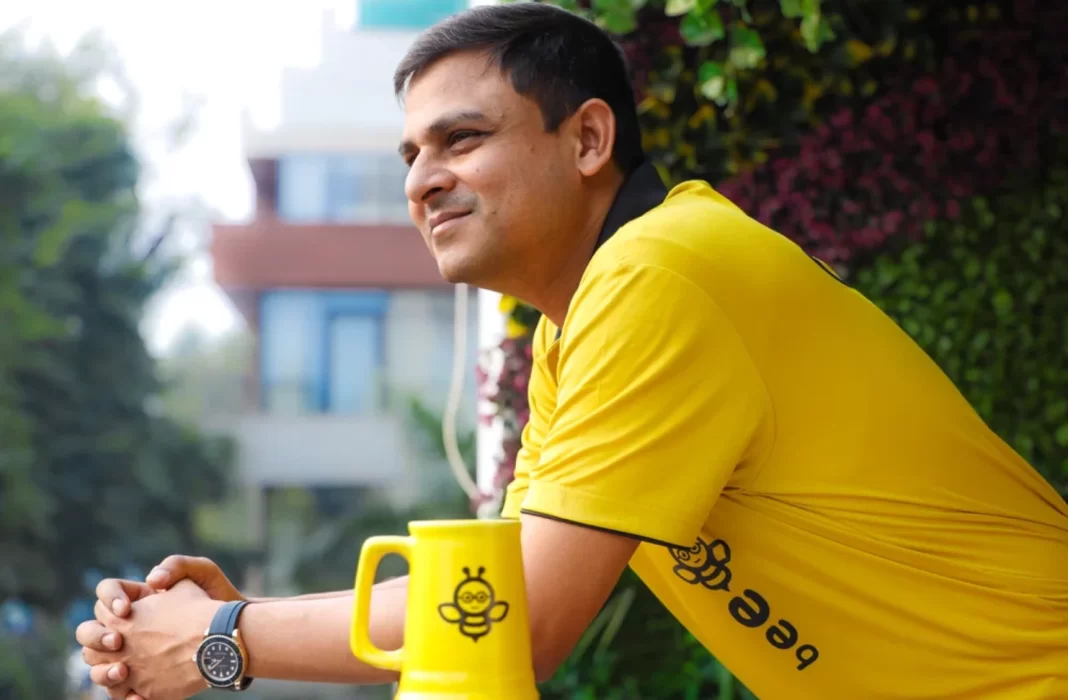

Abhinav Jindal had spent close to two decades in India’s Alco-Bev industry. Consulting, distribution, retail – he had seen every layer of how the business worked. He understood the margins, the market, and the hierarchy.
So, when he floated the idea of launching a crafted, strong beer in 2018, he expected a question or two about scale or timing. What he got instead was outright dismissal.
The strong beer segment was a closed game, dominated by a few national giants, notorious for wafer-thin margins and unforgiving to newcomers. Every veteran he spoke to told him the same thing: try IMFL instead. It needed lower investment, had easier execution, and offered better margins.
But Abhinav had seen something they hadn’t. Or perhaps, something they’d stopped seeing.
In conversation with The Restaurant Times, the Founder and CEO of Kimaya Himalayan Beverages reflects on building BeeYoung, navigating a pandemic six months after launch, and why sometimes the right path is the one everyone warns you against.
The Gap Nobody Wanted to Fill
“India’s beer market has traditionally been dominated by strong beers; at one point, nearly 85% of consumers were drinking them,” Abhinav explains. But here’s the irony: “they were just drinking, not supporting, consuming, or embracing the product.”
There’s a difference between consumption and connection. People bought strong beer because it was available, affordable, and delivered on the singular promise the category made: alcohol content. The positioning was blunt. The purpose was singular.
“There were clear gaps between consumer expectations and what the market was offering in taste, aroma, flavour, after-effects, brand positioning, and personality. Most strong beers were positioned purely around alcohol strength. People were drinking to get drunk, not to enjoy what beer truly represents: being chill, social, and non-pretentious.”
That disconnect became the seed. Abhinav recognized that there was not just a gap in the market, but an entirely missing conversation. He asked himself: What if strong beer could really mean something? What if it could deliver craft quality, thoughtful flavor, and a drinking experience worth remembering?
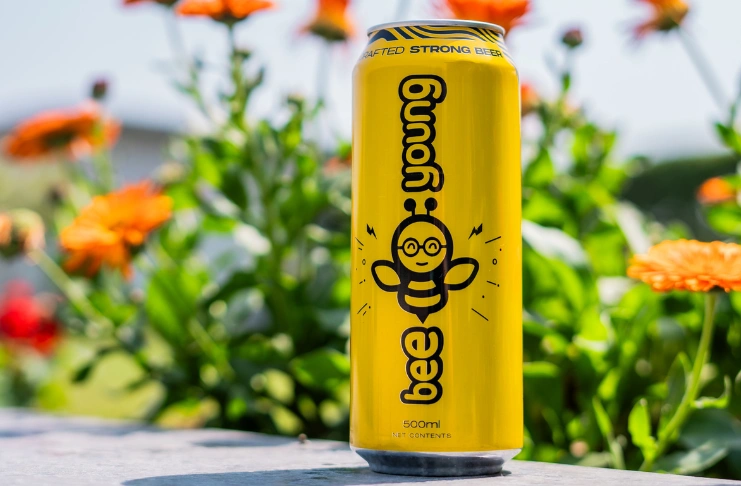
“We saw an opportunity to reimagine what a strong beer could be. BeeYoung was born out of that vision, to bridge those gaps and create a path-breaking brew that delivered a craft-like experience without any compromises.”
The team spent over a year conducting research, understanding brewing processes, identifying quality gaps, and figuring out positioning. They were all in for building something that would need to prove itself against established players with distribution networks, marketing budgets, and decades of consumer loyalty.
Everything about BeeYoung was designed to resonate with modern beer drinkers who wanted to enjoy, not just consume. From taste to brand personality, the product carried intent.
When BeeYoung launched in 2019, Abhinav knew the real test wouldn’t be the launch itself. It would be what came after.
Six Months Later, Everything Stopped
March 2020. Just six months after BeeYoung’s debut, the country shut down.
For most new brands, timing could not have been worse. For a bootstrapped beer company with no investor buffer or backup capital, it could have been fatal.
Distribution networks froze overnight. Retail outlets closed. Consumer behavior turned unpredictable. Everything the team had built in those first six months suddenly hung in suspension.
Yet, being self-funded came with its own advantage.
“Launching premium products was one of the key decisions that might not have been possible with external investors,” Abhinav reflects. “Typically, investors would expect a brand to first focus on scaling distribution and achieving market depth before moving toward a more premium positioning.”
Without investor pressures dictating strategy and board meetings requiring approvals, the team could make decisions quickly, pivot when needed, and focus on what actually mattered: product quality and staying connected to consumers.
They doubled down on digital communication. Kept the brand visible when physical presence was impossible. Maintained relationships with distributors and retailers through the uncertainty. Most importantly, they didn’t compromise on the product.
The discipline that kept them alive during the pandemic became the foundation for everything that followed.
The Cost of Building Right
There’s a glamorous narrative around bootstrapping. The freedom, the control, the satisfaction of building something entirely yours. What often gets ignored is the relentless financial discipline required to survive.
Every decision at BeeYoung carried weight.
“We’ve always focused on keeping costs low and operations efficient across the board,” Abhinav explains. “That meant fine-tuning our manufacturing facilities, contracting only the capacities we were confident of utilizing, and following a just-in-time approach for raw materials and finished goods.”
The biggest strategic decision was to let the product do the talking. “Our investments were directed toward distribution and the off-premises segment, primarily retail, rather than the on-premises or Ho-Re-Ca (hotels, restaurants, cafés) business. This decision helped us control costs effectively, as the expense of doing business in Ho-Re-Ca is almost five times higher than in retail.”
5 times. That’s not a marginal difference. That’s the difference between sustainable growth and burning through capital in pursuit of visibility.
The discipline paid off. But not immediately.
Knocking on Doors
Building belief in a new product category doesn’t happen in quarterly cycles. It happens in individual conversations, repeated demonstrations, and the slow accumulation of positive experiences.
“It’s an ongoing journey,” Abhinav admits when asked about early skepticism. “The market is extremely competitive; it’s truly cutthroat out there.”
The phrase “cutthroat” isn’t hyperbole in India’s alcohol beverage industry. Its description. Getting shelf space, convincing distributors to take a chance on an unknown brand, persuading retailers to stock something their customers haven’t asked for yet.
“It takes a lot of hard work and consistent effort, continuously knocking on doors to make people believe that BeeYoung is a product capable of making a real difference.”
The breakthrough comes in the tasting when someone tries BeeYoung for the first time, and the response is immediate. The taste, the smoothness, the craft quality in a strong beer category. It surprises people. That surprise creates conversations.
“Once they see the response when consumers try it for the first time and share positive feedback, that validation changes everything. When that feedback reaches retailers, distributors, or even larger partners, it builds confidence and turns initial skepticism into genuine belief.”
Word travels. Slowly at first, then faster. Retailers start requesting stock. Distributors call back. The product proves itself in the only way that matters: repeat purchases and organic word-of-mouth.
Then came the awards.
When the World Notices
Gold at the Asia Beer Challenge 2025 for BeeYoung Beyond. Silver for BeeYoung Crafted Strong Beer. Gold at the European Beer Challenge. Silver at the World Beer Awards. The Ambrosia Award for Best Strong Beer. Product Debut of the Year at Spiritz Awards.
Each recognition validated the founding premise: that Indian craft beer, made with quality ingredients and careful process, could compete globally. That strong beer didn’t have to mean compromised quality. That premiumization in this category was possible.
But the awards meant something beyond validation. They opened doors. Created conversations with international partners. Put BeeYoung in contexts where Indian craft beer rarely appeared.
The choice to use Doon Basmati Rice from Uttarakhand in BeeYoung Beyond has a story in itself.
“What excites me most about taking ‘local to global’ is the opportunity to tell India’s story through our ingredients,” Abhinav says. “Using raw materials like Doon Basmati allows us to showcase the richness and diversity of Indian crops on a global stage. It’s not just about making beer, it’s about celebrating local traditions, supporting farmers, and introducing global consumers to Flavors and varietals they may never have experienced.”
Indian ingredients. Indian craftsmanship. Indian innovation. World-class quality.
The Questions Nobody Asks
Success in the Alco-Bev industry gets measured in cases sold, markets entered, and revenue growth. Those numbers matter. But they rarely show the full story.
“Yes, scaling is the name of the game; everyone talks about growth and reaching certain revenue benchmarks,” Abhinav acknowledges. “But when you’re bootstrapped, the real focus is on sustaining the business for the long run.”
Sustaining is indeed more important than scaling. It requires building foundations that hold, creating systems that work when you’re not watching, and developing a team that carries the vision forward because they genuinely believe in it, not because they’re compensated to care.
“For us at Bee Young, growth isn’t just about expanding the business; it’s about continuously growing the brand in the consumer’s mind. It’s crucial to stay true to our vision, maintain consistency in quality, and deliver benchmark standards day after day.”
That consistency requires daily choices: deciding not to cut corners when costs rise, maintaining quality standards even when it’s expensive, and staying focused on what the brand represents when market pressures suggest pivoting.
“That discipline of never losing focus and always prioritizing quality is what truly defines long-term growth, beyond just the numbers.”
Where Beer Becomes Memory
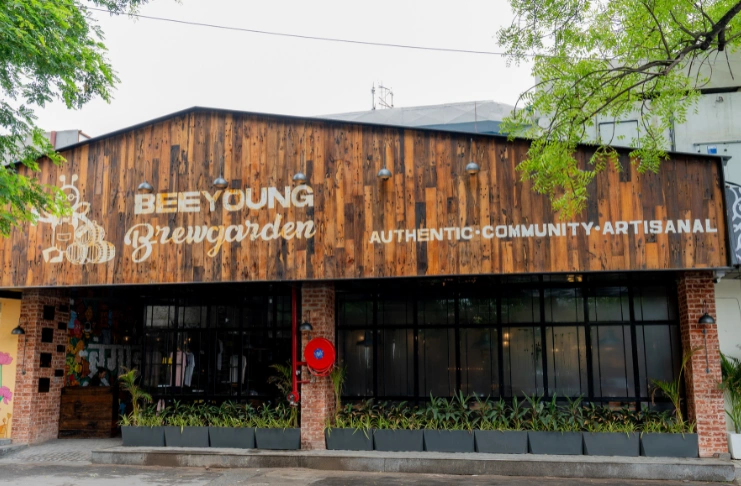
The Brew Garden opened as BeeYoung’s first experiential space—a physical expression of what the brand stood for.
“Beer, at its core, is all about experience,” Abhinav explains. “The very DNA of beer is about being chill, friendly, and unassuming.”
The space captures that spirit. It’s designed to feel relaxed and social, where people can explore seasonal brews, limited editions, and small-batch experiments that may never go into mass production. It’s a laboratory and gathering place at once.
“Experiential spaces like The Brew Garden give consumers the chance to connect with the true personality of beer. These spaces create an environment where people feel comfortable, relaxed, and social, which is exactly how beer is meant to be enjoyed.”
That idea extends to everything BeeYoung does, from packaging and retail presence to communication strategy. Every touchpoint reinforces the same belief: beer should bring people together, not just deliver alcohol content.
“It’s not just about the drink itself, but about the atmosphere and the sense of community that come with it.”
The Fine Print
Ask entrepreneurs about their biggest lessons and you get polished answers about resilience, vision, and persistence. Ask Abhinav, and you get this:
“My biggest lesson is not to take anything for granted. Read the fine print, do a deep dive, and understand the route-to-market as thoroughly as you can.”
The alcohol beverage industry in India operates under a complex web of state-level regulations. What works in Delhi doesn’t work in Uttarakhand. What’s permissible in Punjab requires different documentation in Uttar Pradesh. Every state has different excise policies, licensing requirements, and distribution rules.
“Don’t take people at face value, do the hard work, complete your due diligence, and only then take the plunge. Getting this wrong can be extremely costly, even disastrous.”
‘Disastrous’ represents the reality of operating in a highly regulated industry where missteps can mean months of delays, significant financial losses, or complete inability to operate in a market. The due diligence here becomes the survival.
Building Without Blueprints
The alcohol industry doesn’t often talk about sustainability. The focus stays on production, distribution, and sales. Environmental impact gets acknowledged in press releases but rarely drives operational decisions.
At BeeYoung, it does.
“At BeeYoung, sustainability is not just a concept; it is a guiding principle behind how we operate,” Abhinav says. “We have implemented several initiatives to reduce our environmental impact across production and packaging.”
Those measures are tangible. Water used in brewing is recycled within the system to minimize wastage. Plastic shrink wraps have been phased out. Paper consumption in packaging has been sharply reduced.
“Our patented bottle design is another important step in this direction. The upgraded bottle, which we introduced two years ago, has been developed with enhanced quality and durability, allowing it to go through more recycling cycles.”
Beyond immediate changes, the brand also explores ways to incorporate indigenous crops and revive long-lost varietals.
“These efforts are ongoing, and sustainability will continue to remain a key part of BeeYoung’s journey as we grow.”
The Team That Carries Forward
Twenty years of experience across the sector taught Abhinav something fundamental about leadership: Your team is the center of it all.
“I believe great brands are built by passionate teams, not just good strategies. At BeeYoung, we focus on hiring people who genuinely believe in what the brand stands for.”
The culture encourages open thinking and gives people ownership of their ideas. When the team feels trusted and inspired, they naturally align with the larger vision.
“Being young at heart, experimental, and quality-driven is part of our culture. “
His leadership philosophy centers on three principles: empowering, supporting, and enabling people to take strong, bold decisions in their everyday work.
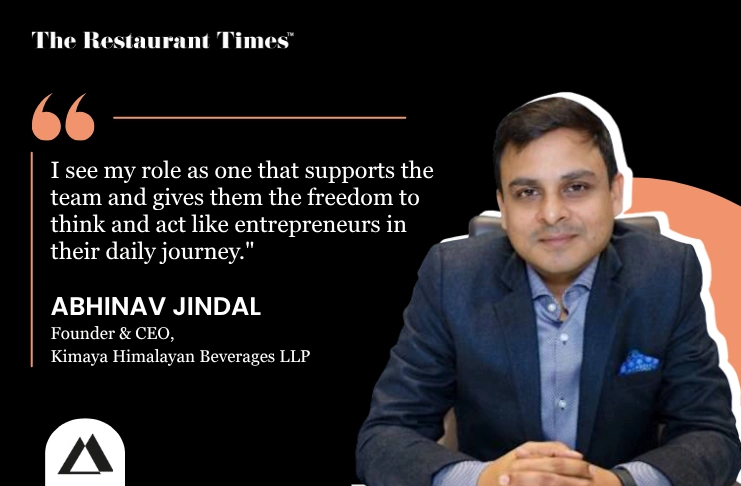
The approach ensures everyone on the team operates with an entrepreneurial spirit. Not because they’re told to, but because they’re given the space to.
“It is less about managing people and more about growing together with a shared sense of purpose.”
Three Words
If asked to describe BeeYoung’s journey in three words, Abhinav mentions: “Resilient. Disruptive. Homegrown.”
The brand is resilient because building it from scratch in a competitive and evolving market wasn’t easy. But they stayed consistent in purpose.
Disruptive because they challenged a fundamental assumption that strong beers cannot be premium or crafted.
“And most importantly, it is homegrown. Everything about BeeYoung reflects Indian craftsmanship, community, & confidence to make something world-class right here in India.”
What Comes Next
Ten years from now, Abhinav wants BeeYoung to be remembered as the brand that redefined how India experiences beer. “A brand that is proudly Indian, world-class in quality, and rooted in good times and togetherness.”
The vision hasn’t changed since that moment in 2018 when everyone said no. Create something worth believing in. Build it right. Let the product speak.
“Whether it is through our craft brews or experiences like the Brewgarden, I want BeeYoung to stand for authenticity, innovation, and the youthful spirit that connects people across generations.”
The strong beer segment in India was dominated by giants. The margins were terrible. Everyone advised against it. Abhinav Jindal went ahead anyway.
Six months after launch, a pandemic shut everything down. The brand survived. Then thrived. Today, BeeYoung holds gold medals from international competitions and shelf space in markets across North India. The team is preparing for South and East India expansion.
The journey from universal rejection to global recognition took resilience. It took disruption. It took the confidence to build something world-class in India, for India, using Indian ingredients and Indian craftsmanship.
Takeaway? Sometimes the right path is the one everyone warns you against. Sometimes the best validation comes not from those who said yes easily, but from those who said no and later changed their minds.
BeeYoung’s story is still being written. But the opening chapters have proven that strong beer in India can mean more than alcohol content. That craft quality and mass appeal aren’t opposites. That being proudly Indian and world-class aren’t contradictions.
In an industry that told him to stay out, Abhinav Jindal built something worth staying for.