
In 1986, Gilbert Le Coze would visit the Fulton Fish Market every day, early in the morning, to ask vendors for their best lobsters, scallops, and tunas. The vendors were kind of unimpressed at first, but soon, they understood that this Frenchman would not compromise.
That single-minded devotion to the fish became the foundation of Le Bernardin: freshness, precision, and letting the ingredient speak for itself.
Thirty-eight years later, the philosophy remains, and in fact, is as solid as ever.
When the Vision Suddenly Lost Its Voice
In 1994, Gilbert Le Coze passed away suddenly at the age of 48. The restaurant was thriving, reservations were full, and the kitchen hummed with his vision. Then he was gone.
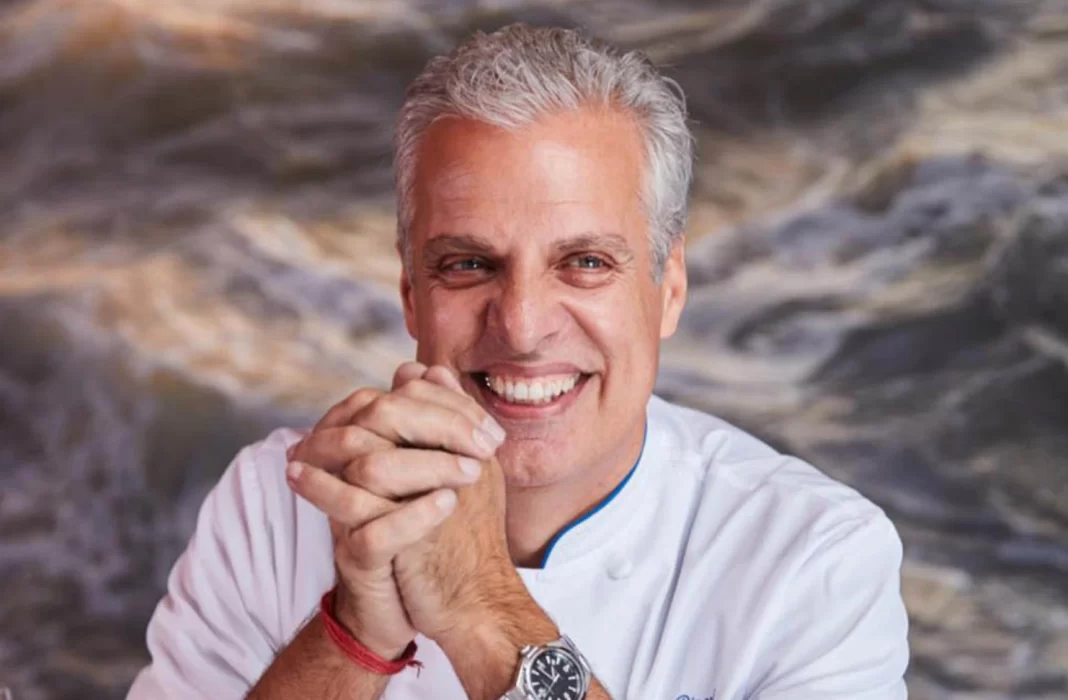
Maguy Le Coze had to decide between the two: close the restaurant and return to France, or stay and fight for what they had built. She stayed. She worked with Chef Eric Ripert, Gilbert’s close friend and protégé, who had been by his side for years. Ripert took over the kitchen to continue Gilbert’s legacy with the same respect for the fish & the refusal to cut corners.
“I was not scared of continuing the legacy of Gilbert,” Ripert said in an interview with Forbes. “I was focused, maybe a little naïve, but fearless.”
That fearlessness carried them through.
The Constant
Le Bernardin today maintains the same philosophy Gilbert brought from Brittany in 1972. The fish remains the star. The preparations are still rooted in French technique, but lighter and more refined, touched by Ripert’s Southern French roots and his openness to global inspiration. Miso glazes, truffle butter, and jalapeño ceviche appear on the menu, but never at the expense of the seafood itself.
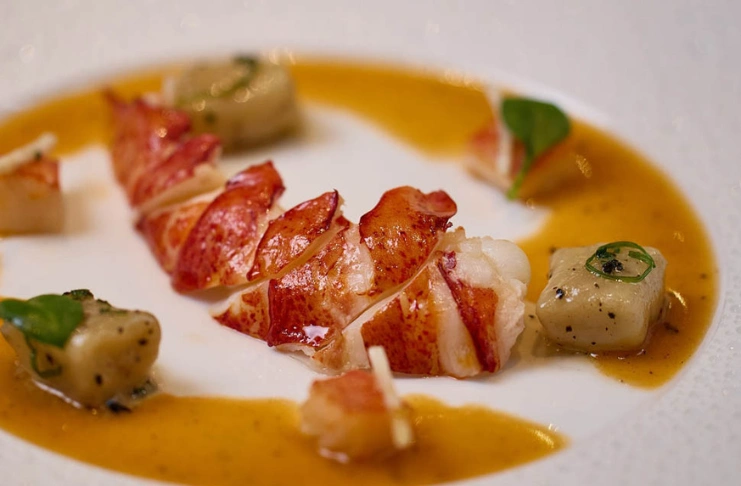
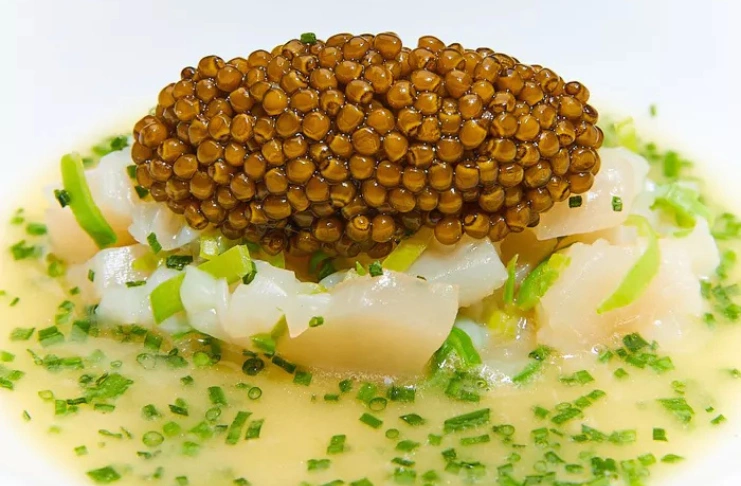
Ripert’s tuna carpaccio with foie gras has become legendary. So has the Dover sole meunière, the black bass with shiitake, the octopus charred with black garlic. These dishes are statements of his confidence and mastery.
The dining room reflects the same balance: it’s sleek and modern, featuring oceanic art, soft lighting, and polished wood. The service is impeccable, discreet, knowledgeable, but never fussy.
The clientele includes well-heeled diners from around the world. They arrive dressed up in diamond necklaces and pressed suits, not just for a meal, but a choreography long rehearsed and flawlessly executed.
The Art of Evolution
Le Bernardin has never remained static. Maguy Le Coze has always believed that evolution equals survival. “You must always evolve,” she said. “If the restaurant were still like it was the day we opened, it would be old. You must always change, but subtly.”
In 2011, they elevated their space by adding a lounge for the first time. In 2014, they opened Aldo Sohm Wine Bar just steps away, a more casual space where simple, shareable plates complement an expertly curated wine list. They launched Le Bernardin Privé for private events. They adapted their menu to showcase North American seafood when they could no longer find the same quality ingredients they had in Paris.
They survived 9/11. They survived the 2008 recession. When COVID shut down New York, they redirected the kitchen to cook meals for World Central Kitchen. When they reopened, the clientele returned stronger than before.
The Refusal to Expand
Le Bernardin does not plan to franchise the restaurant.
Ripert has received multiple offers to expand his brand to Las Vegas. He has always declined. “I don’t see how I can be at Le Bernardin and take good care of the team and the clients and at the same time do that in Vegas,” he explained. “What is most essential is to be mentoring, to be following my passion, to be with our clients, and to be content with where I am.”
That focus, that refusal to chase every opportunity, distinguishes Le Bernardin. They closed restaurants in Atlanta and Miami. They turned down money. The moment you chase scale, you lose precision. Precision is everything here.
The Price of Excellence
A meal at Le Bernardin costs $210 for the four-course prix fixe dinner menu, plus wine pairings. When they opened in 1986, dinner cost $65. The price has climbed. The standards have not budged.
Critics have claimed fine dining is dying. Ripert and Maguy have pushed back. “If you try to make a reservation in fine dining establishments, very often one cannot get a table,” they noted. “We think that fine dining and luxurious restaurants are very vibrant and inspirational.”
Try booking a table at Le Bernardin on a Saturday night. The dining room is full. The kitchen is firing. The energy is constant.
What Success Really Means
Ripert does not think about the three Michelin stars when he walks into work. He does not dwell on the four stars from The New York Times or the fact that they have been ranked number one in the world by La Liste. He thinks about the fish. He thinks about the team. He thinks about making people happy.
“When I come to work, it’s about cooking, being with the team, making people happy, and creating an experience,” he said. “That is really my state of mind. Then, your rewards come.”
He practices Buddhism. He wants to become enlightened. He spends time with his family. He mentors young chefs who will one day surpass him, and he welcomes that reality. “The new generation that we see coming is already showing signs of extreme talent,” he said. “It’s a logical progression from generation to generation.”
The Legacy
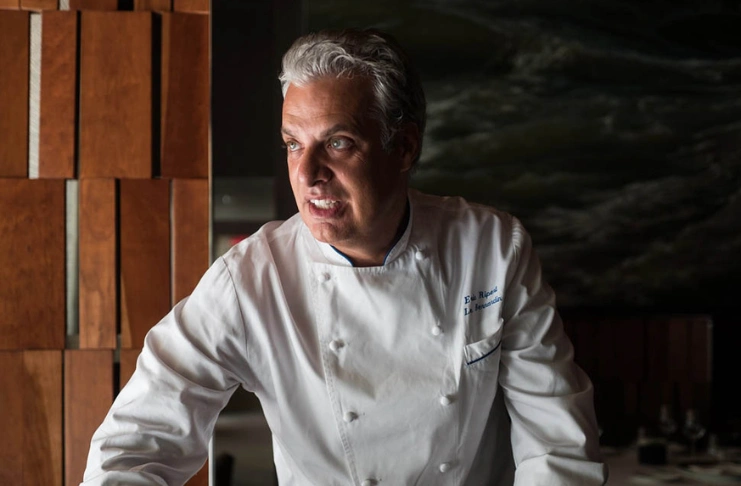
Le Bernardin has trained countless chefs who now work at other restaurants. Some have even become competitors. “We train people that potentially will be competitors or work for competitors, but other restaurants do the same,” he explained. “The vision of the chef is unique. That vision cannot be duplicated.”
You can copy the menu. You can replicate the techniques. But you cannot copy the ethos. You cannot fake the decades of discipline, the grief transformed into grace, the refusal to compromise when it would have been easier to do so.
Maguy Le Coze became the first woman to win the James Beard Award for Outstanding Restaurateur in 2013. Ripert was named Outstanding Chef in the United States in 2003. The accolades continue to accumulate.
But they miss the point. The point is the fish. The point is showing up every morning, as Gilbert did at the Fulton Fish Market in 1986, and demanding the best. The point is evolution without erosion. The point is building something so solid that even tragedy cannot topple it.
When you eat at Le Bernardin, you taste 38 years of relentless focus. You taste a brother’s vision carried forward by a sister’s strength and a chef’s discipline. You taste what happens when people refuse to settle.
That flavor exists nowhere else.