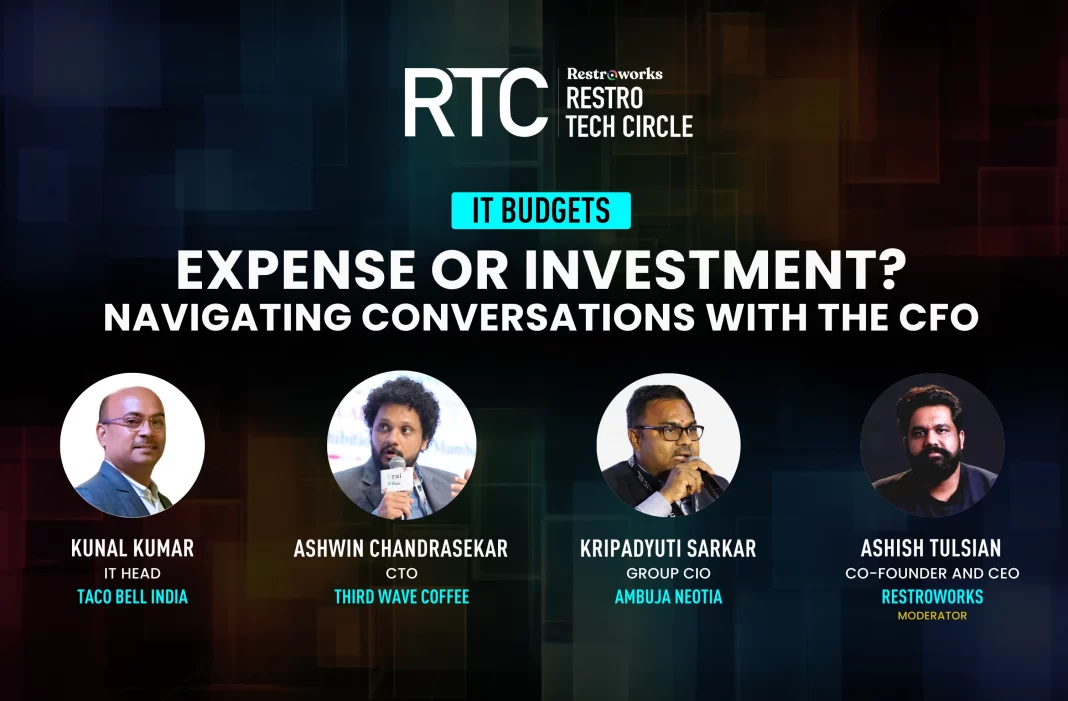

In September 2025, RestroTech Circle convened CTOs and technology leaders from India’s top restaurant chains in Goa for two days of candid, closed-door dialogue. Under Chatham House rules, the forum made room for honest conversations about the current state of restaurant technology and where it is headed. The discussion also exposed various structural and operational constraints that continue to limit meaningful change.
What is RestroTech Circle?
RestroTech Circle is an invite-only forum for CTOs and technology leaders in the F&B sector. As Nikunj Kewalramani, Communications Lead at Restroworks, explains: “RTC was born out of a simple but powerful idea: that the restaurant technology ecosystem deserves its own space to connect, challenge, and collaborate. We wanted to move beyond surface-level discussions and create a forum where real conversations around innovation, scalability, and transformation could take root.”
In short, RTC gives leaders a platform to share operational realities of implementing (or not) restaurant technology. In an industry where IT departments face constant scrutiny as cost centers, the forum provides space for peer learning and honest dialogue about what works in practice.
The Budget Paradox: Investment vs. Expense
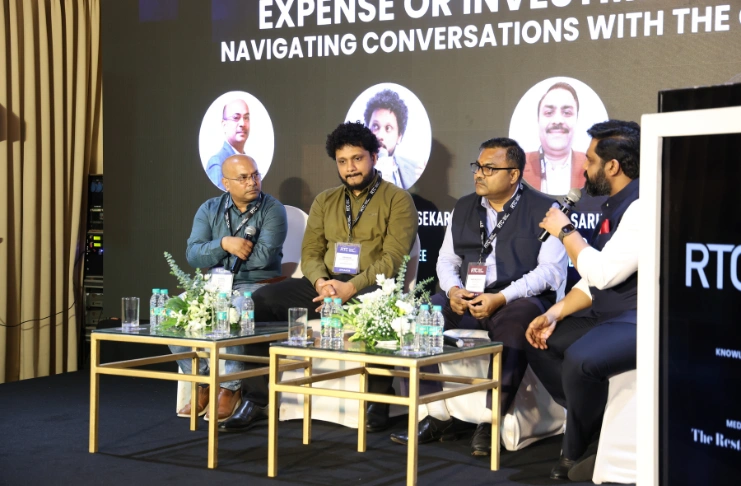
The central tension at RTC 2025 was on how IT leaders secure budget for innovation when finance teams view technology primarily as an expense.
Kripadyuti Sarkar, Group CIO at Ambuja Neotia, outlined a practical framework for board presentations: “I divide my budget into four categories that boards actually understand: customer experience, risk coverage (IT security), compliance, and business insights for decision-making. Independent directors understand these concepts. They do not understand CRM or agentic AI.”
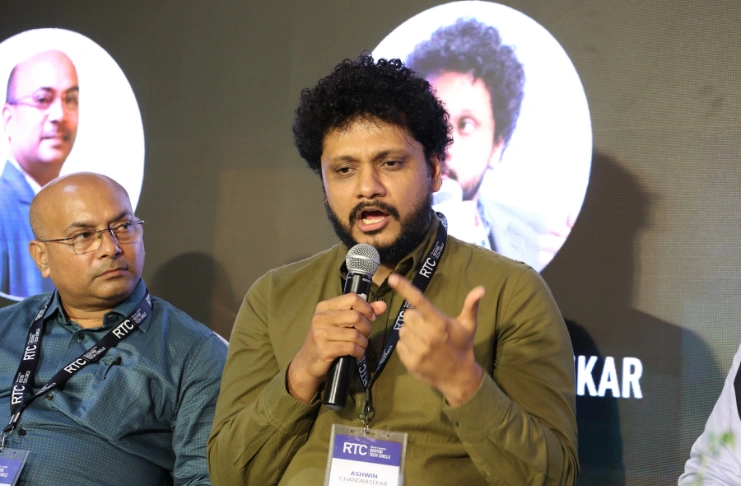
This approach of translating technical requirements into business outcomes resonated across the panel. As Ashwin Chandrasekhar, CTO of Third Wave Coffee, noted: “Everybody in the room wants the best for the company. They are saying something based on their understanding of the world. When you elementalize it like that, it becomes very clear why what is happening.”
The Social Capital Strategy
Building credibility before making large requests emerged as a consistent theme. Chandrasekhar emphasized starting small: “If you are a new CTO where you lack social capital, one of the first things you should work on is building it. Small wins are critical. When you come on time, when you deliver on time, that creates credibility. Once you go from being a new person to having social capital, many of these conversations become easier.”
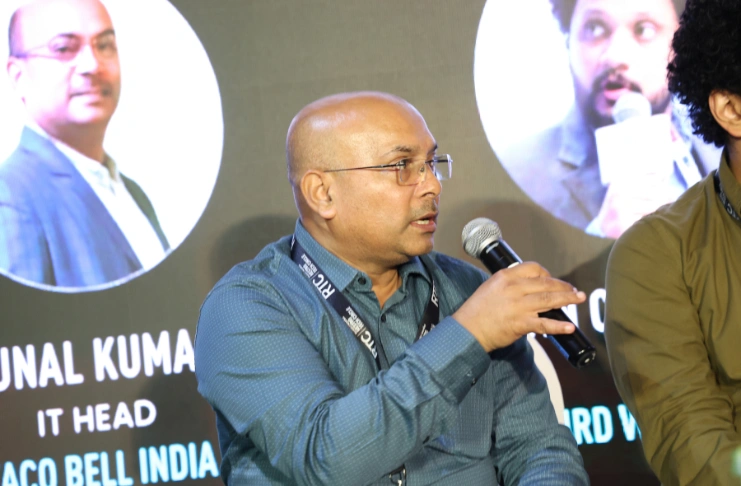
Kunal Kumar, IT Head at Taco Bell India, shared his operational reality: “When I joined, within one month, everyone was saying the cost-cutting person is coming to the meeting room. Every time I go to the boardroom, they ask how much cost I will save this time.” His approach combines savings with time efficiency, which is particularly important in QSR operations where the overnight reconciliation window is critical.
Key Technology Trends Reshaping F&B Operations
1. Video Analytics
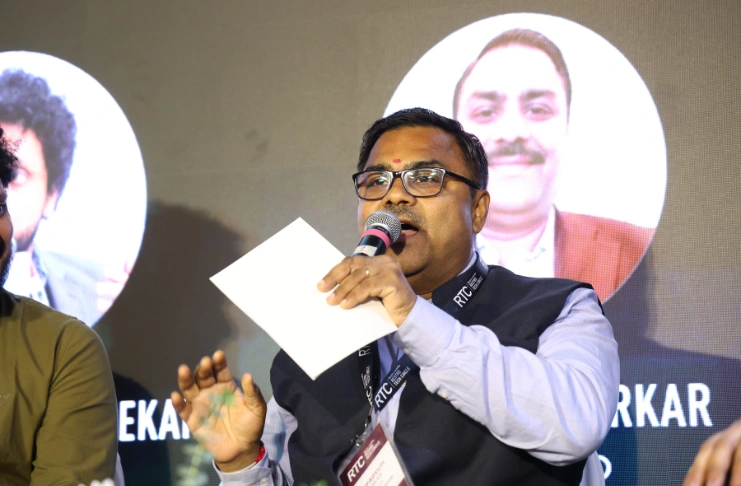
Video analytics emerged as one of the most discussed innovations at RTC 2025. Sarkar shared a compelling proof-of-concept story from Zamana, a Bollywood-themed street food restaurant in Kolkata. His team implemented facial recognition AI without formal management approval.
“I never shared anything with the management. I just installed CCTV cameras and started video analytics on face reading AI,” Sarkar explained. “The system identifies when customers last visited and immediately suggests, ‘Last time you ordered Bombay vada pav, are you repeating that or something new?’ That creates the wow factor.”
This guerrilla approach to innovation delivered measurable results without disrupting operations. When management visited and experienced the personalized service firsthand, the project received an 18 lakh rupees budget for chain-wide implementation.
The broader industry trend supports this trajectory. Advanced video analytics systems now provide real-time monitoring capabilities that extend beyond security. Applications range from theft prevention to food safety monitoring and customer behavior analysis.
In fact, recent industry data indicates video analytics can reduce theft by 30% while providing insights into operational efficiency, making it a dual-purpose investment that addresses both security concerns and customer experience enhancement.
2. Agentic AI
While AI in restaurants has evolved over several years, agentic AI represents a fundamental shift from reactive automation to proactive decision-making. Unlike traditional AI that follows preset rules, agentic AI systems analyze data from multiple sources and determine optimal courses of action before executing them.
The panelists discussed how this technology is transforming operations. Agentic AI can automate portions of the online ordering process, with AI agents capable of browsing options and ordering on a customer’s behalf.
More importantly for restaurant operators, agentic AI helps managers make informed decisions faster by turning data into action, optimizing labor, and easing operational stress while keeping human hospitality at the center.
3. Self-Ordering Kiosks
The adoption of self-ordering kiosks was a prominent topic, with clear data supporting their implementation. Kumar from Taco Bell shared operational benefits, particularly around reducing wait times and improving order accuracy during peak hours.
Industry data indicate that brands implementing self-ordering kiosks have seen average order value increases of 30% (in the case of McDonald’s, for example). Globally, the self-ordering kiosk market in India generated $1,624 million in 2024 and is projected to reach $2,989.7 million by 2030.
Consumer adoption is accelerating, too. 66% of U.S. consumers prefer using self-service kiosks over interacting with staff, citing speed and reduced stress as primary reasons. In India specifically, industry estimates suggest the self-service kiosk market is poised to expand at a CAGR of over 11.1% through 2030.
Moreover, Self-service kiosks reduce total order time by nearly 40%, accounting for the entire process from when a customer begins ordering to completion. For labor-strapped operators, specific case studies show substantial savings. A three-location ramen restaurant, for the record, saved approximately $1,050 per week per location after implementing kiosks.
4. Technology Integration Challenges
A recurring pain point at RTC was the challenge of integrating disparate systems. As Ashish Tulsian, Co-founder & CEO of Restroworks, noted in the opening session: “We are not a product that sits on top of something. Restroworks stack is full-stack. We know many well-intentioned IT leaders who appreciate our product struggle to take a call because it requires significant migration effort.”
The industry data validates these concerns. 76% of restaurant operators see technology as a competitive advantage, but only 13% are satisfied with their current setup. The gap often stems from data fragmentation, where POS, purchasing, inventory, and accounting systems all deliver conflicting numbers, forcing reliance on Excel for manual reconciliation.
The discussion emphasized that successful technology implementation requires more than software procurement. Real integration means every system connects to a single source of truth. When that connection fails, accounting and finance teams spend hours reconciling reports instead of focusing on business operations.
5. Kitchen Display Systems and Backend Optimization
While front-of-house technology often receives attention, Kumar highlighted the critical importance of backend systems, particularly Kitchen Display Systems (KDS). He emphasized the operational reality that QSR teams face during closing: “The pain point of the QSR segment is the operations team. From 11 p.m. to 1 a.m., they spend two hours getting everything sorted out. Otherwise, they must ensure everything is completed before 5 a.m. when data needs to travel.”
This operational constraint means any technology implementation must prioritize time efficiency alongside cost savings. The panelists agreed that backend optimization, while less visible than customer-facing innovations, often delivers the most immediate operational value.
6. Culture of Innovation vs. Fear of Failure
Perhaps the most critical discussion centered on organizational culture rather than specific technologies. Ashish framed the challenge: “The central question is, how does one innovate when it requires buy-in from leadership? That buy-in must address two things: one, change. And the other part is failure, the appetite to fail.”
Chandrasekhar’s session on building a culture of innovation resonated deeply with attendees. His emphasis on processes, people, and possibilities over pure technology highlighted that successful digital transformation is fundamentally about organizational readiness.
The discussion revealed that resistance often comes from well-meaning tenured employees. As Ashish noted: “Old people in a company are its biggest poison and power. They keep foundations strong, but at times they also resist change. While they believe it is for the good of the company, in today’s world, that belief often proves incorrect.“
The Proof-of-Concept Approach: Learning from Failure
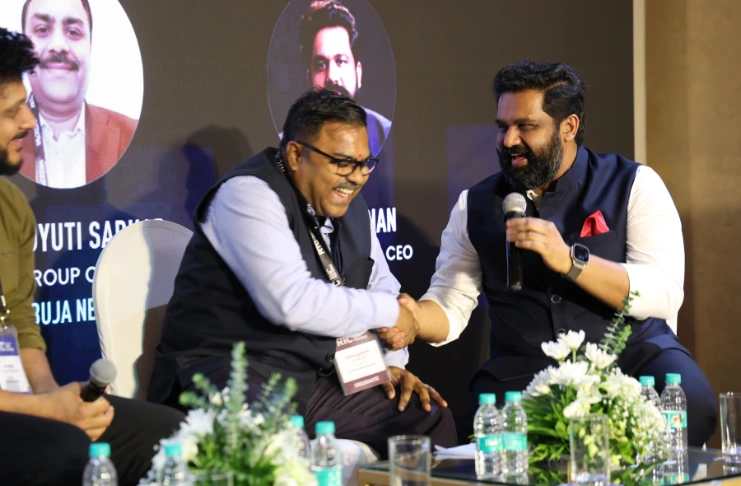
A practical strategy that emerged from multiple discussions was the importance of small-scale pilots.
Sarkar’s video analytics implementation demonstrated this approach. Rather than seeking upfront approval for chain-wide deployment, he started with a single location and proved value before scaling.
This approach offers three key advantages:
Lower financial risk: Small pilots require minimal budget, making them easier to approve. As Sarkar noted, he worked within the existing “kitty budget” for CCTV cameras.
Faster learning cycles: Quick implementations allow teams to identify issues and adjust before large-scale rollout. Chandrasekhar emphasized: “Take a smaller project, execute it like it is the most perfect thing that was ever executed. They gain confidence.”
Built-in failure tolerance: If an experiment fails, the impact is contained. This aligns with marketing principles where, as Ashish observed, “every marketer knows they are wasting 50% of their budget. They just do not know which 50%.”
Critical Success Factors for Technology Implementation
The panel discussions revealed several critical factors that determine technology implementation success:
Understanding Your Board
Sarkar emphasized the importance of knowing your audience: “We must examine their LinkedIn profile and background. Most independent directors came from a finance background, approximately 80% of them. So my strategy is to convert a cost center to an innovation center through four propositions: customer experience, risk coverage, compliance, and business insights.”
Building Social Capital
Chandrasekhar’s emphasis on credibility building resonated across discussions. The message was direct: new technology leaders should focus on establishing trust through consistent delivery before making bold requests.
Time vs. Cost
Kumar’s focus on time efficiency rather than pure cost savings highlighted an often-overlooked dimension. In 24/7 QSR operations, technology that saves staff time during critical windows (like overnight reconciliation) delivers value beyond simple cost reduction.
Data Privacy and Compliance
A cautionary tale from Ashish underscored the importance of thorough vendor evaluation. He shared that he discovered a vendor’s ISO certificate was fraudulent, purchased for 5,000 rupees from someone who “did nothing.”
His point: “The problem is when people are buying cheap solutions, most do not check what compliance, what security, what privacy practices exist.”
With the implementation of India’s Digital Personal Data Protection (DPDP) Act approaching, this concern has heightened urgency. Leaders emphasized that security and compliance require proactive attention, especially as restaurants handle increasingly sensitive customer data.
Leadership Lessons: Advice for Aspiring CTOs
The panel concluded with advice for emerging technology leaders. Sarkar emphasized continuous learning: “Keep learning because you can command boards if you have knowledge of the world. Independent directors are very knowledgeable, very sharp. If you think they do not know agentic AI, they will immediately mention Salesforce’s agent force. You must be sure that you understand what products deliver what purposes in your business.”
Chandrasekhar identified three critical leadership attributes:
People management: “I really enjoy watching people grow. As a leader, it is important to ensure you can give vision to people, guide them when they are going astray.”
Visioning: “Unless a leader can tell what a vision is to larger teams and galvanize them in that journey, you cannot be a leader.”
Execution excellence: “Even as CTO, I love coding. No developer can mislead me because I can go find out what is happening on the ground.”
Kumar emphasized empowering teams: “Learn from me what I am doing. When you are learning, give me solutions, not questions. Next time, when you give the solution, some questions will automatically arise, and you will rethink the solution.”
The Path Forward: Technology as Business Enabler
The discussions at RTC 2025 revealed a maturing perspective on restaurant technology. More and more leaders are now embracing a nuanced understanding of technology as a business enabler that requires strategic thinking, organizational buy-in, and continuous iteration.
As Chandrasekhar noted, “Expense or investment depends on perspective. Tech is a significant multiplier if you have the appetite for it. When you make a company into an enterprise, you need multipliers. For that world, tech is important. But even in that world, whether you want to go the extra mile for out-of-the-ordinary experiences is an add-on.”
The consensus? Successful technology implementation in restaurants demands understanding your organization’s readiness, building credibility through small wins, translating technical capabilities into business outcomes, and maintaining the courage to experiment while accepting that some initiatives will fail.
For India’s restaurant industry, projected to grow from $85.19 billion in 2025 to $139.8 billion by 2030, the technology decisions made today will determine which operators scale successfully and which struggle with fragmented, inefficient systems.
Ashish rightly emphasized: “Whenever you feel that you have arrived, whenever you feel you have achieved some success, tell yourself that your predecessors got 30 years, you got 10, but from now onwards, you at best have three years. Somebody, somewhere, is writing code that can beat us if we stop innovating.”
The restaurants that thrive in the future will not necessarily be those with the biggest technology budgets. They will be the ones who build cultures of experimentation, earn buy-in through credible execution, and maintain the discipline to learn continuously from both successes and failures.