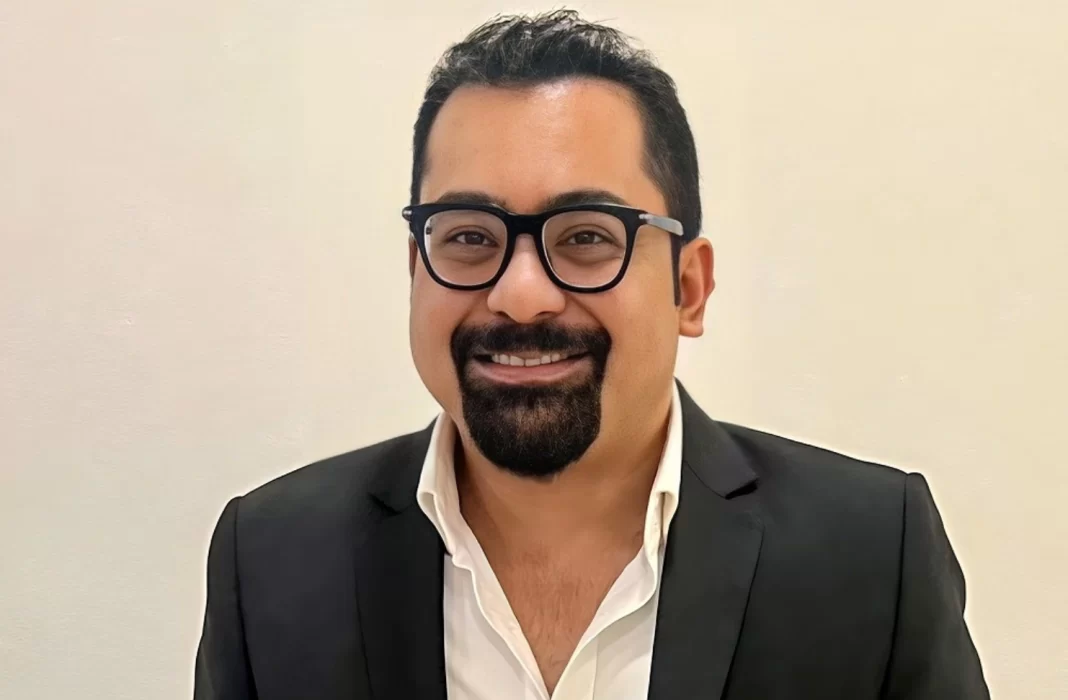

Amit Bagga says he wants to “build a self-sustaining hospitality platform that creates mass employment, feeds communities, and, eventually, outlives him.”
Daryaganj is his way of making that vision tangible. It’s a proof-of-concept that nostalgia can be engineered, memory systemised, and culture operationalised at scale.
Today, the brand sports over ₹100 crore in annual revenue, 2.6 million guests, an acclaimed national presence (with 56 awards and recognitions, including Restaurant Icon of the Year by Economic Times and Entrepreneur of the Year by the International Hospitality Council), and scale to Bangkok, the UK, and the GCC.
Interestingly, the starting point of it all was a collapse.
The Teenager with a Scrapbook
Long before Daryaganj came into the picture, Amit Bagga had unknowingly already started working towards it.
At just 16, he subscribed to The Economic Times and cut from there every article he could find on hotels and restaurants. Over time, he had hundreds such clippings, which, in his own words, “gave me early insights into the industry and made me determined to open a restaurant.”
So, after school, he convinced his family to back a South Delhi location. But in 2001, property sealing and soaring rents ruined the plan. He was heartbroken, of course.
“I shifted to launching salons instead, until a chance meeting with a restaurateur friend in Khan Market pulled me back in,” he says. “Initially, I refused, determined never to enter the restaurant business. But soon realised I loved building restaurants from scratch.”
In 2010, Boombox Cafe opened. Then OTB in Hauz Khas Village. “Both did really well. The numbers were crazy back then.”
The Seed for Mistake
Believe it or not: Success breeds confidence, and confidence breeds mistakes. For a record –
Earlier, Bagga “decided to scale with food-based concepts, believing they were more sustainable than bar-focused businesses.” In fact, he launched three new brands back-to-back in Hauz Khas Village, namely Farsi (Middle Eastern shawarma), Desia (Indian street food), and Makina (Mexican). “That was my biggest mistake. I put all my eggs in one basket, in a market that was unregulated and facing infrastructure issues.”
When Farsi’s license was rejected due to traffic congestion, the market began to collapse. All three brands shut down within months.
“With Hauz Khas dying, OTB also had to close,” Bagga says. “I sold other restaurants to cover debts. By 2015–16, from having six to seven restaurants, I had none. People, including relatives, wrote me off, saying my career was finished.”
The Lessons He Learned
With absolutely nothing to back him up, Bagga spent two years doing freelance projects, taking consultancy roles, and every now and then questioning whether he belonged in the industry.
Good thing he never quit. Instead, he studied what actually works, and here, he shares his three key learnings:
- Don’t open all your brands in one market; it’s too risky.
- Pick the right first location; even a great concept will fail if the location is wrong.
- Focus on food-based concepts for longevity; bars and cafés have low loyalty; food brands can last decades.
More importantly, he realised that “a brand should have a strong story.”
Honouring the Legacy
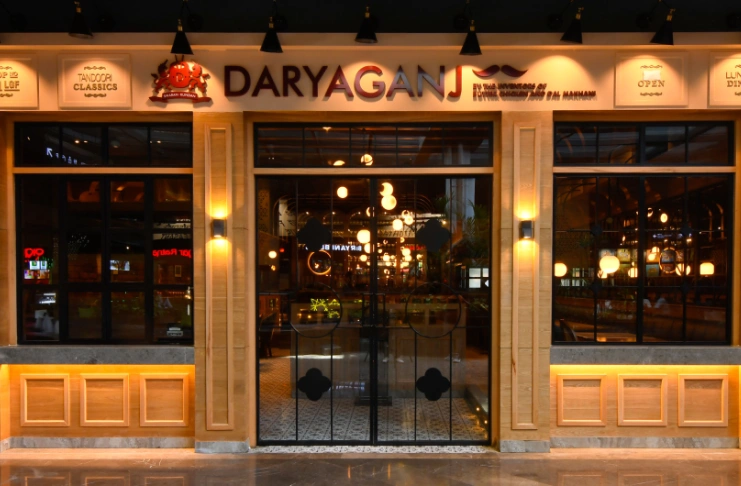
In 2017, Bagga’s childhood friend Raghav Jaggi shared with him a story of “how his grandfather, Mr Kundan Lal Jaggi, co-invented butter chicken and dal makhani in 1947 at his restaurant in Daryaganj after migrating from Peshawar.” Anyone would know how popular these dishes are on the global stage, but their origin is known to few, if any. So, Amit took it upon himself.
He “met Mr Jaggi, recorded his stories, and learned about the original techniques and ingredients. Demand was so high back then they even owned a poultry farm, with inflation-adjusted revenues of ₹7–8 crores a month.”
Unfortunately, Mr Jaggi passed away before the restaurant opened, but with his blessings, the first-ever Daryaganj outlet was launched in April 2019.
Recreating 1947
Six months before the launch, however, Bagga ran food trials using inputs from Mr Kundan Lal Jaggi on how dishes were made in 1947. He shares: “With no written recipes, I reconstructed [dishes] from family memories, removed modern gadgets like mixer grinders, and even hand-churned butter.” He told his chefs to imagine cooking in 1947 with only the equipment and ingredients available back then.
When hiring chefs, Bagga would ask how they made butter chicken or dal makhani. They’d list 18 ingredients. He’d tell them to remove 10.
The reaction was always shocking.
But Bagga’s point was simple. Over the decades, chefs have overcomplicated Indian food. The best results come from fewer, high-quality ingredients and authentic techniques.
This approach created a replicable system. If the technique could be simplified and standardised, it could scale without losing integrity.
Competing Where Everyone Said Not To
“Many people told me [launching a classic North Indian restaurant in Delhi] was a mistake, that the future was in fusion or modern Indian concepts,” Bagga recalls himself disagreeing.
“Delhi has North Indian restaurants on every corner,” he shares, but only about 1% serve the kind of quality he envisioned. So if Daryaganj could prove itself in Delhi, it could succeed anywhere.
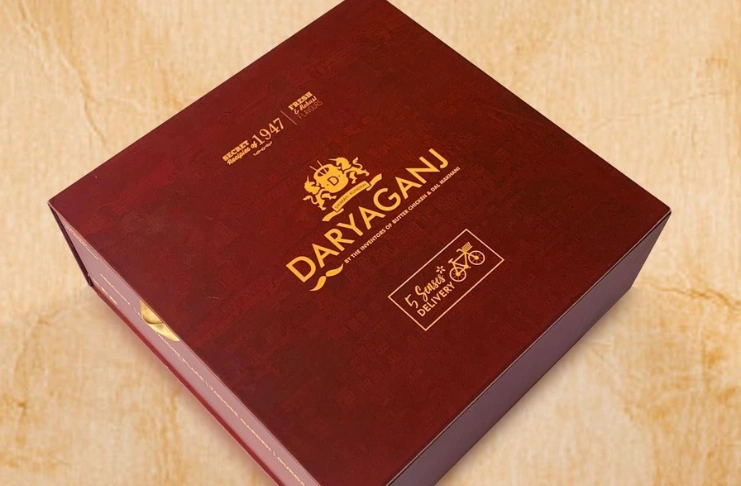
Deliberately, “we position Daryaganj as serving comfort North Indian food at reasonable prices, with great value and a contemporary yet nostalgic setting. But it’s much more than food; we design the experience around all five senses.”
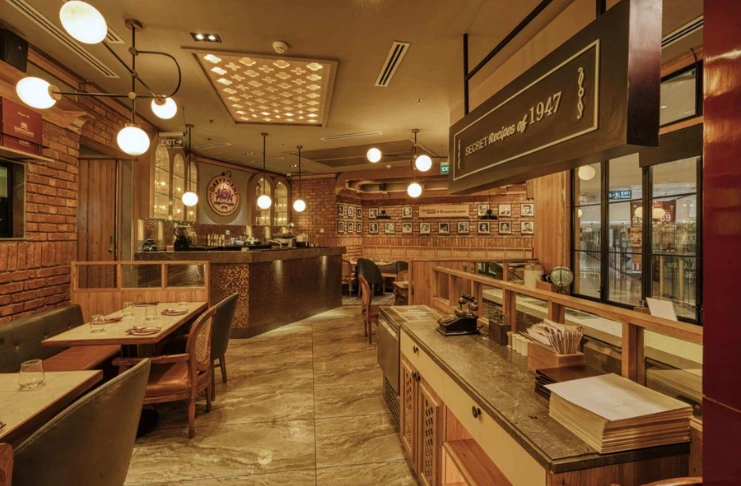
The sense of smell, for example, is evoked through a signature fragrance that blends a contemporary note with an Indian flower, refined over 100 iterations. Similarly, comfortable seating and earthy table surfaces feel good to touch. Relaxed premium interiors with brick walls, reto accents, and warm lighting are easier on the eyes. In the background, soulful, unplugged classics by new-age artists connect with all the generations. As for the taste itself, the food is light yet flavorful.
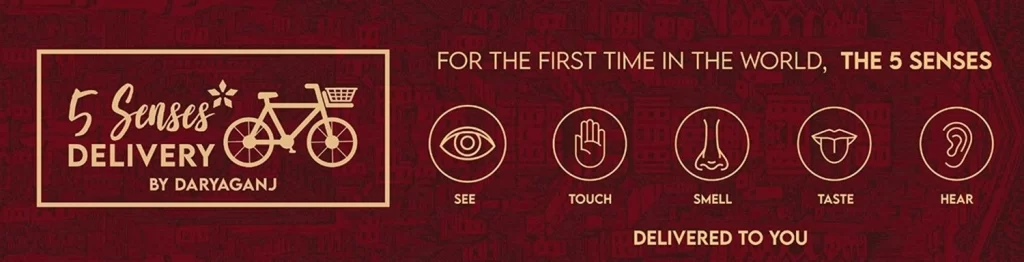
And, in case you are wondering whether this works, the numbers back it up: To date, over 2.6 million guests have been served, with a 59% repeat rate.
Indeed, good marketing may bring someone in once, but only a genuine product and emotionally resonant experience confirm repeat visits.
The Unit Economics
“For most restaurants, there are three big costs: COGS (food & beverage cost), manpower, and rent,” Bagga breaks down.
At Daryaganj, COGS sits at 28% through menu engineering. Manpower costs 15-17%, including statutory compliances and service charges. Rent is capped at 15% of sales.
On top of that, utilities run 2-3%, aggregator and booking commissions from Zomato, Swiggy, Easy Diner, and Dineout cost another 4-5%.
Marketing spend is just 1-1.5%. Maximum 2% including digital.
Bagga believes the best marketing is a happy customer. “We are extremely customer-obsessed. Every review from every platform is pulled into one dashboard daily. We run sentiment analysis to identify trends, and our customer experience head personally monitors them.”
When a negative review comes in, it triggers an immediate ticket to the outlet manager. “The manager must answer three things: Why did it happen? How will you prevent it in the future? What’s the resolution for the guest?”
Pausing at ₹100 Crore & Then Scaling Strategically
When Daryaganj crossed ₹100 crore in ARR, Bagga decided to pause (which is very unlikely in the mainstream).
In an interview with Deccan Chronicle, he shares: “For us, scaling is not just about adding more outlets; instead, it’s about getting the foundation right. We have been focusing on consolidating the business, refining our systems, processes, and strengthening our back-end and supply chains so they are robust, consistent, and future-ready.”
After all, Daryaganj’s legacy is rooted in India’s culinary history, and protecting it demands discipline.
With the foundation now in place, Daryanganj recently announced the launch of its newest outlet in Delhi’s Connaught Place. “It’s a very important store. Connaught Place is a location that I feel defines the whole Delhi culture and how the restaurant culture started in the city. There are some restaurants here still running for 70-80-90 years,” Bagga says.
With this, the brand now has almost 15 outlets and plans to reach 20 by the end of 2026.
The Reality Check for Aspiring Restaurateurs
Bagga has advice for anyone walking in with ₹2 crore wanting to open a restaurant.
“First, don’t enter this industry if you think it’s glamorous; it’s one of the toughest businesses. You work when everyone else is celebrating New Year’s Eve, festivals, or any other family occasions.”
Second:
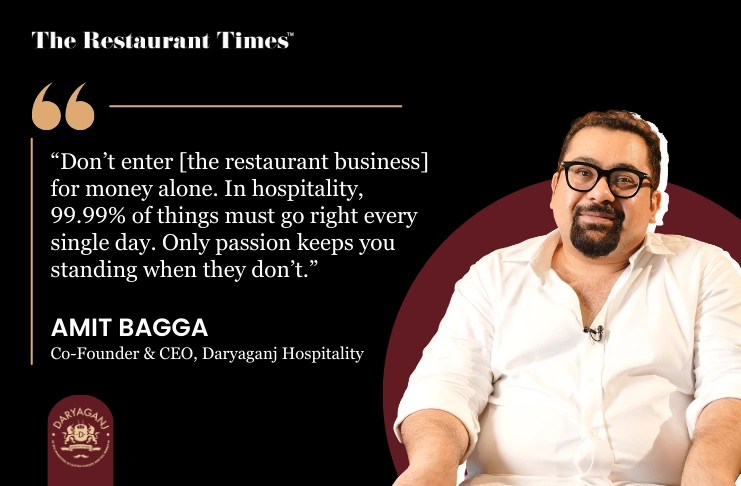
“Third, gain hands-on experience. Work for a restaurateur, or at least spend time in a live restaurant environment. If you want to enter this business, come spend a week with me at Daryaganj and see what it’s really like. You’ll quickly realise it’s not as easy as it looks.”
Building an Infrastructure
From the teenager with a scrapbook to now one of the most celebrated names in the Indian F&B industry, Bagga has always been very particular about the clarity of his intent.
Over the years, he has been building an infrastructure that can create employment at scale, train people consistently, replicate across markets, and operate independently of personality-driven leadership. And, with Daryanganj, you will have to admit that he is doing great at it.