
There is a really popular saying: If it didn’t make it to Instagram, did it even happen?
We’re living in a time where flaunting one’s whereabouts on the gram is everything. More often than not, we don’t just seek out places to eat—we gravitate toward spaces that photograph well.
That instinct explains the cult following of Tania’s Teahouse, widely regarded as the 7th-most-Instagrammable café in the world. It’s a familiar sight across Middle Eastern influencer feeds, with the now-famous “Hey there, Habib-tea” wall as both its backdrop and calling card.
And it works. When you find yourself in a pink-painted oasis with rose gold touches, a splendid marble floor, and quirky notes adding puns to your tea, you do get the picture (pun intended).
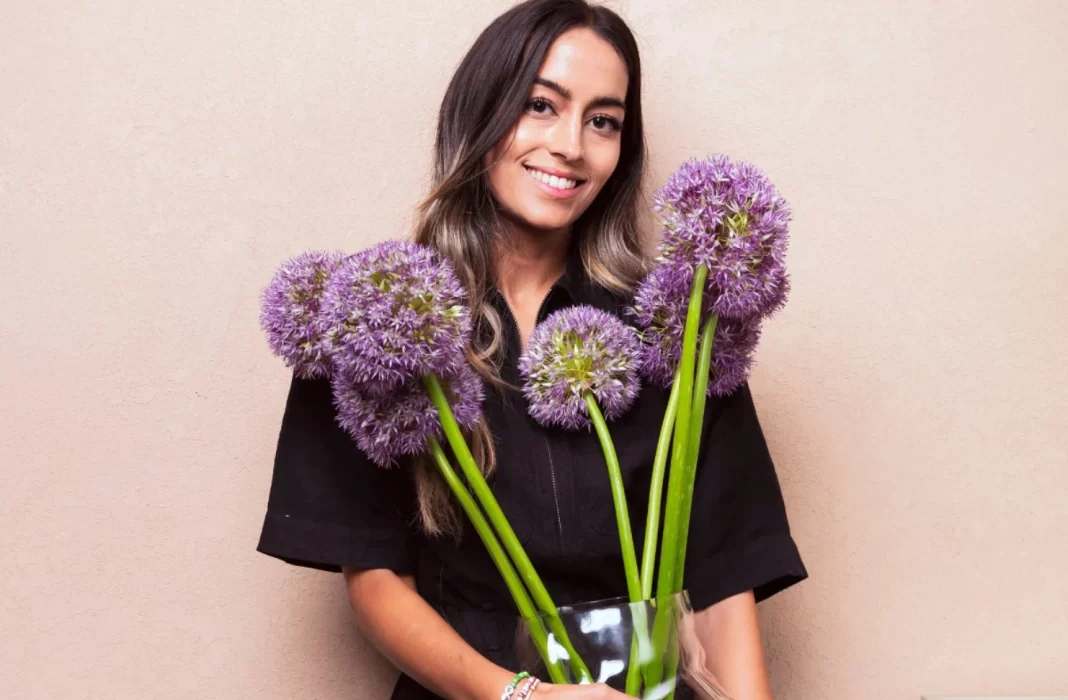
But here’s a thing – Tania’s Teahouse exists because its founder’s body gave her no other choice. While at university, Tania Lodi was diagnosed with lupus, an autoimmune disease that brought chronic pain, migraines, weakened immunity, and severe fatigue.
“I didn’t want to rely on heavy medication,” she says. “So, I threw myself into the love of tea and inclusive eating.”
Being mindful about what she put into her body made her realize she wanted to create a place that catered to people like her. And thus happened Tania’s Teahouse. Today, the brand operates two locations in Dubai: The flagship in Dubai Hills and Sereni-Tea at Keyani Wellness Centre.
In conversation with The Restaurant Times, Tania Lodi shares what it really takes to run a café business and why kindness should remain a core operating practice throughout.
The Viral Scandi-Eclectic Aesthetic
Although great food takes precedence over everything else, you can’t enjoy your meal if the seating is uncomfortable or the restaurant’s ambiance is depressing.
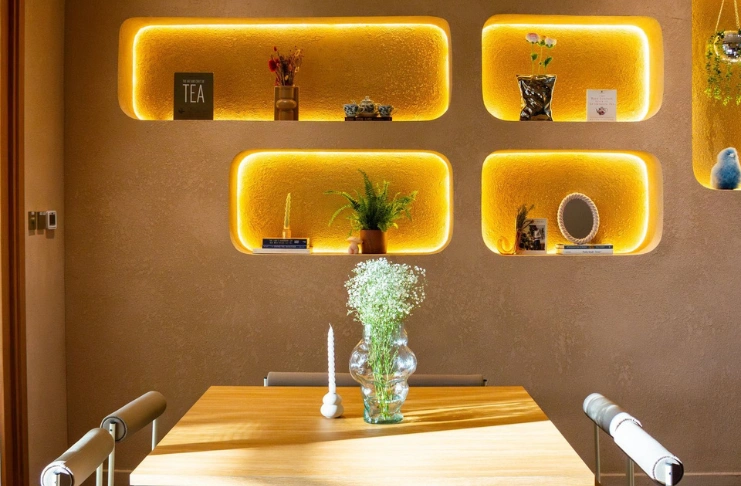
That’s why Tania always wanted to “create something that felt comfortable and cozy, but also a bit more eclectic and classy.” Her taste evolved further as the brand matured.
The Dubai Hills flagship, for example, features three distinct event spaces: the Tea Room, the Sun Room, and the Lunar Room. The Tea Room is darker, broodier, more sophisticated, and Scandinavian. The other two are lighter and airier, with shadowbox shelves for product placement.
“I love being unpredictable and constantly pushing myself beyond my comfort zone in interior design and creative endeavors. I enjoy doing things that are out of the box. The reception to the Tea Room has been really positive, and it’s been a fun experiment,” Lodi says.
She collaborated with Collectus Studio for this design. “Collectus Studio is also a local business, and I love working with other local businesses, especially people who have grown up in Dubai. We clicked immediately, and I felt like he understood the concept.”
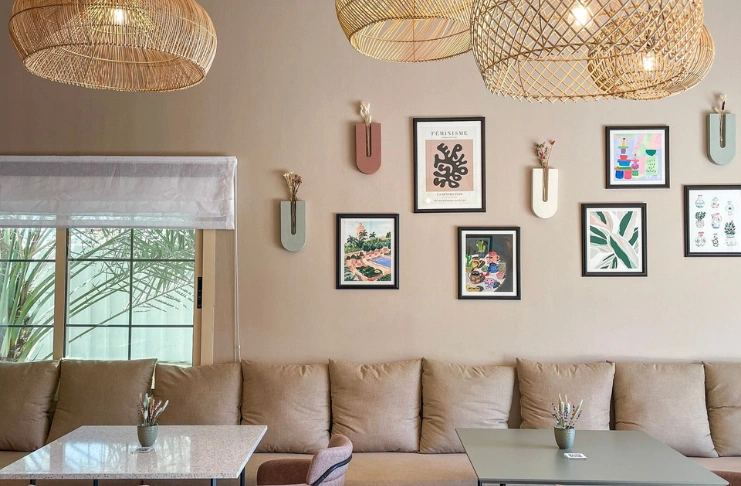
The space also features local artists on framed walls and products from Urban Nest. The purpose?
“I believe in being Instagrammable and impactful. I utilize the aesthetic appeal of the interiors to enhance your well-being. I want to build a place where you feel at home, escape the daily grind, and immerse yourself in an atmosphere where you feel safe and happy,” she shares.
According to her, the Instagram appeal is a delivery mechanism for a deeper experience. “[I am] using it to make you feel better rather than just being a frivolous, pretty place with no soul.”
When Lodi was in university, she loved going to different cafés to work alone. “When I first started Tania’s Teahouse, there weren’t many options for people to go alone to a café with their laptop and books. So I wanted it to be very inclusive for people who just wanted to come alone and read a book.”
The space has plug points throughout, strong Wi-Fi, and cozy seating that feels like your own living room. The café hosts crafting events, manifestation journal-making, sewing, floral arranging, life-coaching workshops, and a variety of other activities.
The Concept of a Mindful Menu
Over the past few decades, public awareness of diet, food intolerance, and allergic reactions has increased. Consumers have varied dietary preferences, including gluten-free, dairy-free, sugar-free, keto, vegan, and vegetarian. Therefore, a “one-size fits all” menu simply doesn’t cut it.
So, what does it take to actually design a good menu?
There are two sides to designing your restaurant menu: experiential and operational. You must think about how your customer would perceive your menu when they enter your restaurant for the first time. Here are some key considerations:
Keep the menu simple: A 50-page menu only overwhelms your customers. So, think about these questions while you’re at it:
- Is the menu easy to browse?
- Do customers find the menu items easy to understand?
- Do the menu items look exciting and appealing?
- Does it include something for everyone?
- Do you provide staff training to help customers select items?
Curating a menu that meets everyone’s requirements is important for a great customer experience as it makes customers feel welcomed, included, and cared for.
“The rise of autoimmune disorders has shown us that a lot of people have different food intolerances. So, we want to make sure we can accommodate all of these dietary restrictions. But also, stay full-flavored and delicious. We don’t serve boring food. We want to put a fun twist to it,” says Tania.
Her personal experience with lupus has a big influence on this. “Because of my autoimmune issues, I’ve learned a lot about my body, what suits it, and how to nurture it better. I’ve also researched which food groups can increase the chances of a flare-up and unlearned many misconceptions about what foods are actually good for you and which ones aren’t.”
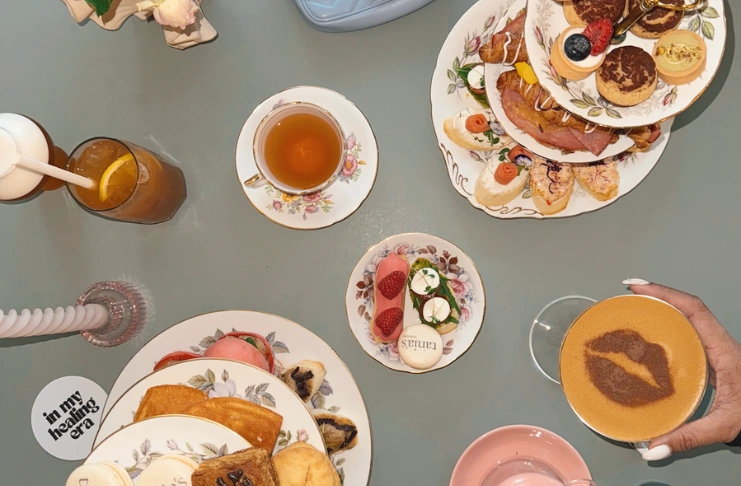
The menu here, for the record, includes avocado toast made with toasted sweet potato instead of bread (paleo, dairy-free, gluten-free, sugar-free, vegan). There are also chicken dishes with cordyceps mushrooms for energy and focus. And so many more such options.
“I love using ‘shrooms. We’ve incorporated a lot of functional mushrooms in our dishes, which are basically adaptogens. Adaptogens increase your resistance to environmental stressors, so they’re good for your mind, body, and soul.”
Reduce food waste: Food waste is a major problem in the restaurant industry. Having recycled ingredients has helped Tania reduce wastage at her cafe.
In addition, she recommends staying mindful of the quantity of ingredients you order. Being a small cafe, Tania’s Teahouse stores only the required amount as per the menu design.
Creating an Authentic Brand

The restaurant industry is inundated with a variety of options for cuisines and experiences. This creates stiff but healthy competition within the industry, wherein it becomes important to do things differently. As Tania points out, “You don’t want to be a follower. You want to be a trendsetter.”
Something that’s working in a different country may not work in yours. It is important to avoid simply copying concepts and instead apply your unique ideas and thoughts. Doing so requires thinking outside the box and having fun while you’re at it.
Lodi credits her mother and sister as her biggest motivators. “They constantly remind me how important it is to center my values around my business and channel my creative gifts through that. My mom, in particular, is one of the most creative people I know—growing up, we were always immersed in DIY projects. Thinking outside the box and prioritizing human connection and love (as cheesy as it may sound) is, in my opinion, the true magic behind any brand, and it’s what I strive to do every day,” she shares.
Going Global
Restaurant franchising is a great way to expand the brand footprint and spread it across different locations worldwide. That said, there are a few prerequisites that need to be in place:
- A sustainable business model
- A model that is easy to replicate
- A business partner that shares the same values
Tania’s Teahouse has been operational and has received many franchising inquiries. It’s finally time for the brand to open to the franchise model. With the current focus being GCC and the UK, the brand is open to collaborations from across the world.
“My ultimate dream has always been to take our brand global, sharing ‘positivi-tea’ with the world through impactful community activations, mindful dining experiences, and immersive spaces that celebrate the art of slow living.”
The second location, Sereni-Tea at Keyani Wellness Centre, offers a blueprint for expansion. With its hygge-inspired design, an anti-inflammatory, gut-healing menu, and a pet-friendly terrace, the space reflects Lodi’s dedication to nourishing mind, body, and soul.
The Reality of Entrepreneurship
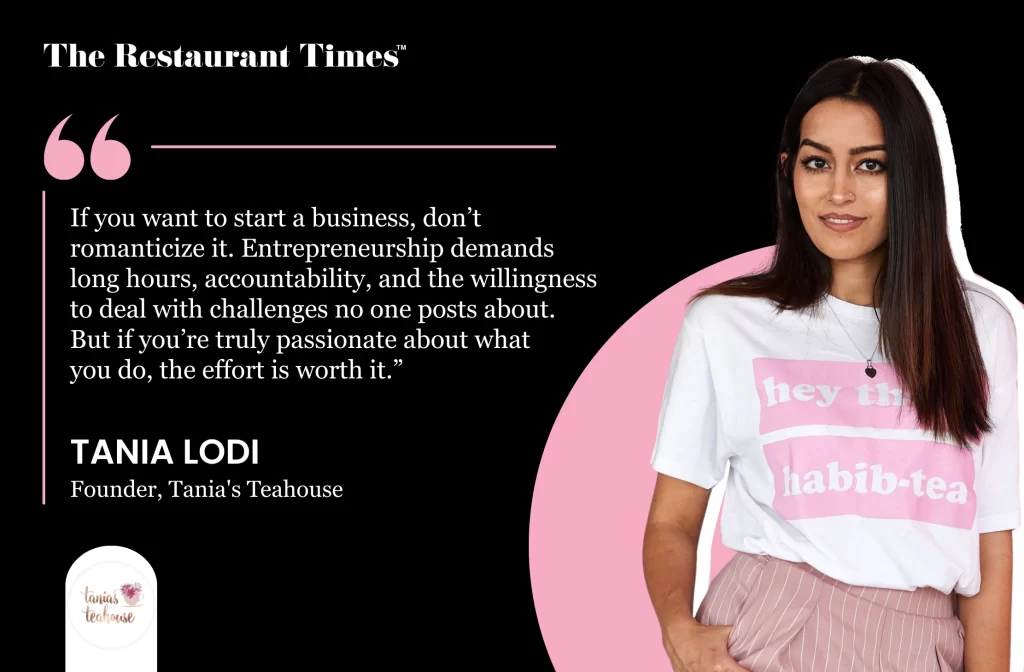
As for advice to the budding F&B entrepreneurs, she says,
Building a business while managing a chronic illness taught Lodi lessons about burnout and boundaries. “I wish I had focused more on the inner work and less on the toxic hustle. As an empath, I would take things so seriously—like operational issues, staffing problems, or dealing with a toxic customer—and I would ruminate on them, letting them eat me up at night.”
In the early days, a negative customer review would ruin her entire day. She had to build resilience. “Now I’ve developed tough skin, and I can accept that we aren’t everyone’s ‘cup of tea.'”
Tania also stresses the importance of running a business ethically. It is extremely important to practice kindness with employees and customers. As a business owner, what you do and how you do it sets the tone for your brand image and work culture.
“Kill with kindness. I believe in karma, and I’ve been raised to believe that if you do good, good things will happen to you. I don’t believe in tearing others down to succeed yourself, and I really think kindness can go a long way.”
The Key Message
When asked what she wants customers to take away from Tania’s Teahouse, Lodi shares:
“I would like my customers to feel that everyone’s success metric should be a healthy nervous system. Because we focus on inclusive offerings and on using plants, adaptogens, and herbs to enhance your well-being in a sustainable way, we often forget this. We get distracted and overstimulated by modern society and don’t focus on our body’s needs.”
The changes don’t need to be dramatic. “Adding a pinch of cordyceps mushroom powder to your coffee, where you don’t even taste it, can help your brain concentration for the rest of your day. Adding ashwagandha root or reducing gluten if it makes you feel bad can make a difference. Introducing this kind of lifestyle in a way that is not intimidating but sustainable and easy is something we strive to show.”
Tania Lodi’s journey proves that limitations can become differentiators. Her pain informed her purpose. Her struggle created a space where others find healing.
The business keeps her alive. And in turn, it helps keep others well.