

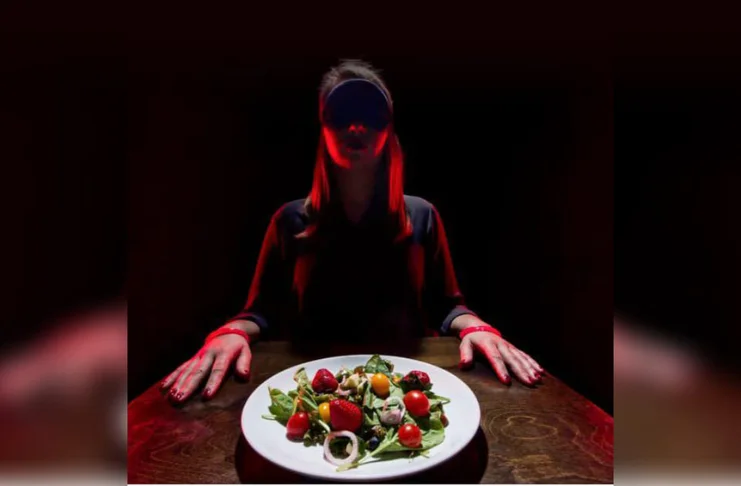

At Inorbit Mall in Madhapur, Hyderabad, and near Phoenix Market City in Bengaluru, guests are stripped of their senses (cell phones) and their light sources (light-emitting devices) to enter complete darkness (no hand in front of the face visible).
The servers who work in these venues have learned to read in total darkness over years of experience there and have been trained to deliver quality service in this amazing place. Serving in total darkness is not merely an act of charity, but rather a career; spatial awareness and navigation are the keys to success for these individuals. This is Dialogue in the Dark’s Taste of Darkness experience, India’s pioneering dark dining concept, where the complete absence of light becomes the main ingredient.
Founded by visionaries S.V. Krishnan and Sudha Krishnan, the concept brings the global Dialogue in the Dark social enterprise to India. Founded in Germany by Andreas Heinecke in 1988, this movement has now expanded into 30 countries and over 130 cities worldwide, where it uses darkness as an educational catalyst to change public perceptions of people with visual impairments. The Indian version of this model has been launched in Hyderabad, with plans to expand into Bengaluru and Chennai’s Express Avenue Mall, offering the combination of a pitch-black exhibition and a dining venue, presenting guests with two opportunities to challenge preconceived notions about the capabilities of people who are able-bodied and their level of independence.
The servers who work in these restaurants have been trained to work effectively in total darkness and have built their confidence in this environment through years of experience. For them, these positions are not simply charity jobs; they are professional roles in which spatial awareness and navigation are key to fulfilling their duties. This partnership represents a new and innovative approach to helping visually impaired individuals be successfully employed (by creating jobs in which being visually impaired is a benefit rather than an impediment). Guests to these restaurants would witness the exceptional skill and expertise of these servers, who navigate rapidly and effortlessly through a completely darkened space, whereas able-bodied guests cautiously and slowly make their way forward with their arms outstretched, fumbling for tables and their water glasses.
The Darkness Protocol
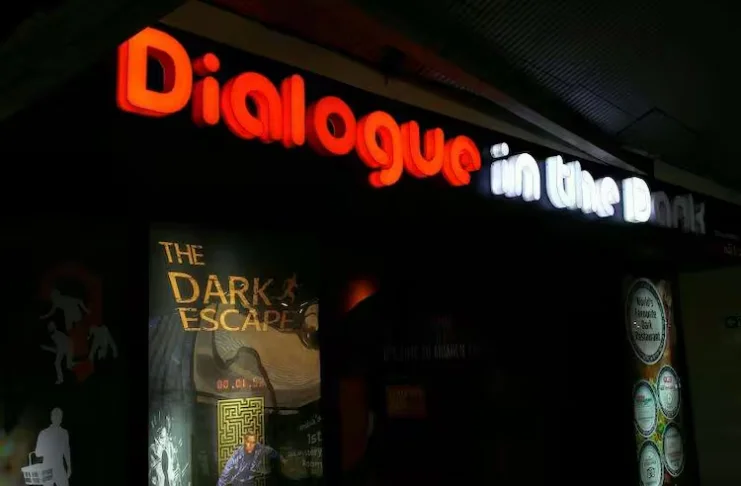
All dining experiences begin with a reception area lit with light so guests know how to enter the darkness. All light sources, including watches with luminescent displays and any item that may interfere with the absolute darkness environment, must be returned. This requirement is not a security issue; however, if any of these items were to emit a momentary light, it would disrupt the creation of the sensory environment on which the entire dining experience is based. When dining at these venues, guests will choose between vegetarian and non-vegetarian food and four different styles of cuisine: Des.
The menu is a mystery to the guest until he/she tastes them. Diners will learn about and experience the dish through taste and smell; therefore, knowledge of what to expect is unnecessary.
Visually impaired guides greet groups, forming human chains in which each person’s hand finds the shoulder ahead, the other hand reaching back to touch the guest behind. The first few steps create such great disorientation that one loses spatial awareness. Without visual stimuli, the disorientation left by the restaurant becomes just that; sound is now used to navigate the restaurant (clanging of silverware, murmuring of the guests, the guide’s voice giving directions).
At first, many guests experience an overwhelming sense of fear. However, once the very first activity begins, the fear is replaced with playfulness.
The entire dining room is completely dark, protected by multiple layers of lightproofing material. There are no lit emergency exits, and no light is coming in through the cracks under the doors. The servers describe the table setup by touch, using a clock-face analogy to explain where each item is located. For example, the appetizer is at 12 o’clock, the sauce is at 3 o’clock, and the bread is at 9 o’clock. Therefore, when a person is looking for a specific item or something that has fallen to the table, they can locate it with their hands. Many guests will stop using their cutlery and will instead use their hands to eat, as that is much easier than trying to eat with invisibly appearing utensils, and no one is watching anyway, allowing guests to eat without having to maintain any level of civility.
The Sensory Transformation
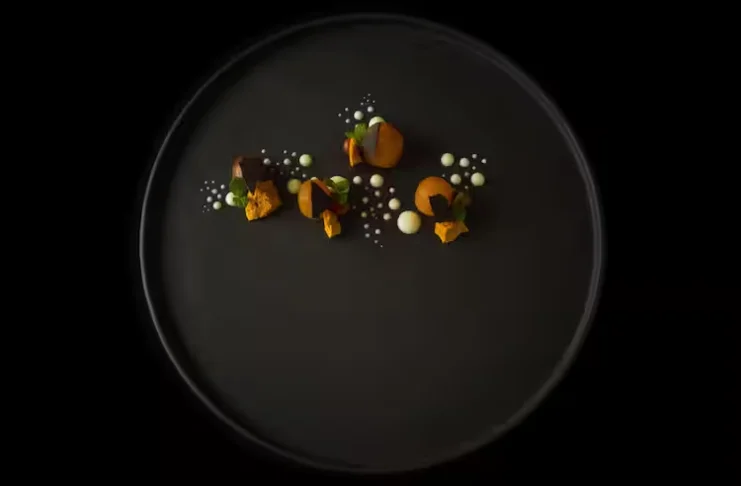
After dinner service concludes, guests may feel their eating styles have changed dramatically. Because they had no visual input confirming their assumptions about food, every single bite was new and unique. Texture provides one confirmation of food items, and flavour provides another; for example, the crunchiness of the food could be due to a capsicum or a water chestnut. The colourless sauce gives the impression it will be bland, but then suddenly floods the mouth with heat. Diners report heightened taste and smell awareness, though debate continues whether this represents actual sensory enhancement or simply undivided attention to normally ignored input.
The food itself receives consistently positive reviews. Four-course meals arrive in practical lunch-box style serving, handed over by servers who collect tokens and confirm dietary preferences. Soups, rotis with chicken gravy, various rice preparations, as well as regional dishes based on the combination you ordered, are likely to be part of any Dinner in Total Darkness experience. The element of surprise in the meal makes each Dinner in Total Darkness experience a guessing game, blending existing perceptions of food based on how we see it (seeing is believing) with what our senses experience when we taste it.
New dynamics occur during the darkness of Dinner in Total Darkness. Without our eyes, we cannot see who is eating around us or look at our phones. Because we cannot see, diners bond with one another through their shared vulnerability. Business groups are leveled because when everyone fumbles with no visual hierarchy, no one feels superior. Servers demonstrate their exceptional ability to navigate their tables at the speed of running, providing evidence that their ability to complete this type of service makes converting Dinner in Total Darkness from a gimmick into an authentic change in how we view our abilities. Activities like feeling plastic alphabet letters to form words, guided by patient servers offering hints, add a playful dimension while building appreciation for non-visual problem-solving.
The Lasting Impact
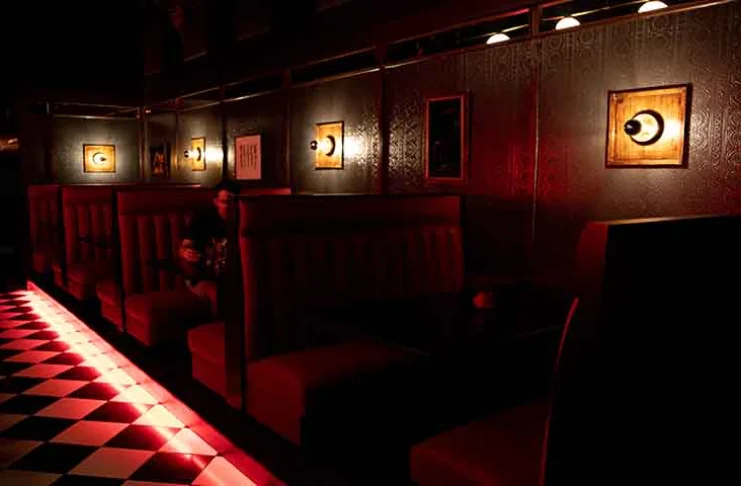
In addition to being a unique restaurant, Dialogue in the Dark is committed to helping society. By eating at the restaurant, customers provide jobs for visually impaired employees, and these jobs showcase their strengths rather than their weaknesses. There are several false assumptions about disability in India; there is a widespread assumption that visually-impaired people cannot work at all. Dialogue in the Dark creates jobs for employees who are visually impaired and, by creating positions rather than using traditional hiring methods, the restaurant also raises important questions about how we view qualifications for employment.
A large part of the revenue generated by Dialogue in the Dark comes from corporate bookings at the restaurant. Many businesses will use this experience as a team-building activity. Because this restaurant is dark, it eliminates the barriers to power that exist within organizations, so even the CEO will need help navigating it. Employees report a broadening of their ability to understand other individuals through their use of empathy and perspective-taking; navigating the challenges that visually impaired people face on a daily basis for several hours provides an understanding of how to help you develop success in creating diversity in your organization, in contrast to the traditional methods of conducting a diversity presentation. Educational groups, particularly hospitality and psychology students, visit to study experiential learning and sensory adaptation.


