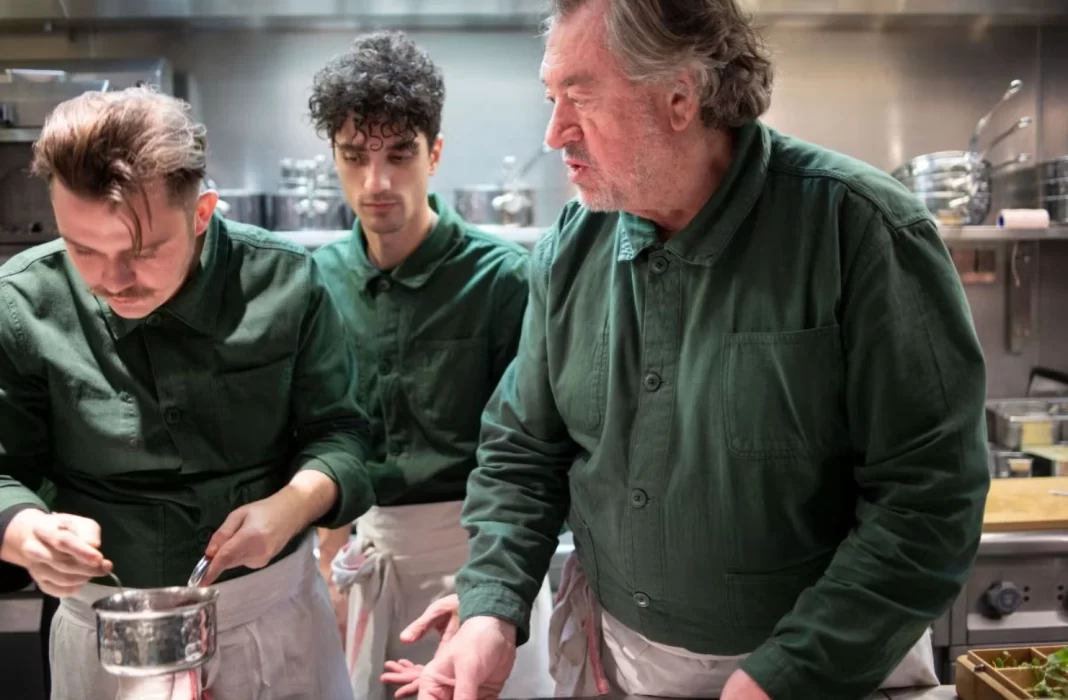

Think about it: how many people have you seen walk away from a successful career at 54, with no professional kitchen experience to speak of, and still go on to run one of the best restaurants in the world?
That’s rare, isn’t it? Bruno Verjus nailed it at Table, nonetheless.
He was born in 1959 in Roanne, a town in the Auvergne known, among other things, for producing chefs of some seriousness. He studied medicine in Lyon, then moved to China, where he lived for nearly two decades. There, he built a medical device and packaging company and eventually sold it in 2005.
As for food itself, he wrote a food blog called Food Intelligence that went on to become one of France’s most respected culinary voices at the time. He also hosted a radio show on France Culture called On Ne Parle Pas la Bouche Pleine. He spent, by his own count, nearly fifty years on the side of the eater.
And then, in April 2013, at an age when most people in the restaurant industry are thinking about what they should do next, he opened Table in the 12th arrondissement of Paris with 24 covers and a 25-euro lunch menu.
“I’m the oldest, youngest chef. Age isn’t important. What matters is your approach,” he says.
The first recognition came in 2018 (its first Michelin star). Then came a Green Star awarding the restaurant’s commitment to sustainable gastronomy in 2020. The second Michelin star came in 2022. In 2023, Table entered the World’s 50 Best Restaurants list for the first time, at number 10, and has held its place since. As of the most recent rankings, Table sits at number 8 in the world, making it France’s highest-placed restaurant on the list.
Surprise from the Producers
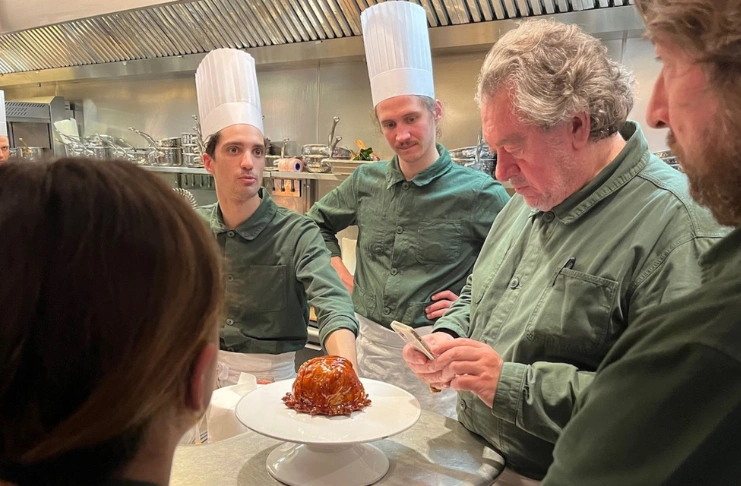
Before you can understand the food at The Table, you have to understand how the kitchen works, because the two things are inseparable. Most fine dining restaurants, for example, operate around their shopping list. The chef decides what to cook, places an order, and the producers deliver what was asked for.
Verjus does it a bit differently.
Every morning, parcels arrive at Table from the producers he works with. The parcel has whatever they believe is at its absolute best that day, and the kitchen works with that ingredient.
Verjus describes it as a surprise party. Basically, what comes through the door each morning is the menu. He says, “Our commitment to a cuisine of the moment brings us into a direct relationship with our local producers. They supply us on a daily basis with what nature has to offer, free of pesticides and respecting the soil. We do not place any orders based on quantity. Only quality counts.”
This approach demands a level of culinary improvisation that would alarm most classically trained chefs. Verjus, instead, leans into it. He has spoken about the influence of jazz on how he thinks about cooking.
At the start of every service, he looks at the light, considers how he is feeling, and decides which notes to bring out that day.
He also banned mise en place, the French tradition of cutting and prepping ingredients hours before service. At the Table, vegetables are cut only immediately before they are served. It is, as Verjus puts it, going back to the roots of cooking. Before there were fridges, things were alive until you ate them.
The nutrients are thus present, the vitality is present, and the flavours are as honest as they are going to get.
His closest mentor, Alain Passard of Arpege, shaped much of this thinking. The two met when Verjus was a regular at the restaurant, visiting once a week for ten years. Passard taught him to hold back, to trust instinct, and to resist the urge to do too much.
Eating At The Table
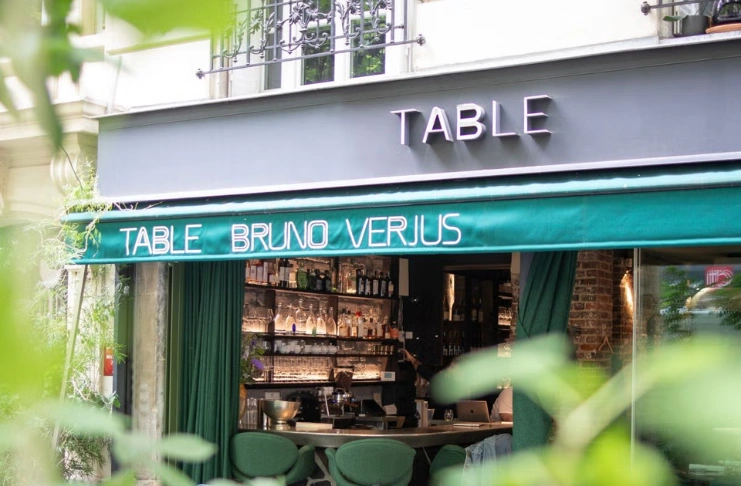
The space is small. Twenty-four covers, arranged around a long tin counter that Verjus designed himself to undulate through the room, creating private nooks while keeping everyone connected to the open kitchen. There are no grand chandeliers or elaborate room designs. Just two striking sculptures hang on the walls, a seal and a seahorse by sculptor Jean-Marie Appriou.
In fine weather, a small garden opens outside. The kitchen is open and calm, and the team that works it moves with what one visitor described as the poise of a Formula 1 pit stop crew.
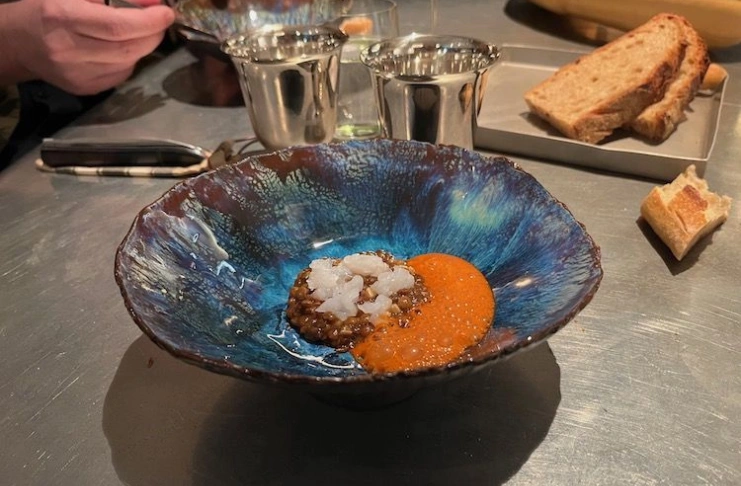
Every meal begins with Couleur du Jour. The dish changes each day depending on what has arrived from the producers, but the principle is constant. It is a plate of the most seasonal herbs, vegetables, and salad leaves, raw and precisely arranged, designed to open the palate and introduce the idea of micro-seasonality.
Then comes a tasting menu that cannot be described in advance because, in fact, it does not exist in advance.
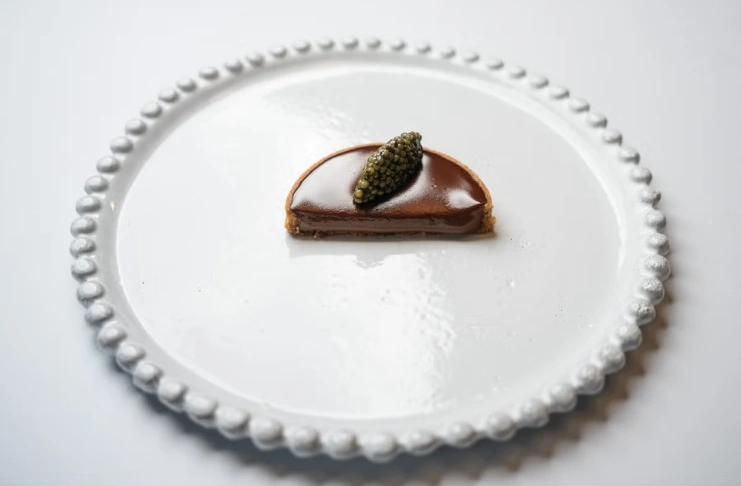
However, one thing remains constant – Each meal concludes, always, with the chocolate tart. Dark chocolate from Peru, cream infused with capers to cut the richness, Oscietra caviar on top. The saltiness of the caviar and the acidity of the capers pull against the depth of the chocolate. It is followed by madeleines, Verjus’s own recipe, served with olive oil for dipping. The combination is gentle, personal, and oddly unforgettable.
“Bruno’s genius lies in his ability to coax out surprising and complex flavors from just a few carefully chosen ingredients. It is therefore difficult to find restaurants that are truly unique. But Table is just that,” notes a returning guest.
On the Side of the Eater
Something about Table’s approach to hospitality deserves its own attention, because it is as carefully considered as the food and just as unusual in the context of fine dining.
Verjus spent fifty years as a customer before he became a chef. That experience is not incidental to what Table is.
For the record, what the kitchen actually serves here is the customer’s experience, the pace of the meal, the amount of food, and the emotional arc of the evening. Verjus shares, “I was 50 years on the side of the eater. We are customer-centric, the opposite of the old-style fine dining, where it is so much about ego and performance. I see myself as a nurturer. I want guests to feel like they are being hosted at my home.”
Verjus also holds a few seats back from bookings each day, releasing them on the morning of service. He loves spontaneity, he says, and wants Table to remain a place that can accommodate the impulsive as well as the planners.
For a restaurant at this level of demand, it is a meaningful gesture. It says something about what kind of place he actually wants it to be.
Bernard Pacaud, founder of three-Michelin-starred L’Ambroisie and one of the great guardians of Parisian haute cuisine, has described Verjus as an excellent self-taught chef who knew how to create an original and recognised restaurant.
Dominique Crenn, who holds three Michelin stars at Atelier Crenn in San Francisco, says, “His cooking has no deceit.”
Reading the Light
You could spend a long time describing what makes Bruno Verjus unusual as a chef and still not quite land on it. The biography is certainly striking. But the biography is not really the point.
What is the point, perhaps, is the question he asks himself at the beginning of every service. He looks at the light, considers how he is feeling, then decides what to do with the ingredients producers have sent that day, in the light, with his team, for the people.
He says, “I do believe that by writing the menu every morning I am always designing a restaurant I would like to go and eat in. It is my 30 years as a restaurant-goer that have led me to where Table and I are today.”
He has also spoken about his medical background shaping how he thinks about ingredients. He does not heat butter above 37 degrees Celsius. He uses cream and butter sparingly. He cooks with ancient wheat flour. He believes that food that retains its vitality, prepared as close as possible to the moment it is eaten, nourishes differently. The body recognises it.
In 2021, he published a book, The Art of Nourishment, tracing the unusual journey that brought him to gastronomy and reflecting on what he had learned along the way.
No. 8 in the World. And Still Getting Better.
Table entered the World’s 50 Best Restaurants list in 2023, at number 10, making it one of the most notable new entries in the list’s history. In the most recent rankings, it has climbed to number 8, making it France’s highest-placed restaurant in the world.
For three consecutive years, it has held its ground among the best restaurants on the planet.
These numbers are worth acknowledging for what they represent, even for people who find rankings generally overrated. The World’s 50 Best list is voted on by food professionals and serious diners from around the globe. A high ranking means that people who eat everywhere, and have done so for a long time, consider Table among the most significant restaurants in the world.
And yet the restaurant has 24 seats. It operates four days a week, Tuesday to Friday. When asked whether Bruno Verjus would recommend other 50-year-olds following in his footsteps, his answer was “Definitely. As long as you have the passion.”