

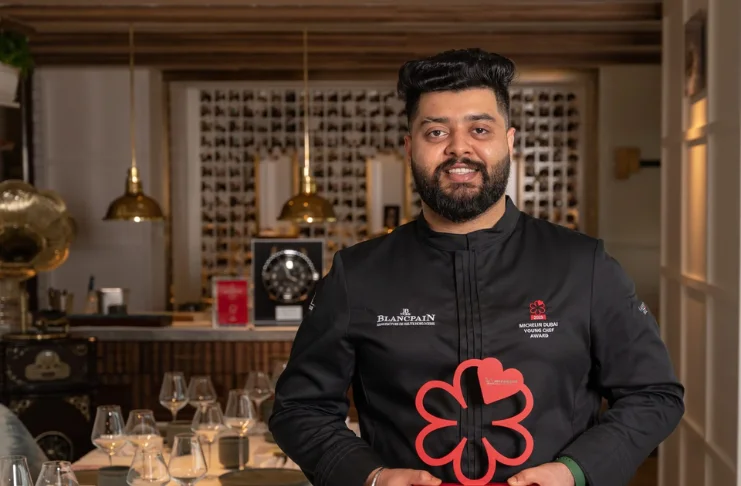

There is a chef in Dubai, in the DIFC, staring at a bitter gourd, not because he is unwilling to use it. Because he is trying to think of a way to make you fall in love with it. This is the work of a chef at avatāra, a restaurant that has earned a Michelin star, an international fanbase, and a radical philosophy, based on the ingredients that all other restaurants discard in the back of their pantries.
To understand how they got there, you have to go back to Rishikesh, to a kitchen that smelled of the Himalayas.
A Grandfather’s Kitchen, a Maharaja’s Table
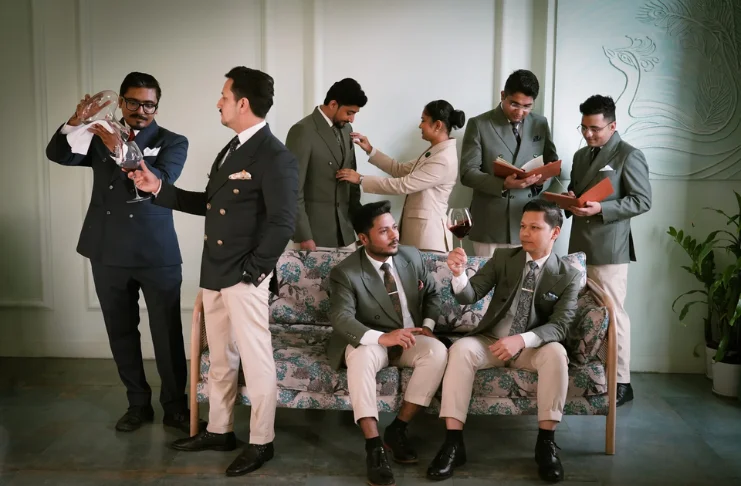
Rahul Rana was born and brought up in the foothills of the Himalayas, in the scenic hill town of Rishikesh, Uttarakhand, where most people are vegetarian, in a household where food is already taken very seriously. His grandfather was a cook for the Maharajas. “Cooking is like meditation for me,” Rahul Rana has said. “I have possibly inherited this from my grandfather, who was a chef for the Maharajas. I believe that taste is everything. A good meal has the power to rejuvenate and change perceptions.” (Avatara Restaurant)
This is the palate that would eventually upend the entire concept of the restaurant Rahul Rana would go on to create. But at the time, Rahul Rana was headed in another direction altogether.
Rahul Rana received formal hospitality training and began his career at Ananda in the Himalayas in 2007. He spent years in the precise and meticulous world of pastry. But in 2016, Rahul Rana arrived in Dubai as the Executive Pastry Chef at Trèsind, the renowned modern Indian restaurant led by Chef Himanshu Saini. The formal schooling Rahul Rana received would serve as the underlying structure for everything Rahul Rana would go on to do.
A Casual Question That Started Everything
In 2019, after many years of making outstanding desserts, Rana felt the need to do more. He approached Bhupender Nath, the owner of the Passion Food and Beverage Group, with what Rana himself described as “an offhand remark.”
The idea of avatāra was born in 2019, and I discussed it with the owner of the Passion Food and Beverage group, Bhupender Nath. “I casually asked him one day, ‘I’m now getting bored with the pastry. I want to tell you about the concept: we want to do a purely vegetarian restaurant. Can you open a restaurant for me?”
The answer was affirmative, and the next two years were spent developing the menu, which would be required to perform well without the “shortcuts” that most, if not all, Indian or non-Indian chefs would instinctively want to use. “I saw an opportunity to create something extraordinary by using unconventional vegetables and avoiding the common crutches like paneer, potatoes, and mushrooms.” This constraint would be the entire idea.
avatāra opened its doors in 2021. Within two years, the restaurant received its first Michelin star.
The Menu That Rewires Your Expectation
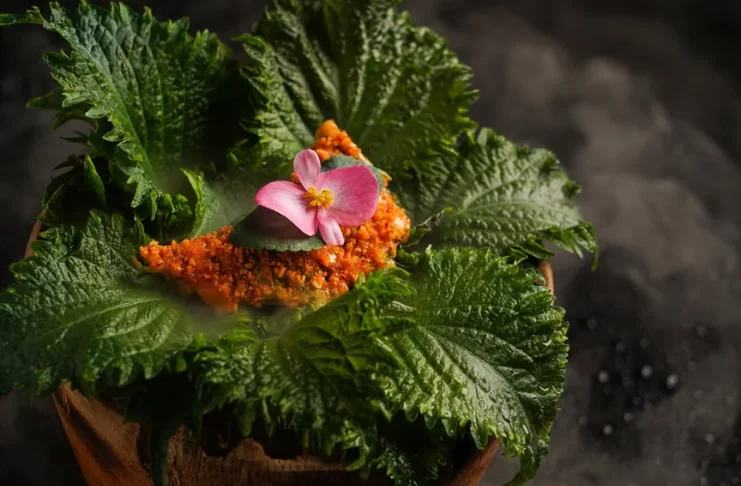
The 16-course degustation menu at avatāra is underpinned by a philosophy that can only be understood in terms of what it excludes. No paneer. No mushrooms. No garlic. No onion. No meat substitutes. The residue? Everything else. And that is quite a lot.
The meal starts with Naivedhya. It is a ceremonial offering derived from temple traditions. It is a small sweet dish made out of makhan malai, panchamrut, and mishri. It is served in peacock-shaped bowls. The guests, it seems, are to be treated like gods. The idea of atithi devo bhava is deeply ingrained in Indian culture. The geometry of the temple ceremony is replicated in the presentation. The flowers are edible.
And that is where the real argument begins. The bitter gourd is ghee-roasted and accompanied by mango sambhar gelato and a dosa tuile crisp. The turnip is cooked as a steak and done so convincingly that the National reviewer wrote of it being a near-perfect illusion. The jackfruit stuffed momos are so similar in texture to meat that those who eat meat are often perplexed by the connection. The horse gram curry, from Uttarakhand, is served with gluten-free bread, and the menu card includes nutritional information for the food. The training in pastry is evident in the thought process, the food’s temperature, and the construction of dishes made from ingredients most chefs would not touch with a ten-foot pole.
“At Avatara, what we create is a reincarnation of soulful Indian food that is inspired by fresh and simple ingredients,” Rana told Kitchen Herald. “There is a perception that Indian food is limited. We want to change that by showcasing the endless possibilities that Indian food can offer.”
The Star, the Young Chef Award, and What Comes Next
avatāra won its Michelin star in the 2023 Michelin Guide Dubai awards, making it the first vegetarian Indian restaurant in the world to achieve the accolade. The achievement, in Rana’s own words, has been not only validating but also had an instant effect:
“When we saw we got this recognition from the MICHELIN Guide, I walked to the stage to receive the chef jacket and plaque with the one MICHELIN star title. I was so nervous, but also so happy,” he told the Michelin Guide. “It has had a very big change to the restaurant. We have seen the number of customer entries increase because people are travelling and now coming to avatāra just to try this vegetarian option of Indian cuisine.”
The same year, the Michelin Guide Dubai Young Chef Award was presented to Omkar Walve, then just 29 years old and instrumental in developing the tasting menu since the kitchen’s inception. Today, he heads the avatāra kitchen, continuing the foundations laid by Rana with the same conviction in vegetarian cuisine in new dishes. The restaurant was also honored with the Gault and Millau UAE 2023 Future Great Chef of the Year award for Rana.
The goals are clearly stated: “If we want two stars, then avatāra needs to beat avatāra,” Rana was quoted in the Kitchen Herald. The above statement says it all about the kind of kitchen avatāra it is.
The concept has now been replicated in Mumbai with the same philosophy.
What avatāra Proves
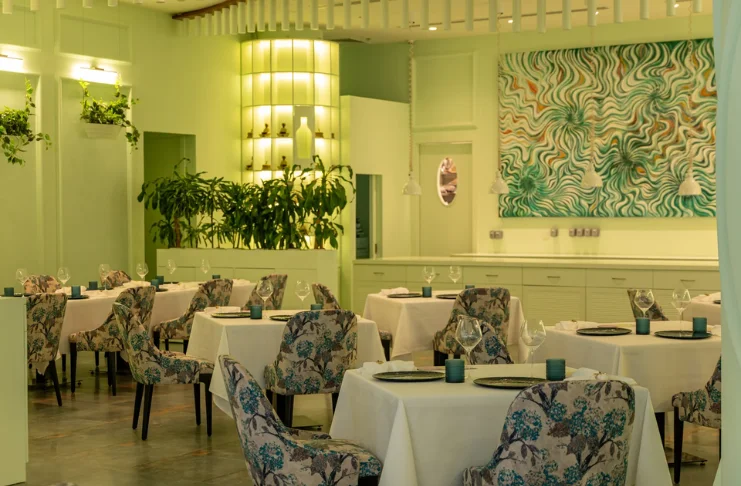
A pastry chef from Rishikesh, tired of desserts, asked his employer if he could open something no one in Dubai had ever tried. Not an obvious backstory for a Michelin-starred chef. But it is precisely the right backstory, because every aspect of avatāra challenges what you thought it would be, from its location in the city to its cuisine of celebration to its vegetables, which it somehow makes you love despite your better instincts.
The turnip steak is worth booking for.


