

Right after two days of their wedding, JP and Ellia Park had packed up their life in Seoul and landed in New York City. All they had in mind was that JP had a job at Jungsik and somehow they were going to make it work.
Both had known each other for fifteen years, studied at the same university, and fallen into the orbit that most people who love food usually find themselves in.
Now they were newlyweds with a simple plan: Cook, learn more (in New York), then go back to Korea and start a brand of their own.
That was around 2012, and of course, like any great protagonists, they didn’t follow the course.
“We thought we would stay in New York for two years, then go back to Korea,” JP shared. “But there are more opportunities in New York, so we changed our minds.”
And, honestly speaking, thank lord they changed their mind. We got Atomix – a 14-seat basement counter in the still-rough-around-the-edges NoMad district.
| “Ato comes from the ancient Korean word for ‘gift.’ That’s what we wanted to deliver. New York was going to be our stage.” – Chef Park Jung-hyun, Atomix |
Why Korean Food?
Before settling in New York, Chef Park Jung-hyun had been moving.
He first went to Finland as an exchange student, then to London, then spent three years in Australia, six months traveling through Southeast Asia, before returning to Seoul to work with Yim Jung-sik, one of the architects of modern Korean fine dining.
JP had thought, for a while, about cooking French food, but it didn’t sit right with him.
“My advantage is my knowledge of Korean food,” he says. “It’s not my childhood memory to cook French or Italian. It’s hard for me to develop those menus.” So he stopped trying altogether and got very serious about being himself.
What They Built
In 2016, Atoboy was launched. It was just a casual spot that sold banchan, and it immediately got popular among Americans.
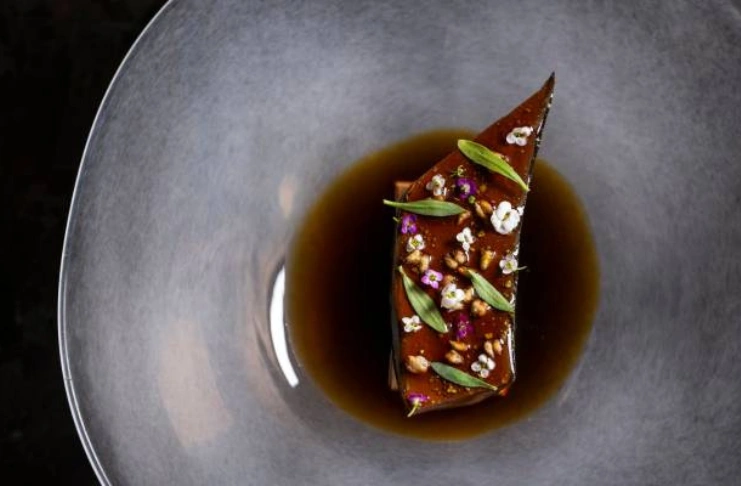
So, two years later, Atomix came with the same philosophy, but stripped down further & pointed higher. It offered a tasting menu of twelve courses, each arriving in bespoke ceramics, accompanied by a card that explained the dish, its ingredients, the technique, and the cultural thread running through it.
Korean names were kept “as is,” because to translate them into something easier would be to lose part of what they are.
Dishes like tteok-galbi — a grilled short-rib patty — with chocolate and chopi (a Korean pepper with a floral heat) were an instant hit.
And the fermentation work behind it made them all the more special. Why not? Atomix makes its own nuruk, the Korean starter traditionally used for makgeolli and rice wine, then uses it as a base for sauces and a seasoning mixed with salt. That’s worth appreciating.
| On keeping the language “We wanted to honor the cultural heritage and authenticity of our cuisine. We address the challenge of language by offering staff training on pronunciation and cultural context and by encouraging diners to ask questions.” – JP |
How the Team Made It This Far
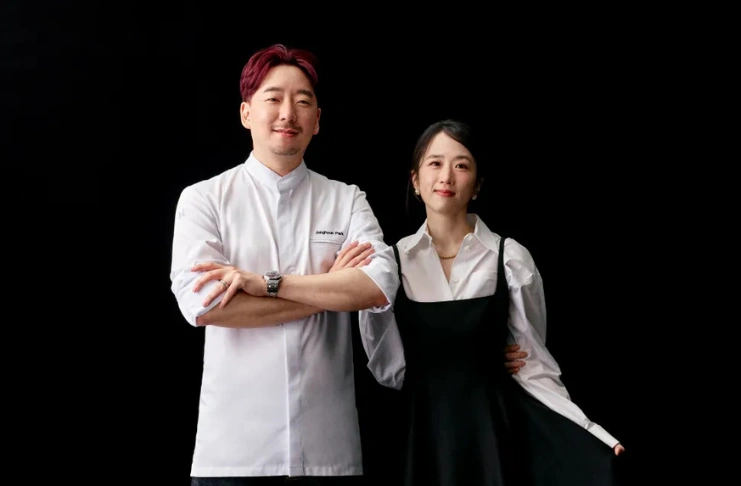
When the North America’s 50 Best list came out in 2025, and Atomix was at the top, JP’s first words were: “This recognition isn’t about me or even just the kitchen,” he said. “It’s about the collaboration and passion of the whole team.”
Yes, yes, while it could read rehearsed, but try spending any time understanding how Atomix actually works — the culinary lab in Korea, the ongoing guest education program, four restaurants running simultaneously under Na:eun Hospitality — and you will realize he means it structurally.
Ellia runs the business, the service, and the philosophy of the room. She describes herself as “a translator of JP’s art” – someone who, because she understands his thinking so completely, can carry his ideas from kitchen to table without distortion. She even received the James Beard Outstanding Hospitality award in 2025.
| “Fine dining today stands for people, philosophy, and culture. It’s no longer just about chandeliers and white tablecloths. Guests want to understand what inspired a chef. The personal connection counts.” – Ellia Park, Atomix |
The culinary lab in Seoul, which we just mentioned, is their research center. Staff go to Korean markets, find “true” Korean ingredients (not American equivalents), study specific techniques with people who have spent their lives mastering them, then bring things back to New York.
A hot sauce, for example, that was developed in the lab is now part of the Atomix menu. JP shares the story with guests when he serves it. Every single time.
On Awards, And What Comes After
Getting a Michelin star less than a year after opening (as happened to Atomix in 2018) is a great feat, but it can hollow out a restaurant if the team isn’t grounded enough to hold its shape.
JP was honest about the weight of it then, and he still is.
“When I was young, I was focused on the Michelin star as an amazing achievement. After getting it, I’m thinking about what I can bring to this achievement.” Now there are two stars. People often ask about a third, and he says, “It can be stressful, but I’m not living for that.”
The awards (you name it – the James Beard for Best Chef in New York [ 2023], the Gin Mare Art of Hospitality in 2022, the Villa Massa Highest Climber in 2023, now the top of North America) add to the responsibility.
“They create more responsibility to the young crew, to the cuisine I’m presenting, the community,” JP says. He has, on more than one occasion, thought carefully about what advice he’d give younger chefs. He says,
| “I would advise young chefs not to work towards Michelin stars, even if it is their dream, as it was mine. Focus on pushing yourself to your best abilities, consider what your unique vision and talents are, and work hard every day. With dedication and honest, earnest work, the opportunities will come.” |
The bigger picture
Everyone around the world has been going gaga over Korean cuisine, and Park believes he is both a beneficiary and a contributor to all of this.
When he arrived in New York, Korean food, outside Korean communities, mostly meant barbecue. But soon people also started recognizing its fermentation culture, regional depth, and the overall complexity of a cuisine.
“It’s not just about food,” JP says. “It’s also music, movies, beauty. Korean culture is booming worldwide.” He’s watched it from a particular vantage point — twelve years in New York, cooking Korean food at the highest possible level, watching the conversation change from the inside.
Next comes London, where the Parks are opening a Korean BBQ restaurant in Mayfair. It won’t be a typical fine dining. Instead, there you’ll experience the grilling, sharing, kimchi, dips, and possibly K-pop in the background. “We want to bring this intimacy and culture to Europe,” JP says.
| “We grow through our travels, through experiences at other restaurants, through conversations. We grow by tasting ingredients. What matters most is finding our own balance within all of this.” – JP |
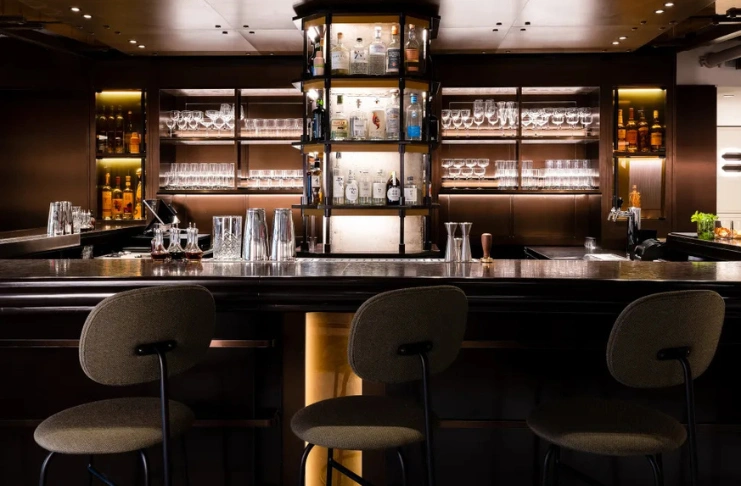
Atomix is, at its core, a 14-seat room in a basement in NoMad, and it will always be. The only thing that has changed is the weight that room now carries.
The brand now serves as a statement about Korean cuisine, as a model for how to build a restaurant with genuine values, and as proof that the most important thing a chef can do is know, very clearly, who they are.