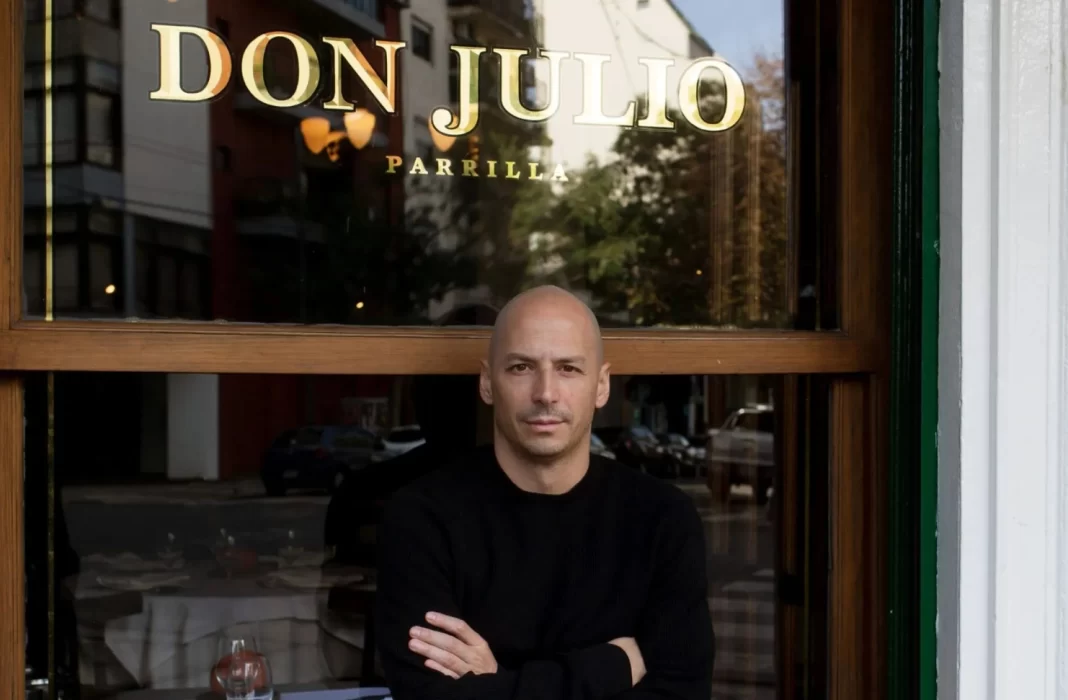

We bet there are very few people on this earth who haven’t heard of Don Julio. It’s a place often described as a ‘cathedral for steak lovers.’ A place where stepping through the doors brings you closer to the soul of Argentina.
A place where meat is inherited, generation to generation.
Pablo Rivero inherited – all he has today – from his grandmother, who was a butcher, his parents, who were cattle breeders, and a culture that celebrates barbecue for its pauses, achuras, and the intimacy of a shared table.
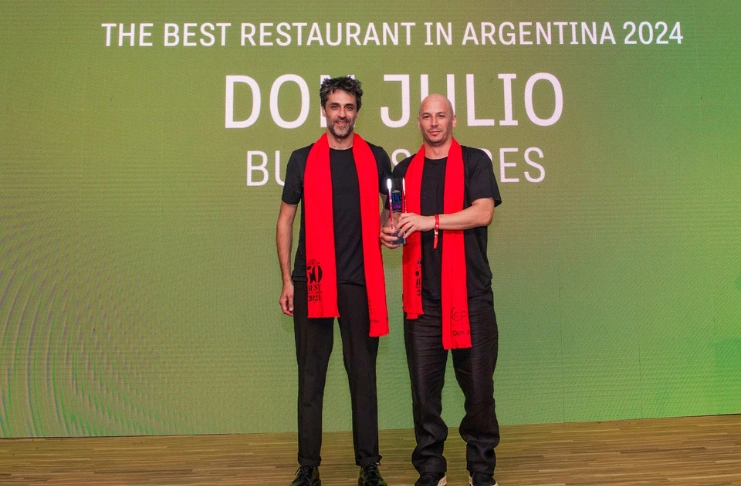
What started in 1999 as a neighborhood parrilla is today one of the most sought-after reservations in the world, earning global recognition and, in 2024, once again being named the best restaurant in Latin America.
Yet even at that height, Rivero affirms, “God belongs to everyone. But it seems He has a special affection for Argentines.”
| “I think the secret of Don Julio is the love everyone who works here puts into what we do. They are the ones who bring the world to Argentina, to Buenos Aires. We are just the ones who put it on the table.” Guido Tassi [Executive Chef, Don Julio] |
The Experience

Walk into the restaurant, and the first thing you notice is the grill – there, in full view – V-shaped, designed in a way that no fat drips onto the embers and no smoke from the white quebracho charcoal is ever contaminated.
The walls are lined with wine bottles. Hundreds of them, each with a message scribbled on by diners. Rivero calls them “moments lived that are trapped here.” It is the most Argentine thing you can imagine.
Upstairs, downstairs, the dining room fills every night with cheers. The service is warm, attentive, and generous. If you’re waiting for a table, they bring you sparkling wine and hot mini empanadas, along with the menu, which reads like a beef anatomy and a love letter at the same time.
Be it Thick rib-eye, a giant T-bone, the house-favorite skirt steak, the famous spiral sausage, Mollejas, Tira de asado, or whatever you order, you’re sure to enjoy the smokiness, nuttiness, and sweetness that comes off that quebracho grill.
Recognition
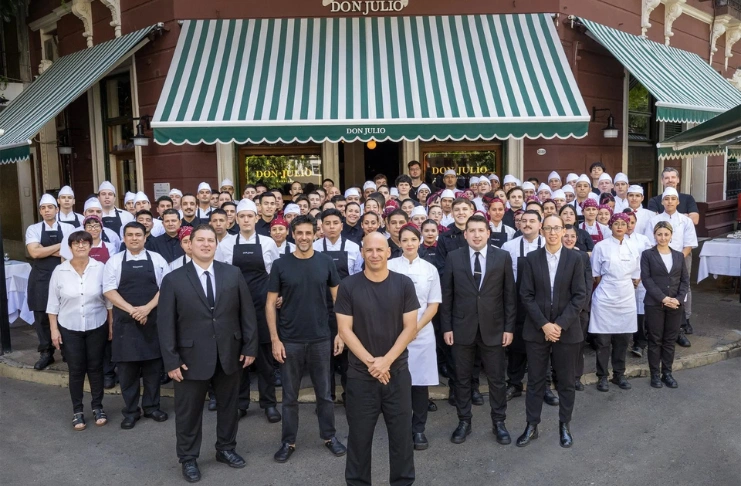
To earn the name it has today, Don Julio had to do the same thing well for twenty-five years and then do it slightly better. Rivero himself was voted Latin America’s Best Sommelier in 2022, then received the same honor at the global level in 2024.
The restaurant and the man are, in a sense, the same story.
| 2024 | Best Restaurant in Latin America – Latin America’s 50 Best |
| 2024 | World’s Best Sommelier – Pablo Rivero |
| 2022 | Latin America’s Best Sommelier – Pablo Rivero |
| 2020 | Best Restaurant in Latin America [FirstTime] |
| 2018 | Art of Hospitality Award – Latin America’s 50 Best |
Bottles on the Wall
As we mentioned earlier, whenever a diner orders something from Don Julio’s cellar (and there’s a great deal that qualifies), Rivero asks them to write a message on the bottle before it joins the hundreds already lining the walls of the dining room.
At first, it started as a gesture. Now, it’s a living archive of every night.
Rivero trained as a sommelier and was among the first generation to graduate from the Escuela Argentina de Vinos in 2006. The cellar he owns has 14,000 labels, each making an argument, made in bottles, for why Argentine wine deserves to be taken as seriously as the beef beside it.
The Farm
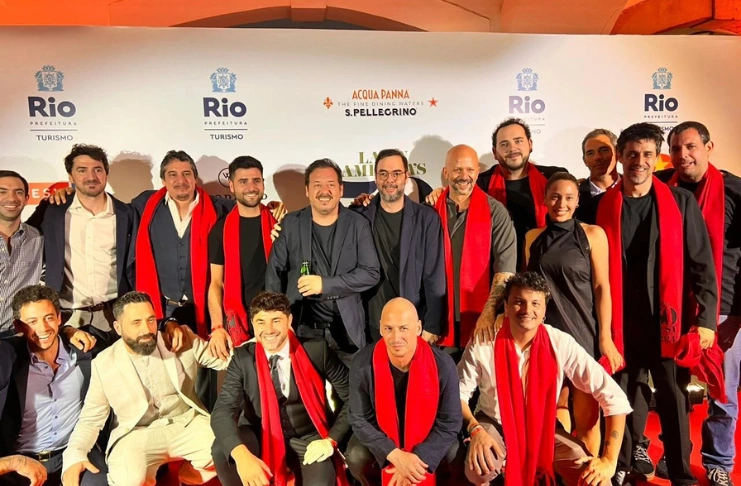
Nearly everything on the Don Julio menu comes from the restaurant’s own farm just outside Buenos Aires.
The Aberdeen Angus and Hereford cattle are raised according to regenerative farming principles (an ecological practice that helps restore the soil and capture carbon from the atmosphere). They call it regenerative ranching. Since 2021, all of Don Julio’s beef has come from this project.
The vegetables — organic asparagus, peppers, courgettes, heirloom tomatoes — are grown through the Traza project, planted one season in advance so the harvest is ready when the menu needs it. Nothing is chosen from what’s available at the market. Everything is decided in advance, by the restaurant, from seed.
| “We carefully monitor the seeds that we sow and the animals that we breed, always thinking of the planet and using animals as an agent both for the recovery of the soil and the capture of carbon from the atmosphere.“ Pablo Rivero [Owner-Sommelier, Don Julio] |
Since Rivero’s grandmother was a butcher & his parents were cattle breeders, the regenerative farming project is, in that sense, the family philosophy, extended and made rigorous. The meat is butchered and aged entirely in-house. The process (from the animal in the field to the cut on your plate) is controlled, considered, and completely their own.
How Guido Tassi Joined the Fire
Guido Tassi’s training took him through Hotel Marriott Plaza in Buenos Aires, Hotel Llao Llao in Bariloche, and then abroad to Martín Berasategui’s 12-Michelin-star restaurant in the Basque Country and Michel Bras’s 3-star kitchen in France. He was named Best Young Chef by Cuisine & Vins magazine in 2008. He has published a book on charcuterie. He has hosted on television.
In 2016, he joined Don Julio as consulting chef.
His words: “I’ve always felt identified by the grill, the fire, and the raw material. I had this idea that the Argentine barbecue could be improved. Nowadays, we run two highly successful establishments that represent our culture.”
April 2026
In April 2026, Tassi and Rivero co-opened Social Corazón – a three-floor space that operates as a café, restaurant, bar, and bakery simultaneously.
The bakery runs the floor oven from early morning: miñones, flautitas, cremonas, croissants, alfajores, and what is being called the real jewel of the menu – toasted ham and cheese in breadcrumbs. By midday, pasta, rice, meat, and fish take over. A wine list by Martín Bruno, described as having unusual depth for a neighborhood café, anchors the drinks. A cocktail bar opens all evening.
Of course, it is not a second Don Julio. Neither is it pretending to be. Instead, it boasts a daily-use space, accessible prices, continuous hours, and neighborhood energy.
Reserve Your Seat
Want to dine at Don Julio? Book two months in advance if you can. If you can’t, arrive close to midnight because the Argentines eat late, but Don Julio’s prices attract an earlier crowd, and tables open when you least expect them.
Either way, when you sit down, when the wine arrives, and the smoke from the quebracho rises and the first cut lands on the table in front of you, you will understand immediately why Pablo Rivero opened this place twenty-five years ago and never once considered doing anything else.