

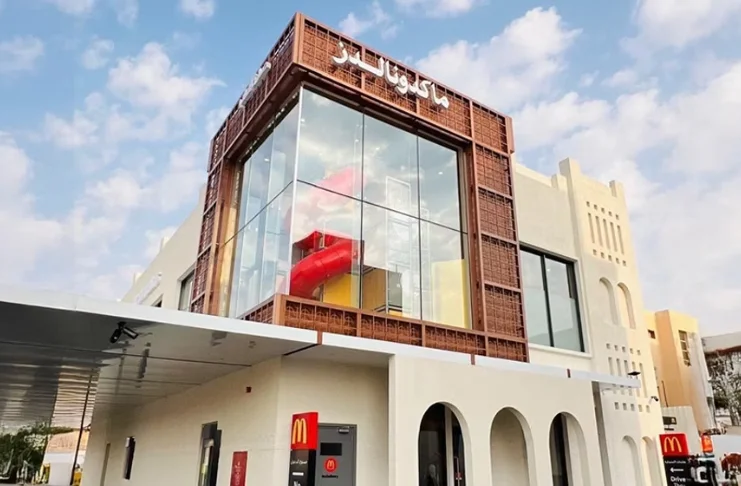

McDonald’s has emerged as a significant contributor to Saudi Arabia’s economy, supporting more than 22,500 jobs and generating an estimated SAR 3.6 billion ($960 million) in GDP impact over a one-year period, according to a report by Oxford Economics.
The findings underscore the growing role of large foodservice brands not just as operators, but as economic multipliers within national markets.
The report breaks down McDonald’s impact into three distinct layers:
- Direct contribution: SAR 1.1 billion from its own operations
- Indirect contribution: SAR 1.7 billion generated through spending with local suppliers
- Induced impact: SAR 800 million from employee and supply chain spending
Together, these layers illustrate how restaurant chains extend beyond storefront activity, influencing industries ranging from agriculture and logistics to real estate and services.
Notably, for every SAR 1 million generated directly, the business is estimated to create an additional SAR 2.2 million in broader economic value, highlighting a strong multiplier effect.
The company’s operations supported over 22,500 jobs, including more than 13,000 direct roles within restaurants and management, and around 9,400 indirect roles across suppliers and related sectors.
This employment footprint reflects how foodservice chains act as entry points into the workforce, particularly in markets focused on youth employment and skills development.
The report also noted investments in workforce development, including training programs, certifications, and skill-building initiatives aimed at strengthening local talent pipelines.
McDonald’s operates over 438 restaurants across Saudi Arabia, serving more than 121 million meals annually, including dine-in and delivery channels.
This scale positions the brand as a major player in the country’s foodservice landscape, with a footprint that spans urban centers and regional markets.
The company has also committed to continued investment in the Saudi market, including more than SAR 312 million directed toward new restaurant development and upgrades.
These investments align with broader national goals under Saudi Arabia’s Vision 2030 strategy, which aims to diversify the economy and strengthen private sector participation.
The report highlights additional contributions through community initiatives, including:
- Over 53,000 volunteer hours
- More than SAR 4 million in donations
- Distribution of 28,000 meals to underserved groups
Such efforts form part of the company’s broader social responsibility programs, reflecting an increasing emphasis on community engagement within the hospitality sector.


