

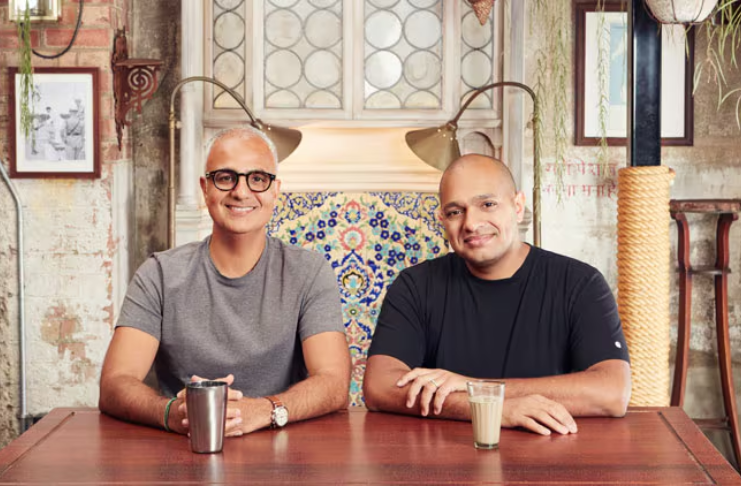

In 2010, London had great Indian food at two extremes: Michelin-starred restaurants for special occasions and curry houses as part of British tradition. But as co-founder Kavi Thakrar observed in an interview with SL.Man, “Neither of these options really expressed Indian food and culture in a way Shamil and I felt it could be.”
What was missing was something in between. Something rooted in Indian culture that showcased the food in a way London hadn’t seen before. The answer arrived in the form of Dishoom, a recreation of the Irani cafés that once populated Bombay in the 1960s.
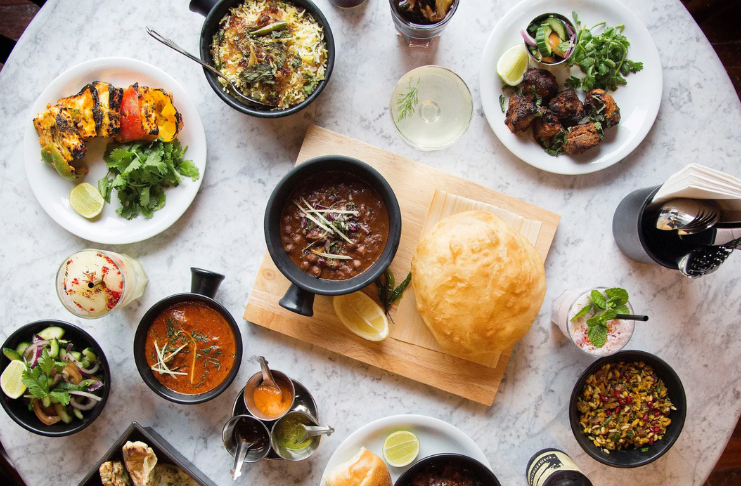
Cousins Shamil and Kavi Thakrar, along with brothers Amar and Adarsh Radia (who left in 2017), opened their first site in Covent Garden. They painstakingly crafted every detail, from chequerboard tiles and bentwood chairs to sepia-toned family portraits and vintage Bollywood posters. Even the menu told stories: Nalli Nihari lamb stew named after a Bombay tradition, black daal slow-cooked for 24 hours.
As Shamil told The New Consumer, “Britain and India have an old relationship that goes back centuries. And in some ways, old relationships can get a bit complacent.” He felt people thought of India in clichés: Bollywood, cricket, curry houses, maharajas. “But I think there was so much more to be said culturally about India. We thought food was a great way to say it.”
The Big Heart Philosophy
Shamil came to restaurants from an unlikely background: consulting at Bain & Company, Harvard Business School, a PPE degree from Oxford’s Univ College. His whole inclination was analytical, with templates for revenue, costs, profit, capital, and returns.
But early on, he realized something was missing. As he explained to University College Oxford, “You’ve got to find something that moves you, that you really care about, that’s not just an opportunity to make a buck.” His father’s words guided him: “For something to truly succeed it must have a little poetry at the heart of it.”
That poetry manifested in what Dishoom calls operating with “a big heart.” After a decent first year but slower growth than hoped, the founders had an epiphany. “We refocused the business around awesome food, awesome service and having a happy team,” Shamil told The New Consumer. “The best way to lower costs is to get your revenues up. People forget that.”
They embraced complexity instead of cutting corners. Each new Dishoom location would have unique design and backstory. Each dish would be as authentic and labor-intensive as possible. They famously offered unlimited free chai to waiting guests, no matter the expense, just to make them feel cared for.
As Kavi described to The New Consumer, “Seva, the Hindu concept of selfless service, informs everything we do.”
The Storytelling Obsession
What truly sets Dishoom apart is obsessive attention to narrative. Shamil explained to The MBS Group that the team writes an in-depth story each time they open a new restaurant, imagining who may have launched the equivalent café in 1960s Bombay and who its patrons may have been.
They photograph hinges and pinheads in India to ensure the look is precisely right. “Unless you are into the history of it and the Bombay heritage for its own sake, then I don’t think you can do what we do,” Shamil told The Caterer. “All that obsession and crawling around archives in Bombay – you could save yourself a lot of bother and just build a restaurant.”
One marketing manager is being mentored by a novelist rather than attending writing courses for marketers, to encourage unleashing creative instincts in brand communications.
The Numbers That Followed
The pivot to quality over revenue yielded extraordinary results. By the mid-2010s, queues spilled out the door at every location. Dishoom won Yelp’s Best UK Restaurant award two years running. The group serves 50,000 customers per week, according to The New Consumer.
In 2021, Dishoom ranked #4 in the “100 Best UK Companies to Work For” list, first in hospitality and leisure. It employs over 700 people, with even junior workers earning well above London living wage.
The company has since expanded beyond London to Edinburgh, Manchester, and Birmingham, with additional Permit Room cocktail bar spin-offs in Brighton, Cambridge, and Oxford. The 2019 cookbook “From Bombay with Love” became a bestseller. During COVID-19, the company pivoted to meal kits and delivery through 12 kitchens across London, Brighton, and Cambridge.
Charity at the Core
During Ramadan one year, the team asked their Muslim chef Naved what the festival meant. He explained it was about depriving yourself to know what it is to have little, and about giving Zakat, your gift to somebody else.
“So, we decided to donate two meals that year, for every meal that we served in the restaurants for Ramadan, and then at Diwali that same year we made that permanent,” Shamil told University College Oxford.
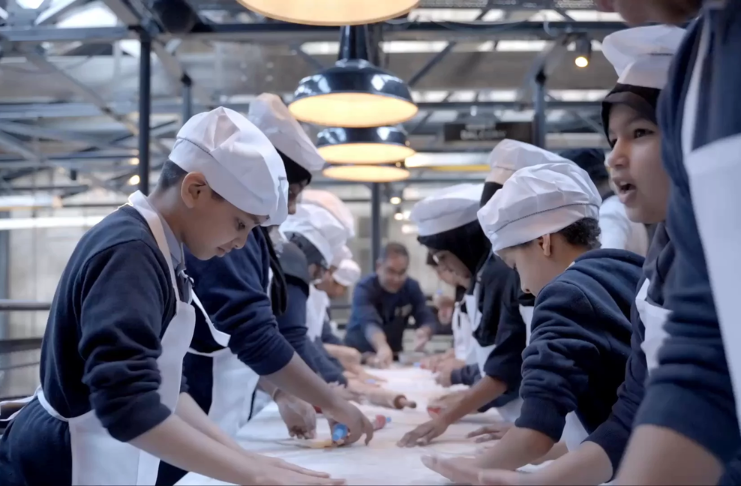
For every meal Dishoom serves, it donates a meal to a child who would otherwise go hungry, working with Magic Breakfast in the UK and Akshaya Patra in India. The company also supports Seeds of Peace, which brings together young people from Israel and Palestine to foster understanding.
As stated on Wikipedia, co-founder Shamil explained the ethos: “We’ve given up trying to take costs out of the business by simplifying the offer.”
Culture as Foundation
Dishoom’s commitment to culture extends beyond charity. The company hosts an annual “family mela,” a summer party for employees, their families and children, suppliers, landlords, and friends. They celebrate all major religious festivals: Diwali, Eid, Christmas carols, Raksha Bandhan.
As Shamil told University College Oxford, “We used to celebrate as a family a lot at Hindu festivals, and it struck me that it was really important to celebrate across other religions at Dishoom as well. All of that was for me extremely important in bringing people together, which is what we love doing. The world needs that – for people to see each other as people, not as different tribes.”
Long-serving team members are treated to “Bombay Bootcamp,” a trip to Mumbai for inspiration. Regular values workshops reinforce the company’s philosophy.
The Biggest Challenge
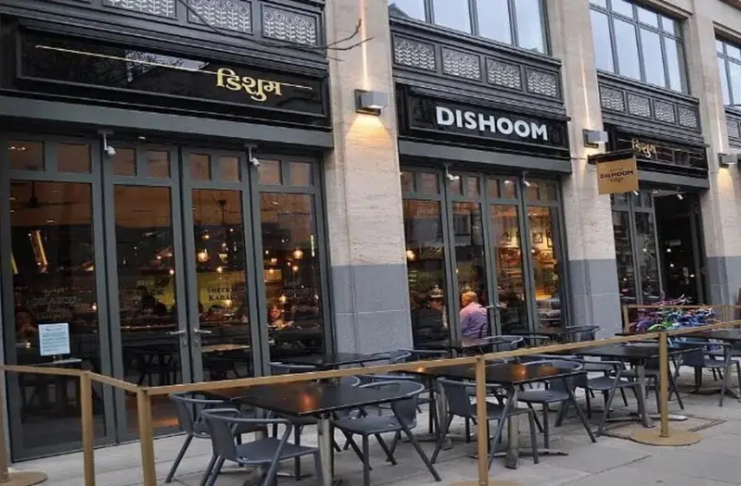
One of the hardest battles was shifting perceptions. “One of the biggest challenges was getting people to see Dishoom as an all-day venue,” Kavi told SL.Man. “We’re known for our breakfasts now, but back then no one was going to an Indian restaurant for breakfast – or even lunch. But in India, 1.8 billion people eat breakfast every day, so why not here?”
The famous bacon naan roll became a signature, but it took guerrilla marketing to gain traction. “I remember finding old bicycles, painting them bright colours, and leaving them outside the restaurant with ‘Dishoom’ written on them,” Kavi recalled.
Food bloggers became early champions. Instagram didn’t exist yet, Facebook was new. “We made friends with all of them – we might have been the most blogged-about restaurant in the world at that point.”
What’s Next
When asked about long-term goals at The MBS Group presentation, Shamil was refreshingly reluctant to put a figure on expansion. He noted that some of the restaurant industry’s troubles come from over-aggressive growth fueled by plentiful capital.
“For Dishoom, building strong brand experiences patiently and carefully remains paramount,” according to The MBS Group’s account of the presentation.
The company opened Birmingham in recent years, exploring the historic ties between Mumbai and England’s second city. The US remains a possibility but not a priority. Permit Room cocktail bars continue expanding the brand into spirited late-night territory.
What remains constant is the commitment that started it all. As Shamil summarized for The New Consumer: “Fundamentally I think we make decisions because while our head has rationalized it, our heart has taken us there.”
Fourteen years after opening in Covent Garden, Dishoom has proven that poetry and profit aren’t mutually exclusive. That complexity can be embraced rather than eliminated. That free chai and obsessive attention to hinges can build one of the UK’s most beloved restaurant groups.
The queues outside every location tell the story. So do the 700-plus employees who chose to stay. So does the ranking as the fourth-best company to work for in Britain. But perhaps the truest measure is simpler: walk into any Dishoom, and you know you’re entering a world crafted with love, care, and the utmost authenticity.
Once upon a time in Bombay, there were Irani cafés where everyone was welcome. In London today, Dishoom keeps that spirit alive, one bacon naan roll and one cup of free chai at a time.


