
Bakery menu innovation isn’t simply about following every trend that pops up on social media. Instead, it means knowing what your customers really want, recognizing where the market is moving, and making changes to your bakery menu that boost customer satisfaction and profitability. This means an innovative bakery will perform better than one that makes no changes at all, or one that makes too many changes.
What You Will Learn
- How to identify and act on emerging flavor trends and customer preferences
- How unexpected flavors and global influences can differentiate your bakery menu
- How to balance health-conscious offerings with indulgent core items
- How to manage menu design and pricing to maximize profitability alongside creativity
Menu Innovation: Why It Matters for Your Bakery
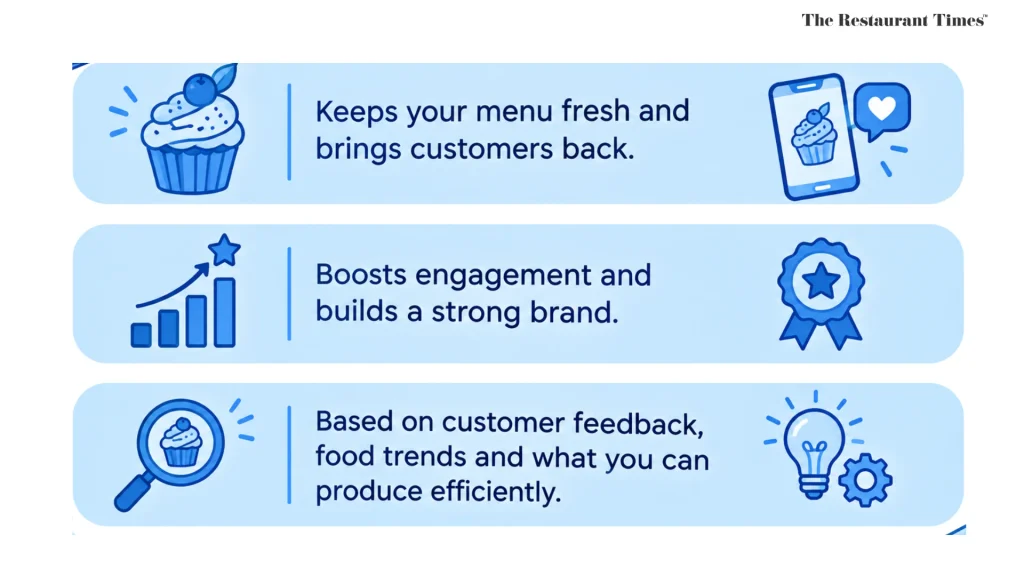
Innovating your bakery menu will keep it fresh, give customers a reason to return, and create social media moments that help customers discover your bakery online.
INDUSTRY INSIGHT
| The foodservice bakery channel in the United States was valued at $18.2 billion in manufacturer shipment dollars in 2024 and is projected to reach $20.8 billion by 2027. |
Thoughtful menu innovations in bakeries will increase engagement, allow you to charge premium prices for innovative menu items, and create a brand identity that will stand for creativity and quality.
The best menu innovation that a bakery could offer is based on three inputs: what your customers are asking for (feedback and purchases), what’s currently trending in the food industry (food trends from restaurants, social media, food media), and what you can produce efficiently using your own people and raw materials.
Unexpected Flavors: Where Menu Innovation Creates the Most Buzz
38% of consumers seek bold, unexpected flavor combinations, and 66% like to try new flavors occasionally. Tracking consumer trends helps bakeries turn that appetite into innovative products with novelty and fun, and nearly half of recent launches are driven by pleasure. Unexpected flavors generate the most social media traction, word-of-mouth, and press coverage for bakeries that execute them well. Nostalgic flavors presented in premium formats generate buzz. Limited-time flavors create urgency for customers to return and can support long-term success.
Khaled Albakar appeared on the Restrocast Podcast and talked about how important it is to stay on your toes, keep innovating, try new things, and grow.

Global Flavors as Innovation Fuel
Incorporating global flavors into delicious baked goods has become one of the surest ways to create innovation for bakeries. Examples include miso caramel, black sesame, cardamom, saffron, pandan, tahini, and yuzu. These flavors work well in baked products, just as miso caramel works in a croissant, black sesame in cream cheese frosting in cinnamon rolls, and cardamom rose in a danish. These flavor combinations are innovative for consumers while remaining easy to prepare for any competent bakery.
Find out the global flavors that are becoming popular in your locality by observing the introduction of such flavors in nearby restaurants, popular keywords in food media, and food blogs on social media focused on current food trends. If a flavor has been gaining popularity in big cities for 12 to 18 months, it’s time to introduce it in secondary markets.
Unexpected Sweet-Savory Combinations in Baked Goods
The fusion of the sweet and savory is far from losing momentum, and it opens up some of the most promising possibilities for bakery menu innovation. Bacon maple croissants, miso butter cookies, goat cheese fig danishes, sweet rolls seasoned with everything bagel seasoning, and even chili-chocolate creations show how adding one ingredient can transform traditional baked goods into something unique. Such products sell at premium prices because they are perceived as innovations rather than regular menu items.
Sweet and savory pairings intrigue adventurous eaters. Chili-strawberry tarts are an example of imaginative flavor combinations. Maple-jalapeño donuts create unique flavor experiences through mixing, and customers increasingly want contrasting, multi-dimensional mouthfeels in a single bite. Lavender honey cookies are a signature flavor combination for bakeries. Bakery trends favor bold flavors and premium ingredients, and texture has become almost as important as flavor in bakery products. Hyper-specific trendy concepts attract new customers.
Developing sweet-savory items requires an iterative approach: start with a logical flavor combination, create a test batch, and taste it carefully before adding it to the menu. The goal is a dish that surprises people on the first bite and pleases them completely by the last bite.
Bakery Menu: Balancing Innovation with Core Items
Every bakery has key menu items, those staple items that ensure consistent daily sales. Most successful bakery menus keep about 70–80% of items consistent and rotate 20–30%. Croissants, sourdough bread, cinnamon rolls, pound cake, cakes, and muffins are common staples, and active sourdough starters can anchor an entire bread-focused menu. Menu innovation does not mean doing away with these staples; it should build on them with tested recipes and popular flavors. Effective menu features can drive sales. Menu psychology can significantly impact customer spending and help attract more customers. Menu engineering categorizes items by popularity and profitability.
The global baking ingredients market was estimated at $16.6 billion in 2021 and projected to reach $22.3 billion by 2026.
A practical way to introduce innovation is through a layered menu system: core items that are always on sale, seasonal items that create buzz through limited availability, and innovative items that are tried in limited quantities to test customer reception. This method manages ingredient costs effectively because seasonal items use fresh, inexpensive local produce, while innovative items remain small-batch until they are accepted. It also supports affordable luxury through premium everyday pastries as a practical positioning strategy.
Spring menu items include strawberry rhubarb tarts and lemon cookies. Summer offerings can feature mixed berry galettes and peach cobbler bars. Fall favorites include pumpkin spice items and apple cider donuts. Winter specialties often feature holiday-themed cookies and gingerbread. Seasonal offerings can drive customer visits year-round.
Introduce new menu items at a manageable pace so you don’t lose the quality of your key items. Introducing one or two new items each month will work for most bakeries. Otherwise, when you overwhelm your team with several products simultaneously, you sacrifice quality for quantity.
The Savory Side of Bakery Innovation
The savory end of the bakery menu stands out as one of the least tapped opportunities for innovation in most bakeries today, and one of the fastest-growing areas of consumer preferences. Custom orders for special occasions, such as a themed savory box, can also significantly increase bakery revenue.
Savory bakery items expand your revenue opportunities throughout the day, giving customers something to eat at breakfast and lunchtime alongside your sweet offerings rather than in competition with them. Savory hand pies, cheese scones, herb focaccia, bacon and egg croissants, savory rolls filled with ingredients, and galettes stuffed with seasonal vegetables or fruit appeal to a different consumer need than your pastries, while requiring many of the same abilities and equipment. Miniature sweet or savory items encourage customers to sample more flavors while lowering perceived guilt. Single-serve mini desserts also let customers try multiple flavors in one visit. A consumer who may eschew a cinnamon roll will embrace a well-made savory item, without your bakery operations needing any new expertise in pastry work.
As far as savory menu design is concerned, it comes down to presentation and timing. Savory baked goods have different optimal serving temperatures and shorter windows of peak quality compared to most sweet bakery products. Display them well in the morning and at lunchtime; communicate serving suggestions clearly, and time the production process properly.
Health-Conscious Innovation for Bakery Menus
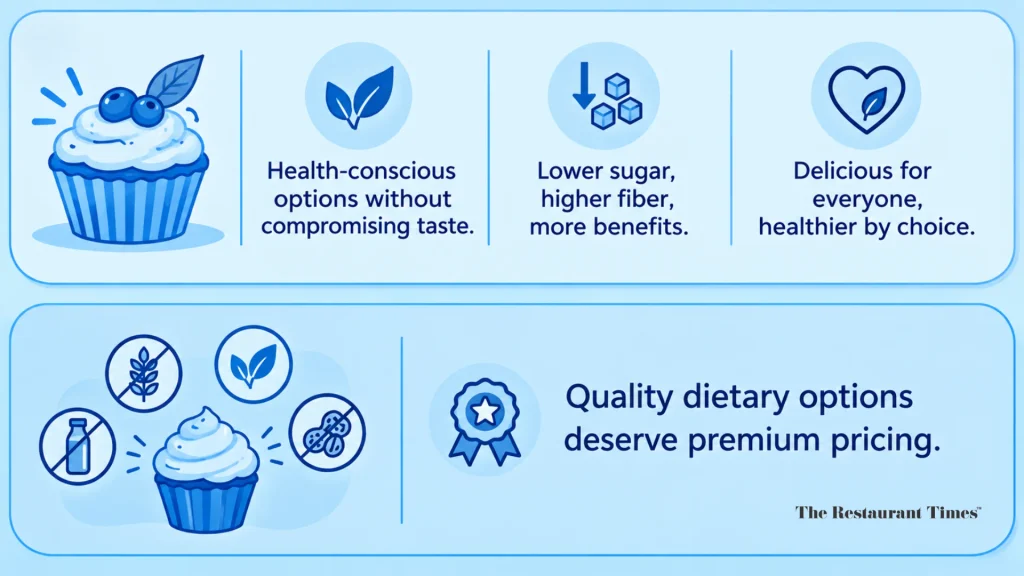
Health-conscious customers represent a rising and valuable target segment that many bakeries fail to serve properly, not because healthier products are challenging to produce, but due to the perception of their clientele as hedonistic.
Health-conscious customers represent a rising and valuable target segment that many bakeries do not reach. A truly health-conscious innovation must not sacrifice flavor, and 66% of consumers prefer clean labels with recognizable ingredients. In addition, health-conscious consumers increasingly want transparency in ingredient sourcing. Instead, it should offer ingredient substitutions that reduce sugar, increase fiber, or use plant-based proteins and gut-healthy prebiotics without making the product inferior. Naturally sweetened products using dates, honey, or maple syrup, higher protein content through almond flour and seeds, and reduced sugar in your core products can help you attract health-conscious customers without creating completely new products. The key question is whether customers who don’t seek a healthier product will still find your product delicious. If yes, then you have created a product that satisfies both segments.
Products that are gluten-free, dairy-free, vegan, or nut-free satisfy those consumers who have dietary limitations that prevent them from enjoying your core range of products. A bakery that offers exceptional-quality gluten-free croissants or vegan cinnamon rolls can build a loyal clientele that desperately needs a decent option amid poor competition, while artisan bread is often valued for its simple, transparent ingredients. Premium pricing is justified for dietary accommodation products when quality is high.
Menu Design: Communicating Innovation Effectively
Bakery menu design is a critical step in turning the creativity and high quality of your products into customer selections, and it is an area often underinvested in bakery business models. It also helps communicate your product portfolio, especially when menu language needs to reflect sustainability and local sourcing as part of the product story for retail customers.
In physical display cases, the names and descriptions of new and experimental menu items are vital. The difference between calling a dessert a “cinnamon roll with cream cheese frosting” and “cardamom rose cinnamon roll” is that you either have a basic description or an intriguing name that justifies high prices and sparks curiosity among potential customers. Descriptive menu-item names tell customers everything they need to know about the dessert, and they can also signal transparent ingredient sourcing when that matters to customers.
New bakery items are an opportunity to create valuable social media content. Unexpected dessert flavor combinations, stuffed pastries torn apart to reveal their contents, and videos that describe a creative baking process are all great examples of engaging content. These posts cost very little money in terms of content creation, and they will bring you a lot of clients thanks to effective social media promotion.
KEY TAKEAWAYS
| – Innovate on a bakery menu systematically, one to two items per month, developed through small-scale trials before committing to full production, based on customer feedback and market analysis. – Unique tastes and foreign flavors get the best engagement and price premiums on social media, but only if they taste good, not just because they are unique. – Creating savory foods in your bakery increases your earning potential and customer reach without needing additional equipment or experience, making it one of the top innovations a bakery can do. – How you present the items on your menu and on social media plays an equally critical role as creating the items themselves in turning menu innovation into sales. |
Frequently Asked Questions
1. How do I know which new items to add to my bakery menu?
Begin by considering customer requests. This is the fastest way to gauge what isn’t already being met. Include social media trends and food trend analysis to see what is catching on. Next, evaluate the item using two criteria: can you make it well enough that you’re proud of it, and can you sell it profitably? If it meets both, bakery owners should test promising items in small production before wider rollout.
2. How often should a bakery update its menu?
Ideally, one or two new items each month and a seasonal change quarterly will keep your menu fresh and create opportunities for social media posts and returning customers. Not so often that it becomes too hard for your customers or staff to create routines. Seasonal limited editions drive repeat visits. Seasonal products should encourage visits due to limited time, and permanent additions should not be introduced until there have been consistent sales for a few weeks.
3. How do I price new and innovative bakery items?
Including fresh and unusual items justifies premium pricing, since customers view them as craft items. To price these, calculate your cost, which should be all the expenses incurred–materials, labor, packaging, overheads, and profits–and compare with what other similar products are selling in the same area. Your unique flavors and craft work justify marking up prices 20-40% above your basic product pricing in most cases.
4. What are the most successful current bakery menu innovations?
Innovation categories performing very well in 2026, and among the strongest shifts in the baking industry because they reflect broader consumer trends, include global flavor combinations (miso, cardamom, tahini, yuzu), strong dietary accommodations (gluten-free and vegan pastries), elevated savory items (cheese croissants, savory galettes, stuffed buns), and show-stopping products that do well socially. What is common across all of these is excellence in execution; novelty alone cannot keep a new product performing once curiosity fades.