


The sourdough bread industry is well past being a pandemic-era trend. For some people, what began as a lockdown activity- feeding the starter, giving out bread to loved ones- became a real business because they found an interest in doing something productive, and there was money to be made. The need for high-quality sourdough bread is clear, the prices are legitimate, and the entry requirements for starting up a bakery at home are much lower than in any other food-based business. What sets the bread makers who make money apart from those who do it to boost their morale is applying business sense to their craft.
This blog will show you everything you need to create a successful and busy sourdough bread business and have a smoother journey.
What You Will Learn
- How to develop and maintain a reliable sourdough starter for commercial-scale baking
- How to price sourdough bread correctly and structure your production for profitability
- Where and how to sell fresh bread: from farmer’s markets to subscriptions and online
- How to build a sourdough bakery brand that attracts and retains loyal customers
Why Sourdough Bread Is a Strong Business Opportunity
Sourdough bread commands higher prices because it takes real skill, patience, and ingredients that are simply unavailable in mass-market products. Quality sourdough bread will cost $8 to $18, whereas a typical supermarket loaf will go between $3 and $5, and people who know about fermentation, digestive system benefits, and craft baking do not compare prices while searching for the baker they trust to provide them with fresh bread week after week.
INDUSTRY INSIGHT
| The global sourdough market size is projected to grow from $4,937.80 million in 2026 to $7,353.34 million by 2034, exhibiting a CAGR of 5.10%. |
Moreover, the variety of sourdough bread available is increasing, from bagels and baguettes to enriched loaves and flatbreads. In addition, you can make cookies and crackers from sourdough starter. Therefore, a sourdough bakery with a strong, well-thought-out product range can start up from a home kitchen, using very small amounts of bread per week.
Sourdough Starter: The Foundation of Your Business
Sourdough bread costs about £1 to make and sells for £3. The global sourdough market was valued at $2.3 billion in 2023. 62% of consumers view sourdough as healthier, a 10% increase since 2021. Sourdough bread continues to rise in popularity, with a 17.98% increase in social conversations over the past year. The sourdough market is driven by consumer demand for clean-label products. Sourdough baking emphasizes traditional fermentation and premium ingredients. Know what the foundation of your business is.
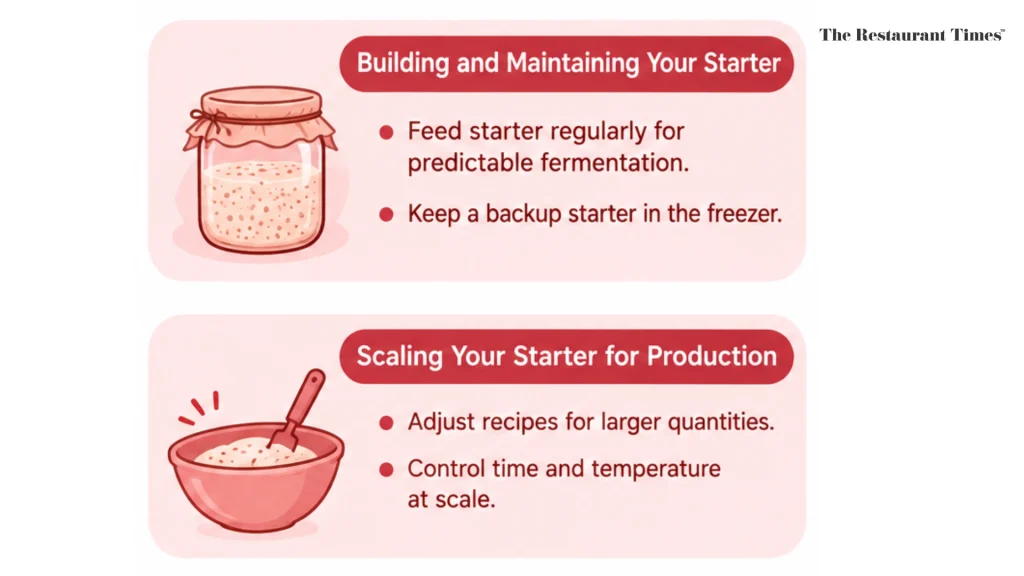
Building and Maintaining Your Starter
The sourdough starter is a living culture of yeast and bacteria that helps to ferment the dough and develop the distinctive flavor of sourdough. In domestic-scale production, most people keep only one starter. But at an industrial scale, you will need a large quantity of starter that can ferment enough batches of dough in one day, and it must be maintained predictably.
Feed the starter regularly, either once or twice a day during active production periods, with the same flour and at the same hydration rate each time. Regular feeding means a regular fermentation process, and a regular fermentation process means a regular product. Inconsistent starter behavior is the main problem in sourdough production, because clients who like the sourdough one week but not the next will quickly stop trusting your bakery. Keep the backup starter in your freezer; if your starter stops working for some reason, you will be out for weeks, while the frozen starter saves you more time.
Scaling Your Starter for Production
Scaling up sourdough bread making is more than just increasing quantities according to your home recipe. Temperature, time, and hydration interact differently when working with larger quantities of dough. Take the time to develop your own recipes at a production level before you go into sales; baking 10 or 20 loaves of sourdough at one time will mean changing the time for bulk fermentation, folds, and proofing that you won’t be used to from your home recipe.
Baking Sourdough for a Business: Production and Pricing
The global sourdough market is growing at a 9.1% CAGR from 2024-2032. Getting the production and pricing right before you take your first order is the difference between a sustainable business and a hobby that earns some money but consumes more time and energy than it returns.
Pricing sourdough must cover ingredient costs and consumer willingness to pay. Buying ingredients in bulk reduces the cost of sourdough baking.
Setting Up Your Home Bakery for Production
A home kitchen can become a proper sourdough bakery with the right equipment and process organization. The oven will be the primary purchase for your bakery; regular home ovens bake two loaves at a time in a Dutch oven, while commercial countertop deck ovens bake six to twelve loaves at once.
Many sourdough businesses reach the stage where your home oven becomes the limiting factor in your productivity before anything else, and you end up losing all your encouragement and motivation. Determine your oven capacity and plan your weekly production around it. Many states allow the sale of non-hazardous foods made in home kitchens. Home bakers must check local health department regulations for cottage food laws. A food handling license may require a fee. You may need permission from your building’s body corporate.
A stand mixer is more efficient for larger dough amounts than hand mixing. Baskets for proofing (bannetons), in the necessary quantities to accommodate all the loaves at once, help you organize the entire baking process instead of baking in several batches. A dough scraper, scoring knife, and kitchen scale (grams) are essential for proper sourdough baking.
Pricing Your Sourdough Correctly
The biggest place where most sourdough bakers leave money on the table is in pricing. The right price for a loaf of sourdough bread includes your ingredient cost, packaging cost, labor at an appropriate hourly wage, overhead, and a profit margin. If a single loaf of bread took you four hours of active and passive effort—mixing, folding, shaping, baking, cooling—uses three dollars in flour and seventy-five cents in packaging, and you value your labor at twenty dollars an hour, your cost of goods for a single loaf is eighty-three dollars and seventy-five cents per loaf.
In such a case, $12 is working at a loss. On the other hand, pricing between $18 and $22 would cover your costs and make good profits.
Most sourdough bakers, when doing these calculations for the first time, will realize they have been selling their product below the proper price. The market for quality sourdough bread is always there in almost all of the towns and cities. When customers pay for something they consider art, they do not compare its price with the supermarket.
Where to Sell Your Sourdough Bread
Choosing the right channels to sell your sourdough is as important as the bread itself. Cottage food laws allow many bakers to start selling from home. Artisan bakers can maintain profit margins of 60-80% by selling premium loaves. Read ahead to know more.
Farmer’s Markets and Local Events
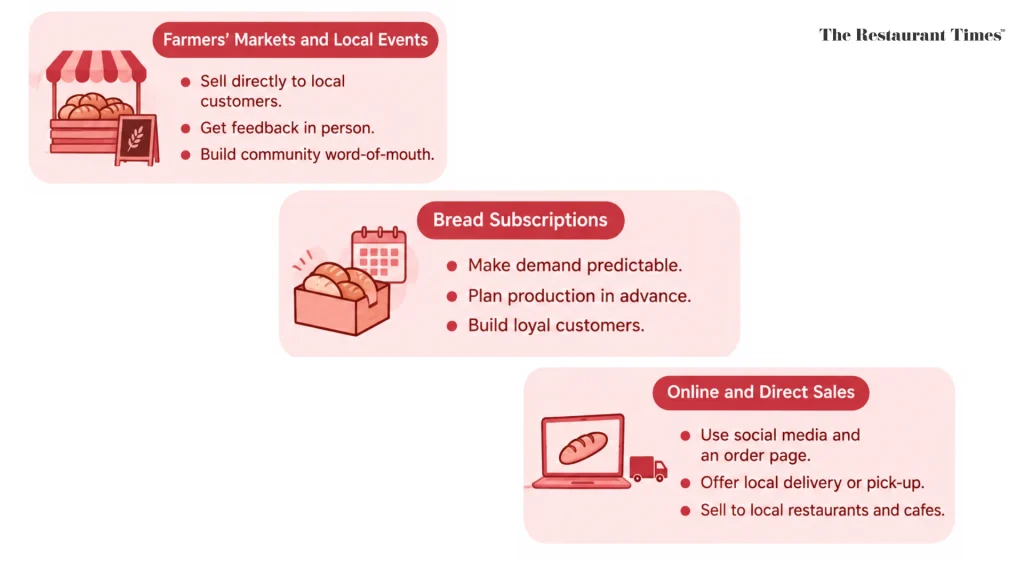
The farmers’ market is the most natural and common beginning point for sourdough business development. It offers direct contact with consumers, who are especially interested in local and handmade foods; it lets you distribute samples, turning potential customers into purchasers; and it helps you build community contacts that will work for you through word-of-mouth marketing.
Moreover, markets can give you feedback. The fact that you have sold out a particular type of bread by 9 in the morning on weekends means that there is an implicit request for you to make more of it. If you have product left at the end of the day, that’s a message from the market. Start with visiting one or two farmers’ markets per week.
Bread Subscriptions
The subscription business model, where clients subscribe to purchase a certain number of sourdough breads each week, is the most valuable revenue stream because it makes demand predictable in advance. By knowing that you will be selling 30 loaves of bread on Mondays during the weekends, you will know how much to produce with zero wastage.
Start the subscription program only when you already have some customer loyalty built from the farmer’s markets or other communities you are targeting. These are the customers who will keep buying your bread and are perfect candidates for subscribing to purchase it every week. Provide them with a slight discount or early access to newly introduced products.
Online and Direct Sales
An order page and local delivery or pick-up service can take your marketing to places outside the farmer’s market on weekends. Sourdough bakers have a very strong customer base on Instagram; they use this social media to show images of how they make bread, their starter culture, flour sources, etc., and convert their followers into clients. It is especially useful for sourdough, as the dramatic process of scoring and baking the bread is great content to post online.
Bulk selling to local restaurants and cafes increases your sales volumes and variety of sources of income; for example, one person that purchases 20 loaves of your bread per week is equivalent to 20 regular retail customers with much lower transaction costs. You should cultivate relationships with local food businesses by giving them samples and following up. Buyers from restaurants and cafes are practical people; they will be satisfied only after you prove yourself as a regular and reliable supplier.
Building Your Sourdough Bakery Brand
The reason people buy your bread and not the artisan one from the grocery store or the competitor at the farmers market is because of your brand. Three things make up a sourdough bakery brand. First, there is the delicious bread; then there is the story behind your brand and how you make it; and finally, packaging that represents what’s inside. Kraft bread bags with a logo and ingredients list can present a professional image at low cost.
Tell your story on your website, Instagram, and a small card you include in your packaging: how did you become a sourdough baker, which flour do you use and why, and how your starter was created. Those details will make an emotional connection with customers, something that mass-produced bread does not have. Once people hear your story, they become brand ambassadors who promote your brand among friends and family without you even advertising.
KEY TAKEAWAYS
| – The sale of sourdough bread can be profitable if you price it right, covering costs of ingredients, packaging, work at a decent hourly pay rate, and making a profit – most home bakers seriously underestimate the cost of production – Farmers’ markets are the perfect place to test your product lineup (baked goods), pricing strategy, and production volumes before you decide on subscriptions or wholesale clients – The subscription-based model allows you to forecast your demand, planning production and purchasing much better than ad hoc selling bread – Brand story, quality, and packaging are the three things that make your customers stick to your particular sourdough bread bakery and not the one with the lowest prices on the market |
Frequently Asked Questions
1. How profitable is a sourdough bread business?
A home baker making 30 loaves of bread a week priced at $15 each will earn $450 weekly, or approximately $23,400 annually, from part-time work. After subtracting the cost of ingredients, packaging, and market fees, you’ll have a 40 to 55 percent profit. Subscription accounts and café orders can increase your annual income to more than $50,000.
2. Do I need a license to sell sourdough bread from home?
In the majority of states in the USA, the sale of sourdough bread from home is legal due to the Cottage Food Laws of that particular state. In most states, you need to register, have a cottage food permit, business license, or state department of agriculture registration, and label your sourdough products in a specific way.
3. How much sourdough bread can I make in a day at home?
The average home oven makes two loaves of bread per baking process, which is four to six loaves per day on average. A countertop deck oven can make 8 to 20 loaves of bread per bake cycle. The typical sourdough home bakery produces between 20 and 50 loaves of bread per week.
4. How do I get my first sourdough customers?
Begin by selling your products to your friends and family. Next, try out some farmer’s markets. Create your own bread-making process on Instagram and connect with the sourdough community. Word of mouth in the sourdough community is highly effective once you have fulfilled your product’s promise; offer a free loaf at an affordable price.


