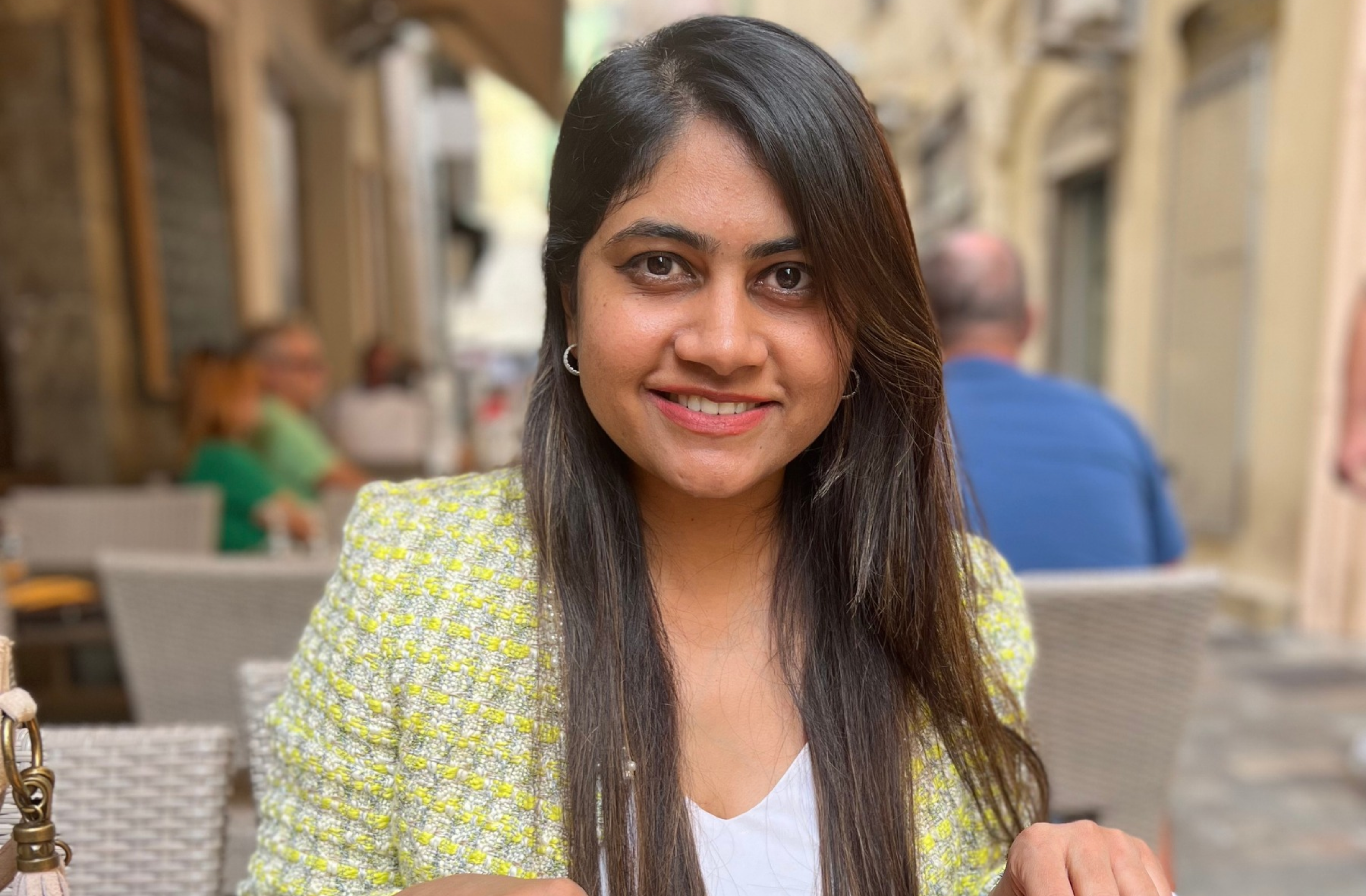

Last week, I sat with Preet Sanghvi for about 40 minutes discussing everything she has built to date, what she plans to do next, what she learned along the way, and so much more, and you know, while I don’t want to diverge from the main topic (and yes, I want to assure you that I was super attentive the whole time), her story kept reminding me of this one theory I read – The adjacent possible.
It’s a term coined by a theoretical biologist, Stuart Kauffman, and is about how a possibility you couldn’t have imagined at the beginning starts to make sense once you take the first step.
Like, imagine yourself standing in a room with four doors. You can open the doors available to you, but you can not walk through the door that doesn’t exist yet. Once you enter one of those rooms, however, you discover even more doors within. You wouldn’t have known of those doors, or let me say, “possibilities,” until you decided to step into one of those rooms.
What I mean to say is you don’t necessarily need to know where each decision will lead. What you need to do is recognize the possibilities available to you at the moment, explore them, and remain open to the ones that emerge along the way.
And that’s what Preet Sanghvi did at every step of her professional career.
Dare Over a Cup of Hot Chocolate
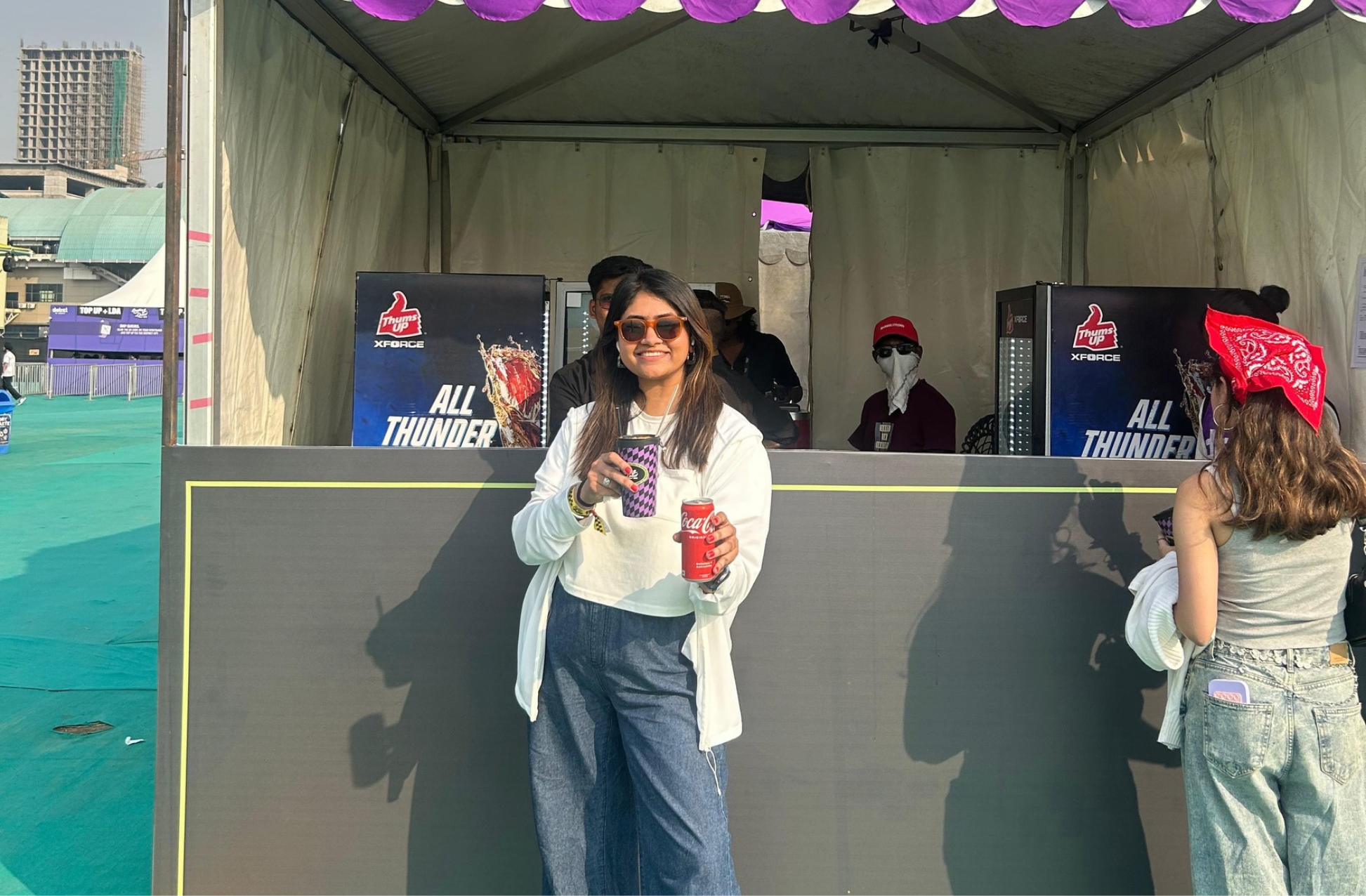
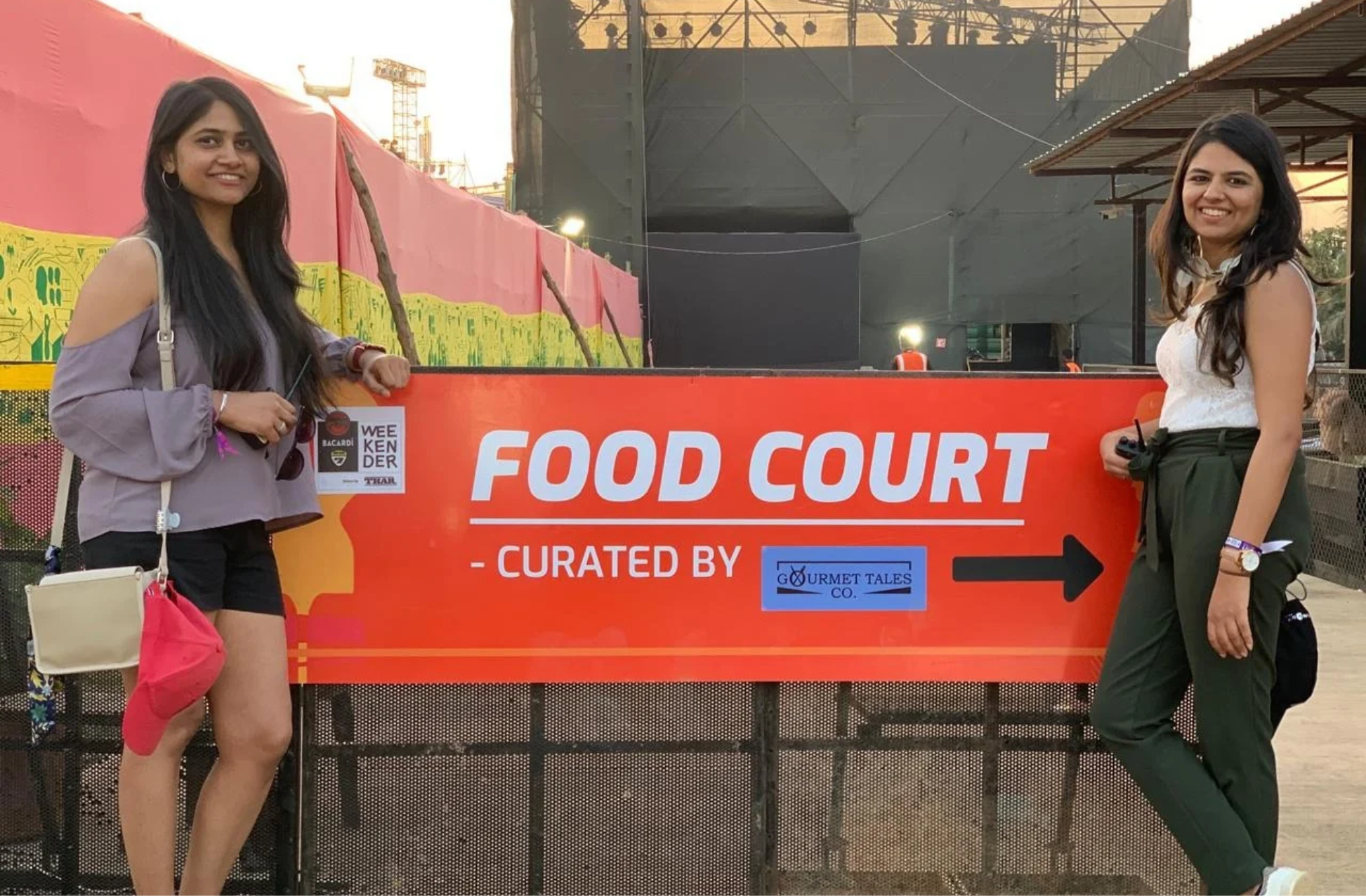
Back in 2018, Preet Sanghvi was a brand manager at a hospitality group. She used to travel a lot and kinda ate her way through festivals abroad. During this time, she noticed how everywhere food was treated as an experience in its own right except at home. In India, she kept seeing the QSR brands at every event she attended. She brought this up in front of a friend who was then festival director at Bacardi NH7 Weekender, India’s biggest music festival at the time, over a cup of hot chocolate.
Moreover, she had very recently discovered a food truck on Zomato that had a really interesting menu, and she couldn’t understand why festivals didn’t have things like that. So, her friend gave her a dare. She said, ‘ We have an art curator, we have a music curator, we don’t have a food curator. So why don’t you get on board?”
Preet had never curated food for a festival before. She didn’t even know what the role entailed. But the idea struck a chord, and she took it on as a gig.
Her role was to curate the food court for a festival expecting 35,000 people. Over the next four months, Preet and a friend who partnered with her cold-called brands, persuaded them to participate, and brought together around 40 food brands from Pune, Mumbai, Bengaluru, Hyderabad, and Delhi. The best thing happened when someone from the crowd, a regular at the festival, walked up and told her it was one of the best food experiences they’d ever had. Plus, that event caught the attention of other organizers, including those from Mahindra Blues and the Filmfare Awards, who wanted to know why the same approach wasn’t being applied to their events as well.
That’s how one opportunity led to another, and what began as an experimental gig became her entire business. Basically, the idea was that food deserved the same thoughtful curation as music and art.
The earlier days at Gourmet Tales Co were hard; like, how was she supposed to explain to anyone, “Why is curation needed? Why is food so important? How if food is not done well, people will always talk about it.”
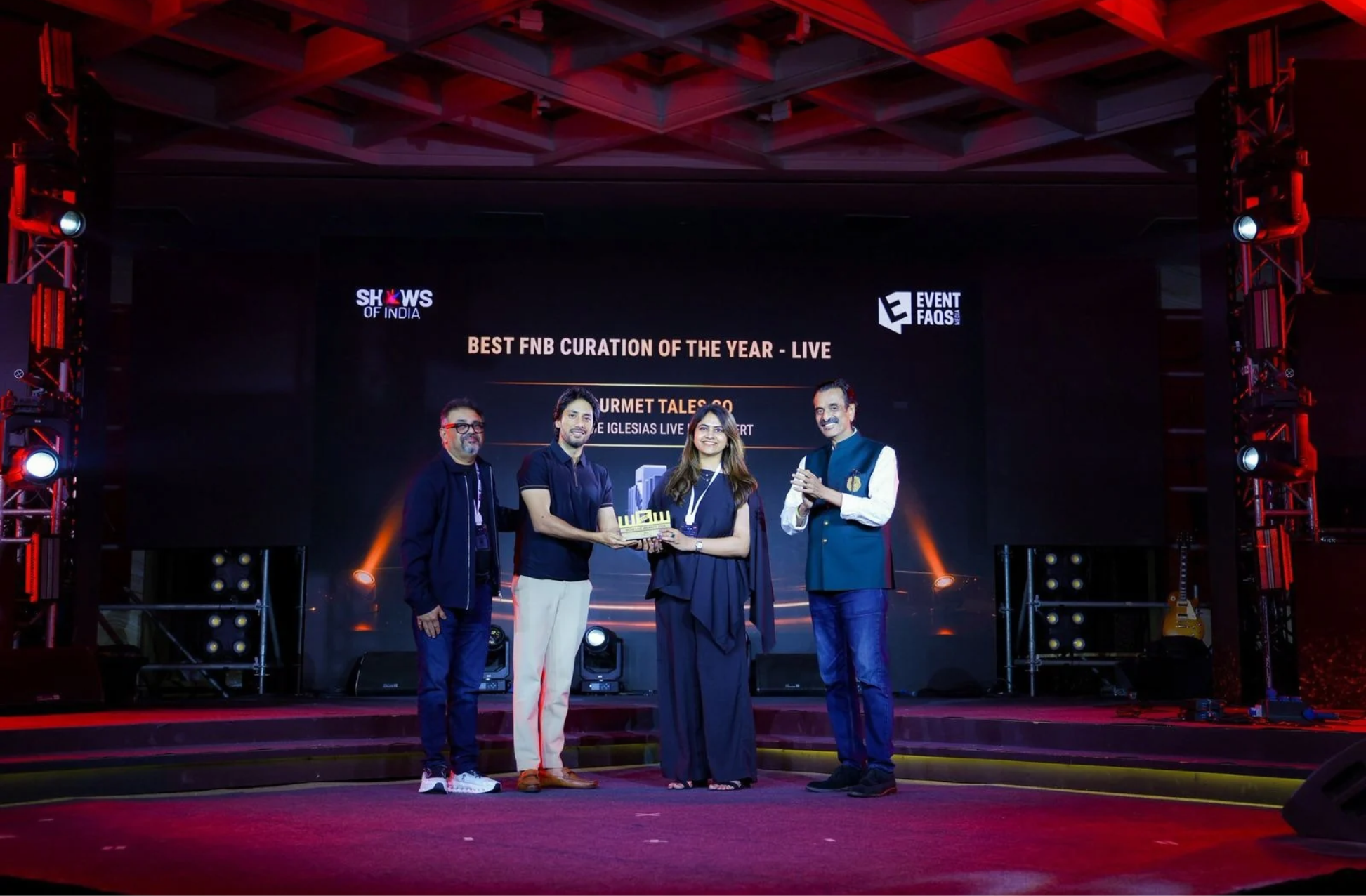
Over time, her work began speaking for itself. As of date, Gourmet Tales Co. has curated 250+ events across India and the UAE and has built a network of over 800 F&B brands. Its portfolio includes Bacardi NH7 Weekender, YouTube Fanfest, Rolling Loud, Coca-Cola FIFA, Lollapalooza, Filmfare, BMW Joytown, live concerts (like that of Enrique Iglesias), Falguni Pathak Live Navratri, Tata Marathon, Ajio Lux, and more. It also became the first-ever Indian food curation company to run the food zone of an international event.
Today, the company operates out of Mumbai and Dubai, with a creative headquarters and food studio in South Mumbai that is equal parts workspace, test kitchen, curated workshops and events, and ideas room.
| “For 8 years I’ve been building what didn’t exist before, a discipline that sits at the intersection of food culture, brand intelligence, and experience design. I call it food curation. India calls me when they need to get it right.” |
The Curation of Food Experiences
Preet Sanghvi now calls herself the architect of food experiences, and I believe, rightfully so.
She says, “Curation is still at the heart of everything I do. I will never stop being a curator.” What changed is the size of the question. In 2018, it was: what should people eat at this event? Now it’s who should be eating, where they should run into it, what the journey should feel like, how the menus, prices, and flow work together, and whether the entire experience is operationally viable. And at the end of all that, “the memory people take away.”
While most people think curation is just about assembling a few good restaurants, it’s really not it. In her own words: “Every second person has ‘curator’ in their bio. Oh, a curated food court.” But “putting ten good restaurants together doesn’t justify the word curation. Curation is the relationship between those ten choices. Why these ten? Why this cuisine? Who is the audience? What is missing?”
Preet says that the biggest misconception is that she picks brands because she personally likes them. “Trust me, all 800 of those brands are my personal favorites. If I could, I would. But that’s a tough decision you have to make at times.”
The real test, then, is whether a brand fits the event, not just whether its food is good. Preet looks at the audience, the event’s theme, the occasion, the brand’s price points, and the story it wants to tell. A restaurant might have an excellent menu and a loyal following, yet struggle to serve thousands of people within a tight window. At a festival drawing 20,000 people, for instance, taking 10 to 15 minutes to prepare a single order simply isn’t viable. Brands need the capacity to serve an item in a minute or two, at most.
“Sometimes we simply reject a brand because even if we love them, maybe that environment isn’t right for them,” Preet Sanghvi explains. “My job isn’t just to say, ‘Okay, fine, you’re a cool brand, I’ll bring you in.’ My job is actually to say, ‘Is this the right brand for this particular experience? We get a lot of heat for it, but this is how it is.”
Footfall is Not Revenue
Festival food and beverage (F&B) has a reputation for being expensive for brands and unforgiving for vendors. Especially for a small artisanal brand, participating in a major festival indeed offers visibility and access to thousands of potential customers, but whether it makes business sense is a different question altogether.
Preet Sanghvi believes brands often get caught up in the race to participate in every major event. But after more than 250 events and experiences over eight years, she’s seen enough to understand that capability is contextual.
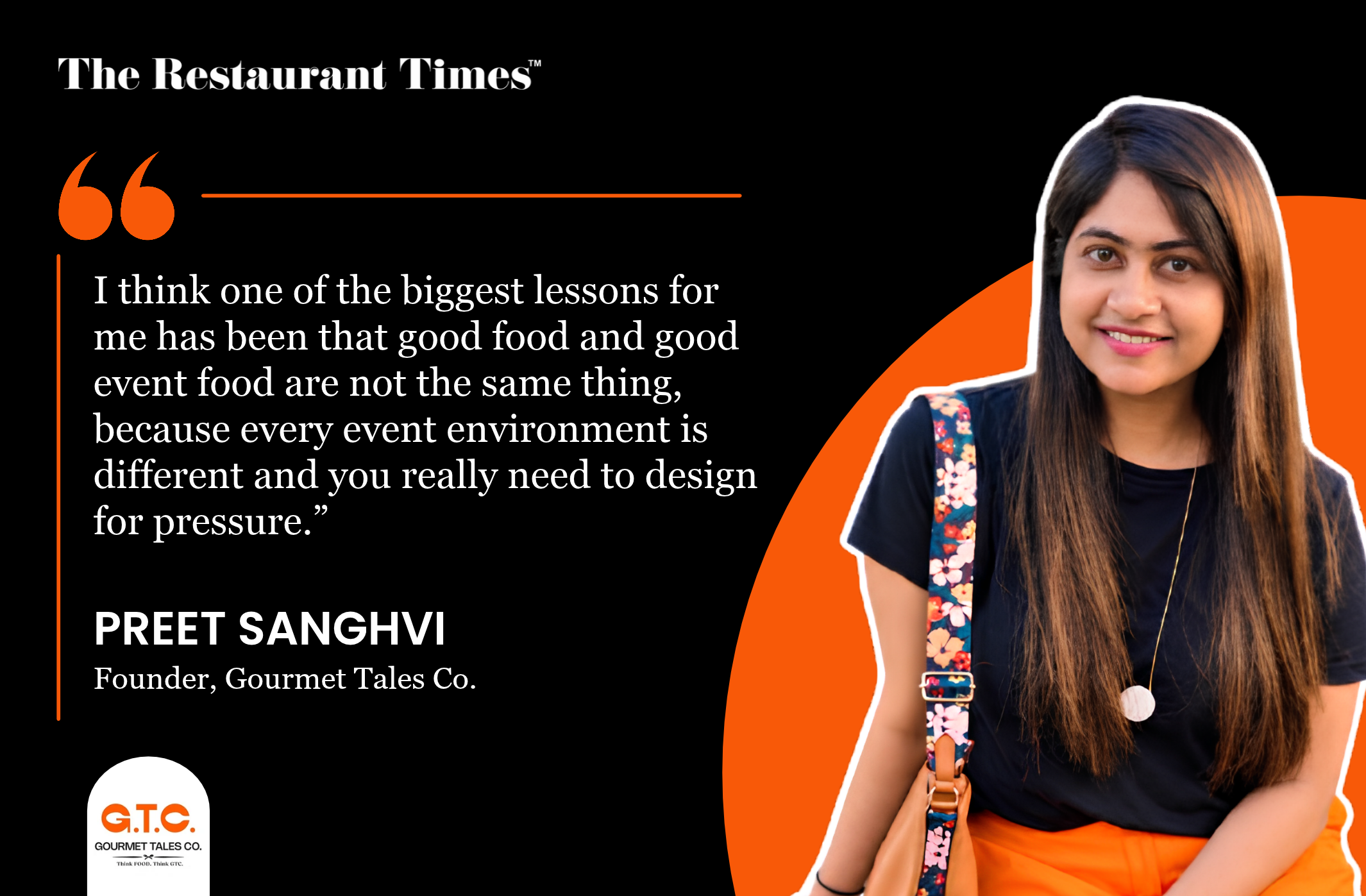
“Footfall is not revenue, and revenue is definitely not profit. And profit is definitely not ROI,” she says. You can’t just pay for a stall and call it that you’ve participated in a festival. As a brand, you have to account for manpower, equipment rentals, transportation, and other operating expenses. Even at an event with enormous footfall, these costs eat into margins.
What’s the solution? Preet’s advice is to ask yourself: Why are you even participating in this event?
“Some events are worth doing because you make money. Sometimes it’s discovery. Two thousand people saw you and tomorrow they order from you.” For a business looking to expand geographically, an event can also be a way to test a new city and understand whether there is a market for its products.
None of these objectives is inherently better than another. The problem occurs when brands participate without knowing which outcome they are trying to achieve.
As Preet sees it, whether an event is profitable ultimately depends on the brand and how it wants to position itself. “You can make an incredible dish in your kitchen, but can you make 500 of them consistently?” If not, “stick to your restaurant model or your delivery model. These things sound unglamorous, but this is what makes a brand travel.”
Because India Has a Lot of Dots And Not Enough Bridges
“India definitely does not have a food problem. It has a discovery problem.”
Preet Sanghvi says, in India, you can travel 500 kilometers, sometimes even 50, and find a completely different food culture, technique, or ingredient. Few countries offer the kind of regional diversity that India does. Yet, for all that abundance, the average consumer may never meet most of it, and the small regional brands doing it well don’t have the marketing muscle of the chains. “It’s very easy to go on Instagram and find ten places you must visit. But how do you get to those ten places?”
That is where I think food curation makes the biggest difference. Festivals, airports, tourism programs, cultural institutions, etc., bring food stories to people who might otherwise never encounter them. They create a meeting point between brands and audiences, giving smaller businesses a chance to be discovered without having consumers travel across the country.
But, again, this cannot be the responsibility of one company or curator alone. Brands, consumers, the media, event organizers, tourism boards, and governments all have a role to play in connecting India’s food ecosystem.
“Discovery needs infrastructure,” she says, because “India doesn’t need more food. India needs to discover more of the food it already has.”
| “Most people treat food at events, airports, and destinations as logistics. I treat it as the experience.” |
What’s Next?
Preet Sanghvi wants to build a platform where food discovery, travel, and entertainment all come together. “I haven’t seen that yet. Some space is great for this, some event is great for that, but nothing has brought them together.” She also dreams of a food festival IP for India that pulls in visitors from abroad, in the way people fly to London for Taste of London. “I don’t want people to say, okay, we’ve just gone to Bombay, Delhi, Kerala, Goa. There is just so much more. And infrastructure is very, very important.”
Her ambition is bigger now, but the underlying idea is still the same: there are food stories waiting to be discovered, and the right experiences can help people find them.
Looking back, it’s interesting to consider how much of this began with a conversation over hot chocolate. Preet wasn’t setting out to build an industry around food curation. She noticed a gap, took a chance on an unfamiliar role, and discovered new possibilities through the work itself. Each opportunity opened the door to another, eventually leading her somewhere she couldn’t have thought of at the beginning.