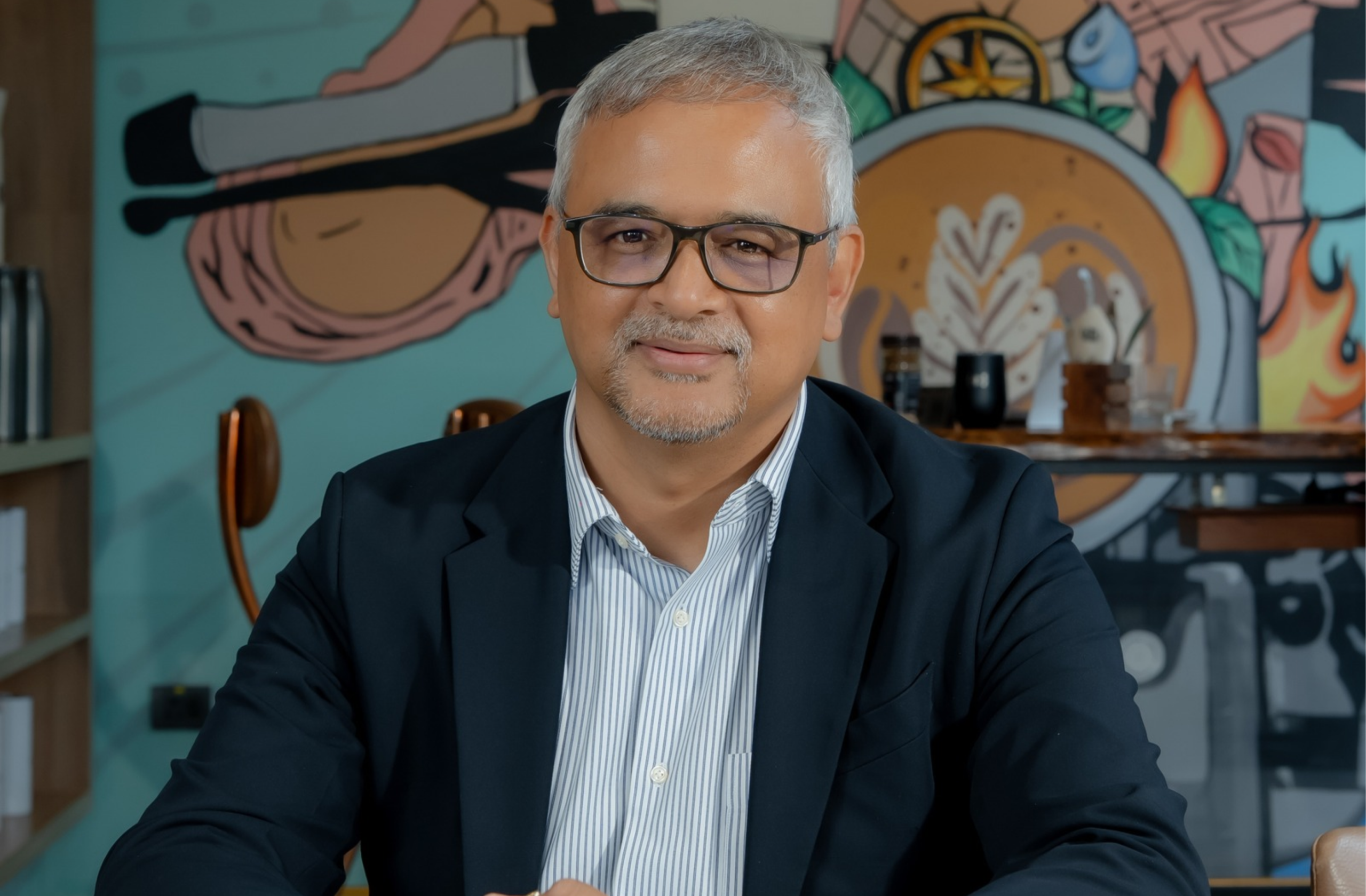

On August 1st, 2026, Coffee Island India launched its all-new Greek menu, and so Amitabh Negi, CEO of Vita Nova Group, took to LinkedIn to share how “hospitality has a unique way of reminding us what customers truly value. While products may attract attention, it’s the experience that determines whether they return.”
Having spent more than two decades in the industry, Negi believes hospitality is created long before customers walk through the door. “It’s reflected in how teams prepare, how they communicate with one another, how they respond when things don’t go as planned, and the pride they take in getting the smallest details right.”
As Amitabh Negi and his team build Coffee Island India, it’s super obvious how strongly they focus on building a culture that creates experiences customers would want to come back to, and let me remind you – THAT TAKES TIME. The team is in no rush at all to put their cafe on every corner.
Well, the interesting part here is that the market right now is every bit worth moving faster for. Like, the average Indian drinks 20-30 cups of coffee a year. Chained outlets are also the fastest-growing part of India’s cafés and bars market, at an 11.72% CAGR through 2031. IMARC valued India’s coffee shop market at USD 424.6 million in 2025 and expects it to reach USD 1,152.1 million by 2034. Basically, there’s a lot of demand still waiting to be poured. But Coffee Island is choosing to take its time (deliberately so!).
Why is that? Amitabh Negi sat down with the team at The Restaurant Times to discuss why, for him, getting the experience right is much more of a priority than just speeding through it.
Making the Very First Bet
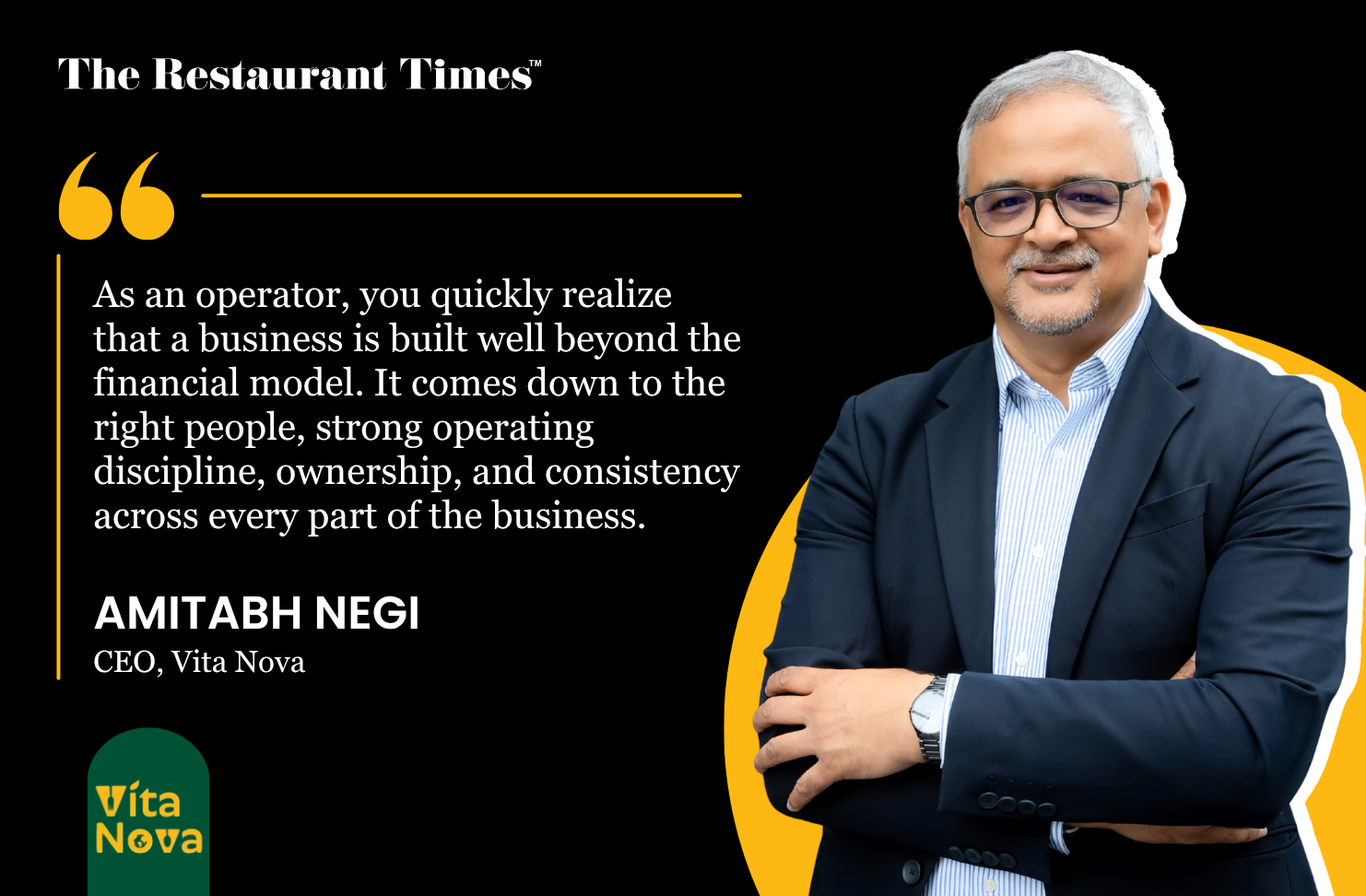
Before entering the coffee industry, Negi had worked at some of the biggest (let me say that again – BIGGEST) food-service businesses out there – KFC, Pizza Hut, Domino’s, etc. Plus, he used to advise private equity firms on growth strategy and value creation across hospitality investments.
So when Vita Nova was set up in July 2024, he kind of knew what growth looks like both on paper and in stores.
“We don’t just launch or acquire cafes and restaurants. We create brands that are born from a deep understanding of people, their evolving tastes, and their desire for meaningful, memorable dining moments.” – About Vita Nova
The exact goes with Coffee Island, of course. The brand opened its doors in 1999, in Patras, Greece, with the aim of building a community around specialty coffee. “From 1999 until today, our magical journey into the world of coffee has been offering unique surprises, leading our way into coffee innovation and sustainable growth. From day one, we have been evolving, innovating, and bringing that extra spark to your daily brew.”
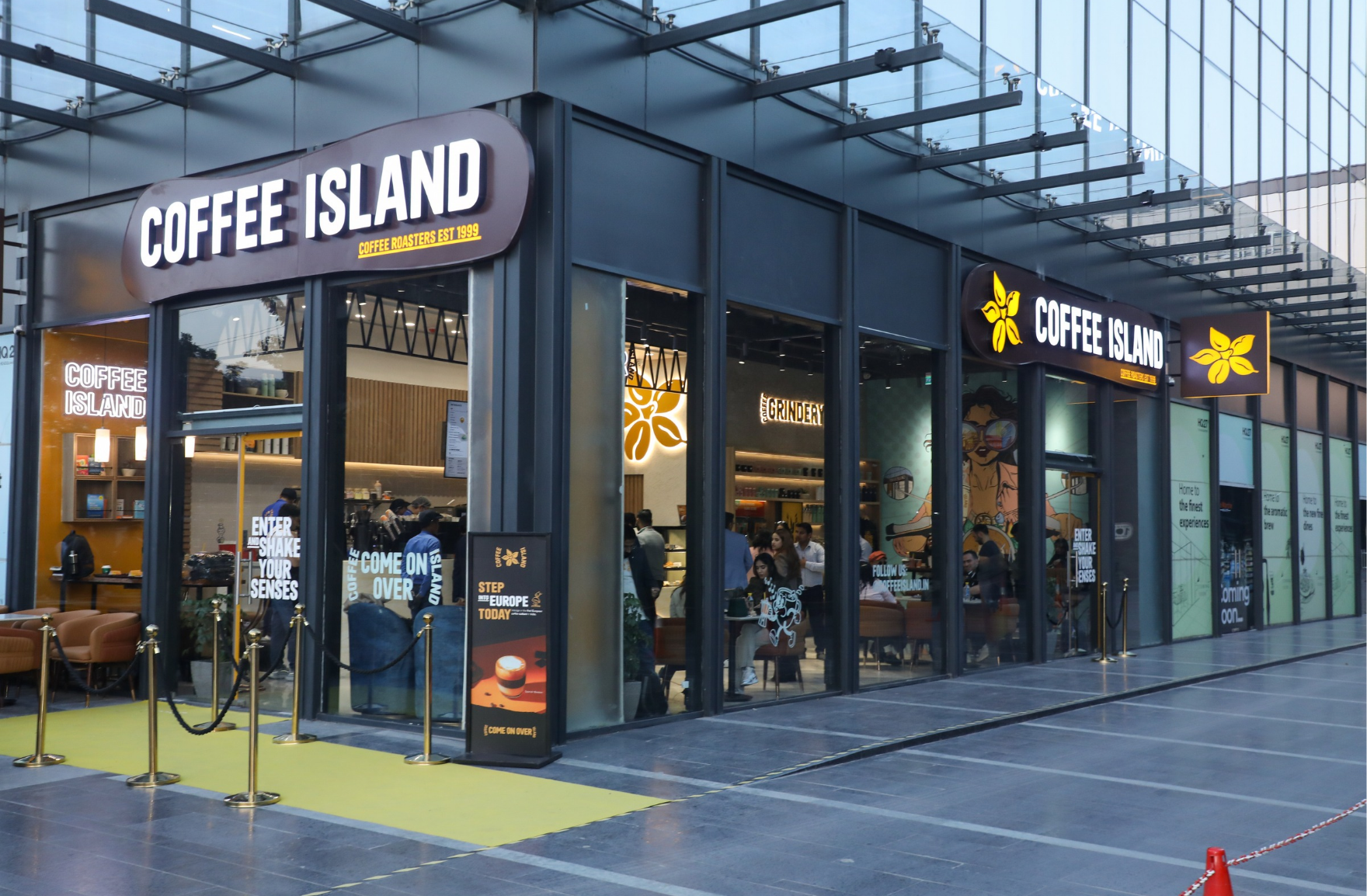
Today, the brand network counts 600+ coffee shops in Greece, Cyprus, the UK, the USA, UAE, Canada, Dubai, France… and so on.
It came to India with the same vibe and ambition, i.e., to build community and culture around coffee “that’s curated ‘by you, for you’.” And as far as I know, it’s been going strong.
“India has a large and growing coffee market, but there was still room for a more specialty-led proposition built around the coffee itself,” Amitabh Negi says.
Here, the founders wanted a differentiated global coffee brand, and Coffee Island’s strength was its roasting heritage and its focus on the bean, its origin, roast, and flavor.
And since “the biggest learning [Amitabh Negi got from working in QSR] is to get the operating model right before scaling,” he wholly dedicated the first year at Coffee Island to “building the business. The objective was [and always will be] not to move customers through quickly, but to deliver consistent quality while allowing them to enjoy the experience.“
Building a Café You Are Meant to Stay In
Coffee Island has pretty solid European roots, and yes, you can bring other cultures to India (plenty of brands do that), but of course, you can’t expect Indian consumers to behave like Europeans too, can you?
As Amitabh Negi puts it, “The European on-the-go coffee habit does not translate completely to India. Indian consumers tend to spend more time in cafés and are more likely to pair coffee with food.”
And that’s why, to make Coffee Island work here, the team had to adapt to the local habits and preferences of Indian consumers.
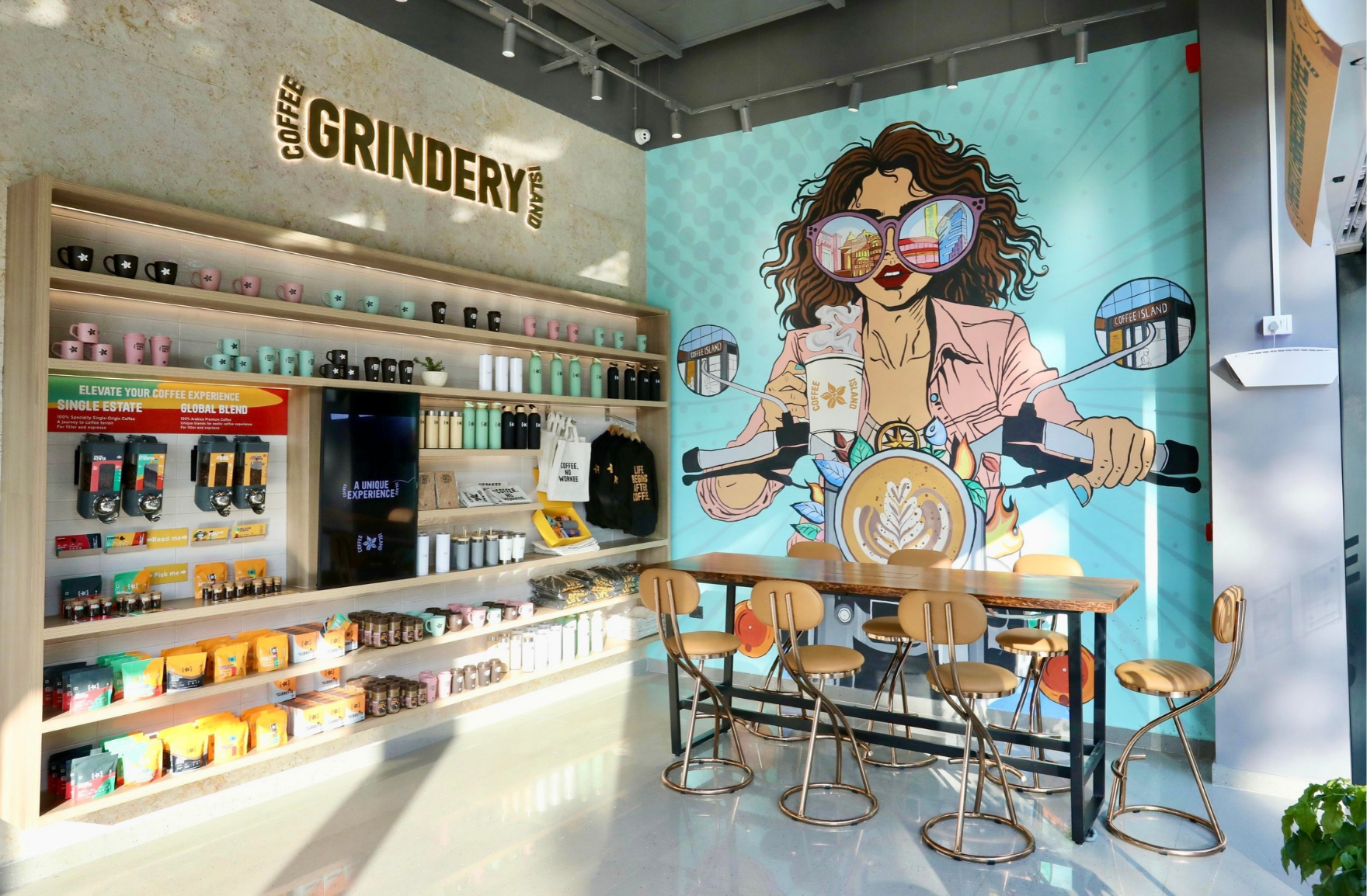
At Coffee Island India, a customer gets to pick a coffee by its blend, origin, and flavor profile, “rather than simply choosing a size.” The menu has Indian blends, global blends, and single-estate coffees, with food and formats built to complement them. The room itself is designed as a place “to sit, explore and spend time.”
In fact, food brings in almost 30 percent of the brand’s sales, and 30 to 35 percent of monthly sales come from loyalty members, according to The Punch Magazine. Plus, Coffee Island Beyond, whose Greater Kailash II outlet in Delhi is the flagship, stays open round the clock. It “allows us to serve different consumption occasions across the day, but it also requires much tighter operating discipline.” Staffing, preparation, inventory and waste have to be planned around each daypart, which kind of turns the café into “a more consistent neighborhood destination.” And that seems to fit the Indian café habit rather well.
Keeping the Coffee Global & the Experience Local
As for the menu itself, the team worked with Sunalini Menon to develop it.
She used to run quality control at the Coffee Board of India until 1995 and is one of Asia’s most recognized coffee cuppers. Coffee Island’s R&D team worked with her for about six months before the first store opened.
The launch menu thus had drinks like the Spanish Bombon, Freddo Espresso Ristretto, and Vietnamese Shakerato. Yes, there was a lot of European and international influence to it, but the idea was never to Ctrl+C, Ctrl+V the global items and make the Indian customer adjust to them.
The team wanted to bring Coffee Island’s European sourcing route and coffee philosophy closer to the Indian palate instead. Menon helped the team identify flavor profiles that Indian consumers would be more comfortable exploring.
And apparently (fortunately so), the Indian palate was more open than they initially assumed.
When Coffee Island first entered India, Amitabh Negi says, “Indian consumers weren’t actively looking to understand different coffee profiles.” But twenty months on, they were more willing to explore different coffees and formats, including newer offerings such as Ube and Mont Blanc. And that, for Coffee Island, is basically the new job profile – having people to keep discovering more and more & getting used to them.
A significant part of Coffee Island’s sourcing comes through its global network, with more than 62 coffee varieties from origins including Ethiopia, Brazil, Nicaragua, Kenya, Colombia, and Peru. At the same time, the brand works with Indian growers to build exclusive blends for the market.
Basically, the coffee itself did not need to be “completely Indian” for the brand to work in India. What needed to be built was everything around it, whether that was the supply chain, roasting, or store-level execution.
Negi says India’s specialty coffee ecosystem is still young, “particularly in traceability, infrastructure, and consistency across the supply chain. So our approach is to build these capabilities steadily without compromising on our sourcing standards.”
What Makes a Trend Worth Keeping?
Cafés are where flavor trends break, and Coffee Island has been pretty quick to try them.
Take ube, for example.

In May 2026, it launched an ube range with an Iced Ube Latte, an Iced Ube Matcha and an Ube Smoothie. Local Samosa reported a limited run of four drinks across its Delhi and Gurugram outlets, priced at roughly ₹250 to ₹350.
Co-founder Samit Khanna, on this, shared: “Consumers today are constantly looking for experiences that feel fresh and exciting, especially in the café space. Ube stood out to us because it’s visually unique, easy on the palate, and versatile across formats. We wanted to introduce it in a way that still feels familiar and enjoyable for Indian consumers. The response globally around ube has been interesting to watch, and we felt this was the right time to bring that conversation to India through Coffee Island.”
How does the brand decide if the particular product will fit the market or not?
Amitabh Negi says, “We look at trends based on whether they have a clear role in the broader customer proposition.” Plus, if something new proves popular with customers, fits into the brand, and continues to make sense beyond the initial hype, it gets to stay.
Younger customers, of course, have made this whole discovery, experience, and digital engagement thing a lot more interesting, and that contributes to how the brand designs its stores, innovates its menu, and talks to the people.
There’s a line, though. “We have not changed the fundamentals of the brand to follow every trend. Coffee quality, sourcing, and consistency remain non-negotiable.”
Playing the Long Game
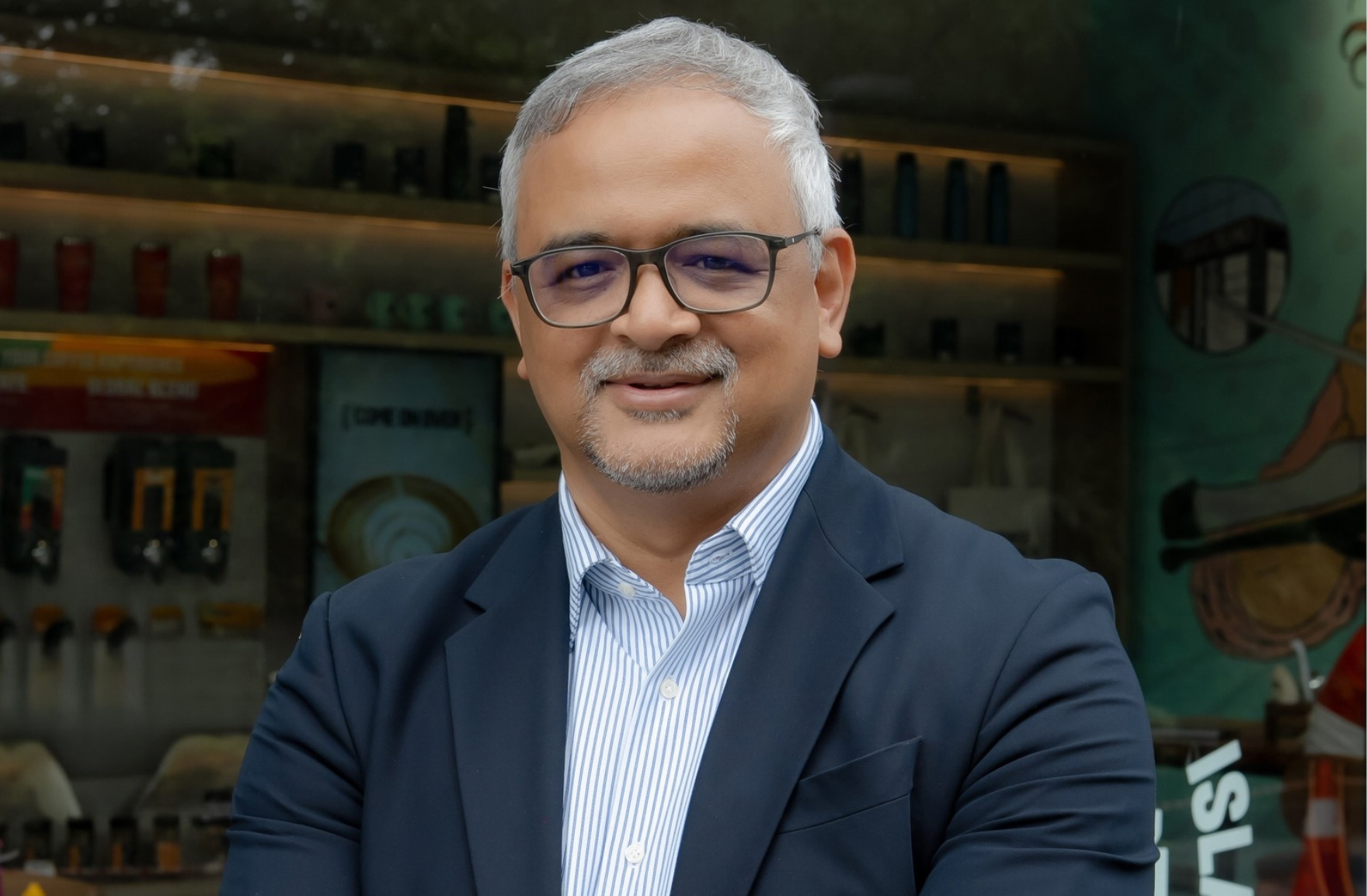
Every business reaches a point where growth is no longer the biggest challenge. The real challenge is preserving what made it successful in the first place. Amitabh Negi has spent more than two decades in hospitality, and he believes sustainable growth is rarely about moving faster. It comes from stronger foundations, capable teams, operational discipline, and experiences customers trust.
He describes Coffee Island’s over 25 years of European specialty coffee heritage as something to build on carefully, keeping it true to its roots while making it more relevant to Indian consumers.
He says, “Success, for us, won’t be defined by how quickly we grow, but by the strength of the business we build, the experiences we create, and the trust we earn along the way.“
In five years, Amitabh Negi wants Coffee Island to be a leading specialty coffee brand in India, built on quality, sourcing and consistency, while still giving people new ways to discover coffee.
Which, in a market where everyone seems to be racing to open the next café, is probably the more interesting ambition: to grow without losing the reason people came in the first place.