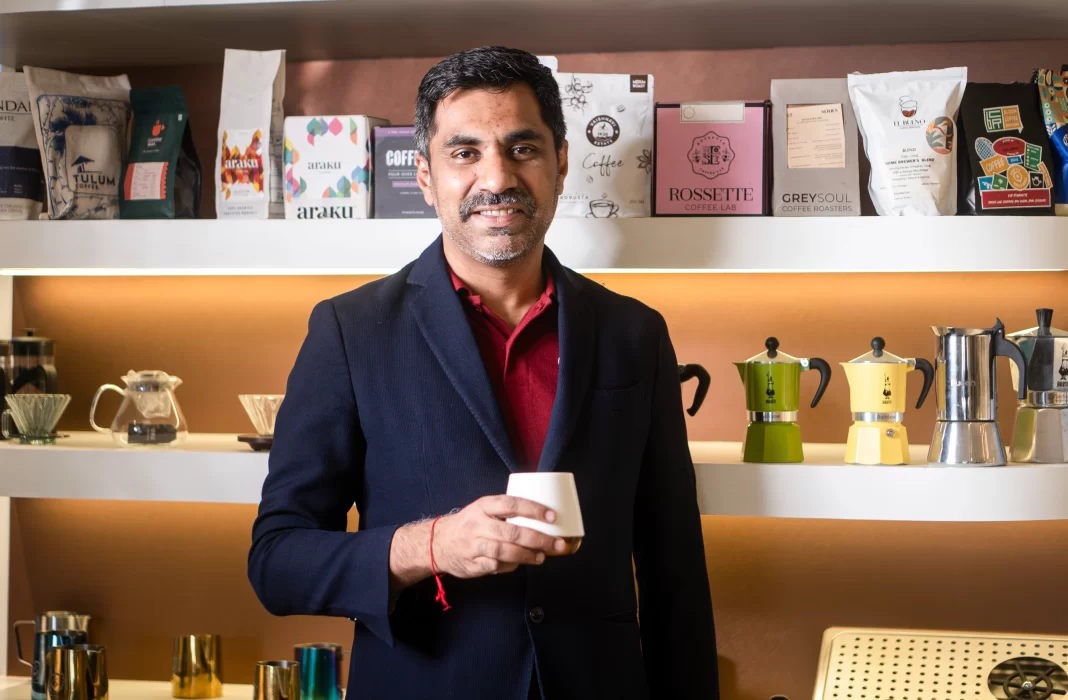

As a certified coffee & literature lover, I have read and scrolled past this line N number of times: “I have measured out my life with coffee spoons” by T.S. Eliot. I know, I know…In The Love Song of J. Alfred Prufrock, the coffee spoon is hardly a celebration of coffee, but when my team at The Restaurant Times told me we were going to interview Abhinav Mathur, I had to sit down with- haven’t we been doing the exact same thing for the past few years, perhaps even more so after the pandemic, except that somewhere along the way, the spoon became the whole experience?
We stock coffee beans at home, look up grinders online, visit cafés a little too frequently, and share on social media whether this coffee is the best or that. For many, the everyday ritual around coffee is the lifestyle.
And, in many ways, Abhinav has been building in this exact space. With a background in FMCG and consumer durables, he has always looked at the product “through the lens of consumer behavior, technology, and experience.”
He shares, “India already had a deep relationship with coffee, but the conversation was largely about the beverage rather than the experience around it. We had filter coffee traditions, instant coffee at home and a rapidly expanding café culture, but there was still a relatively small conversation around the equipment, technique, provenance and craft behind the cup.”
Plus, he noticed that people preferred going to a café, as if that was the only place a good coffee could happen. “I felt there was a much larger opportunity around everything that happened before and after that café visit, like how coffee was brewed, understood and experienced at home and at work.” And that’s pretty much what he went on to build across his three different businesses.
| About the Three Brands in Abhinav Mathur’s Portfolio Kaapi Machines | The B2B side Founded in 2007, Kaapi Machines provides equipment, technology, training, consulting, and service to cafés, hotels, QSRs, offices, roasters, and other professional coffee businesses. Today, the brand works with over 5,000 cafés, 200 hotels, 2,000 offices, and 3,000 individuals, with partnerships spanning Rancilio, Hemro, and La Marzocco to collaborations with Araku Coffee, Subko, Theobroma, Nandan Coffee, and McDonald’s. Something’s Brewing | Consumer-facing Something’s Brewing is built around home brewing. It sells coffee equipment and gear, but also runs workshops, community events, and a physical Coffee Experience Center to help people learn and experiment with the product in real time. Budan | The product side Budan is a home-coffee equipment brand. It aims to make café-style coffee more accessible at home, with products designed around kitchen sizes, usage patterns, serviceability, and price points Indians are more comfortable with, rather than simply importing an international product and putting it into the market. |
Because the Pandemic was How India Learned Brewing…
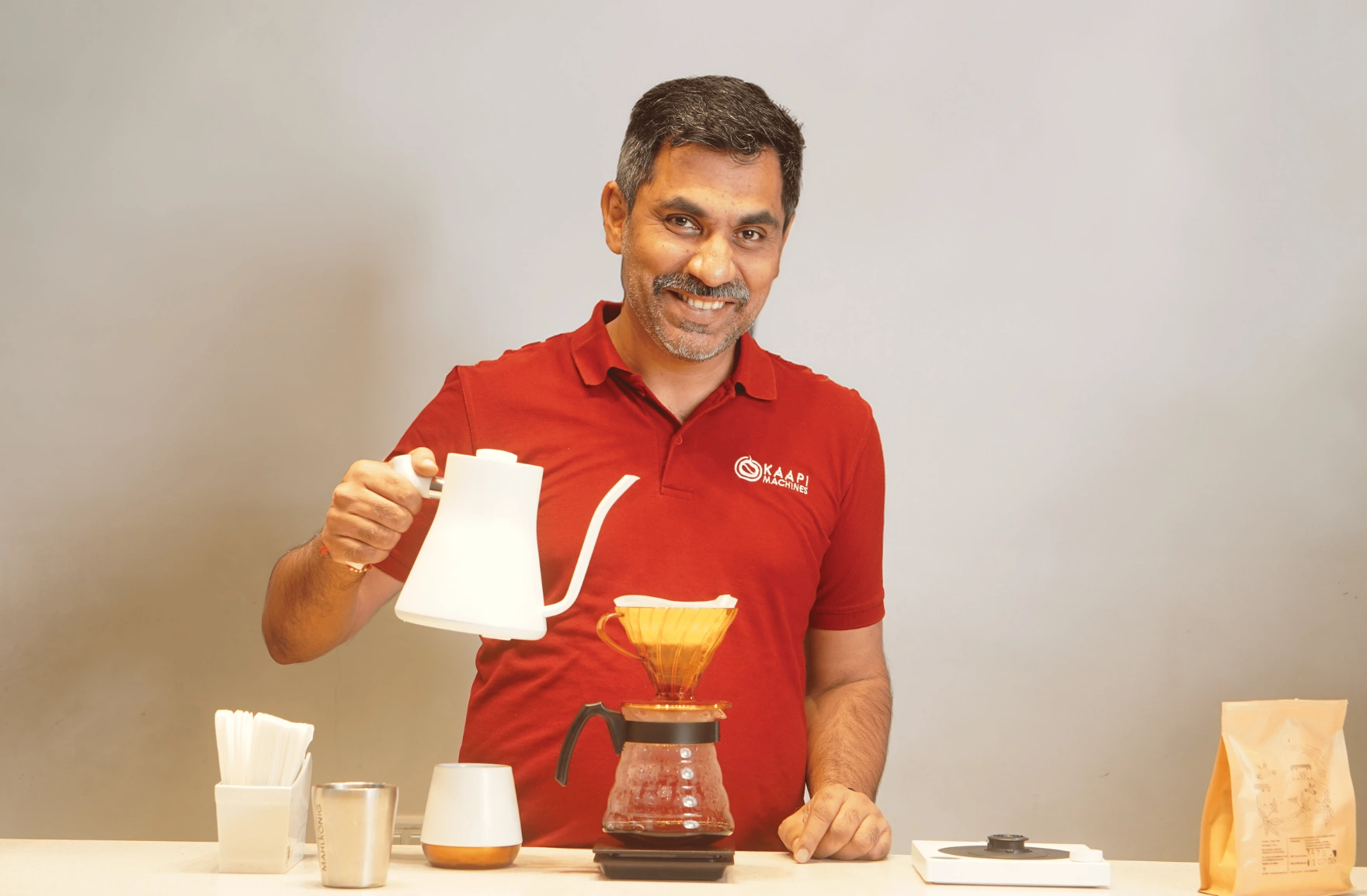
Something’s Brewing was launched in 2020. Back then, home brewing in India was still very, very niche. But when the pandemic forced most cafés to shut, people suddenly had to recreate the overall coffee experience right at home.
“We started seeing consumers asking much deeper questions: Which beans should I buy? How should I grind them? What is the difference between a French Press and a pour-over? Why does the same coffee taste different depending on how I brew it?”
That, he says, was one big signal that homebrewing was not just another pandemic fad. “We were seeing a shift from simply wanting coffee to wanting to understand coffee.”
Now, more and more people bought a simple brewer, then came back for better beans, grinders, scales, kettles, and eventually espresso equipment. Something’s Brewing captured this category by building around “education, experimentation, and community.”
When Convenience and Craft are on Venn
Convenience is: I want coffee quickly.
Craft is: I want to understand why this coffee tastes the way it does and how I can make it better.
Right at the intersection is home brewing, where people want “convenience, obviously, but there’s also a desire for control and experimentation.”
That might mean buying freshly roasted beans instead of pre-ground coffee, looking at the roast date, adjusting grind size, controlling water temperature, changing the brewing ratio, or experimenting with different brewing methods.
The important thing is that craft doesn’t necessarily mean complicated or expensive. A pour-over can be extremely simple. What changes is the consumer’s curiosity.
And let me tell you that, according to the Coffee Board of India and CRISIL consumer research, while traditional powder-to-brew coffee remains the most common format for home consumption, 5-10% of consumers aged 18-35 are now moving toward sustainably sourced coffee and 10-15% toward specific estate coffee. They are starting to care about questions like whether their coffee tastes good. Is it sustainable? Is it convenient? How do they brew it? And, perhaps most importantly, what exactly are they brewing?
Thirty Thousand Home Brewers And No Two Are the Same
Something’s Brewing has a community of over 30,000 home brewers, and the most interesting thing about it is that you can’t really draw one profile of them anymore.
“You have young professionals who discovered specialty coffee through cafés, entrepreneurs and people working from home, serious hobbyists, families who have upgraded their morning coffee ritual, and increasingly consumers who simply want to understand what goes into the coffee they drink.”
The path they take, though, is weirdly consistent. Like… almost everyone out there starts with an accessible manual brewer or a basic machine. Then they begin experimenting with different coffees and brewing methods. Next, they look for more control by investing in grinders of their choice, kettles, scales, and eventually, more advanced espresso.
The point is, the more people learn, the more they experiment, upgrade, and develop their preferences. Basically, what happens is the “premiumization” of their experience, and that, btw, doesn’t mean buying the most expensive product available.
Of course, there are people who are willing to spend significantly more on coffee equipment and beans. Something’s Brewing has seen particularly interesting demand in the ₹50,000–₹1 lakh coffee-machine segment, alongside a niche but meaningful market for machines in the ₹3–5 lakh range, as well. For a home appliance, that’s wild!
But premiumization, Abhinav says, is about spending more intelligently.
A consumer who understands coffee may decide they don’t need the most expensive machine. They may spend instead on a better grinder or better beans because they understand where that money can actually improve the cup.
And this isn’t a metro-only thing. “The conversation may look different in a Tier 2 city, but the curiosity is very real.” Through workshops, community events, and distribution, Something’s Brewing is increasingly reaching consumers outside the traditional Bengaluru-Mumbai-Delhi axis.
| Must-Read: Coffee itself is hardly new to India. The Coffee Board traces its history here to 1600 AD, to the legendary holy saint Baba Budan. Then, during the 18th century, commercial coffee plantations were started, thanks to the success of British entrepreneurs in conquering the hostile forest terrain in South India. Since then, the Indian coffee industry has made rapid strides. In the late 1990s and 2000s, brands like Café Coffee Day and Barista made café-style and espresso-based drinks really popular. Later, Starbucks entered India in 2012, and a new generation of independent roasters followed. For example – Blue Tokai, which launched in 2013, says that when it entered the market, Indian specialty coffee was still a small domestic category, with much of the country’s specialty Arabica production going overseas. A decade later, the company says the number of specialty coffee producers it works with has grown to more than 100. That shift also changed the vocabulary. Today, people are more aware of terms like single-origin, estate, roast profile, processing, and grind size. Who brought this change, though? Was it brands, cafes, the internet, or did people just learn it themselves? Abhinav believes it’s a combination of all four, but the consumer is still at the center. He says, “Cafés introduced people to specialty coffee. Roasters introduced them to origin, processing, and roast profiles. The internet gave consumers an enormous amount of information. But ultimately, consumers themselves became curious enough to start experimenting.” |
What Home Brewing Does to Café Visits & Experiences Around It
When someone starts homebrewing, they become much more discerning. No, it doesn’t mean they are now more difficult to please, but Mathur says, “Once you understand coffee, you notice things you previously might not have noticed, like its temperature, extraction, milk texture, consistency, the freshness of the coffee, and even the way the drink is presented. That actually raises the bar for cafés.”
But still, in no way does homebrewing cannibalize the cafés.
“Home brewing doesn’t eliminate the café experience because cafés offer things that a home kitchen can’t replicate, be it in terms of hospitality, discovery, social interaction, new coffees, food and the experience of being somewhere.”
The two feed each other, in his words: “The more consumers understand coffee at home, the more interesting their café visits can become. They walk in with questions, preferences, and curiosity rather than simply ordering whatever they have always ordered.”
From the operator’s perspective, such changes push them to improve their consistency, training, equipment, and menus.
For example, if you consider chains like McCafe, Starbucks, Slay, etc., they are no longer looking at the coffee machine as an isolated piece of equipment. They are thinking about the entire coffee operation, including workflow, consistency, automation, training, service, equipment utilization, and ultimately the customer experience.
Three years ago, Abhinav says, conversations were “more equipment-led.” Today, the questions have changed shape: “How do I maintain consistency across multiple outlets? How do I reduce dependency on individual skill? How do I train teams faster? How do I make the bar more efficient during peak hours? How do I introduce new beverages?”
Growing into that space, Kaapi Machines has developed into “a much broader coffee solutions business, combining equipment with consulting, training, technology, installation and after-sales service,” and it’s what the company’s recent investment from Sedna HoReCa is aimed at strengthening: “product portfolio, manufacturing, technology, warehousing and service infrastructure.”
Where India Stands Against Australia, Japan and Korea
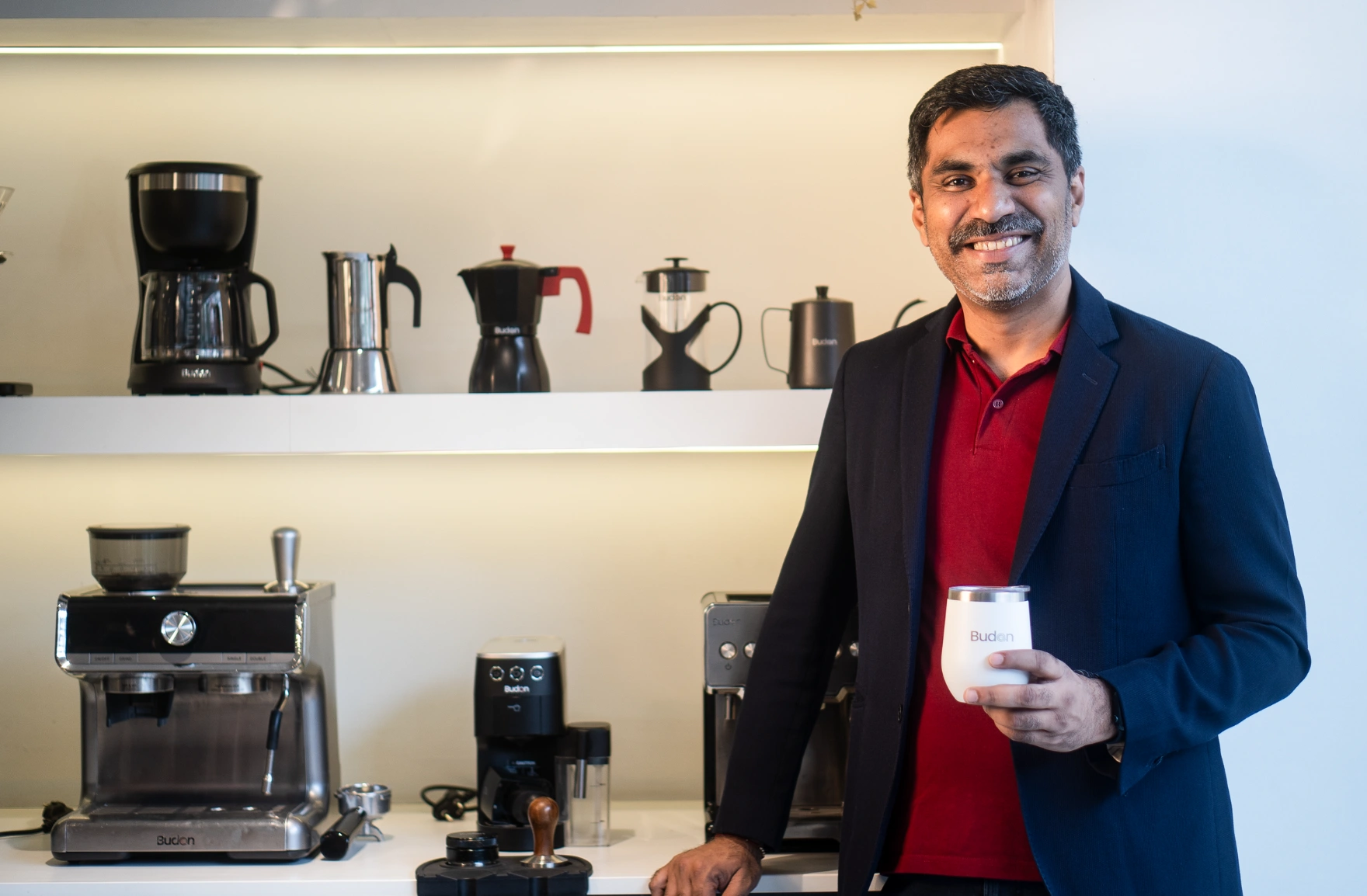
India grew coffee for centuries while drinking tea, and is only now becoming a serious consuming market in its own right. Measured against mature coffee cultures like Australia, Japan and Korea, “India’s advantage is that we have something those markets cannot replicate: a complete coffee ecosystem within one country. We grow coffee, we have increasingly sophisticated roasters, an expanding specialty café scene, domestic equipment businesses, a growing consumer base and a young population that is highly receptive to experimentation.”
Where India still trails, by his own admission, is depth of habit.
“Where we still have distance to travel is scale and maturity of consumption. Markets such as Australia, Japan and Korea have had much longer periods of developed coffee culture, established consumer habits and deeper penetration of specialty equipment and knowledge.”
But he frames that gap as an opportunity. He emphasizes, “We don’t have to copy those markets; we can develop a distinctly Indian coffee culture that combines our traditional coffee heritage with modern specialty coffee.”
Five Years Down the Line, Abhinav Mathur Believes…
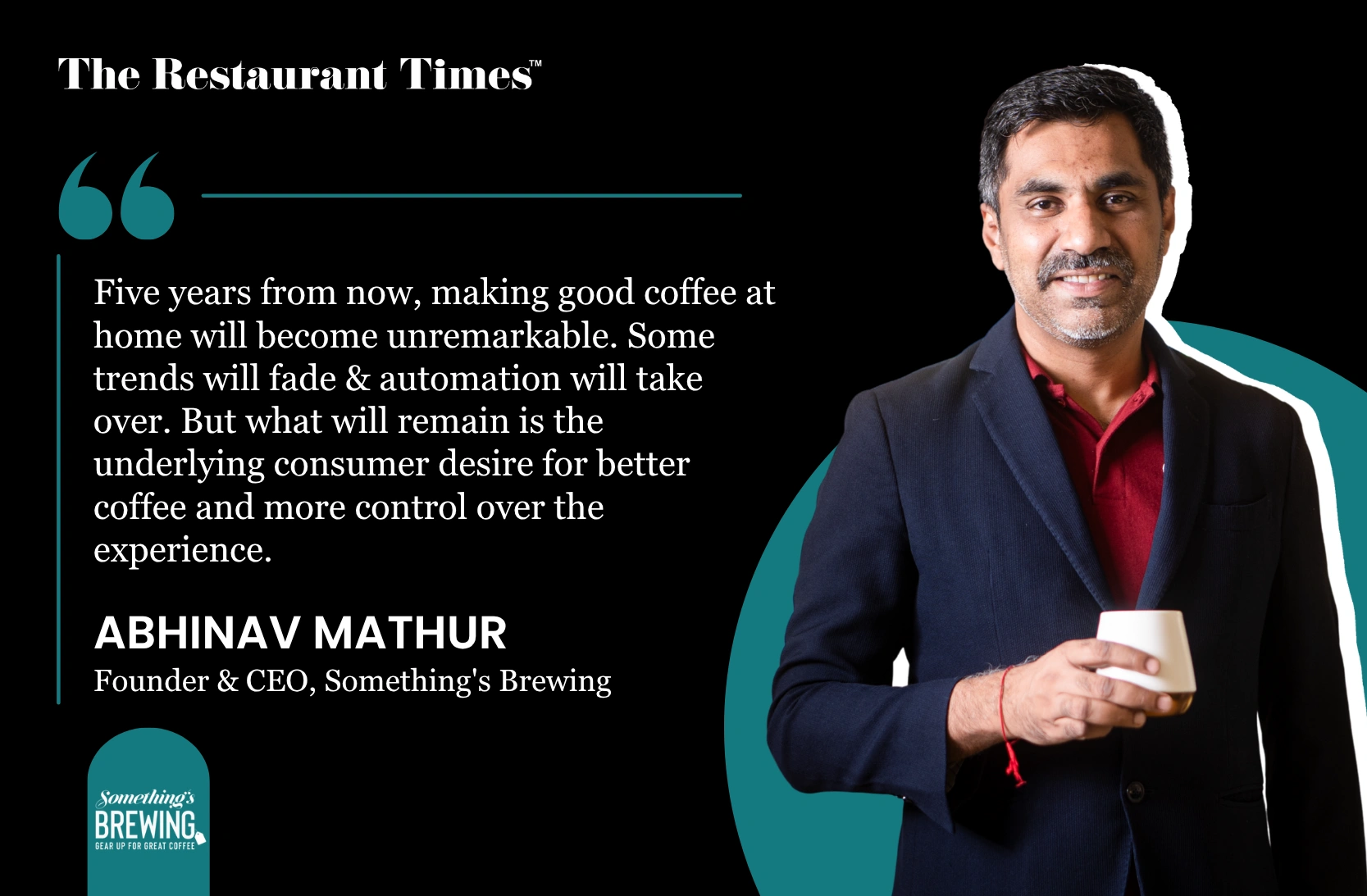
“Making genuinely good coffee at home will become completely unremarkable. Today, owning a serious coffee machine or experimenting with different brewing methods can still feel like a hobby or lifestyle choice. Five years from now, I expect a much larger number of households to think of coffee equipment the way they think about other kitchen appliances.”
Not everything about the current moment will make it that far, though. “Some of the jargon will disappear. Some equipment will become easier to use. Automation will take away complexity from the brewing process. And some trends that are currently driven by novelty will naturally fade.”
What will likely stay, he says, is the appetite underneath all of it, i.e., “the underlying consumer desire for better coffee and more control over the experience.”
As he sums it up, “the long-term opportunity isn’t about selling more complicated equipment. It is about making great coffee easier, more accessible and more enjoyable.”