

Akshay Balwani is an experienced F&B entrepreneur. He is a Director at Upper Crust Foods Pvt. Ltd., the master franchisee of Sbarro, New York Pizza, in India. After working in the publishing and technology industry, including a stint at Microsoft as a Product Marketing Manager, Balwani’s passion for food led him to join his mother and Managing Director, Rashmi Balwani. After identifying a huge potential for high-quality pizzas in the value segment, he took on the reins of the master franchisee of Sbarro LLC in India.
As a pizza brand, Sbarro is known for delivering authentic New York-style pizza. Pizza, as a category, enjoys great popularity in the country, with several international and national players competing with each other. Sbarro, in the middle of all this, has been able to create a unique foothold in the market and has built a strong presence of its own.
In a conversation with The Restaurant Times, Balwani shared insights from his entrepreneurial journey about how to sustain and grow in a competitive market, the role of localization, operations, and technology in building a sustainable business model, and what it takes to run a successful franchise.
Expansion Strategy and Sustaining Growth
Since Sbarro first entered the Indian market in 2012, it has expanded to a number of outlets (some say 12…Sbarro India’s own store locator lists 27+).
For the first five years, the brand’s Managing Director, Rashmi Balwani, who is also Akshay’s mother, took up the brand conceptualization and set up the whole structure for the business. As a company, Balwani said they realized early on that they did not want to be one of those brands that open and close in quick succession.
“There are multiple reasons for this; it could be the wrong choice of partners, location, the mismatch between the brand and what the customer wants, and misalignment of the offerings with the branding,” he explained. “Therefore, we decided to take it slow and focus on keeping the brand aligned with what we offer.”
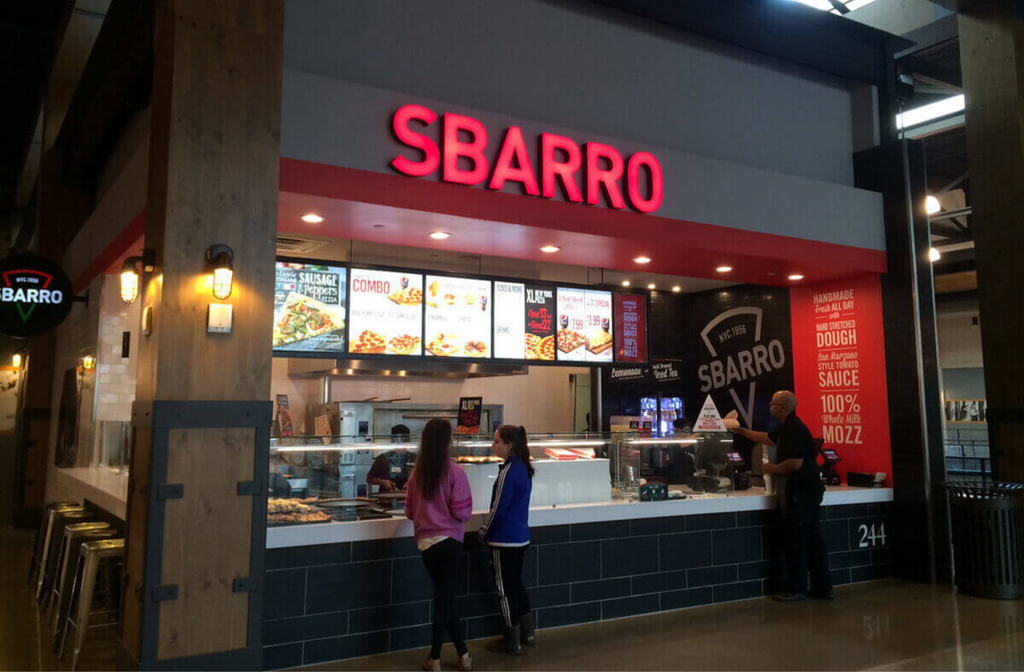
Sbarro offers a premium product at value pricing, and the brand wanted to play in this niche. Globally, Sbarro has done well in malls, entertainment hubs, convenience centers, and transit hubs like airports, railways, and highways, and in the Indian market as well, the team latched onto that and built its way forward.
The food court model has worked well for Sbarro India, with a presence across all A and B category malls in Mumbai city. In Pune and Ahmedabad, the brand has also built a delivery model keeping in mind local tastes and preferences, taking the global product and tailoring it for the local market, while its high street presence works well to meet the demand for delivery in India.
“Our approach has been to make the model work and then expand, instead of expanding and then hoping it works,” Balwani said. “This is one of the reasons why you won’t see sudden outlet launches and closures with Sbarro like with so many other brands. We are not a brand that would open 8 outlets in a year and then suddenly close them all down in the next year.”
Pricing Strategy and Balancing Cost with Inflation
On formulating an effective pricing strategy and balancing the cost of product versus pricing amid rising inflation, Balwani was candid that it remains a constant challenge. “Quite honestly, I don’t think that anybody has mastered it, especially in the value segment,” he said.
Bigger volume players like Domino’s and McDonald’s, he noted, have the volume required to lower their cost enough that the product becomes affordable after a certain threshold, but the margins prove that it gets hard for mid-segment brands with 30 to 50 outlets to balance pricing versus cost, since they carry the cost structure of a big company without the volume needed to achieve economies of scale.
What Sbarro has always tried to do instead is benchmark a target in terms of food costing and play with discounting, product mix, menus, values, and combos to hit that target with some variance, accounting for inflation and other changes.
Random shocks, like the pandemic-driven spike in cheese prices, remain outside anyone’s control. “When these big shocks happen, it’s out of your control, and all you can do is tighten your belt and hold on until it waves off,” Balwani said.
Tailoring the Menu for India
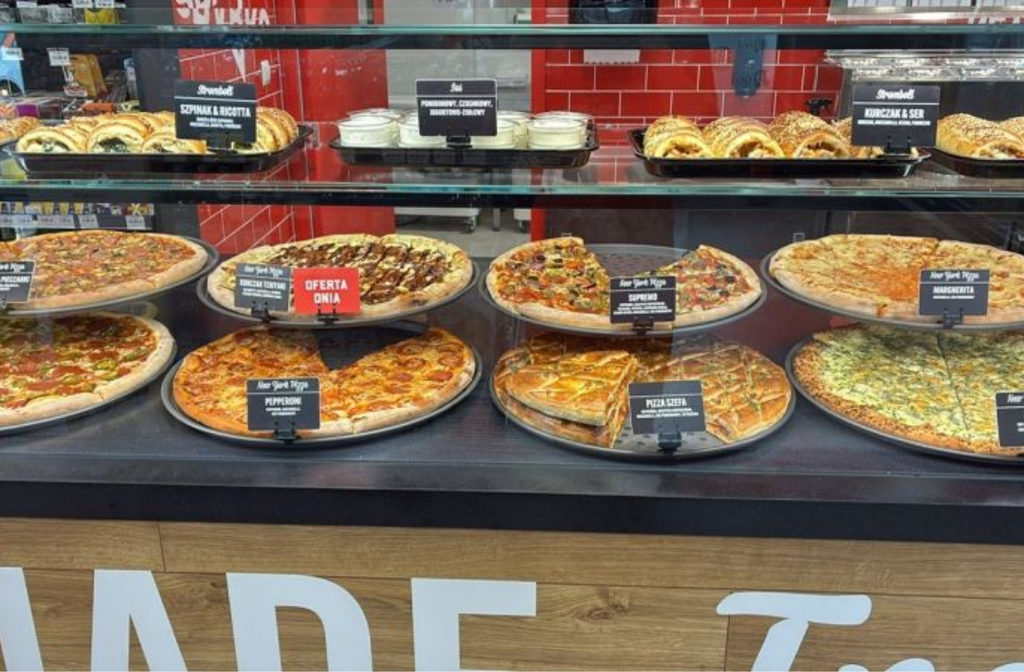
Sbarro is renowned in New York for its unique menu offerings, and tailoring that menu for the Indian market came with its own challenges, most of which Rashmi Balwani navigated while setting up the first outlet, since international brands come with their own set of challenges that have to be adapted to the Indian market. She had to figure out how much of the menu needed to be Indianized and how much needed to stay traditional.
“I think balance is the key in every segment of the product category,” Akshay Balwani said. “We need to have some Indianisation and some globalization. But it shouldn’t happen at the cost of brand identity as it’s something the brand is known for.”
The traditional, supreme, signature product was kept intact, with a whole range of Indian localized products added alongside it.
India, Balwani pointed out, is too large a country for one kind of localization to work everywhere; a market like Ahmedabad needs its own localization, just as Mumbai needs its own. “That said, everything can be local,” he said. “But if you are a brand that is bringing the authentic New York experience, you can’t localize everything because then you have lost what your brand stands for and what’s unique about you.”
Around 40 percent of Sbarro India’s menu remains traditional, and 60 percent of it is localized, including a barbecue pizza with a tinge of spice and sweetness and a Mexicana pizza with a tinge of salsa and spice that Indian customers prefer. “So it’s not that I am putting everything Indian flavored, but it’s about making the product what the Indian customer would prefer,” Balwani said.
Competing in a Tough Pizza Market
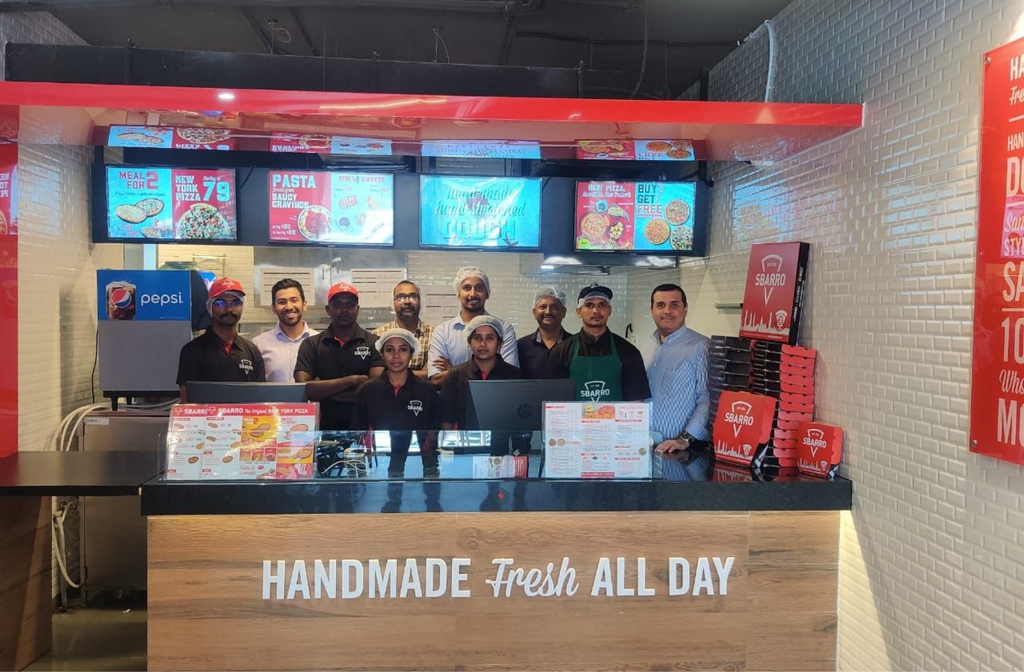
Pizza is a tough category in the Indian market, with stiff competition between national and international brands.
The pizza market, Balwani said, is too large; globally, the burger market is said to be the largest and pizza the second largest, though in India he believes it might be the other way round, given how many market leaders and local players are competing at once.
The key factor in Sbarro’s growth has been staying true to its niche. “If you are just like everybody else, then there is nothing that will make you last in the long term,” Balwani said. “In the short term, you might be able to attract the audience by launching a whole bunch of offers and other things that could work for the shorter term. However, if you want to make it work in the long term, then you have to find a niche.”
Three fundamentals anchor Sbarro’s pizza, and the brand does not change them regardless of price pressure:
- Hand-stretched dough
- San Marzano-style tomato sauce, and
- 100% whole-milk mozzarella cheese.
“No matter what the price is, we will not waver away from our fundamentals,” Balwani said.
Everything else depends on learnings from the market and the competition, including big players like Domino’s and Pizza Hut as well as local favorites that differ by neighborhood, whether it’s Malad, Bandra, or Andheri.
While keeping the core constant, the brand plays with value and flavor, ensuring every bite along a slice delivers on the flavor promised, whether it’s a barbecue, makhani, kadhai, supreme, or pepperoni pizza.
“At Sbarro, we say that if you finish your pizza till the edge and don’t leave it, then you are eating a Sbarro pizza,” Balwani said. “But if you don’t, then you’re probably eating one of our competitors’ pizzas.”
Running a Successful Franchise Model
Operating a business, Balwani has said, is different from operating a franchise.
While owning a restaurant franchise may look like a get-rich-quick scheme to some, it takes a great deal of hard work, time, and money to sustain and thrive.
Two things stood out among his key tips for running a franchise successfully.
The first was addressing what consumers want. Sbarro LLC delivers pizzas across 630 eateries in 28 countries, and Sbarro India operates as a master franchisee in a market where the customer base looks very different from other countries.
India’s market is far more delivery-focused than the US, which pushed the brand to build its own delivery model to serve local consumers. A lack of awareness of consumer wants and spending behavior, Balwani noted, can lead to a downfall.
The second was communication with the franchisor.
Franchisees have to run the business in accordance with the franchisor’s brand specifications, and a proper communication channel is vital to maintaining transparency of operations and eliminating confusion between franchisee and franchisor.
“Making our franchisor understand the Indian market and running the business according to the customer needs is how we run the business and not essentially how it was running for all these years,” Balwani said. “We serve pizzas by innovating them according to the local taste, like BBQ Paneer and Chicken pizzas as well.”
Running a franchise model to its maximum potential also comes with its share of challenges, chief among them striking a balance between what the parent brand has built over the years and the aspirations of its franchisees, with the franchisor weighing marketing dynamics and price sensitivity while the franchisee stays true to the brand’s core values.
Reaching consensus on what to offer the market matters just as much, since franchise owners don’t own the brand itself, only a license to operate it for a specified length of time, which makes it important for the franchisee to help the parent brand understand local tastes and preferences.
Online Delivery vs. Dine-in
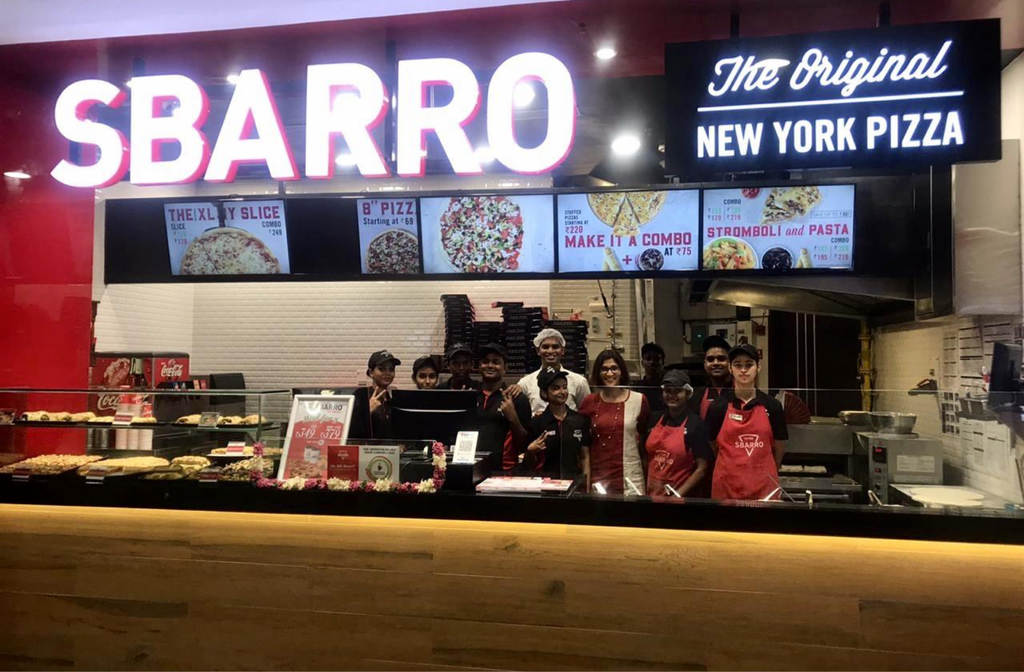
Online delivery through third-party food aggregators like Swiggy, Zomato, and Uber Eats has evolved drastically in recent years, becoming one of the fastest-paced developments in the e-commerce space and giving consumers the ability to choose from a wide variety of cuisines, anywhere, anytime.
“In Tier III markets, people would still like to go out and dine in at restaurants,” Balwani said. “But in Tier I markets, due to heavy traffic and the evolving trend of having food delivered at home, consumers like to order food at home. More and more consumers are shifting towards ordering food at home.”
Partnering with online delivery partners shifts control of product quality from the restaurant to the delivery partner while the order is in transit, which is why Sbarro built its own delivery model to keep deliveries smooth without disturbing the product.
Balwani has also observed that customers have grown less attached to the final product itself; he shared instances of customers complaining about a delivered product, only to keep ordering from third-party aggregators anyway because of the discounts and offers on the table.
“The food service industry might be growing, but the restaurant space is risky, and there are so many factors at play,” he said. “Many restaurant startups never last beyond the first 3 to 6 months. A risky business that can go big or fail quickly, or slowly. One must be absolutely convinced that their business will leapfrog competitors, even when the worst possible problem they can imagine comes along and casts a dark shadow on their confidence.”
Technology’s Role in Optimizing Operations
Technology, Balwani said, has made a world of difference to how Sbarro operates.
Over the last decade, technology has evolved dramatically. For one,
- Legacy POS software for the enterprise used to run on a server and SQL with no internet connection, syncing once a day, leaving restaurateurs dependent on staff to send data manually.
- There were no aggregators around a decade ago.
- Deliveries could not be tracked
- Inventory reports came in late
That has changed over the last six to seven years.
With the advent of the cloud, data has become far more accessible. Sbarro’s POS is now integrated with delivery aggregators, giving live data on orders. Balwani and his managers use the Restroworks cockpit app.
“No matter where I am in the world, I can easily check data through the app,” he said. “I don’t have to call anybody to get any information.” Real-time data on stock and purchases, and visibility into how much stock is left at each store, has changed how the business is run.
The base kitchen module has also helped in understanding variance in products, since a detailed recipe exists for every dish, helping cut down overall food costs. “Even if there is a discrepancy of 5% in terms of the food costs, it can be tracked with the help of the tech we’re using,” Balwani said.
Vision and Advice for Restaurateurs
On where Sbarro goes from here, Balwani doesn’t believe there’s a straight path to any goal. “I strongly believe that you can set a goal, but how you get there will constantly keep changing,” he said.
Sbarro’s goal is to move from a single-city presence in India to a multi-city one, and how it gets there will depend on the city and the customer, whether that means a mall, a high street, or a cloud kitchen.
“We don’t know a few answers yet, and I think that is part of the journey, but what we do know is that we want to keep executing well on our product,” Balwani said.
His advice to restaurateurs is to keep executing well on the product and keep operations top-notch.
“Marketing and competition from other brands may give you a small dip once in a while,” he said. “But it won’t let you die. It would ensure consistent organic growth for you.”
He added that it isn’t enough to simply have a good product. Brands need to keep evolving and developing new products while continuing to execute well, since operations, in his view, are what a brand wins on, not marketing or hoardings alone.
“Each brand knows what they want to do, and I don’t want to say anything but keep executing well and keep growing,” he said. “That’s my motto.”