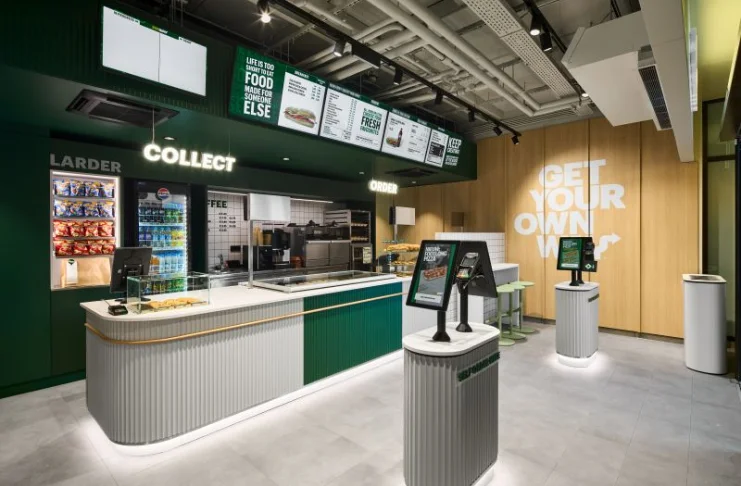

Subway has introduced Blueprint, a redesigned restaurant format for Europe, the Middle East and Africa (EMEA), as the sandwich chain prepares for a major regional expansion and seeks to adapt its restaurants to changing customer routines.
Announced on October 8, Blueprint is scheduled to roll out across new restaurants and remodeled locations in the region from 2027. The concept has been tested in the United Kingdom and the Netherlands and combines updated interiors, digital ordering, expanded daypart offerings and changes intended to make restaurant operations more efficient.
The format gives customers more ways to order, including self-service kiosks, mobile apps and delivery platforms. Digital screens display order progress, while a clearly designated collection point is intended to make pickup more straightforward. Subway also says the layout is designed to help its Sandwich Artists prepare customized orders more intuitively.
The redesign is part of a wider regional strategy that aims to double Subway’s EMEA footprint from approximately 5,000 restaurants to 10,000 over five years. The region includes markets across Europe, the Middle East and Africa, as well as India, Pakistan and Sri Lanka.
Blueprint also seeks to make Subway relevant across more occasions, rather than relying primarily on lunch and traditional sandwich purchases.
The format introduces breakfast offerings and a coffee program, with grab-and-go options planned for locations such as transport hubs. Some restaurants will also test Subway After Dark, an evening concept that changes the ambiance and menu from 6 p.m. Warmer lighting, a dedicated evening playlist and different digital menu boards accompany offerings such as mac and cheese, footlong pizzas and waffle fries. Drinks and desserts are also part of the evening range.
The approach reflects a wider challenge for quick-service operators: making existing restaurant footprints productive across more hours of the day while offering customers greater convenience and choice.
Subway EMEA president Tracy Gehlan said the format was designed around customers’ preferences for how and when they order and eat, while also aiming to improve restaurant economics for franchisees.