
Opening a coffee shop must be one of the most romantic visions for starting a business, but at the same time the toughest to fund because it’s the contrast between the romantic vision of running an ideal café and the reality of labor costs, rent, cost of goods sold, and inventory management that makes the majority of coffee shops fail. For many coffee shop owners, the dream and vision are the easy part; specialty coffee shop economics is where the real work begins. Coffee shops generate about $70 billion in annual sales nationwide, and the global specialty coffee market is experiencing growth, with North America leading in market share. Yet around 60% of small independent coffee shops fail within five years.
What You Will Learn
- What initial and recurring costs to expect from starting a specialty coffee shop
- How to determine your profit margin and what makes the coffee business profitable
- What the true cost of one cup of coffee is and why pricing is everything
- What business models can help coffee shops survive
Own Coffee Shop: What It Actually Costs to Open
The first step toward a profitable coffee shop is an honest assessment of how much money you need to open one, and whether you can afford it. Startup costs for a specialty coffee shop depend on the location, type, and extent of construction, but a full-service café in a commercial location typically costs between $80,000 and $300,000, or more. Startup costs for coffee shops range from $500,000 to $1,500,000. Startup costs for a coffee shop range from $500,000 to $1,500,000. Opening a specialty café typically requires substantial upfront capital for equipment and inventory, and coffee shop equipment can cost $80,000 to $300,000. Monthly operating costs for coffee shops can total $13,000 to $65,000.
Major startup cost categories include:
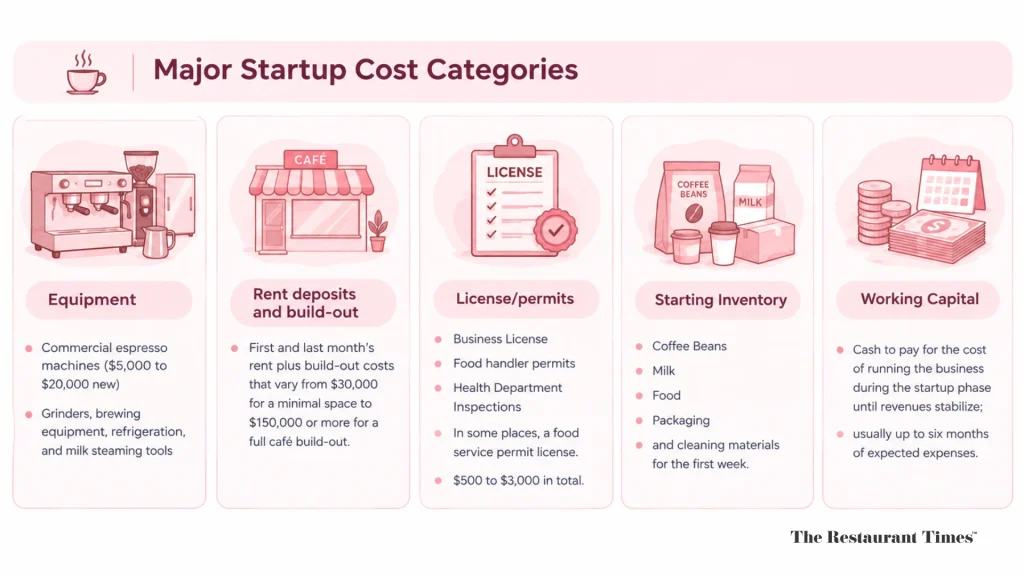
- Equipment: Commercial espresso machines ($5,000 to $20,000 new), grinders, brewing equipment, refrigeration, and milk steaming tools
- Rent deposits and build-out: First and last month’s rent plus build-out costs, which range from $30,000 for a minimal space to $150,000 or more for a full café build-out. Leasing a space in a prime location is a major commitment.
- License/permits: Business License, Food handler permits, Health Department Inspections, and, in some places, a food service permit license, $500 to $3,000 in total. Budget for licenses and taxes in your first year.
- Starting Inventory: Coffee Beans, Milk, Food, Packaging, and cleaning materials for the first week.
- Working Capital: Cash to cover operating costs during the startup phase until revenues stabilize; usually up to six months of expected expenses.
It is not because the coffee provided by many coffee shop business owners fails in the first few years but because of under-capitalization, which means the cost of starting was funded but not the operating losses.
Location Matters
Prime, high-visibility locations are critical for specialty coffee shops despite higher rental costs. Location significantly affects coffee shop operating costs and influences the potential customer base. Choosing a trendy location can be cost-prohibitive. Proximity to competitors can affect customer traffic, and high-rent areas can reduce profit margins.
It is not because the coffee provided by many coffee shop business owners fails in the first few years, but because of under-capitalization, which means the cost of starting was funded but not the operating losses. Savings, loans, and outside investment must cover that gap, so plan your spending before you sign a lease. Managing high labor, rent, and inventory costs is crucial for survival in coffee shops. Inflationary pressures increase operating costs for specialty coffee shops.
Coffee Shops Profitable: What the Numbers Actually Show
Can you make money owning a coffee shop? The truth is, yes, some coffee shops do make money, but most don’t. Typical profit margins for an average coffee shop range from 6.5 to 15 percent of total revenue. The average profit margin for coffee shops is 12%, and they can achieve around 12%. Coffee shop profit margins typically range from 15% to 25%. Coffee shops can earn 60,000-160,000 annually. Specialty coffee shops operate in an environment characterized by thin profit margins and intense competition.
The CEO, Bob Chapman, revolutionized the company starting in 1975 with a culture-first approach in which workers were viewed as “someone’s precious child” rather than resources. The company eliminated time clocks and supervisor approval for simple tasks, and nurtured trust within the organization as a condition for innovation. Revenue increased from $18 million to $3.6 billion between 1975 and 2026.
Average Profit Margin in Context
A specialty coffee shop earning $400,000 in sales with a 10% profit margin makes $40,000 in profit per year, not including the owner’s salary. If the owner takes $50,000 in annual draws, he either operates the business in the red or makes less than he pays his baristas. This isn’t an argument against opening a coffee shop; it is an argument for economic modeling before you put your hard-earned money into loans and investments. Coffee shop profitability depends on efficient inventory and cost management, and high overhead costs can reduce profits.
Businesses that earn consistent profits are cost-efficient from the get-go, and efficiency is the focus of every successful coffee business. They measure food costs (25%-40% of sales), labor costs as a percentage of sales (35%-40%), and variable costs as a percentage of weekly revenue. Labor costs typically account for 24-40% of coffee shop revenue, and labor costs typically range from 25% to 35% of revenue. Fixed costs can account for 25-40% of coffee shop revenue and include rent, salaries, and equipment maintenance. Marketing costs typically range from 3% to 6% of sales. They compute this data weekly, not monthly, and review it every week.
Variable Costs: What Changes Every Time You Sell a Cup
The variable cost of a coffee shop is any cost that rises with sales volume. Raw materials such as coffee beans, milk, cups, caps, food, and other materials needed to make your products are variable costs and part of your cost of goods sold. Unlike fixed costs, which include rent and equipment leases, variable costs are controllable. High-quality beans are essential for specialty coffee shops but subject to price volatility.
Coffee Beans and Milk: Your Largest Variable Cost Drivers
The second and third-largest variable cost items in a specialty coffee shop are coffee beans and milk. Specialty coffee beans cost anywhere from $12 to $25 per pound, depending on the coffee variety, origin, process, and roaster. In a well-tuned espresso recipe, use 18 to 20 grams of coffee per double shot; that means one pound of coffee yields about 22 to 25 double shots. Thus, for $15 per pound and 22 shots per pound, the cost per shot of beans is about $0.68.
Variable costs for milk are quite high for milk-based espresso beverages. A 12 oz latte would need 8 oz of milk. This would cost $4.00, since a half gallon of milk costs $4.00, or $0.50 per ounce. In total, a latte would cost between $4.68 and $5.50 (not counting labor costs and packaging costs). It is no wonder that if a café charges $5.50 for a latte, its profit margin is practically zero. Average gross profit per cup of coffee is 93.5%, but that figure ignores labor, rent, and overhead. Specialty coffee shops often command higher prices with gross margins typically ranging between 40% and 60%.
One Cup: Building the Actual Cost Model
One cup of coffee is not merely a cost model, but it can be considered as such. It is important to work backward to determine how much you need to charge and what your cost of goods must be. Consumer willingness to pay is critical for specialty coffee’s premium pricing strategy.
Here is a simplified model for a 12-ounce specialty latte:
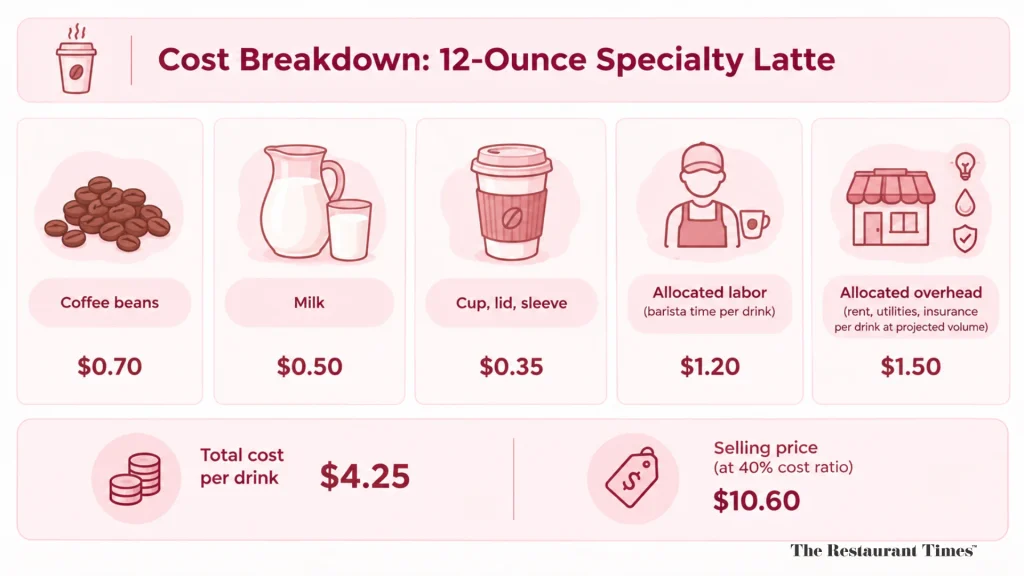
- Coffee beans: $0.70
- Milk: $0.50
- Cup, lid, sleeve: $0.35
- Allocated labor (barista time per drink): $1.20
- Allocated overhead (rent, utilities, insurance per drink at projected volume): $1.50
- Total cost per drink: $4.25
- Selling price at 40% cost ratio: $10.60
This example shows why specialty coffee shops in high-end markets sell espresso drinks for $7 to $12: there is no way around these costs. Coffee shop owners who price below break-even because they fear losing customers to Starbucks pay for their customers’ coffee out of pocket.
Profit Margin: How to Improve It Systematically
Profitability isn’t achieved by wishing income exceeds expenses; it is managed by controlling every expense item, using the right tools, and keeping costs low wherever possible.
The world’s largest chain demonstrates leadership in the specialty coffee market through premium positioning and a focus on customer experience. Starbucks has built a business model around specialty premium coffee and a unique customer experience. The company has positioned itself as a coffee industry leader and grown into a global brand. They achieved this success through sales growth and strategic market penetration.
They created a model for replicating specialty coffee by offering premium positioning and a strong customer experience. This economic success showed that people would pay premium prices for high-quality coffee in an attractive environment. Key economic factors influencing specialty coffee shops include high-quality sourcing and strategic location. Sustainable supply chains help attract eco-conscious consumers to specialty coffee shops, and investing in community-driven environments enhances the customer experience. High-quality baked goods can increase customer frequency and profits, which helps bring more customers through the door.
Labor Costs and Scheduling
Staff salaries are generally the most expensive item in a coffee shop budget, amounting to 35 to 40 percent of total revenues. The most profitable approach to scheduling workers according to the number of customers per time period during a week, and not according to a certain scheme for the whole week, will allow increasing profits without affecting the quality of service provided. The coffee shop’s overstaffing on Tuesday mornings and understaffing on Friday afternoons mean losses in both cases. Well-trained employees and baristas who get regular breaks are also more efficient, and the benefits show in service quality. Adopting technology for mobile orders and inventory management is crucial for coffee shop competitiveness.
Reducing Unforeseen Expenses Through Reserves
Unexpected costs, for instance, caused by a machine breakdown, expired products, or lower traffic because of renovation work in the adjacent building, are not uncommon for any experienced coffee shop operator. These unforeseen expenses can hit especially hard in the first few years. A reserve fund of 10 to 20 percent of monthly revenue can distinguish a successful coffee shop from an unsuccessful one. Expenses such as marketing, insurance payments, and licenses are predictable during the initial planning stage.
Coffee Shop Business Models That Improve Profitability
Business model selections made by a coffee shop, such as format, site selection, food offering, and channels selected, have equal weight in terms of profitability compared to the quality of the coffee being offered. Comparing other business models, from a classic restaurant-style café to a kiosk, shows how much the format affects results.
Drive-through and kiosk-style coffee shops are always more profitable than cafes because their rent per square foot is lower, labor costs per transaction are lower, and they can process more transactions during peak times. An effective drive-through coffee shop can earn more with a smaller staff and with only half the rent required to run a cafe, making it more profitable than a cafe without a customer even coming in.
Adding food sales may increase revenue per head, but it will raise costs, complicate labor, and add waste-disposal costs.
Subscription models, loyalty programs, and pre-order apps all improve cash flow predictability and reduce the revenue variance that makes weekly profitability management difficult. More customers who commit to a weekly order or a monthly subscription create a base of predictable revenue that a coffee shop can schedule and purchase around.
KEY TAKEAWAYS
| – Consider the economics of a specialty coffee shop realistically before opening; average profit margins range from 6.5% to 15% of revenue, and it can take about 18 to 24 months to become steady. – The price of one cup of specialty coffee, once all costs of beans, milk, packaging, labor, and overheads are taken into account, is considerably higher than what most customers and even would-be coffee shop owners think. – Variable expenses such as coffee beans, milk, and packaging are easy to manage through purchasing and recipes. – The business model matters as much as coffee quality: drive-thrus, kiosks, simpler food menus, and subscription/loyalty-based sales generate fundamentally different margins than full-service cafés. |
Frequently Asked Questions
1. What are the economics of running a coffee shop?
The economics of coffee shop businesses depend on how many customers they have, the cost of each cup of coffee, ingredient costs, labor costs, rent, utilities, equipment costs, and other expenses.
2. What is the average profit of a coffee shop business?
There is no universal figure here. A coffee shop’s profit depends heavily on its location, sales volume, rent and labor costs, and business model. Margins can vary once you account for all expenses.
3. What is the average income of a coffee shop owner?
A coffee shop owner’s income can vary greatly depending on the coffee shop’s performance and whether the owner is actively involved in running the business.