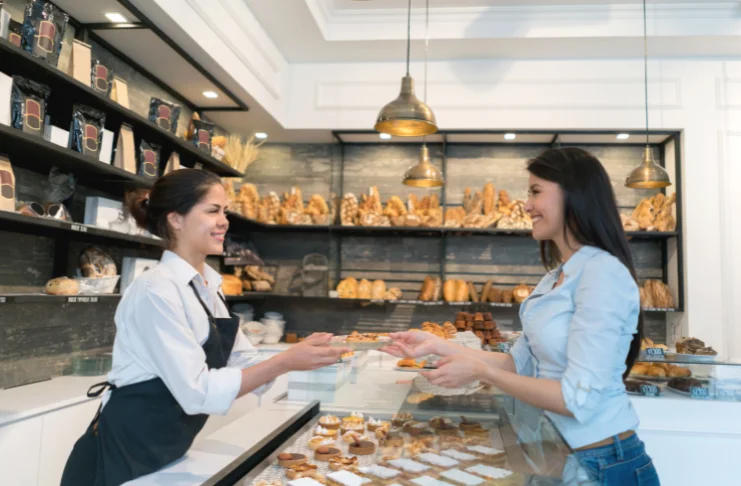

Step into a bakery coffee shop, and chances are that you will find yourself grabbing a table, ordering some coffee together with your croissants, and staying put until you have consumed everything. Step into an all-bakery and you are looking for a dozen donuts, sourdough loaves, or macarons. You’ll be out in five minutes. It is a bakery. They do sell baked goods. However, they have totally different business models, costs, staff needs, and paths to profitability.
Understanding the difference before you launch matters enormously. Choosing the wrong model for your skills, your market, and your capital position is one of the most common and most expensive mistakes in the bakery business.
What You Will Learn
- How the bakery cafe and pure play bakery models differ in operations, costs, and customer experience
- The advantages and limitations of each model for different bakery operators
- How real-world examples illustrate what makes each model work in practice
- How to choose the right model for your concept, market, and capital
Bakery Cafe vs. Pure Play Bakeries: The Core Distinction
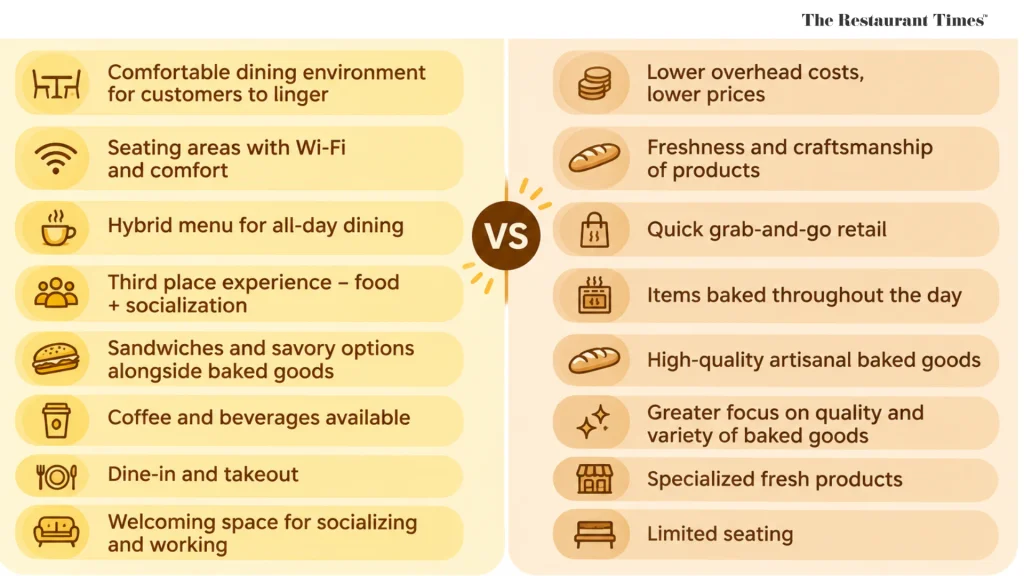
The key factor that distinguishes the two establishments is the fact whether the act of sitting down is included in the product. The bakery café provides an experience; people come for the coffee, then sit for pastries and sandwiches for lunch. In the case of a pure-play bakery, people come for the bread, pies, and rolls, and that is all they care about: the quality of the goods placed into the box.
The global bakery products market size is projected to grow from $515.89 billion in 2026 to $326.55 billion by 2034, growing at a CAGR of 3.59%.
The two business formats could be great businesses, but they compete differently and appeal to customers in different ways and for different reasons.
Bakery Operates as a Pure Play Bakery: What This Model Delivers
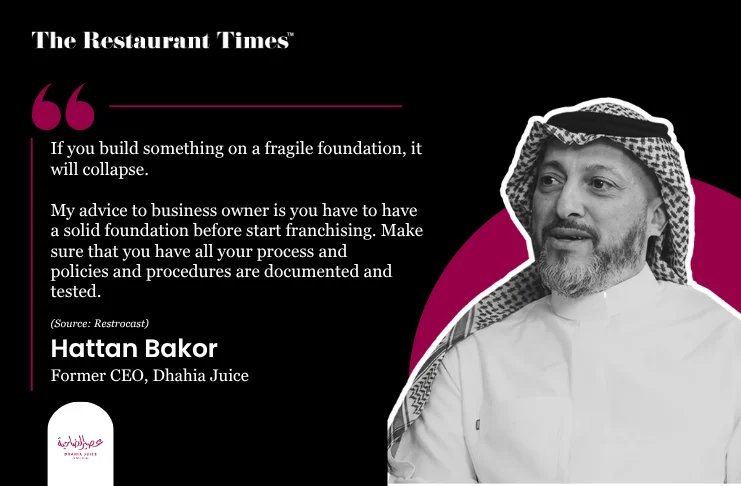
Hattan Bakor, Former CEO of Dhahia Juice, explains how important it is to have a strong foundation for any business. SOPs, business plans, assigned roles, licenses, and other procedures need to be finalized and taken care of before you get into the business. One of the most important steps here is knowing what kind of business you want to start or franchise. This will be the blueprint for the rest of your procedures before your big launch.
Pure-play bakeries focus on quick grab-and-go retail. Pure-play bakeries emphasize traditional experiences, highlighting visual appeal, like using trusted flour to make homemade dough. Pure-play bakeries frequently bake products throughout the day. Pure-play bakeries often produce items on-site for better freshness and have art as part of their appeal. Pure-play bakeries focus more on quality and variety of baked goods. Pure-play bakeries typically have limited seating. The model offers much more than that. Let’s explore it.
Pastry Chef: Focused Excellence and Operational Simplicity
The pure play model lets bakers create a level of focus a bakery cafe cannot always afford. Without overseeing a dining area, a coffee program, and a full lunch service, owners can dedicate all their efforts to what they bake and how well they bake it.
Long’s Bakery in Indianapolis is an iconic example of the focused model in action. With its modest cash-only setup and dedication to baking the most perfectly glazed yeast donuts, Long’s Bakery has garnered cult status in Indianapolis over decades. The appeal of Long’s Bakery is neither the atmosphere nor the coffee; it is the donuts themselves, freshly baked every day from recipes the family perfected over the years. People queue in front of it long before it opens its doors. People make a trip from other parts of town. The donuts are absolutely inexpensive and utterly delicious. There is nothing better about the pure-play model than this: one thing, done better than anything in the whole town.
Best Bakeries Revenue Model and Profitability
Pure-play bakeries earn revenue purely by selling products at the bakery counter, through wholesale clients, from the stall they occupy at farmers’ markets, and increasingly online with local deliveries. The potential to earn per customer is lower than at a bakery cafe because there is no sale of coffee or meals in addition to bakery products; it may also lack alcoholic beverages if the bakery does not offer them.
Developing wholesale clients that supply restaurants, cafés, grocery outlets, and food service enterprises with bread or specialty bakery products is a natural path to growth for pure-play bakeries. Special occasion cakes include those for birthdays and weddings. A bakery cafe that purchases its flaky croissants from a local pure-play bakery, since it cannot produce such high-quality croissants, is a predictable source of income that will scale up. Multiple branches become possible without the complication of running an entire café business at different locations.
Bakery Cafe: What This Model Delivers
Bakery cafes provide a comfortable dining environment for customers to linger. Bakery cafes focus on convenience and comfort with seating areas. Bakery cafes often feature amenities such as Wi-Fi and comfortable seating. Bakery cafes typically require more floor space for seating. Bakery cafes emphasize a third place experience combining food and socialization. Bakery cafes generate higher margins through coffee and light meals. Bakery cafes offer a welcoming atmosphere suitable for socializing and working. Bakery cafes offer both baked goods and meals. Bakery cafes see foot traffic through breakfast and lunch. Let’s read ahead to know what more the model offers.
Customer Experience as the Product
Equal Measure in San Francisco is one of the best examples of how bakery cafes operate at their finest. It serves as a community meeting place, where the croissants, egg tarts, and whipped cream pastries are outstanding, but where the coffee program and the experience of sitting there are equally as good. The shop is like a diner with ample space for eating and may even provide foods besides just pastries. People don’t just come to this place to enjoy the bakery products; they come because Equal Measure is where they want to spend time.
The bakery cafe business model offers more than a bakery, which supports its success by giving customers an experience rather than just a product.
A bakery cafe menu usually includes more than baked goods; people can order sandwiches, soups, and other deli items that provide additional afternoon revenue. While a pure bakery usually closes in mid-morning because everything has already sold out, a bakery cafe can attract significant sales in the late morning and early afternoon hours.
Amélie’s French Bakery & Café is a multi-location French bakery café that increased awareness and drove sales growth across 5 locations through strategic PR and seasonal menu promotion. After nine years in business with fading media coverage, Amélie’s hired SPARK Strategic Ideas to develop an annual PR and social media program.
The agency created quarterly seasonal menu campaigns, on-air cooking segments with local broadcast stations, hand-delivered media packages (picnic baskets, macaron samplers with spice jars), and hosted media tasting events. They repositioned the brand beyond coffee and sweets to showcase their full savory menu and handcrafted seasonal offerings across locations in North Carolina, South Carolina, and Georgia.
The campaign succeeded by revealing Amélie’s best-kept secret—their quarterly rotation of 30+ handcrafted seasonal items—and creating experiential, sensory media engagements that matched the brand’s Parisian patisserie charm. The strategic shift from purely coffee-and-sweets positioning to showcasing breakfast, lunch, and dinner options expanded their relevance in saturated markets like Charlotte and Atlanta.
“As management admitted, Amélie’s seasonal menus were one of the best-kept secrets in Charlotte! No one knew that their chefs and baristas handcrafted over thirty new seasonal items, four times a year.”
Staffing and Operational Complexity
This is because the bakery-café business model entails running two different operations at once: the production bakery operation, which begins several hours before the café is open, and the café itself, which operates to serve customers throughout the day. More staffing and management are needed, and the production and service sides of the business depend more on each other. Any hold-ups in production, like late bread production, can affect the entire business operations.
Corner Bakery Cafe achieved a $200,000 increase in system-wide Average Unit Volume in six months by leveraging technology for revitalization. Corner Bakery Cafe implemented technology-driven improvements across its café locations to support its revitalization and growth strategy. The chain focused on operational technology integration to enhance unit-level performance and customer experience across its system of cafés. Unit-level technology integration improved operational efficiency and the customer experience, directly translating into measurable revenue growth per location. The systematic rollout across their café chain created compounding benefits.
Cinnamon Rolls, Egg Tarts, Flaky Croissants, and Other Baked Goods: Where Product Excellence Matters Most
Regardless of which model you operate, the quality of what comes out of the oven is the non-negotiable foundation. A bakery cafe with a poor pastry case and a great coffee program is a café.
A pure play bakery with mediocre donuts and disappointing pies has no reason to exist.
The items that make a bakery what it is–cinnamon rolls layered in butter and stuffed with spiced sugar, egg tarts whose flaky butter pastry encases the silky baked custard inside, croissants that shatter on first bite and cover your fingers in buttery layers–all require true craftsmanship to be done right on a consistent basis. These are unforgiving items. The croissant made from scratch takes three days of laminating. Egg tarts are difficult to calibrate when it comes to custard. Cinnamon rolls require dough development, proofing control, and fill ratio to avoid messing up.
Paris Baguette has shown us through its growth process that a bakery-café format can work when there is proper investment in the product and the café itself. However, the product, which consists of the baguettes, cakes, and filled pastries, is what makes the customers come back. The café concept simply makes them available to customers.
Whipped creams, fruit compotes, seasonings, and toppings that turn pastries from good to spectacular also separate a serious bakery from an adequate one. They are time-consuming but only visible to customers when they are missing.
Croissants and baguettes are popular baked goods in many bakeries. Challah and brioche are popular types of bread in bakeries. Danishes and conchas are common in Los Angeles bakeries.
Another common trend nowadays is other pastries such as gluten-free options, vegan options, and healthy options in bakeries. This is what businesses need, and most bakeries are switching up their game to offer them.
Region-specific liked products and how so many bakeries are working as per their customers’ preferences:
- Twin Cities bakeries offer whimsical sheet cakes and frosted domes.
- Titus Bakery is known for award-winning donuts and pastries.
- Paczki are traditional Polish donuts popular in Minnesota. Mousse cakes are a Ukrainian party staple, often displayed at celebrations.
- Kyiv Cakes in Lakeville specializes in colorful mousse cakes.
- Ruhland’s Strudel Haus offers handmade strudel with sweet and savory fillings.
- Papá Chuy’s bakery features traditional Mexican pastries like conchas.
- Heidelberg Haus serves authentic German pastries like Black Forest cake. Long’s Bakery has been serving donuts since 1955.
INDUSTRY INSIGHT
| The market size of the Bakery Cafes industry in the United States is $17.8 billion in 2026. The Bakery Cafes industry in the US has grown at a CAGR of 1.3% between 2020 and 2025. |
Pure-play artisan bakeries are simultaneously growing at comparable rates in urban and suburban markets as consumer demand for authentic, high-quality baked goods continues to expand.
Choosing Between the Two Models
The right model depends on three things: what you are genuinely excellent at, what your market needs, and what your capital position can support.
If you have an edge in baking skills, choose the pure-play bakery model. That means your pies, bread, donuts, or pastry items are better than others in the market. In the pure-play bakery business model, you can focus on creating better items, build wholesale accounts to ensure consistent revenue, and open several stores in different locations without the management complexities of café operations.
On the other hand, if you have an edge in hospitality services and experiences, then you should choose the bakery cafe model. This means you want to create a local destination where customers can stay and come back for coffee and other items, and also refer others because of the overall experience. In the bakery cafe business model, you will make higher revenues per customer and per square foot.
Do not choose a hybrid model because you are uncertain; you must choose it deliberately, because you have the skills, the team, and the capital to execute both sides with excellence. A bakery cafe where the pastries are mediocre, and the coffee is uninspired has no clear identity and no compelling reason for customers to choose it over a dedicated café or a dedicated bakery.
KEY TAKEAWAYS
| – The bakery and café approach sells the concept of an experience, baked goods in addition to café culture, and calls for hospitality skills and production skills at the same time, more employees, and greater start-up costs than a pure play. – The pure-play bakery strategy succeeds because of its single-minded focus on quality products, simpler processes, and scalability into wholesale revenue without the burden of café management. – Quality of product–truly excellent cinnamon rolls, egg tarts, croissants, pies–is the unassailable basis of both approaches, while the approach is simply the wrapper, and the baked goods remain the essence. – Select your business model based on where you truly excel, what your market wants, and what your capital allows, rather than picking the model that sounds better on paper. |
Frequently Asked Questions
1. What is the difference between a bakery cafe and a pure play bakery?
A bakery cafe combines a production bakery with full café service, including coffee sales, seating, and sometimes a lunch menu to extend income throughout the day. On the other hand, a pure-play bakery focuses solely on producing and selling baked goods without adding café service. This difference lies in the operations involved in both models.
2. Is a bakery cafe or pure play bakery more profitable?
Neither model is inherently more profitable, since profitability varies by location and execution. Bakery cafes make more money per customer through coffee and food service, but operating costs are high; pure-play bakeries benefit from a simpler cost structure and can build a strong wholesale business, which isn’t possible for a bakery cafe. Pure-play bakeries have lower overhead costs, which translate to lower prices.
3. How do I choose between a bakery cafe and a pure play bakery?
Assess your authentic capabilities: if you are a baker who makes great products and your competitive strength lies in what comes out of the oven, then the pure-play strategy means building on those strengths.
4. What are the startup costs for each model?
The pure-play bakery will cost anywhere from $100,000 to $300,000 in startup costs, depending on production scale, equipment used, and location build-out.