
Diners want to eat quickly without feeling guilty. Healthy fast casual restaurants offer quick, wholesome food made with fresh ingredients, and the market continues to grow as consumers rethink quick food. According to Datassential, nine out of 10 consumers have dined at a fast-casual restaurant in the last six months. This guide covers leading chains, regional chains, special-diet restaurants, and ordering tips.
What You Will Learn
- What qualifies a fast-casual restaurant as healthy
- Leading chains, regional favorites, and special-diet restaurants
- Ordering tips comparing nutrition and cost
- Difference between fast casual and a traditional fast food chain
What Makes a Fast Casual Restaurant ‘Healthy’?
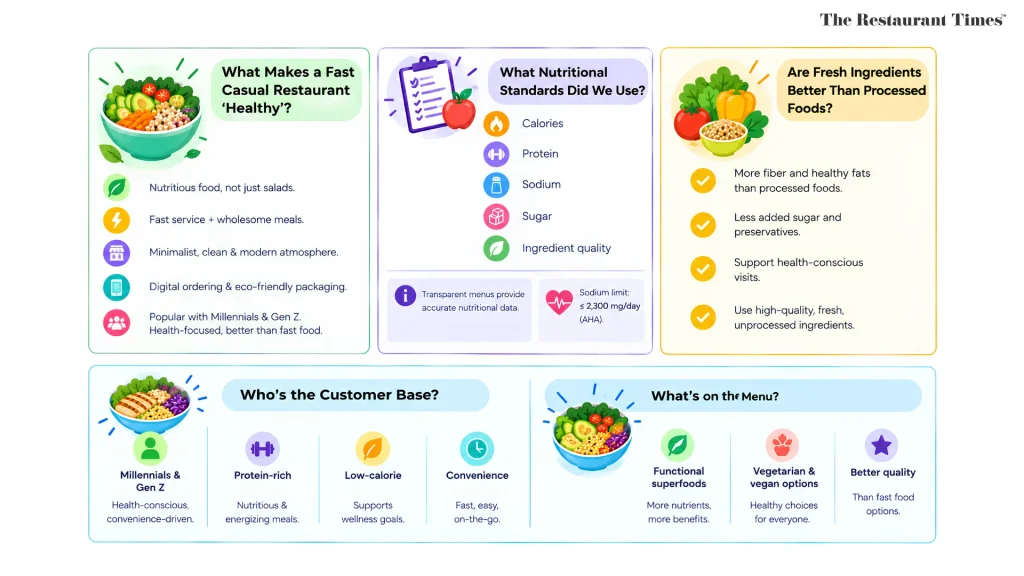
A good fast casual restaurant blends speed and nutrition, not just salads.
Healthy fast casual restaurants balance speed with nutritious food. Fast casual restaurants are known for healthy eating and quick service. Fast casual restaurants bridge quick service and casual dining. Fresh whole foods are among the important features of healthy fast casual restaurants.
Atmosphere and operations are also key factors. Healthy fast casual restaurants often feature a minimalist, clean environment and a modern, comfortable atmosphere. Digital ordering systems are common in fast casual dining for convenience. Health-focused, eco-friendly packaging is used in healthy fast casual dining.
The customer base comprises young adults in the Millennial and Gen-Z generations who want nutritionally rich, protein-rich, low-calorie foods with added convenience. Fast casual restaurants are considered better quality restaurants compared to fast food restaurants,s and there is a rising demand due to increased concern for health and nutrition.
The menu also incorporates the same. Fast-casual menus also include functional superfoods. Healthy menus also include options for vegetarians and vegans, giving consumers healthier choices without extra requests.
What Nutritional Standards Did We Use?
The criteria included calorific value, protein content, sodium content, sugar content, and ingredient quality. Transparency is key because people cannot make healthy choices without accurate data. Transparent menus provide the data needed on the diet’s nutritional content and properties. The American Heart Association states that daily sodium consumption should not be more than 2,300 mg. Be mindful of your sodium intake from sauces and processed meat products.
Are Fresh Ingredients Better Than Processed Foods?
That’s a critical difference between fast casual and fast food. Fresh vegetables, grains, and proteins provide more fiber and fat compared to processed foods. Moreover, fresh foods contain less added sugar and fewer preservatives, which is why health-conscious people visit them often.
Healthy fast casual restaurants use high-quality, fresh, unprocessed ingredients. Fast casual dining uses fresh and unprocessed ingredients. Fast casual restaurants offer fast, freshly cooked food, so you can easily watch your food being prepared in the bowl. This lets you control portion size and swap out items, something you can’t do at fast food restaurants.
What Are the Top Healthy Fast Casual Restaurants Nationwide?
All ten of these restaurants offer widespread availability and healthy choices, but it’s always up to you to order wisely. We preferred places with clearly labeled menus, customizable orders, and at least some healthy, balanced meals. No restaurant is completely healthy, so it comes down to the order itself.
1. Sweetgreen: Best for Custom Salads
Sweetgreen’s main advantage is its customizable salads full of superfoods like kale. Choose leafy greens as the base, add grilled chicken and roasted vegetables, and pick one of the light dressings. The reason is simple – here you can easily control the portions.
2. CAVA: Best Mediterranean Options
CAVA builds bowls around greens, brown rice, fresh vegetables, and proteins like grilled chicken or falafel. Made-to-order meals let you customize them to your dietary preferences. Choose hummus and olive-based toppings for healthy fats, and keep creamy sauces light.
3. Chipotle: Best Customizable Bowls
The CAVA menu features bowls made out of greens, brown rice, fresh vegetables, and proteins such as grilled chicken and falafel. Meals are customizable to suit one’s preferences. Choose hummus and olive toppings for healthy fats, but avoid too many creamy dressings.
4. Panera Bread: Best for Low-Calorie Salads
Chipotle lets you customize your meals with fresh ingredients. The Chipotle Chicken Burrito Bowl contains 43 grams of protein. Skip tortilla chips and creamy sauces, including chipotle aioli; instead, choose fajita vegetables.
5. Panda Express: Best for Lighter Asian Fare
Panera Bread serves low-calorie salads. Panera’s salads use fresh vegetables, making them low-calorie. Pair a salad with a broth-based soup to help you maintain a balanced diet.
6. Subway: Best for Calorie-Capped Sandwiches
Subway’s Fresh Fit products are under 400 calories. Choose whole-grain bread, pile on lots of fresh veggies, and use less sauce. Order a 6-inch sandwich with lean turkey or grilled chicken for a quick, easy choice.
7. Chick-fil-A: Best for Grilled Chicken
Chick-fil-A’s Market Salad offers blueberries and grilled chicken. A grilled chicken sandwich or wrap is healthier than fried chicken. Avoid French fries and replace them with apple pieces or other fruits.
8. Taco Bell: Best Customizable Value
Taco Bell’s Fresco Style options help reduce calories in its popular dishes. The Fresco Style items at Taco Bell contain just 160 calories. Burrito Supreme at Taco Bell is only 340 calories with customization.
9. Burger King: Best Among Burger Chains
Burger King is a fast-food restaurant, so you have to be smart when ordering. Order grilled chicken meals, go for small burgers, avoid onion rings and French fries, and use the nutritional calculator on their website. Use it as an alternative when no fast-casual restaurant is nearby, and pair your order with water.
10. Jimmy John’s: Best for Lettuce-Wrap Subs
Jimmy John’s offers options that help lower your refined carbohydrate intake. Order more veggies and less dressing to keep your meal light, and avoid the chips; opt for a basic sandwich with healthy proteins and plenty of lettuce, tomato, and cucumber.
Newk’s Eatery co-founder Chris Newcomb noted that customers are aware of the brand’s “fresh, from-scratch focus.” He also talked about what the new thing is that they are ready for.
EXPERT INSIGHT
| Customers of Newk’s Eatery are aware of the fast casual’s fresh, from-scratch focus, says CEO and co-founder Chris Newcomb, “and now they are ready to hear the functional message.” –Restaurant Business Online |
Which Regional Healthy Fast Casual Favorites Stand Out?
Regional chains fill gaps that national brands leave, and many lead on local sourcing.
What Is Best on the West Coast?
Mendocino Farms opened to 100 stores without sacrificing chef-driven quality, according to the firm’s CMO in Fast Casual Nation. Expect interesting sandwiches and salads made with fresh produce. This shows that expansion doesn’t mean compromising ingredient quality. If you have a location nearby, try ordering a half sandwich with a side salad.
What Is Best in the Northeast?
According to the company’s CEO, Adam Eskin, Dig Inn created a farm-to-table concept by cutting ties with traditional supply chains and building relationships with local farmers. Its bowls include fresh produce and whole foods, making it a strong option for those who want locally sourced products.
What Is Best in the South?
Newk’s Eatery offers made-from-scratch food and light salads. Its management has built a brand around freshly prepared meals rather than quick fixes. Chicken Salad Chick has grown to 309 units around a fast-casual dining and salad concept. These examples prove that there is great potential for healthy brands with local appeal in the South.
What Is Best in the Midwest?
Crazy Bowls & Wraps has 16 locations in the St. Louis region, offering a full range of dietary filters and ingredient customization. Kum & Go introduced made-to-order stackers, bowls, and pizza in 400 stores across 13 states, bringing healthy options into the convenience store channel. The all-daypart strategy lets consumers buy lunch, breakfast, and dinner on the go.
Which Healthy Fast Casual Restaurants Fit Each Diet Type?
Matching your diet to the right menu saves time at the counter and prevents frustrating substitutions.
Which Are Best for Keto Diets?
Avoid bowls with rice or beans, and choose protein-based bowls with vegetables and healthy fats like avocado or olive oil. Avoid sweet sauces and tortilla chips. It’s easy to pick a healthy meal at Sweetgreen and Chipotle because these restaurants can control their ingredients. Get additional avocado or guacamole for healthy fat, and ask for olive oil and lemon instead of sweet dressings.
Which Are Best for Vegan and Plant-Based Eaters?
d’Lite Healthy On The Go offers organic, plant-based, high-protein meals, and about 70-90% of sales come through drive-thru service. It also uses a technology-based approach, with mobile ordering, a branded app, and a loyalty program. This combination of healthy products and fast service shows that healthy customers are loyal. Sweetgreen and CAVA offer vegan products.
Which Are Best for Paleo Diets?
Paleo eaters should stick to whole foods like grilled meats, fresh vegetables, and olive oil dressings. Avoid grains, legumes, and dressings. Salad-first restaurants are the best option, but Chipotle salads are also a good choice.
Which Are Best for Gluten-Free Eaters With Gluten Sensitivity?
People with gluten sensitivity should stick to bowls rather than wraps and sandwiches. SoFresh uses digital menu filters, allowing consumers to choose and swap ingredients, making it easier for vegans and those following the keto diet. Celiac disease sufferers should pay attention to how the food is prepared.
Which Are Best for High-Protein, Low-Carb Choices?
Double the protein and halve the starch. A Chipotle chicken bowl already delivers about 43 grams of protein. Add grilled chicken at Sweetgreen, or choose a lettuce-wrap option at Jimmy John’s for a lower-carb meal.
How Can You Make Healthier Choices at Fast Casual Restaurants?
A few habits turn nearly any menu into a path toward healthy eating.
Should You Read Nutrition Information Before Ordering?
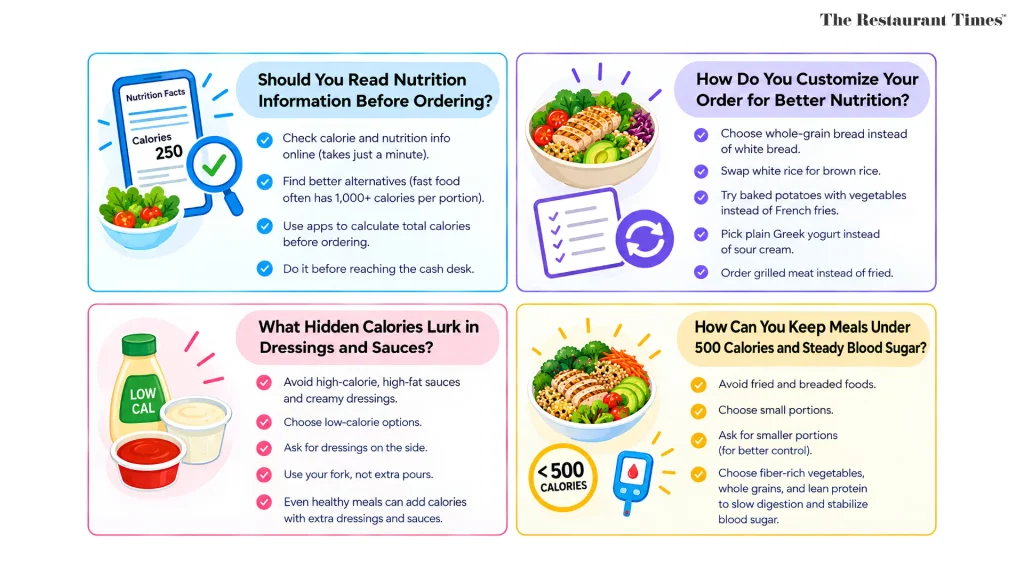
Yes, fast food restaurants provide calorie and nutrition information for menu items online, and it takes only a minute. Fast food usually provides more than 1,000 calories per portion, so this quick method can help you find a better alternative. You can choose a meal and calculate the total calories using apps before ordering, which makes the process easier. Do it before getting to the cash desk.
How Do You Customize Your Order for Better Nutrition?
Customized meal orders let people meet their dietary needs. Customized assembly-line food is popular in fast-casual restaurants. Try choosing whole-grain bread instead of white bread, and brown rice instead of white. Instead of French fries, try baked potatoes with vegetables; plain Greek-style yogurt is better than sour cream. Order grilled meat products rather than fried.
What Hidden Calories Lurk in Dressings and Sauces?
Large portions and calorie-dense sauces can lead to unhealthy dishes. Avoid sauces and creamy dressings high in calories and fat. Choose low-calorie dressings and sauces to minimize the dish’s overall calorie intake. Opt for dressings served separately to control calories, and use your fork instead of pouring it. An interesting podcast explains why even healthy meals ordered at a restaurant can be counterproductive. The same issue applies: extra dressings, sauces, and glazes can nullify the meal’s health benefits.
How Can You Keep Meals Under 500 Calories and Steady Blood Sugar?
Avoid fried and breaded foods to cut out harmful fats. Choose small portions to control calorie intake. Ask for smaller portions to keep calories under control. Fiber-rich vegetables, whole grains, and lean protein slow digestion and help stabilize blood sugar.
Fast Casual vs. Fast Food: What’s the Difference?
Fast casual restaurants usually offer fresher food and more control than a typical fast food chain.
How Do Quality and Ingredient Sourcing Differ?
Fast casual relies heavily on fresh preparation and visible ingredients, whereas many fast food restaurants rely on standardized processing techniques. Menu design is another factor to consider: CDC found healthier foods increased from 13 percent to 20 percent at case locations, while there was no such increase at control locations, where the percentage remained stagnant at 8 percent. The 12 percent increase clearly indicates the intervention caused it rather than a general market trend.
How Do Price Points Compare?
Fast casual is more expensive due to fresh ingredients, labor, and personalization. Premium prices may also reflect portion sizes and ingredient costs. The costs section will show how significant this difference can be.
Which Offers More Customization and Menu Flexibility?
Fast casual restaurants beat other food providers with their build-your-own lines. One well-known fast-food brand worked with The Decision Lab and audited their counters, kiosks, and drive-thru windows. They discovered that “parents don’t expect to find healthy options” at fast food. Healthy fast casual restaurants eliminate this need because customers don’t have to expect anything at all. Slim Chickens CEO Tom Gordon explains how Gen Z snack habits affect fast casual restaurants’ menus.
How Do Healthy Fast Casual Restaurants Compare on Nutrition?
This quick-look table summarizes the calorie and protein claims covered above.
| Chain | Healthy highlight |
|---|---|
| Panda Express | Wok Smart items under 300 calories |
| Subway | Fresh Fit items under 400 calories |
| Taco Bell | Fresco Style as low as 160 calories |
| Chipotle | Chicken Burrito Bowl about 43 g protein |
How Many Total Calories Are in the Average Meal?
Calorie requirements depend on individual body structure. Strive for a healthy balance of veggies, proteins, and limited grain servings. Most fast-food meals have more than 1,000 calories, so you’ll get about half the calories by eating lunch at a fast-casual restaurant.
How Does Protein Content Compare?
Chipotle tops our chart for protein, followed by Chick-fil-A grilled chicken for its lean protein in salads and wraps. Protein provides a feeling of fullness, so a high-protein bowl will not make you snack in the afternoon.
How Do Sodium Levels Compare Across Chains?
High-sodium foods include sauces, processed meats, and broth. Sodium intake should not exceed 2,300 mg per day. When low-sodium dressings are available, always choose them. Sodium levels vary from person to person; therefore, refer only to official nutrition sites. Grilling proteins and avoiding salty condiments can help reduce sodium intake.
INDUSTRY INSIGHT
| The healthy fast-casual segment has grown by over 20% in five years, outpacing traditional fast food, with 58% of consumers preferring organic, plant-based, or local options. |
What Does Healthy Fast Casual Cost on a Budget?
Although healthier fast-casual options may cost more than regular fast food, especially when they feature premium proteins, fresh vegetables, or customizable meals, you can still minimize the difference. Choosing plant protein, seasonal vegetables, smaller serving sizes, and budget-friendly meal options can help you eat healthy on a budget.
What Is the Average Price per Meal by Restaurant?
The average price per meal by restaurant is:
| Meal | Average price |
|---|---|
| Sweetgreen salad | About $16 |
| Big Mac meal | About $10 |
Price depends on city and build; take them for reference only.
Healthy fast-casual items are expensive because they use fresh vegetables and meat and require daily preparation. Expensive rents and lower scale compared with the biggest fast food restaurants also play a role here. However, the benefit is a healthy meal you can eat comfortably.
How Do Loyalty Programs Save Money?
The most common way to order from any restaurant chain is through apps that offer free items and deals, and ordering digitally makes it easy to customize your order. Register yourself before your first order and keep an eye on bonus days when they can combine offers. During a month of workday lunches, these small advantages can become significant savings.
What Are the Best Value Meals Under $10?
Consider half-sized salads, snack-sized bowls, and Fresco Style Tacos. Share a large bowl between two meals, and skip beverages to save more. Ordering a smaller meal can help with portion control, save money, and help you stay slim.
KEY TAKEAWAYS
| – Healthy fast-casual restaurants combine speed with fresh, minimally processed ingredients. – Customization is the most effective way to reduce calories and sodium. – Compare brands using calories, protein, and cost, not just the “healthy” label. – Fast-casual restaurants cost more than fast food, but loyalty programs can help close the price gap. |
Frequently Asked Questions
1. What’s the healthiest fast casual restaurant?
Sweetgreen, CAVA, and Chipotle offer the freshest ingredients and the most customization. It depends on your diet needs: fewer calories, more protein, or gluten-free. Create your own bowl, and you’ll get exactly what you want.
2. What is the healthiest thing I can get from a fast food restaurant?
The best option is a grilled chicken sandwich or salad with no sauces, but plenty of extra veggies. Avoid breaded patties and cream-based sauces; choose fruit or salad instead of chips.
3. What are the 5 healthiest fast food restaurants?
The best fast-food options for flexibility and healthy eating are Sweetgreen, CAVA, Chipotle, Panera, and Chick-fil-A. These places let customers choose their own toppings, sauces, and portions, which matters more than any single menu item.
4. Where is the healthiest place to get fast food?
Look for fast-food places with transparent nutrition info, fresh ingredients, and the option to build your meal. Fast-casual restaurants usually beat fast-food chains in this regard, but you can also shape the outcome with your order.