
The original Dar Hamad was constructed in the early 1960s on an open plot of land now known as Salmiya, which overlooks the coastline of Kuwait City. It was a large family home owned first by the Al-Hamad family and later by the Al Homaizi family, and it endured the golden period of Kuwait – the times of rapid development due to oil revenues that turned a pearl-fishing port into a modern city. As Sina Al Homaizi once told 3oud.com in a recorded interview: “At this huge house, the Al-Hamad family lived and went through Kuwait’s golden period.”
When the family decided how to use the place, a hotel or an office building was out of the question. They decided to open a restaurant, the only thing proper for a house where everyone dined and entertained.
A Family Name, a National Identity
Sina al Homaizi and her brothers established Dar Hamad out of admiration for the Kuwaiti cuisine they grew up on. In an interview with 3oud.com, Sina explained the rationale behind the idea, saying, “During the development stage of the idea we found that there is no restaurant in Kuwait which offers Kuwaiti cuisine in a modern style.” Kuwait was full of international restaurants, luxury hotels, and concept restaurants. But it lacked a fine dining restaurant that presented its own cuisine in a modern way.
Dar Hamad was built to be that institution. As the restaurant’s own official listing describes it: “The vision of Dar Hamad was to establish a modern brand to immortalize the traditional Kuwaiti culture and allow it to evolve according to the local taste.”
The Building as a Statement
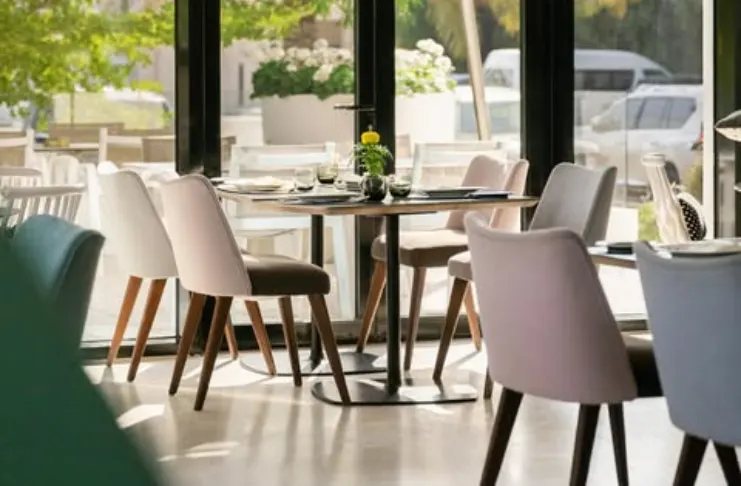
Local architect Hamad Alsaab designed the Salmiya flagship building, completely renovating the family house. Exterior architectural designs, according to the restaurant’s own information, “embody the rebirth of the Al Hamad family house that belonged to the Golden Era of Kuwait’s history.” Internally, the traditional Kuwaiti sandoog, the ornate wooden chest found in every important Kuwaiti interior, serves as the design inspiration. Artisan pottery adorns the restaurant walls, along with custom-made artwork commissioned from young Kuwaiti artists. Chandal wood, Indian sandalwood traditionally used as structural beams in Kuwaiti traditional houses, is one of the restaurant’s signatures.
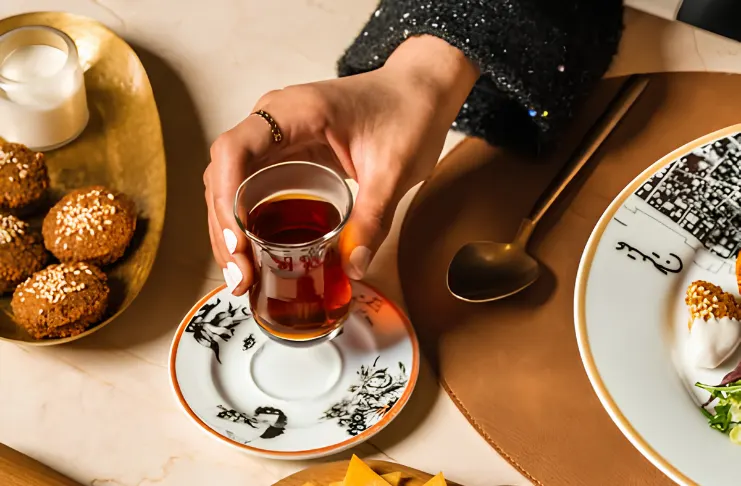
The restaurant has five parts: the main restaurant room, the outdoor terrace, the Chai Lobby for serving tea, the banqueting room, and the Sandoog boutique. The Sandoog Boutique is where guests can purchase heritage foods from Kuwait, as well as artisanal packaged products. The Chai Lobby lets guests enjoy traditional Kuwaiti tea service without committing to a full meal.
The Kuwaiti Table
The menu of Dar Hamad consists of traditional foods of Kuwait’s glory days cooked in a Kuwaiti kitchen with basic ingredients which, according to the vision statement of this establishment, “have become the tastes of choice for the local palates and enable the customers to savor the authenticity of the food served back then.”
The national fish of Kuwait, known as Zubaidi fish, is presented as motabag Zubaidi, which frequent customers consistently recognize as the restaurant’s hallmark. Machboos, the Kuwaiti spiced rice dish and the country’s national food, comes in its most authentic form. The Harees, a slow-cooked wheat-and-meat dish popular in the Gulf countries during Ramadan and festivities, is prepared with the patience it requires. Traditional Kuwaiti desserts complete the meal with date syrups, luqaimat balls, and grain puddings unlike anything in nearby cuisines.
Rich portions are a deliberate design principle: as the restaurant’s official statement puts it, “Kuwait’s distinctive hospitality is also represented in the food with rich portions being a central guideline in food presentation.”
What Dar Hamad Built

Since then, Dar Hamad has also opened a second outlet at Murouj Mall in Salmiya, designed by the same team, drawing on the desert fort of Al-Jahra and Kuwait’s Red Fort to differentiate it from the coast-bound first restaurant in its material language.
As mentioned in a 2014 blog post by 248am, one of Kuwait’s best-known independent food writers: “Fantasizing a culture through its food is one way of reintroducing a nation’s identity.” In the ten years since then, Dar Hamad has proven to be the best example of the strategy’s effectiveness. According to the city guide of the British Ambassador to Kuwait: “Dar Hamad is an institution…It is a room where Kuwait knows its taste.”