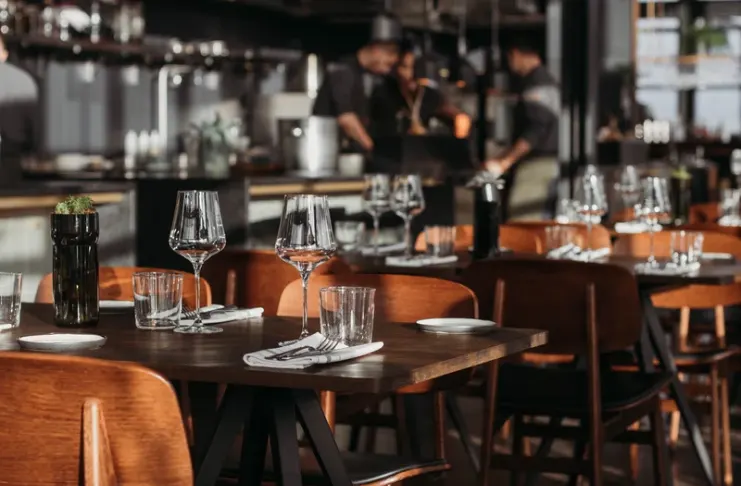

Starting a restaurant business under an established brand seems easy until the numbers start coming in. The cost of a fast casual franchise depends on many factors, including the brand, footprint, and real estate. Get ready to explore all the relevant figures regarding the startup.
What You Will Learn
- Startup and initial investment costs
- Franchise fees, royalties, and other ongoing costs
- Fast casual vs. fast food
- Financing, return on investment, and net worth requirement
How Much Does a Fast Casual Franchise Cost in 2026?
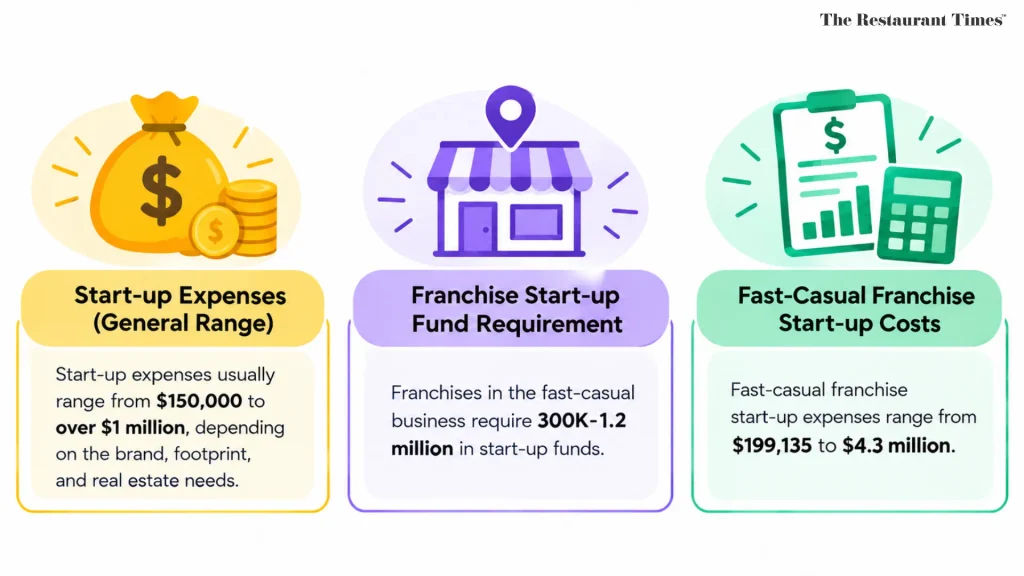
Start-up expenses usually range from $150,000 to over $1 million, depending on the brand, footprint, and real estate needs.
Franchises in the fast-casual business require 300K-1.2 million in start-up funds. Fast-casual franchise start-up expenses range from $199,135 to $4.3 million. In 2026, the U.S. restaurant industry will achieve a $1.55 trillion valuation, according to the National Restaurant Association. Total franchise output grew 4.1%, rising from $858.5 billion in 2023 to $893.9 billion in 2024, adding to an expanding market for aspiring franchisees. Fast food restaurant revenue grew to $423.7 billion in 2026, reflecting a 1.2% five-year CAGR.
INDUSTRY INSIGHT
| 42% of restaurant operators reported their restaurants were not profitable in 2025 (National Restaurant Association). |
What Are Franchise Fees and What Do They Cover?
Franchise fees pay for training, brand rights, and territory.
The initial franchise fee typically ranges from $15,000 to $60,000. Most companies charge $15,000 to $35,000 as the initial franchise fee, averaging about $32,400. In any case, the initial franchise fee usually covers training, brand rights, and assistance from the franchisor.
Chick-fil-A charges a $10,000 franchise fee. Chick-fil-A has no minimum liquid asset requirement.
What Is the Total Startup Cost Breakdown for Fast Casual Franchises?
Your total will include real estate, build-out, equipment, signage, inventory, working capital, professional fees, and pre-opening marketing.
Initial inventory costs generally range from $5,000 to $30,000.
What Are Real Estate Costs and Build-Out Costs?
Build-out costs typically range from $50,000 to more than $1,000,000, depending on location and build-out. Fast-casual build-out costs generally range from $385 to $675 per square foot. Traditional 800 to 1,500 sq. ft. build-outs cost $150,000 to $500,000+, but no-hood build-outs save on kitchen costs. Prices vary by inline, endcap, and freestanding locations, and leases vs. land purchases can make real estate costs go wild. Hood system installations typically run $15,000 to $40,000.
What Are Equipment Costs and Technology Needs?
Kitchen equipment costs usually range from $30,000 to $250,000, depending on the required equipment. Fast-casual franchises tend to have lower equipment costs than fast-food franchises. Fast-casual franchises typically have relatively simple kitchen setups. Equipment and technology costs, such as POS and digital ordering, range from $80,000 to $180,000. FRANdata estimates that 66% of all franchise systems planned technology investment for 2024, compared to 26% in 2023.
How Much Working Capital Do You Need?
The working capital reserve should be between $25,000 and $200,000, covering initial costs until the business becomes profitable, for 3 to 6 months. Fast-casual franchises need $100,000 to $250,000 in liquid capital. The liquid capital requirements for Tier 1 concepts are between $100,000 and $250,000. Fast casual franchises may require a minimum liquid capital of $100,000 to $750,000.
| Brand | Startup costs | Franchise fee | Min. liquid | Min. net worth |
|---|---|---|---|---|
| Subway | $199,135–$536,745 | $15,000 | $100,000 | $150,000 |
| Chick-fil-A | $426,735–$2.3M | $10,000 | None | None |
| Burger King | Not listed | $50,000 | $500,000 | $1,000,000 |
What Ongoing Costs, Royalties, and Fees Should You Expect?
Monthly fees will occur every month irrespective of whether you have made a profit.
Operating costs may include rent, utilities, salaries, and food costs. Be sure to budget for insurance, minimum advertising costs, and rent. Royalties are expected to be between 4% and 8% of the gross monthly sales. The typical ongoing fees are between 4% and 8% of sales. Fast-casual franchise companies incur 7-13% of total ongoing fees. Advertising funds take 1-3%.
What Do Chick-fil-A, Dairy Queen, and Subway Charge?
Chick-fil-A collects a 15% operating services fee of sales. Dairy Queen charges a 4% royalty fee plus 5-6% marketing fees. Subway charges an 8% royalty fee and a 4.5% advertising fee. Fast-food franchised restaurants pay higher ongoing royalties than fast-casual franchises.
Which Fast Casual Franchises Fit Each Investment Level?
Budget, mid-tier, and premium are based on footprint, real estate, and brand.
- Under $250,000: HOTS ($ 141,775- $ 253,075; $70,000 liquid). Subway franchise costs range from $199,135 to $536,745. Subway investment starts at $263,000 and goes up to $630,000.
- 250,000-600,000: Moe’s Southwest Grill (300,000 + cash), FreshtoOrder (447,000 – 931,000,200,000liquid),andPennStation($200,000- $ 800,000).
- 600,000-1 million+: McAlister’s Deli ($425,000 + cash) and bigger stores.
Cafe2U has lowered the cost barrier for franchisees through its compact store format. PennStation shows the importance of transparent investment guidelines that can help prospective franchisees make their decisions. Mixue relies on 1-2 SGD soft serve to enter new markets, a key tool in achieving its ₹1,000+ crore valuation, since prices are very low.
What Hidden Franchise Costs Should You Budget For?
Surprises can blow up budgets; set aside enough money before day one.
Be prepared for permit delays, cost overruns, mandatory remodels, POS upgrades, and grand opening costs. Build in a contingency cushion of 20-30%, as successful openings are rarely right on budget. The State of California has increased the minimum wage of the fast food industry to $20 an hour as of April 2024. High costs and reduced traffic continue to strain profit margins, and fast casual brands with higher construction costs are becoming dated.
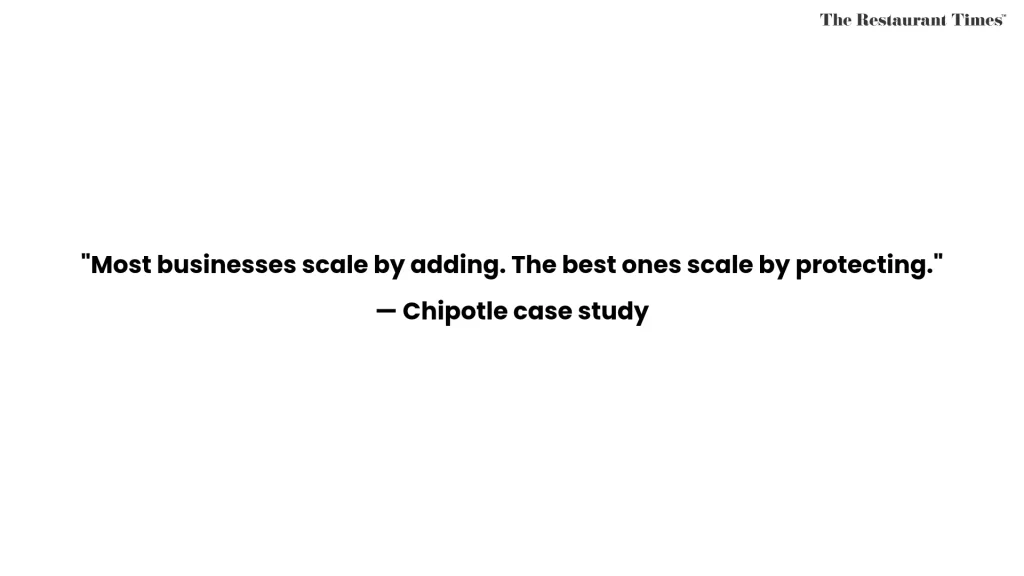
Chipotle averages $2.9M per location, with labor at 24.7% of revenue and occupancy costs 2.1 percentage points lower than others. Its operating structure expanded by eliminating menu items, standardizing, and one value proposition. Make sure to study Item 19 in detail, because average unit volumes are useful if you can manage the same operating expenses.
How Can You Finance a Fast Casual Franchise?
It is common to use several funding sources at once.
They could be an SBA loan, financing by the franchisor, ROBS, or even partners or investors. Each option has different approval criteria, and you should compare monthly repayments and overall interest charged. The lender will consider your liquid cash and net worth and determine the terms and down payment amount. Get estimates from several lenders and understand the requirements in advance. You will need to provide a budget, lease agreement, and liquid cash documentation to the lender.
What Revenue, Margins, and ROI Can You Expect?
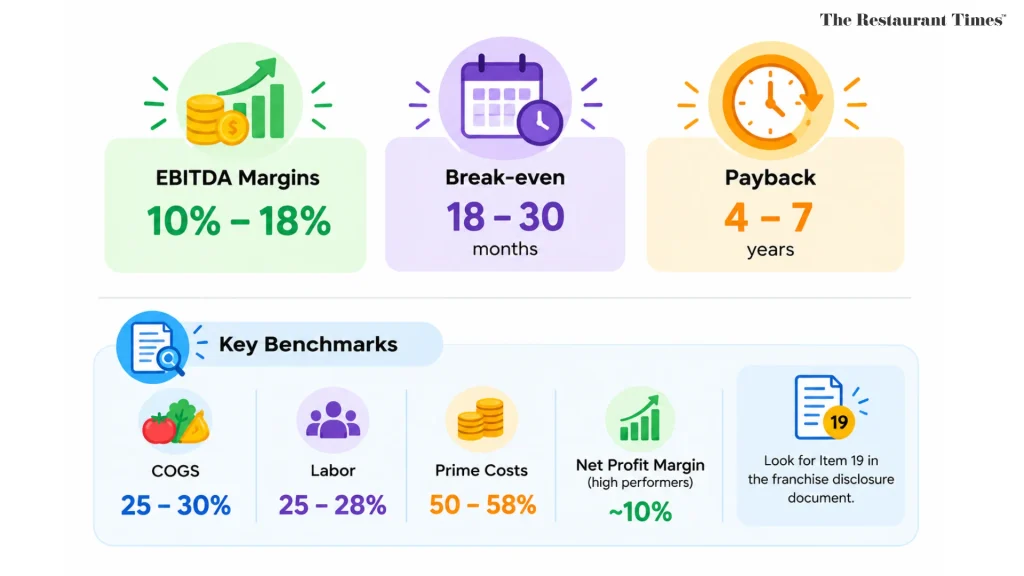
Aim for narrow margins and long-term payback.
EBITDA margins range between 10%-18%, break-even is 18-30 months, and payback is 4-7 years. Look for Item 19 in the franchise disclosure document. Benchmark figures: COGS 25-30%, labor 25-28%, prime costs 50-58%, and around 10% net profit margin for high performers.
How Do Fast Casual Franchise Costs Compare With a Fast Food Franchise?
Fast casual tends to be cheaper to establish than major fast-food franchises.
Fast food franchises may cost $1.3M to $4.7M to establish. Opening fast-food franchises costs more, but fast-casual check averages and margins can make up the difference.
What Do Taco Bell and McDonald’s Cost?
Taco Bell’s initial investment ranges from $1.9 million to $4.3 million. The costs of establishing a Taco Bell range from $1.9 million to $4.3 million. The minimum liquid assets required for a Taco Bell franchise are $2 million. McDonald’s requires $750,000 in liquid capital to start, plus $1.4M to $2.7M up front and 16-20 percent of sales for rent, royalty, and marketing.
What About Burger King and Drive-Thru Formats?
Burger King charges a $50,000 fee, a 4.5% royalty on gross sales, and a 4.5% advertising contribution. Drive-thru or urban flagships can span $500,000 to $2,500,000+.
What Does Multi-Unit Investment Cost?
Multi-unit deals involve making larger commitments but paying less per unit.
Area development charges, territory commitments, and economies of scale would be expected with three or more units. YouMeSushi franchisee Raj Pillai planned a one-year expansion because of a high return on investment and support from headquarters in New Malden. The franchisor’s training and standardization helped him shorten his learning curve.
Can You Afford a Fast Casual Franchise?

Lenders typically require net worth of around 4-5 times your total investment, and franchisors have their own requirements too.
Make sure you have enough liquid capital and test yourself against years one to three and cash flow requirements before signing the franchise agreement. Saravana Bhavan achieved 130+ units in 30+ countries with reinvested profits alone. Most of the potential buyers require some sort of plan.
How Do Regional and Format Costs Vary?
Urban sites cost more than suburban or rural ones, and state rules differ.
Economic structures differ between food courts, inline, and free-standing formats. With Dish’d, partners can operate virtual brands from a single kitchen for £20,000 per week, sharing staff, equipment, and costs. CREAM added 13 new sites to its fast casual restaurant brand. Fast food sales in the U.S. reached $423.7 billion in 2026.
KEY TAKEAWAYS
| – Fast casual franchise costs range from $150,000 up to $1,000,000+. – The franchise fee is much smaller than the build-out and equipment. – 4% to 8% royalties make your profit after a while. – Plan for a 20% to 30% margin and find out net worth and liquid funds. |
Frequently Asked Questions
1. How much does it cost to open a fast casual franchise?
Most cost $300K to $1.2M, though totals range from $150,000 to over $1,000,000.
2. What are the cheapest fast casual franchises to open?
HOTS (141,775–253,075) and Subway are among the lower-cost options. Compact formats like Cafe2U’s can also lower the entry threshold.
3. What are the ongoing fees for fast casual franchises?
Royalties run 4% to 8% of gross sales, with total ongoing fees often 7- 13%.
4. What hidden costs should I know about?
Permit delays, overruns, remodels, POS upgrades, and grand opening costs. Budget a 20–30% buffer.
5. How do fast casual franchise costs compare to full service restaurants?
Fast casual generally needs less complex kitchen infrastructure, which can lower build-out and equipment costs. Full-service concepts also carry more labor and larger dining rooms.
6. What is the average ROI for fast casual franchises?
Payback typically runs 4–7 years, with break-even in 18–30 months.