

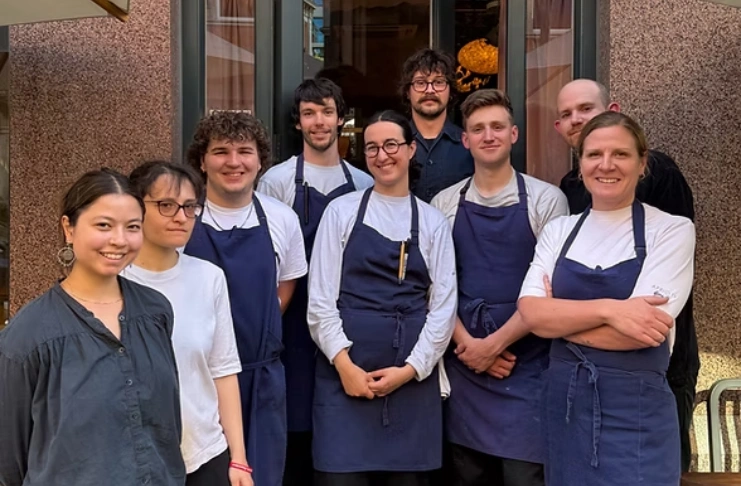

The word apricity has been around for a while. It goes back to the seventeenth century, when the word referred to the heat of the sun in winter, that particular feeling of the sun warming you up on a cold day and making you realize for a moment that all is going to be well. The word was forgotten. But Chantelle Nicholson revived it.
The restaurant bears that name. And the name carries the same ideas of rebirth, warmth, generosity, and light, the values that define the entire essence of everything that Apricity stands for, from choosing fish to employing staff.
From Law School to the Savoy
Chantelle Nicholson is from New Zealand, where she had a father who taught horticulture and who produced all their fruits and vegetables, and a mother who was absolutely against any junk foods. Nicholson graduated from the University of Otago with a degree in law, passed the bar, did some work in finance, but simply could not help but cook. In 2004, Chantelle appeared on an amateur show organized by Gordon Ramsay, Chef Search, and won her way into the last six contestants. The head chef at the Savoy that year, Josh Emmett, offered her a job right away.
She took it. Her seven-hour office days became eighteen-hour days on her feet. “I loved learning,” she said in Luxury London. “Kitchens were, historically, known to be quite tough and unforgiving environments. There were experiences I had that I wanted to ensure I changed.”
This is a woman who has worked for 20 months at the Savoy, worked with Pétrus under Marcus Wareing, and then left the kitchen to manage the operations of Marcus Wareing Restaurants. She opened The Gilbert Scott in 2011 and Tredwells in Covent Garden in 2014. As the chef patron of Tredwells since 2018, she has been known to practice sustainability and vegan cooking long before these ideas were adopted by everyone. Tredwells received the Michelin Green Star in 2021 but had to close in September of the same year due to the pandemic.
Nicholson’s reaction was to open the restaurant All’s Well in East London, just to keep her staff employed and financially secure during the pandemic. And that brought us to Apricity.
A Restaurant Built on Circular Principles
Apricity opened in spring 2022 on Duke Street in Mayfair. “It’s now or never,” Nicholson said at the time of a long list of things she intended to change: doing away with service charge, normalizing a five-day working week, and bringing zero-waste cocktails to one of London’s wealthiest postcodes.
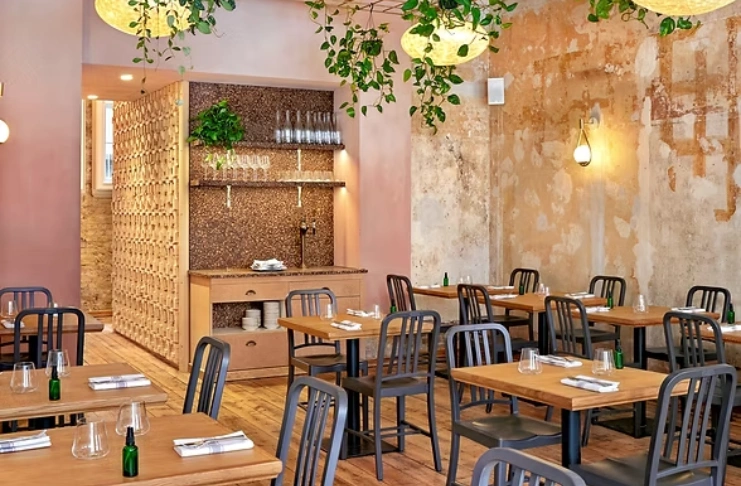
The fit-out, by designers Object Space Place, was completed as a low-carbon refit. Pink-hued plaster walls, plenty of plants, and chairs made from recycled waste materials. Bare surfaces. The Michelin Guide describes the overall effect as having “a rustic, pared-back quality” that chimes directly with the kitchen’s ethos. The aim, as Apricity’s own website states, is to “create a sustainable restaurant connecting guests with British farmers and suppliers who share our ethics, through joyous dining”, as noted in the Michelin Guide.
In 2023, the Michelin Guide awarded Apricity a Green Star, recognizing its leadership in sustainable gastronomy. It was a second Green Star for Nicholson personally, following the one she earned at Tredwells.
What Ends Up on the Plate
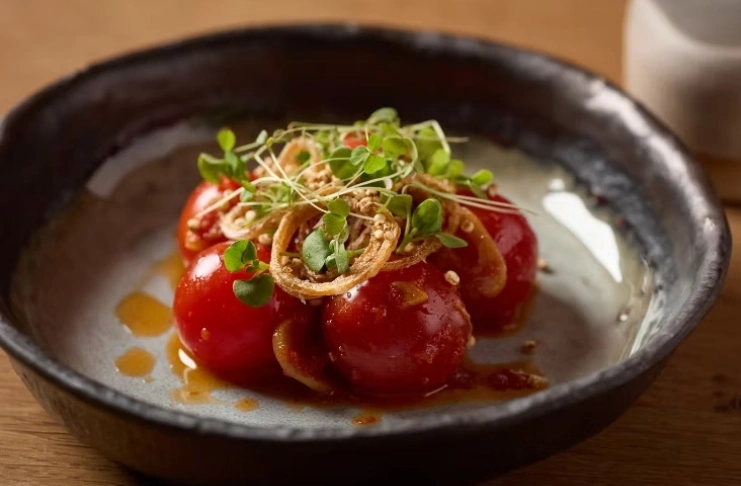
Each dish at Apricity comes with its own supply chain story, and this is not an exaggeration. This is precisely the idea behind this restaurant. For example, a salad may include lettuce grown on-site the previous day on a local vertical farm, transported by electric vehicle, wild garlic flowers hand-foraged from a nearby location, Isle of Wight tomatoes slowly dehydrated to increase their natural sugar content, and a dressing made of British rapeseed oil and British miso produced in London. You may think this is just a regular salad, but the combination of components creates a real surprise for customers.
The tasting menu includes both a vegetarian path and a meat-based one, using regeneratively farmed meat, with the animal’s life cycle becoming an integral part of the cooking. Braised ox tongue. Pork belly from Devon. Lamb mutton with spicy chickpeas. The wine selection is based on low-intervention growers focused on soil health and biodiversity, with a preference for English vineyards. The zero-waste cocktail concept uses kitchen scraps, transforming the rhubarb-poached syrup into a cocktail. Nothing is wasted when something else can be created.
Chef’s Table reservations seat six to twelve and are hosted in the kitchen, where Nicholson and her team present the full seasonal menu with visibility into the whole process.
More Than a Restaurant
In addition to being a board member of Apricity, Nicholson is an independent board member of ReLondon, a food council member for City Harvest, and an ambassador for Chefs in Schools. She has written a cookbook titled “Planted” and is a chef partner for Fjora, the signature restaurant of 1Hotel in Copenhagen. In any case, she can be called a chef who chose to make the discussion about food go beyond the dishes themselves.
Apricity is the place where such discussions start – on Duke Street in Mayfair, right next to Oxford Street, but far removed from its throwaway food scene.


