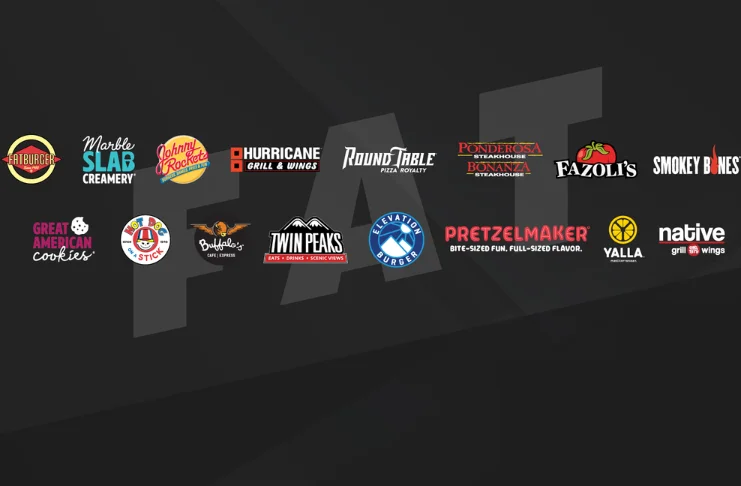

A U.S. bankruptcy court’s approval of the proposed sale of FAT Brands for nearly $1 billion is emerging as one of the restaurant industry’s most closely watched restructuring developments this year and a major signal of how consolidation dynamics are evolving across global foodservice.
The court has approved the sale process tied to FAT Brands’ restructuring efforts, clearing the way for a transaction valued at approximately $1 billion involving the company’s portfolio of restaurant concepts.
The development follows mounting financial and legal pressures surrounding FAT Brands and its leadership over the past year, including debt-related concerns and regulatory scrutiny tied to earlier financing activities. The company, however, has continued operating its restaurant brands throughout the restructuring process.
For the broader restaurant industry, the story extends far beyond one company.
The FAT Brands case highlights a deeper transformation taking place across global foodservice: restaurant growth through acquisition is entering a more financially disciplined era after years of aggressive consolidation fueled by low-cost capital.
Founded as a multi-brand restaurant platform, FAT Brands expanded rapidly through acquisitions over the past decade, building a portfolio that includes concepts such as Johnny Rockets, Round Table Pizza, Twin Peaks, and Fazoli’s.
The company became emblematic of a larger restaurant investment trend in which operators pursued scale through multi-brand portfolios rather than organic expansion alone.
That strategy gained significant momentum globally during the low-interest-rate environment of the late 2010s and early post-pandemic years, when franchise-heavy restaurant businesses were viewed as attractive, asset-light investment vehicles with scalable royalty-driven revenue streams.
But the operating environment has changed sharply.
Higher borrowing costs, cautious consumer spending, labor inflation, and slowing discretionary dining growth are now forcing restaurant groups and investors to reassess acquisition-led expansion models. Increasingly, profitability discipline and operational integration are becoming more important than aggressive portfolio accumulation.
The FAT Brands restructuring reflects those broader pressures.
Industry analysts note that multi-brand operators today face growing complexity around supply chain management, franchise support, technology integration, menu optimization, and brand differentiation, especially when overseeing highly diverse restaurant concepts across categories and geographies.
At the same time, franchisees themselves are under pressure.
Operators across quick service, casual dining, and fast casual continue to face rising labor costs, delivery commission challenges, and value-sensitive consumers. In that environment, franchise networks are placing greater scrutiny on corporate leadership, operational support systems, and long-term financial stability.
The case also raises important questions about the future of restaurant consolidation globally.