

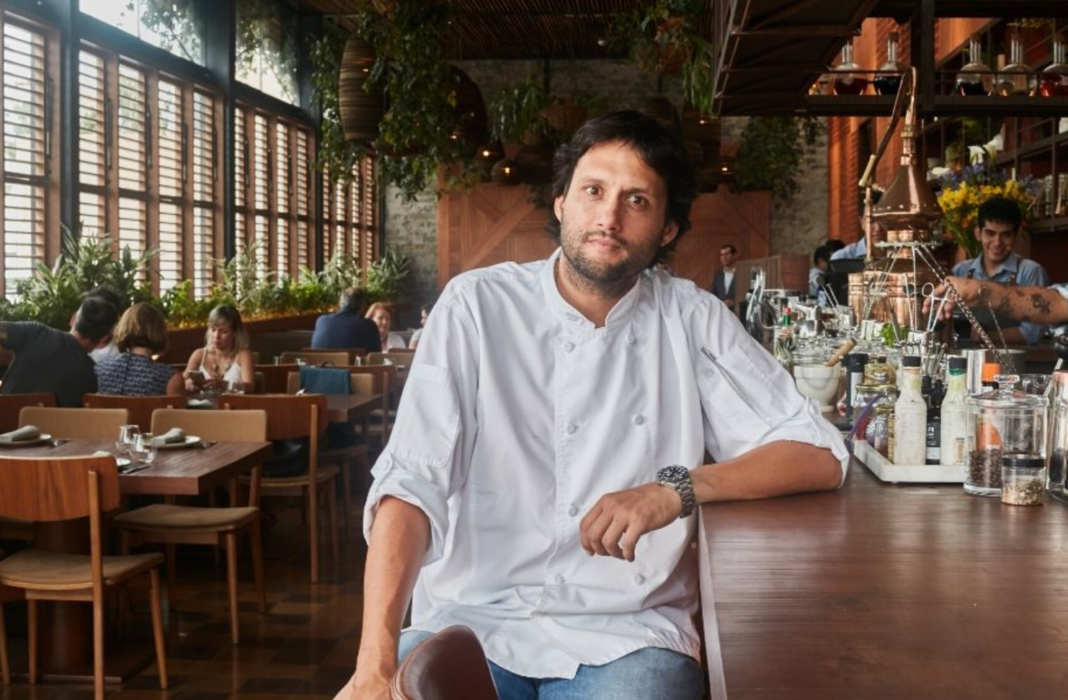

“It is a blessing to have been born in a country like ours. One of the most biodiverse in the world, with a mountain range that crosses and protects us, looking at a kind ocean that feeds us and an Amazon that enriches and oxygenates the world.”
That’s how Jaime Pesaque opens his first book. With gratitude, and why not? Mayta turned 17 in 2025, and in every sense, that’s worth celebrating.
It was back in 2008 when Pesaque had no idea what he was getting himself into. The first five or six years, by his own admission, were “brutal.” The restaurant barely broke even. There were moments where closing felt more rational.
But he kept going.
What’s remarkable about Mayta at 18 is not that it survived. It’s that it evolved without losing itself. “It is the same soul,” Pesaque says now, “but we have been growing as cooks and people, thanks to life experiences.” The restaurant that exists today (ranked 39th in The World’s 50 Best Restaurants, named Best Restaurant in Latin America at the World Culinary Awards 2024) is not the same restaurant that opened its doors in Miraflores all those years ago. But ask Pesaque, and he’ll tell you how the DNA hasn’t changed a bit. They still follow territory first, product second, and the cook last.
In an industry that has spent decades celebrating the chef as the story, Mayta has always insisted the land is the protagonist.
Trained in Europe, Forged in Peru
Before Mayta, and even before Lima, young Pesaque moved through kitchens in Europe, absorbing, watching, enduring the pressure that came with it. He spent time at El Celler de Can Roca in Spain, which was then the best restaurant in the world. He studied at the Italian Culinary Institute for Foreigners. He cooked in Aspen, Colorado.
Europe gave him discipline. It gave him a reverence for ingredient and technique that he still carries. “Europe shaped me in terms of discipline, creativity, and respect for the product,” he said. And the best of all, it gave him the clarity of distance. Seeing Peru from afar made him love it even more. And maybe that’s why he chose to return home.
“My kitchen was sharpened here in Peru.”
That sharpening, in fact, has never stopped because what Pesaque learned at Can Roca was a way of thinking, one that calls for you to be meticulous, curious, and perpetually unsatisfied. He brought that back to Lima and translated it in his own backyard.
Why Amazon is the Future,
Pesaque genuinely believes that “the Amazon is the pantry of the future.”
He’s been saying it for years now because every time he goes back to the jungle, it proves itself true again.
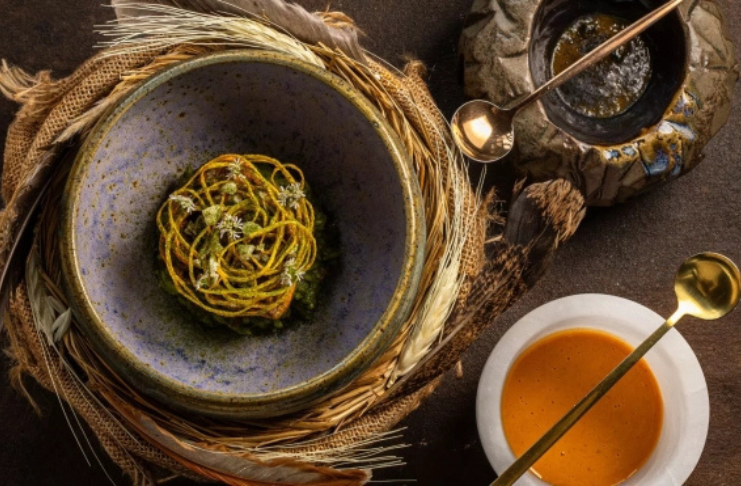
Mayta’s current tasting menu is built around everything he brought from there, be it Charapita peppers, Callampas (wild Amazonian mushrooms), Pihuana salt, Sacha oregano, Sacha coriander, Macambo, blue-flaked cocoa, and so much more.
“We need to explore more and develop,” he says. “First, at the local level, to reach the supermarkets in Peru, because everything is very centralized in Lima, and then export.”
The Amazon has been underrepresented in the Peruvian pantry for too long, even within Peru. Pesaque and his team travel there regularly “as students.” They always come back with at least ten suitcases of product. They build relationships with intermediaries they trust. They work slowly, deliberately, because the alternative (rushing it) would be so much worse than not doing it at all.
“It is a job that has to be done, although it is not fast. And it is collective. Individual, it is impossible.”
Creativity is a Practice,
“Creativity does not come by itself. It is disciplined,” says Jaime Pesaque, and this might come off as a surprise to anyone who thinks fine dining is all about the chef having spontaneous inspiration.
About the “discipline” at Mayta, there is a development room at the restaurant with people inside it, every day, following Pesaque’s guidelines, testing, failing, adjusting, & testing again. Every process starts with a concept that’s often inspired by Peru’s pantry, and connected to the communities and people they encounter along the way. From there, it moves to ingredients, to seasons, to what the plate can hold without collapsing under the weight of its own ambition.
The tasting menu at Mayta isn’t the product of one brain. It’s the result of a room full of people who have been given permission to push, question, and be wrong under the discipline of a chef who knows exactly what he wants but has learned, over 18 years, that wanting it alone isn’t enough.
“Discipline and creativity are the most important things for me, and that’s what I transmit to my team. I believe a lot in discipline and in offering diners a unique experience, an experience that I have not lived and that is Mayta.”
And Restaurants Are Embassies.
Pesaque often talks about this one guest who dined at his now-closed Hong Kong restaurant. The man came in, admitting he didn’t know where Peru was. So, Pesaque looked after him personally, and three days later, the guest came back with his family. He had bought tickets to Peru for all of them.
“That’s when I realized that restaurants are embassies of our culture.”
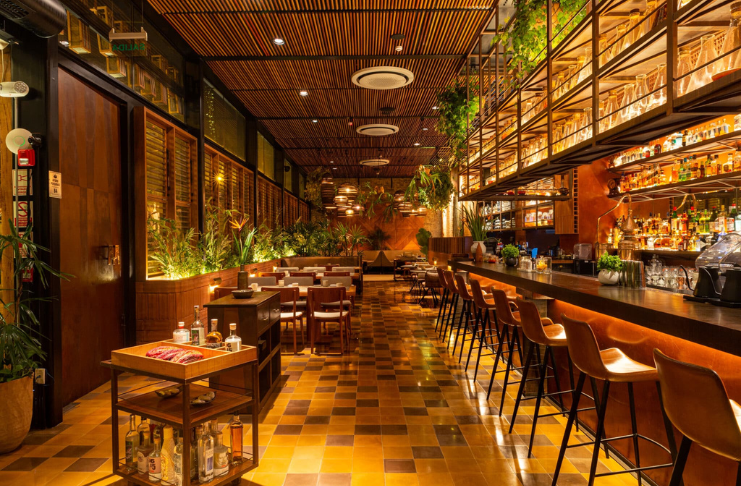
At Mayta, every dish that leaves the kitchen is, in some small way, an argument for Peru, for its coastline, its highlands, its jungle, its people, and its history. The tasting menu is explicitly structured as a journey: coast, mountains, Amazon, & back again. The bar (which Pesaque treats as the beginning of the experience) is stocked with distillations and fermentations that can’t be found anywhere else.
Even the book he published in late 2025, which is, btw, the first Mayta book, extends this embassy into print. It is a tribute, as he writes, to the “heroes and heroines who work from dawn to offer incomparable shells and shellfish from the Paracas Sea, harvest cocoa cultivated since pre-Columbian times, or the cushuro of the high Andean lakes.”
The Peruvian product at Mayta “is not ours,” Pesaque says. “It belongs to everyone.”
What 18 Years Have Brought Along
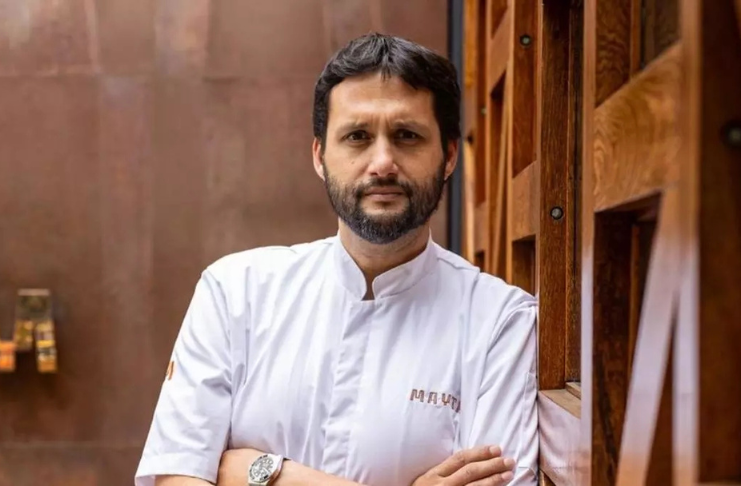
Indeed, there’s a version of this story that focuses on the awards, the 50 Best ranking, and the critical recognition. Those things are real, and Pesaque is honest about their commercial value. “You have to take care of that because in the end it is a business.”
But that’s not what 18 years taught him.
What it taught him is patience – knowing that the right things take time.
What it taught him is that humility is understanding where good food actually comes from: not from the chef, but from the soil, the sea, the jungle, and the people who tend them.
What it taught him is that the real responsibility is on the cooks who will come after him.
“I never see myself as a teacher. What I do feel is the responsibility of being an example for the promotions that will come, not only in gastronomy, but as a person, as a Peruvian, as a promoter of culture.”
Mayta, at 18, believe it or not, is a work in progress. There are Amazonian fish that Pesaque hasn’t yet put on the menu. There are communities in the jungle he hasn’t visited. There are dishes that are yet waiting for the right season, the right ingredient, the right moment before they are served on the plate.
And that’s what keeps the doors open.


