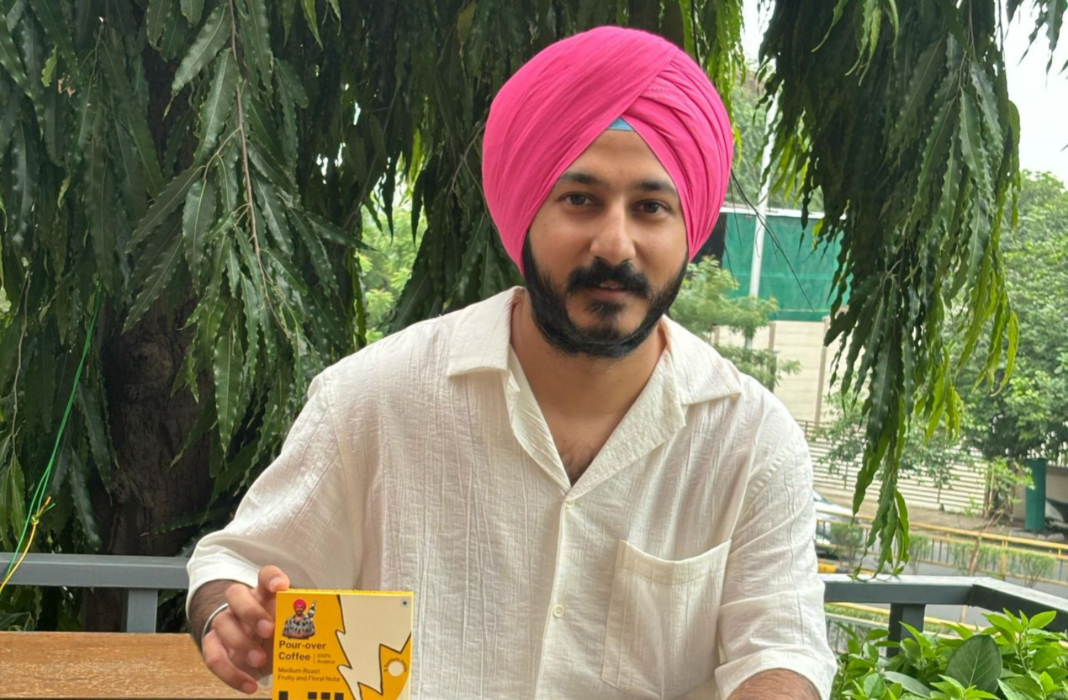

In 2017, coffee culture was booming in India, but only for a wealthy few.
Middle-class folks wanted in on the action, but premium brands like Starbucks were too pricey and kept them away. Bhupinder Madaan, a young serial entrepreneur, saw this gap during a visit to a bar in Delhi and got to work.
He launched Theka Coffee to bring specialty coffee experiences to everyone, starting with quirky names like Palang Tod and Coffee ki Jawani, sold in beer bottles. The fresh, 100% Arabica coffee and unique roasting methods made Theka a hit among the millennials. Today, Theka has over 800 outlets across 45+ cities, and has reached a valuation of over Rs. 100 crore.
Bhupinder’s Theka Coffee pitch also got shortlisted to feature on Shark Tank India. It got him plenty of attention, even if he didn’t get the funding. Since then, he’s received partnership offers from top brands like Microsoft and Reliance. Theka is now a go-to hangout spot for coffee lovers.
The Beer Bottles
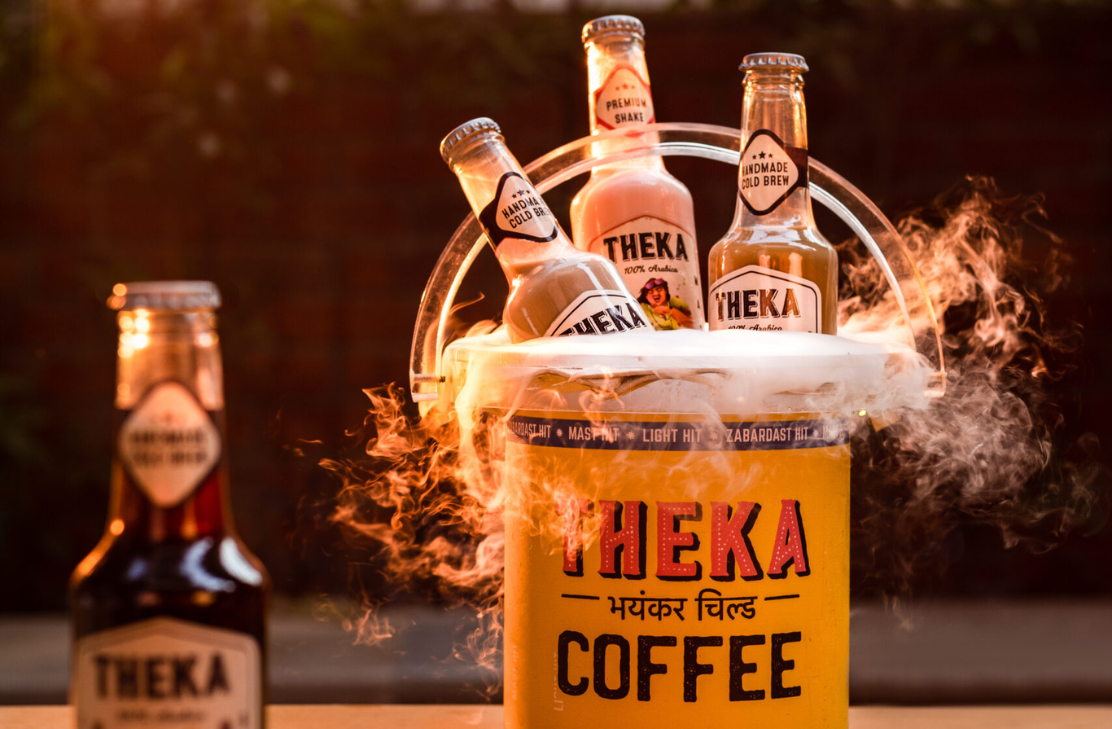
Madaan remembers sitting at SOCIAL with beer in his hand. “When I was having a beer, I realized that one sitting next to me had ordered coffee, which came in a soggy glass, and I found it very boring and unappealing. So I was laughing because I was holding something very cool, and the other had something very soggy in their hand. That’s the exact point.”
That moment planted a “seed”: what if coffee could be just as cool to hold as a beer bottle?
And that observation eventually led to one of Theka’s USP i.e., serving cold coffee in beer-style bottles and giving drinks names such as Palang Tod, Coffee Ki Jawani, and Next Level.
“Ultimately, I think because I love to be perfect in whatever I’m doing. I made sure I developed the product well and then served it in a beer bottle. Earlier, I just wanted to sell any kind of coffee, but then, when I got into it deep, I understood that there’s a huge gap in premix, powder coffee, and freshly brewed coffee, so that’s when we decided to go completely deep into it and sell one of the best coffees across India.”
“A lot of upper-middle-class, lower-middle-class, and even poor people,” he noted, “have not experienced good-quality coffee. They still go for premixed powdered coffee, which isn’t real coffee. That’s not the best coffee they should have,” and so before launching the brand, he visited estates and farms, roasted his own coffee, and ran extensive experiments.
As a result, he developed a concept centered on 100% Arabica coffee beans, blended with select natural beans to create a rich, smooth, and flavorful experience in every sip.
Grown at altitudes above 4,000 feet, these premium beans are sourced from some of the finest coffee-growing regions in India. The high-altitude cultivation enhances the aroma, depth, and character of the coffee, delivering a bold yet balanced taste that stands out.
The quirky names and bold concept made Theka an instant hit among millennials. Today, a cup at Theka costs ₹100–₹125, while comparable quality elsewhere often runs ₹250–₹300.
Setting the Foundation
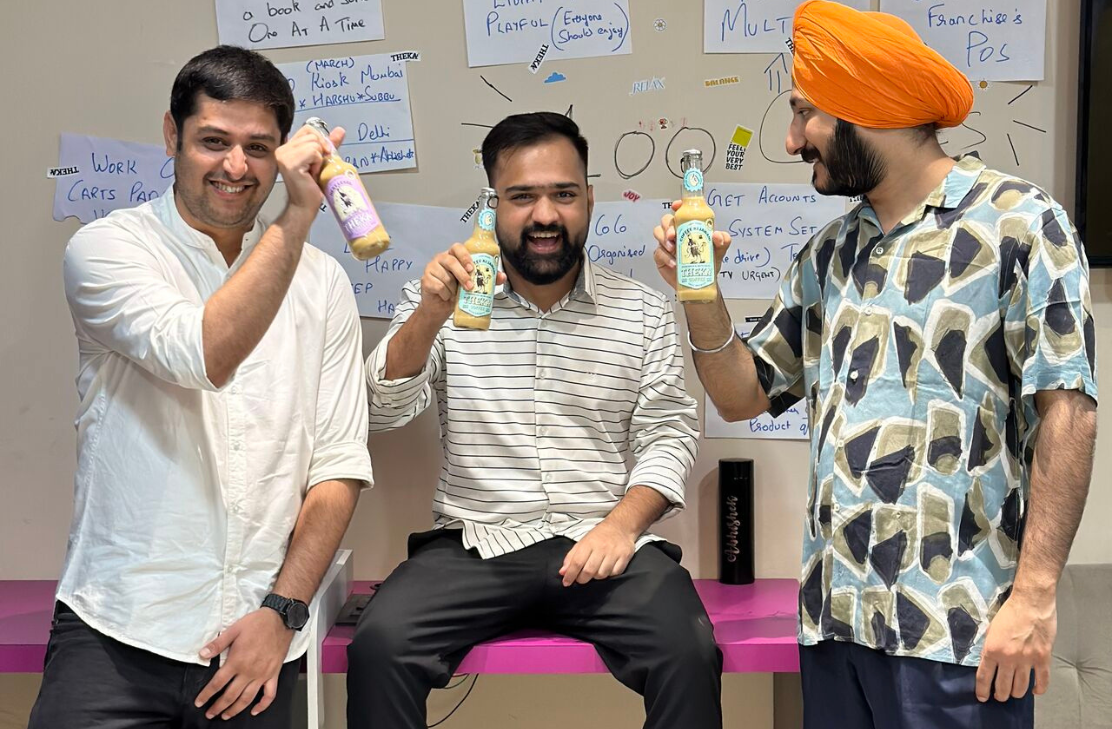
Bhupinder had been running businesses since he was 14. He literally started with selling momos and later ran an IT company and 100+ food outlets across various formats. These experiences across business development, sales, and F&B operations gave him a sharp instinct for what works at scale.
The best part is that throughout this journey, he learned two very important lessons:
First, the importance of continuous self-learning. “Every moment when you’re trying to work in your daily life, you always forget to learn,” he says. “You should keep some time for yourself and your research. Everything is evolving very quickly, especially in the food industry.”
Second, financial literacy. “Financial knowledge is something that people lack when they are doing food industry businesses, especially when scaling up. So I made sure I learned that pretty well. Now I know every part of my business from a financial point of view.”
His philosophy for building businesses has since crystallized into five clear principles:
- Start small
- Sell quality
- Be affordable
- Scale quickly, and
- Work really hard
Surviving the Pandemic & Starting Over
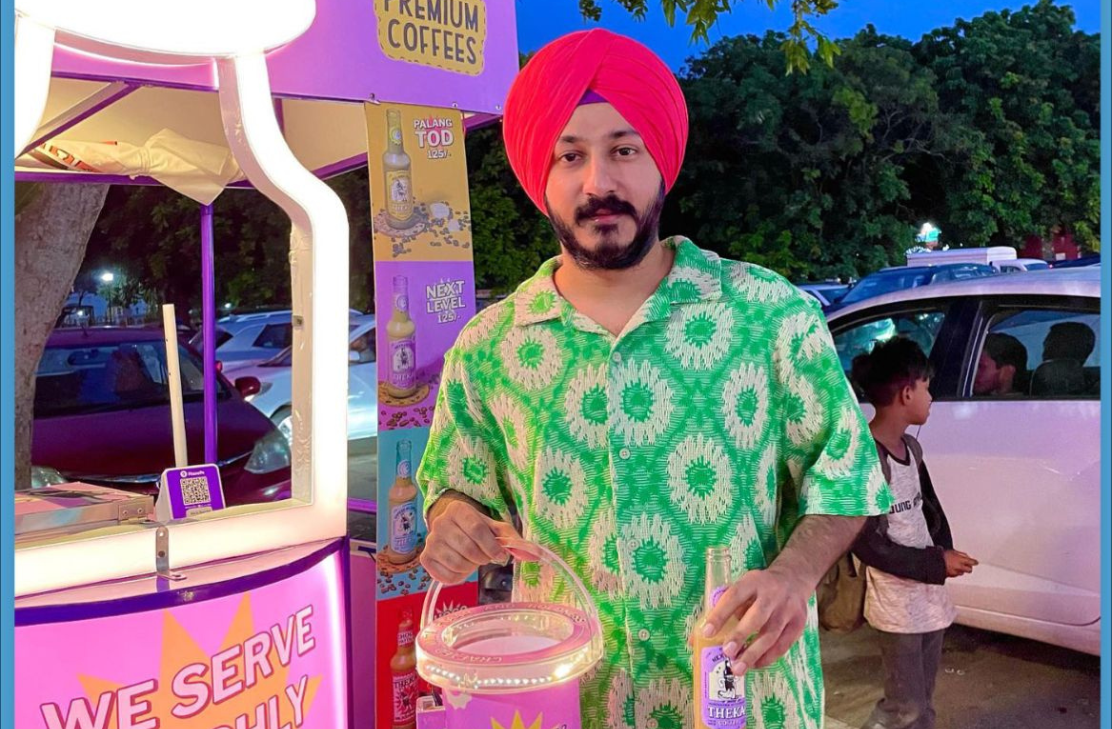
When COVID-19 hit, Theka Coffee, which had by then scaled up from a cart to multiple cafes and chains, was carrying high fixed expenses. So, when revenue dipped, the business collapsed almost entirely.
“We lost all – the whole brand. The brand got shut down,” and so Bhupinder did the next best thing – he went back to basics. “I started from the street again [as a coffee cart] and scaled it up again.”
“I personally don’t take failures that seriously. I keep my personal life different and my business side different. I was laughing about it,” he recalls.
The pandemic also gave him a critical insight into the F&B industry that lean, sustainable operations are everything. “You need to always create a sustainable business model. You can’t depend on very high fixed expenses. If today a pandemic hits the business, it’ll be just like shutting my kiosk down, keeping it at one location. Whenever a pandemic ends, I’ll rotate the business again.”
Low CapEx, low OpEx, and a hub-and-spoke model have since become the backbone of Theka’s expansion strategy.
Shark Tank, National Recognition, and a New Phase of Growth
After rebuilding the brand, Bhupinder applied to Shark Tank India solely because he had already tried “a thousand VC firms and angel investors” and needed funding to survive. “I don’t even remember how I filled out the form.”
He got selected and walked onto that stage, and while he did not secure a deal there, either, the national exposure increased awareness of Theka Coffee and introduced the brand to a much wider audience. “Shark Tank was an overnight switch in my life,” he says. “One day before the episode aired, I had no idea what would happen. After it aired, I was on continuous phone calls.”
In terms of commercial gains, that one appearance on Shark Tank led to Bhupinder gaining multiple partnership offers from top brands, including Microsoft and Reliance, with Theka carts later launched across 10 Reliance locations.
As for the competition that came along –
“I personally don’t focus on competition. I really don’t focus on competition, and to date, I have no idea who my competitors are. All I know is that I have to work hard on my business, my product is really delicious, and I have to make sure to make my product available at the best places around. If people like to drink my product, they will have it. If they like somebody else’s product, they will drink that. So I, personally, and this is genuine, I really don’t find anybody as a competitor, neither do I look at what they are doing.”
The Road Ahead
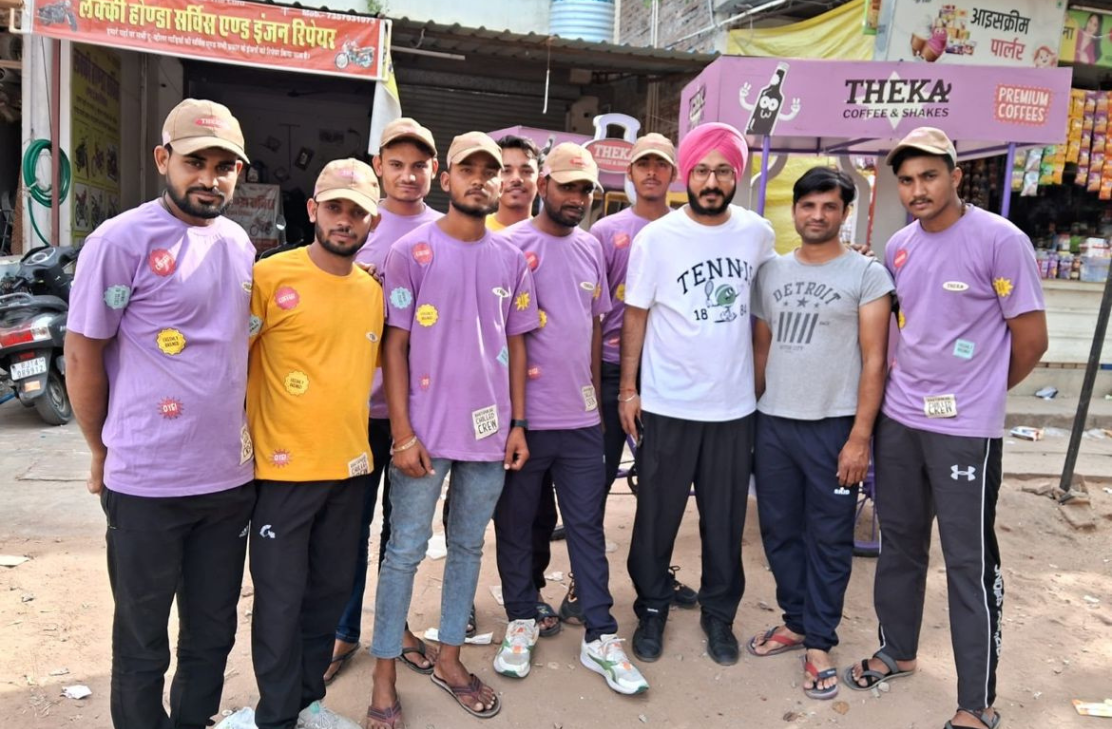
Today, Theka is opening roughly two new locations every three to four days. “We are just working very hard to reach wherever the journey is taking us. It’s like we just want to reach a point where we are serving coffee in 1,000 locations. Now, where these locations should be, that’s not something that we are planning. As opportunities are coming, we are opening our doors and accepting them happily.”
But even as the brand scales, Bhupinder remains deeply hands-on. His phone number is on Theka’s page, and he still picks up the first call. He is present at all openings and actively runs operations himself. “Even after Shark Tank, I’m still hustling,” he says.
His advice to aspiring entrepreneurs? “Never give up. But you should also not be foolish. If your product is really not that great, accept your defeat. But if you know that you have put your hard work into it, please don’t give up. Something will happen, and things just work in your favor if you have not given up.”
And please, please, please “don’t listen to people much. Everyone’s journey is different, and nobody truly understands your situation. Unless someone has lived my life (or anyone’s life for that matter), their advice may not be relevant.”