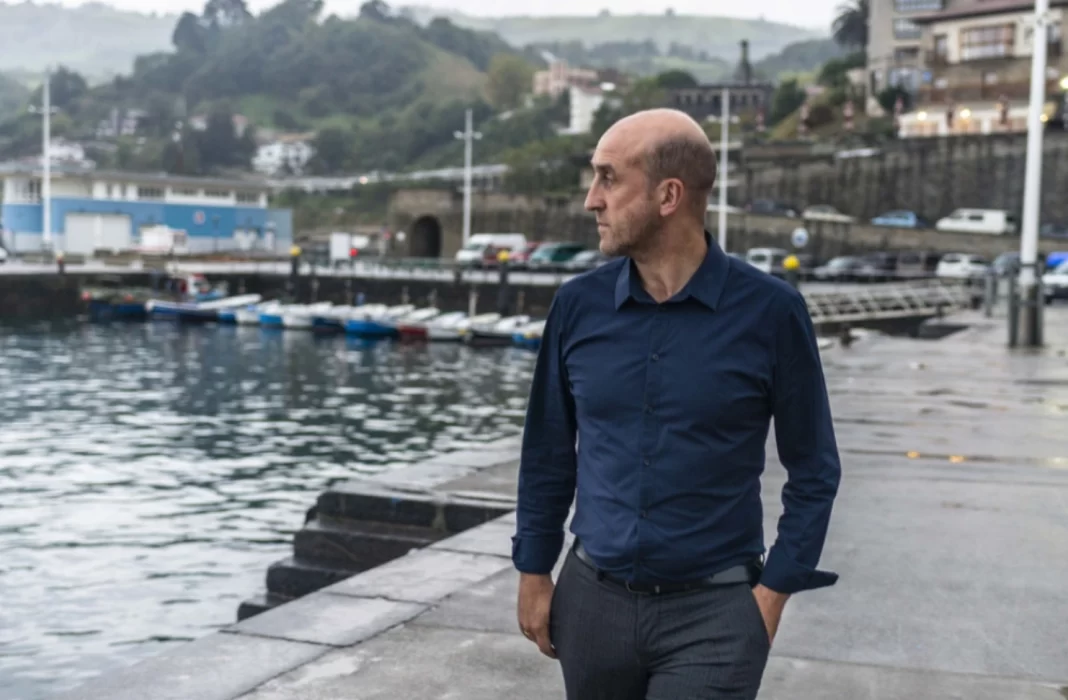

Aitor Arregi grew up doing his homework at table four in the dining room of Bar Elkano. Yes, Bar Elkano, that’s what his family used to call the space before it was rebranded as a restaurant.
The legs of that table doubled as a football goal. He learned mathematics partly from the restaurant’s accounts. His grandmother Joxepa ran the kitchen, and he was in it constantly, inseparable from her, eating breakfast, lunch, and dinner off the marble counter.
Getaria juts out into the Bay of Biscay on a small peninsula. Juan Sebastián Elcano was born here, the first captain to successfully complete a circumnavigation of the globe. Balenciaga too. The port is one of the most important in the Basque Country. The ecosystem here is, as Aitor says, simply “privileged.”
“I grew up in this family home, with the environment of the culinary landscape, which is Getaria,” says Aitor. “It is those childhood experiences that have marked the evolution of my life.”
When Pedro Threw the Neck Into the Fire
Pedro Arregui was a happy man in front of his grill. He stared at it as if only he were capable of understanding it, which, for a very long time, was more or less true.
The actual story, however, dates back to 1964, when Pedro returned from Germany and helped his mother, Joxepa, turn the family grocery store into a bar. One day, almost casually, he threw the neck of a hake, the cogote, into the fire. At the time, the neck was just scraps, the least valued part of the fish, but heat somehow added to its value. Even the fishermen who supplied it felt that in their pockets.
Then came the turbot. Whole, skin on.
Most kitchens used to trim the fish down to the loins. Pedro realized that it was the fish’s skin that held the gelatin, the fat, & the flavor. So he put the entire fish over the grill. Then the clams, kokotxas, squid, anchovies, and more – each following the same logic: cook the whole thing, respect the whole thing, and see what you find.
“Since the fire of the Paleolithic, the grill has been used as the excuse to show off the nudity of the animal that perches on it to roast itself. We continue to do the same as always in constant improvement, without failing to comply with these premises. As my father used to say: simple.”
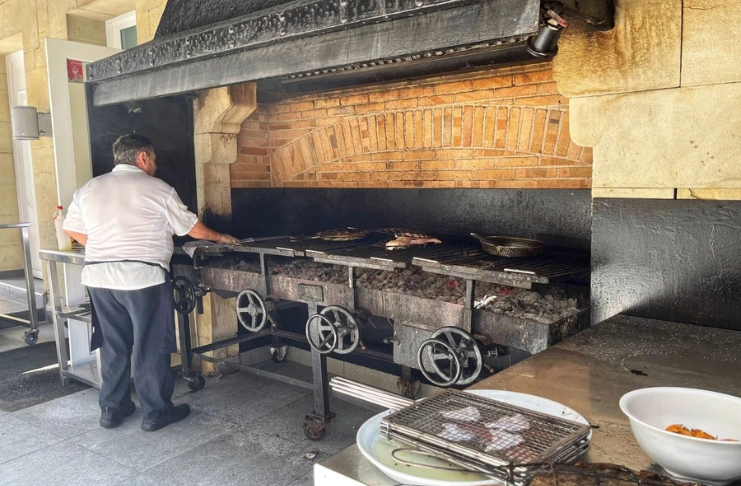
At Elkano, the coals are lit at 11 in the morning, and they have been lit at 11 in the morning for decades.
Calling Fishermen by the Name
Before the service begins, a few hours every day are dedicated to the fishermen. Their names are Isidro, Iñaki, Faustino, José Luis, and Eusebio, and they are each called by those names because they are not suppliers in any corporate sense; they are the other half of what Elkano is. Some of them are the sons of the men who supplied fish to Pedro.
“Fishing, especially in Getaria, is generational,” Aitor says.
The turbot that arrives in the kitchen comes from a small fleet working the Basque coast, and the quality of what they bring is governed by so many factors.
For example, whether the fish feed on a rocky area or sand changes the flavor entirely. Similarly, the lunar cycle changes the texture of percebes. The spawning season determines the fat content of the sourced fish. If the Bay of Biscay turbots have been feeding on bluefish, they are much plumper.
And then there is the eye. To look a fish in the eye and see the brightness still there, that is the first test. Pedro built his standard around it.
One rule he has for everyone who supplies him is “If you don’t bring the best, don’t come to Elkano.”
Aitor says that the relationship across the whole chain runs on “a sacred trust.” The family motto, lived by: “Buy it well and try not to spoil it.”
The Grill at Elkano
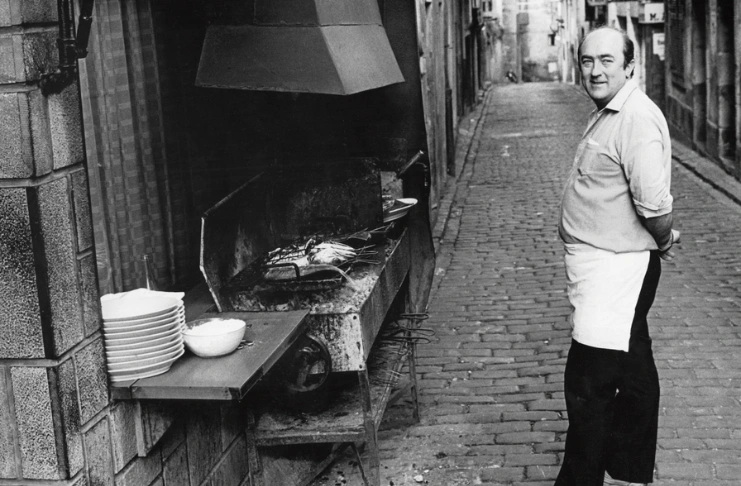
Obviously, the grill is not an invention of Elkano. It is older than any restaurant. Fishermen carried grills on their boats for centuries and cooked their catch over charcoal on the open sea.
Even Juan Sebastián Elcano, the explorer, left three iron grills in his will alongside the Santa María de la Victoria.
When fishermen came ashore, they brought the practice with them. Outside the cider houses of Getaria, they would grill whatever the sea had given them after long days on the water. Pedro Arregui grew up watching those scenes closely.
Then the tourism grew. Visitors followed the scent of burning wood drifting through the streets and began searching for someone who could cook fish the same way.
“This is how the first grill masters emerged,” Aitor says, “sailors on land who disembark with all their knowledge.”
There are 14 grills openly operating in the street in Getaria today. The tradition did not go anywhere. Elkano just gave it a dining room and, over sixty years, a depth of understanding that continues to grow because that is the only direction the Arregui family has ever known how to move.
The grill, Aitor explains, “is an act of nakedness and bravery. You can’t disguise anything. Charcoal grills, but doesn’t impart aromas like certain woods. The key lies in the proximity of the product, the seasonality, and the knowledge of the territory.“
Agua de Lourdes
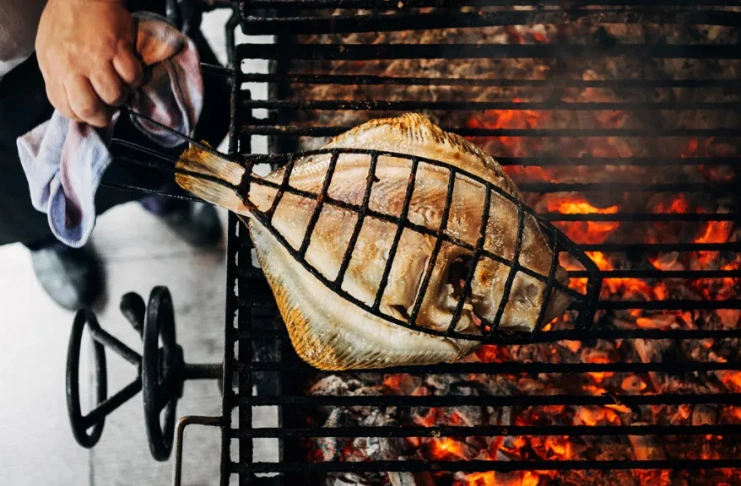
If Pedro defined Elkano through fire, Aitor’s mother, Mari José Artano, created the dressing that goes on the turbot after it leaves the fire. It is called Agua de Lourdes, and its recipe is secret. It contains oil, vinegar, salt, and several other ingredients that nobody outside the family knows in their exact proportions, and that is how it will remain.
Aitor has only ever described it this way: “Two Ave Marías, an Our Father, and the night.”
When someone pointed out to him that the Greek poet Archestratus, writing roughly two and a half thousand years ago, described the ideal preparation of turbot as baked with an emulsion of oil and lemon, Aitor considered this and said: “Not far is the concoction of the Greek poet Archestratus (of which I did not know), of the Water of Lourdes of Mari José. Probably two Hail Marys, an Our Father, and the night are my mother’s addition.“
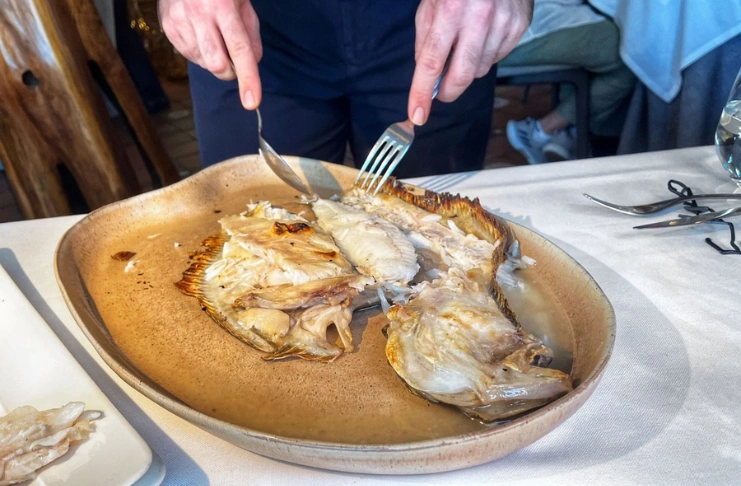
As the turbot cooks, the Agua de Lourdes hydrates the flesh and amplifies its natural gelatin. By the time the dish is served on the table, the sauce pools in with the fish’s own collagen, collecting at the base of a minimalist platter designed specifically to hold it.
From there, the fish is taken apart in front of the diner, piece by piece. First, the upper loin, then the softer underside, then the fins, the collar, the cheek, the eyeball placed into a soup spoon, and even the brain, if you want it.
Nothing is discarded because, at Elkano, every part carries memory.
The cheek, in particular, is offered as an act of respect. In Basque fishing families, the best part of the head traditionally belonged to the elders at the table. Children earned it only on occasion.
The cheek, Aitor says, “they gave it to those who behaved well.“
The Coming Back
For all the inevitability of Elkano in Aitor’s life, his father insisted that Aitor study a career first. So he went to university. Then someone encouraged him to go to Vitoria to play football, and six months at Alavés turned into several years, working in the restaurant on weekends and being promoted from team to team throughout his professional career. He played, and naturally quite enjoyed it, too.
But, as he says, “nothing warms more than a mother’s lap.”
He came back to Elkano on June 18, 2002, just as he had promised his father. For the next twelve years, the two worked side by side at the grill, refining ideas that now define the restaurant itself.
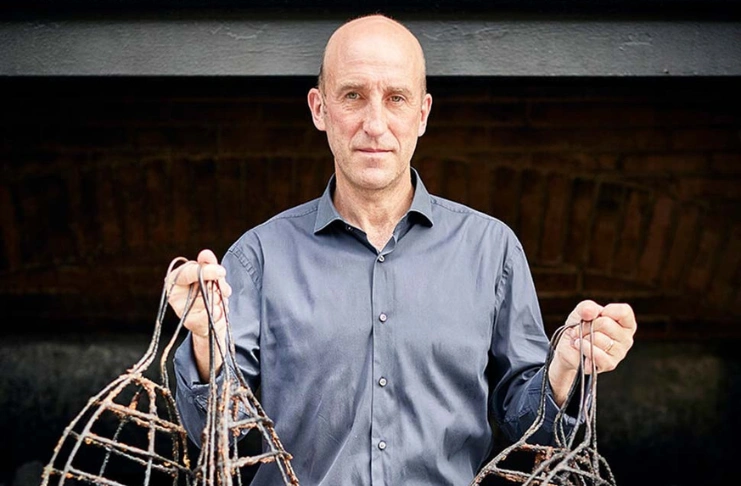
They prepared the hake kokotxas in three ways: pil-pil, battered, and grilled. There was the kokotxera, developed in 2003 with the help of a blacksmith in Hernani, a mesh device designed specifically to make it easy to place kokotxas directly over an open flame. And there were the Bocados Atrevidos, seasonal “daring bites” that pushed Elkano towards grilled tuna served with raw heart, shrimp ceviche, and sautéed red mullet liver.
Pedro died in 2014. Aitor has said more than once that he has not been able to hold a proper vigil for his father. But he also says: “As long as Elkano exists, he will remain alive in some way.”
The Sixty-Year Legacy
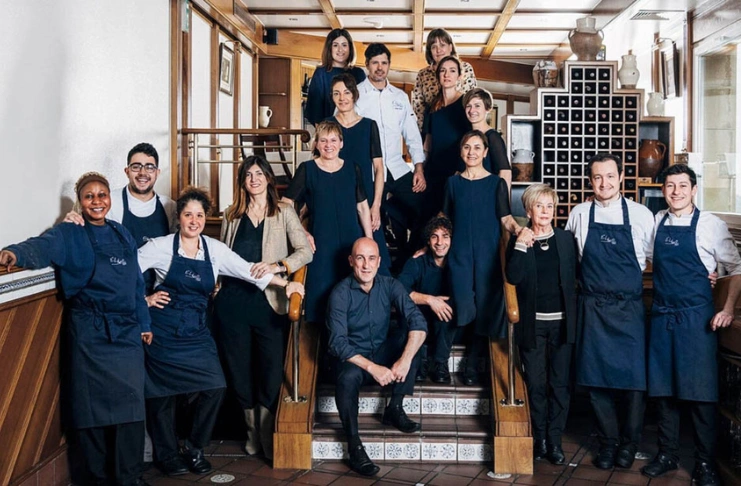
If you walk into the dining room of Elkano, you’ll see a doll on a shelf, a portrait of a fisherman in a Basque beret, and a spoked ship’s wheel on a column.
A writer who visited described the collective effect as “ease and warmth, a permission structure to get down to the sticky-fingered business of eating seafood.”
And yet, people travel across the world to sit here.
The restaurant today ranks 24th on the World’s 50 Best Restaurants list. It also has a Michelin star. Chefs come here on pilgrimage. Food writers run out of adjectives and then write more paragraphs anyway. One of them, nearly a year after eating here, wrote that she was still “clinging to those final bites and the sense of wonder that welled up at a white-clothed table in Getaria.”
Aitor’s role at Elkano, in his own words, is “to be one more of that total ‘one.’ It is to defend, care for, and transmit to others the legacy of our land and the know-how of the people.”
That may be the clearest explanation of who the restaurant belongs to, because Elkano never belonged entirely to the Arregui family alone. It belongs to a place, to a coastline, to generations of fishermen, grill masters, mothers, blacksmiths, and diners who collectively shaped its way of seeing.