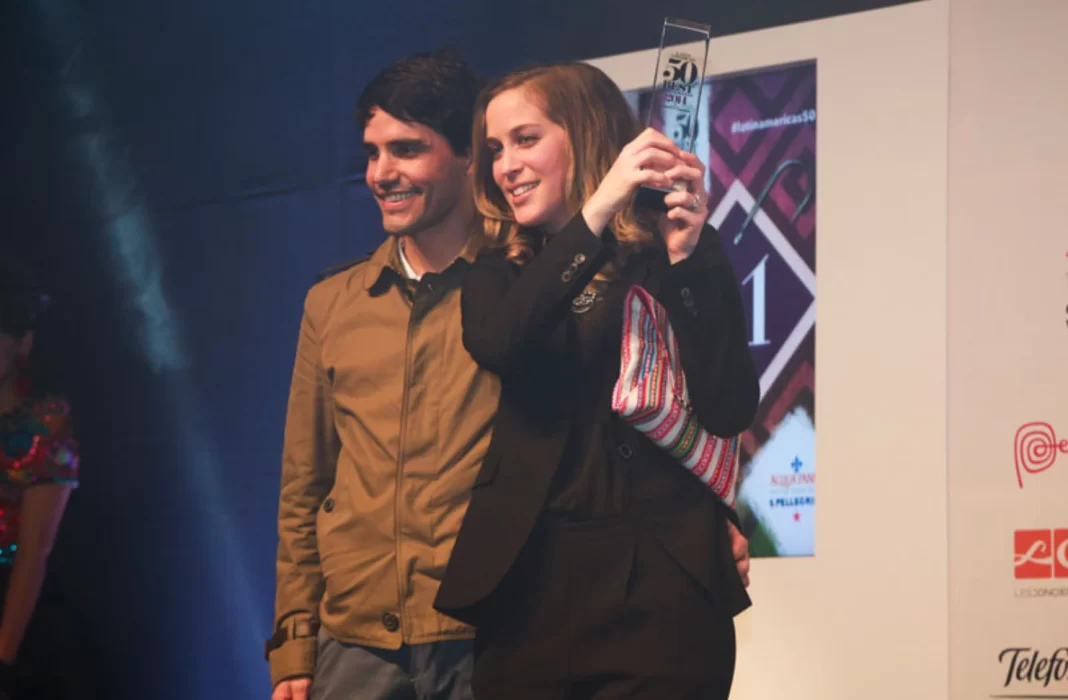

Pía León spent twelve years at Central (Yes, the best of the best 2023). She was right there at the stove from day one.
When people asked her why she hadn’t opened her own restaurant yet, she would just say, “Not yet.” She believed it wasn’t the right time yet until 2018. Her son, Cristóbal, was two at the time, and Casa Tupac was finally ready.
Then came Kjolle.
What’s a Kjolle?
It’s a small, bright yellow flower native to the Andes, as simple as that. It’s found across regions like Peru and Bolivia, and grows in high-altitude, often in rugged terrain.
Why is it so special? Because imagine this – you’re in the Andes, right? Everything’s kind of rough, rocky, dramatic. And then out of nowhere, you see this bright yellow little thing popping up. It has literally no business being there, and it’s still blooming.
That’s a Kjolle.
In Andean culture, it represents resilience, simplicity, and presence.
Let us walk you through Kjolle now:
You Start in the Garden
Before the menu, before you even sit down, you walk into a garden planted with species from three completely different Peruvian ecosystems: the coast, the mountains, & the rainforest.
Someone from the hospitality team is already there waiting, you’re handed a welcome drink, and you have absolutely no idea what’s in it.
Then You Go Through the Research Lab
Mater Iniciativa is the knowledge centre at the heart of everything León does.
It powers the menus at Kjolle, at Central, and at Mil near Cusco, and it’s run by Malena Martínez, Virgilio’s sister, with a team that includes chefs, geologists, sociologists, and textile artists who travel to the Andes and the Amazon to sit with indigenous communities and learn their century-old techniques.
León, for example, was once taught by a local community how to build and use a huatia, an oven dug into the ground and lined with rocks, traditionally used to cook seasonal tubers. She described it as “a session of gratitude for the earth and for the work.”
Kjolle now has its own version of the huatia. Like, you see how seriously they take these learnings.
You then pass through Mater on the way to the dining room.
Nine Course Experience
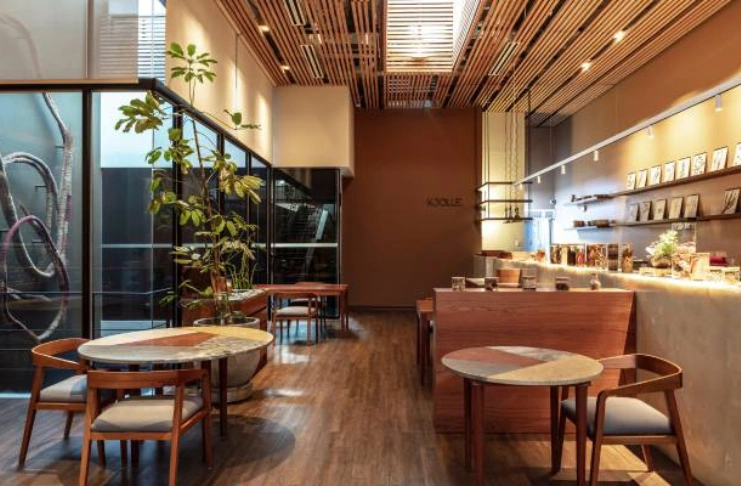
The dining room is calm and open. Around you are all Peruvian wood and stone and light.
You are handed a menu with nine courses of ingredients you’ve probably never heard of, that too cooked in ways alien: mashwa, olluco, mochero chilli, chuncho cocoa, sachapapa.
But don’t worry, the dishes won’t overwhelm you because the team has clearly thought very hard about the exact right amount of context to give you, and nothing more. “We don’t have those long attacks of information that leave you confused,” León has said.
The Dish Everyone Talks About
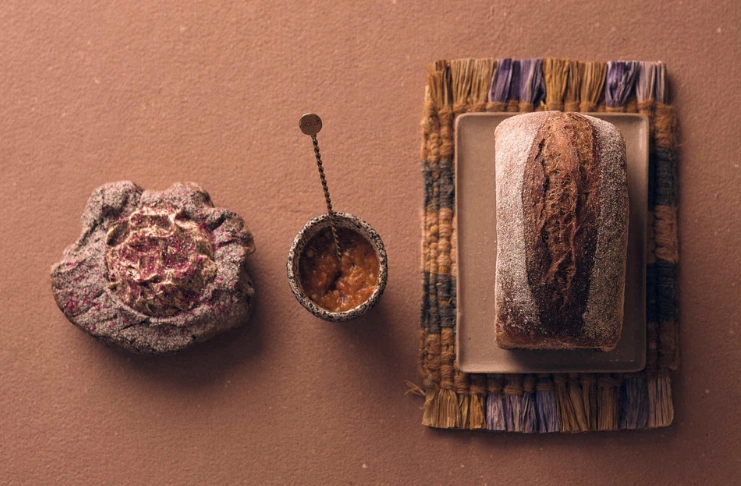
Many Tubers has been on the menu since Kjolle opened, and it’s León’s most recognisable dish: toasted yellow and red slices of olluco held together by a creamy oca paste, served on a tart made from cañihua dough, a cereal in the quinoa family.
Olluco is an ingredient most Peruvians have eaten their whole lives, but almost always prepared one way, in one context, without much variation.
Kjolle takes that familiar thing and makes something completely unexpected with it, and watching a Peruvian diner encounter their own food in a new form is apparently one of the most satisfying things about working there.
“It’s beautiful to be able to generate curiosity,” León says, “whether you’re a local or a foreigner.”
Seven Years on Cocoa
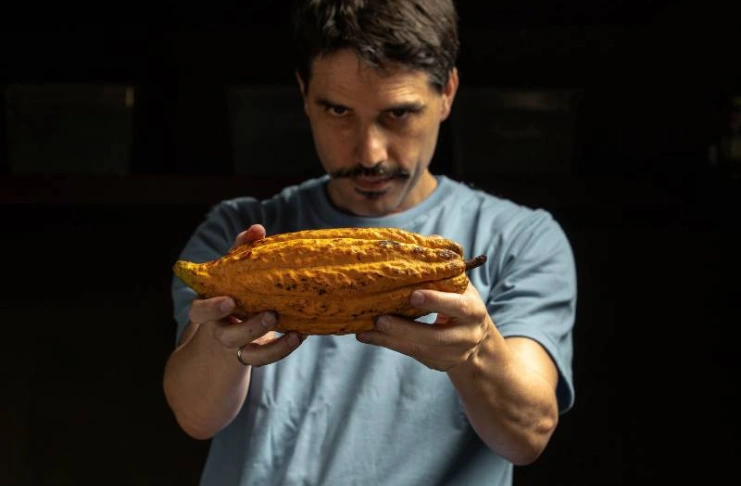
León and her team have been working with cocoa for seven years now, and when she says “working with cocoa,” she means the whole fruit: the bean, the shell, the husk, the water, everything.
They use it in desserts but also in savoury dishes, including in tiger’s milk, the sauce traditionally served with ceviche. There’s a team member dedicated entirely to cocoa research.
“Simple, but ingenious,” is how León describes the results, which is her whole philosophy, really.
Before the final dessert course, guests are taken to a separate room to experience theobromas in their raw forms, such as cacao, macambo, and copuazú. You hold them, smell them, learn about them.
Then you go back to the table.
The Drinks of Delight
There’s a Liquid Lab, a dedicated space where the beverage team designs a pairing for each course guided by the same Mater research that guides the food.
The alcoholic side spans sparkling, rosé, and orange, with colours deliberately chosen to mirror the colours on the plate. The non-alcoholic side pulls from chichas, ferments, roots, and botanicals.
The mashwa pairing is the one people keep talking about: mashwa is a tuber, spicy and colourful, and culturally loaded, and it arrives both as a frozen dessert and as the drink accompanying it, served in a glass with an irregular cut specifically chosen so you taste it correctly.
“This pairing has it all,” says Diego Vásquez, head of hospitality and beverages, and it’s one of those moments in a meal where you genuinely stop and think about how someone came up with that.
The Award
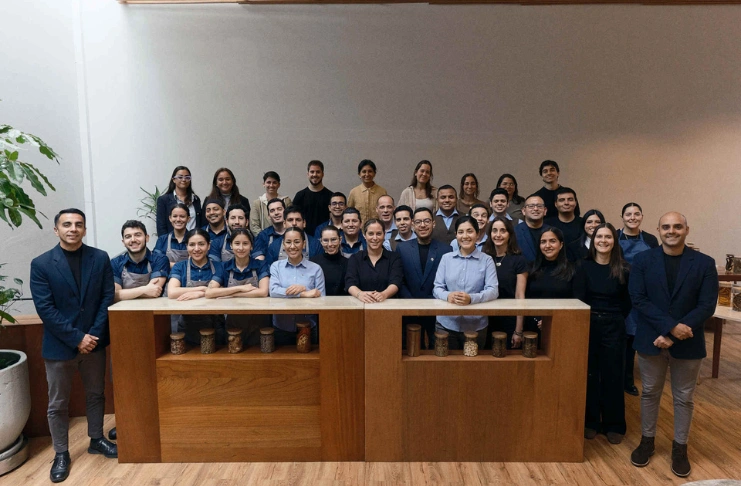
In 2025, Kjolle won the Art of Hospitality Award at Latin America’s 50 Best Restaurants, voted on by around 300 industry professionals across the continent.
León also holds the World’s Best Female Chef title from 2021, an award she’s spoken about honestly: “Hopefully there will come a time when it’s no longer needed.”
She Changed How the Kitchen Works, Too
What do you think staff get working at Kjolle? Two days off a week for everyone, built-in breaks in the service, clearer internal structures, and a lot more.
León is open about the fact that the hospitality industry has a wellbeing problem, that she recognised it, and that she and Virgilio actively changed things at Casa Tupac.
“Human sustainability is the foundation,” she’s said, and she means it practically. Before the pandemic, for the record, she was travelling constantly and described that period as “a race.” She came out of it more deliberate, more protective of the people around her, and more honest about what a kitchen actually needs to function well over time.
No Two Meals Are the Same
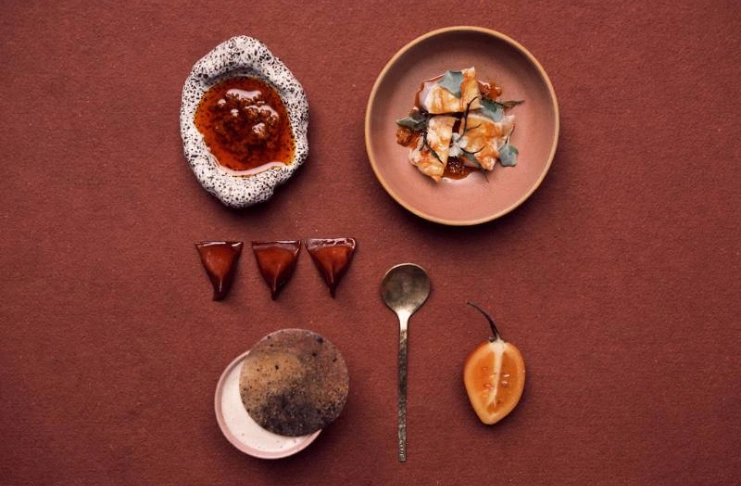
The hospitality team is often well-trained to read people quickly and adjust, and so do they, Kjolle.
Some guests, for example, want to go deep into the Mater research, the geological expeditions, the Amazon communities, and the centuries-old techniques. Others want to follow the drink pairings wherever they lead. Some ask questions at every course, and some just want to sit and eat and not be interrupted, and the team figures out which kind of person you are within the first few minutes and responds accordingly.
“The precision to decipher what each customer wants,” says Vásquez, “that’s what makes us different.“
What You Take Home
All set? Now there’s a memento at the end of the meal. You will never know what it is in advance.
But the purpose of that is León wants you to leave with knowledge, curiosity, and a desire to tell someone about the meal, Peru, its biodiversity, the sheer range of what it produces, and what’s possible when you take it seriously.
Kjolle is currently ranked 9th on the World’s 50 Best Restaurants list. It sits in the same building as the restaurant that was once named the best in the world, and it is entirely, unmistakably its own thing.