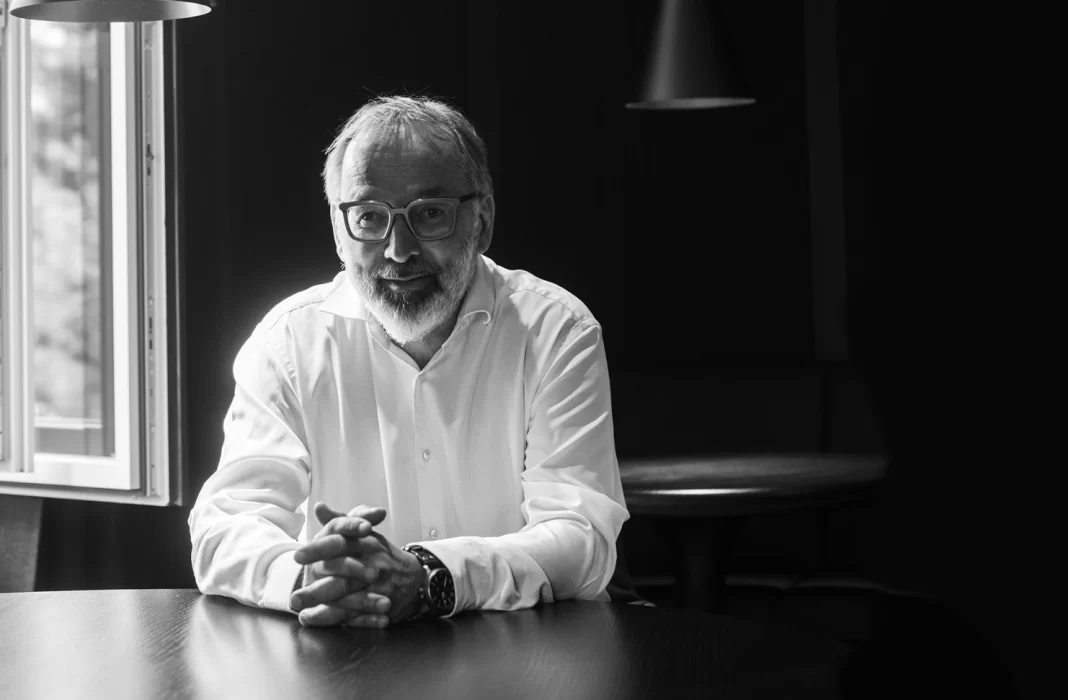

It was around 2008, and Norbert Niederkofler was already holding two Michelin stars at St. Hubertus in Alta Badia, which by most accounts should have been enough. But he still kept asking the same question to people who came to eat at Atelier Moessmer. Why did you come? And the answer was always the same thing, in the same order: the mountains, nature, & the cuisine.
That answer (and the order in which it was given) specifically matters here because Norbert used to cook with olive oil and lemons and all the universal ingredients of haute cuisine, and none of those things had anything to do with where his guests were sitting. You could have been in Paris or Tokyo, and the food would have felt much the same.
So he stopped. He stopped cooking with olive oil because olive oil doesn’t belong in the Dolomites. Similarly, he stopped with the lemons, the lobster, the Wagyu, the vanilla, the cinnamon, and the ocean fish, too. Everything that couldn’t be found within his mountains, within his seasons, within his valley was no longer part of the kitchen. And he called what replaced it “Cook the Mountain,” a manifesto that soon became one of Italy’s ways to contribute to the global conversation about food, land, and how the two should speak to each other.
“I want to inspire the world with the spark of ethical cooking, to change the way we eat, collaborate, and live.”
People thought he was going to lose his stars. The people who gave out stars even told him so. He ignored them, and soon after, in 2017, St. Hubertus earned its third star.
The Villa He Had Been Watching for Years
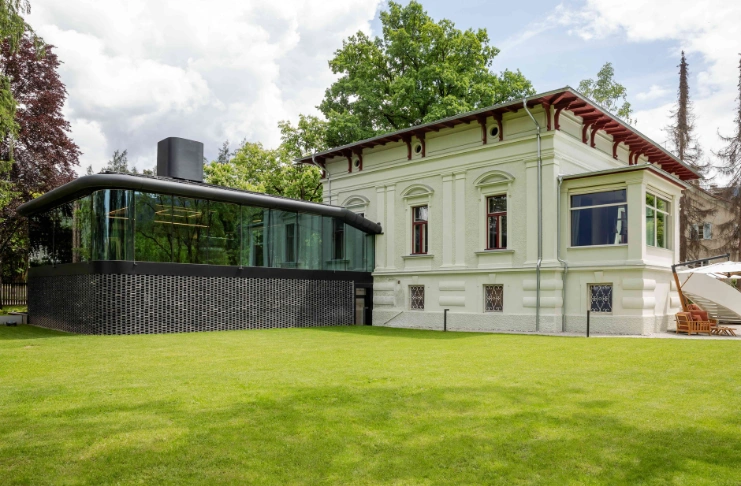
Almost at the same time as Niederkofler left St. Hubertus (2023), a historic villa, Villa Moessmer, in Brunico, went up for sale.
Built in 1890, the villa was originally the home of the owner of Moessmer, South Tyrol’s oldest producer of loden fabric. Over the years, the company became known for working with some of the world’s leading fashion houses.
The villa also has a literary connection. South Tyrolean writer Joseph Zoderer spent years working there, often writing by hand and pinning pages to the walls as he worked.
Because the building is protected as a historic landmark, almost nothing there could be changed. Even the scratches and marks on the original floors have been preserved.
Within six months of opening Atelier Moessmer inside its walls, Niederkofler had three Michelin stars again, plus a Green Star. He is, in fact, now among only 35 restaurants in the world to hold both simultaneously.
The villa sits inside a six-thousand-square-meter park and holds up to 35 or 40 guests across several rooms:
- A lounge with a fireplace where you begin and end the evening
- A library full of books and artwork where Zoderer used to sit with his manuscripts
- A dining room with round tables
- A veranda table for six, and finally,
At the center of everything are twelve barstools around an open kitchen housed in a glass cube. The loden fabric samples from the original textile collection are still displayed throughout.
You ring a bell at the front door when you arrive. (Lukas Gerges, the restaurant manager and head sommelier, says they wanted it to feel like ringing a friend’s doorbell) And from there, everything that follows is built around the idea: “We didn’t want to make a classic restaurant. We wanted to make it a home.”
Nothing Modern, Nothing Imported, Nothing Wasted
Executive chef Mauro Siega, who was born in 1992 in Maniago, Friuli, leads the kitchen at Atelier Moessmer. While the atmosphere is calm, the way the kitchen operates is surprisingly demanding.
There are no sous vide machines and no modern ovens. Meat and fish are cooked over an open fire, with chefs sometimes moving them in and out of the heat multiple times to achieve the perfect result. The team also follows a strict no-waste approach. Whole animals are brought into the kitchen, and every part is used, even fish scales. To make the most of seasonal ingredients, the restaurant has aging cellars, fermentation rooms, and a dedicated pastry room where bakers prepare the bread served at both Atelier Moessmer and Niederkofler’s mountaintop restaurant, AlpINN.
The philosophy behind all of this revolves around three key pillars: seasonality, local mountain ingredients, and zero waste.
Seasonality is especially challenging in the Alps, where winters are long and fresh produce can be scarce. The kitchen also works exclusively with ingredients from the surrounding mountain region. That means they don’t use oysters, citrus fruits, ocean fish, olive oil, or any sort of imported flavors.
Plus, only about 10% of what comes into the kitchen gets used immediately. The other ninety percent is frozen, dried, fermented, pickled, smoked, or otherwise preserved. These techniques are inspired by traditions that mountain communities have relied on for generations.
“We have to decide in the spring or summer about what we will need in the winter,” Siega says. “This is nothing new. This is very much back to the past.”
The farmers who supply Atelier Moessmer are known by name. The kitchen doesn’t tell them what to grow. “The farmers tell us what they have.” It’s a simple idea, but one that completely changes the relationship between a three-Michelin-star restaurant and the surrounding land.
The Taste of Mountains
According to Niederkofler, this philosophy also helped revive fruits and vegetables that had slowly disappeared from local farms. As demand for these varieties faded, many farmers stopped growing them. Cook the Mountain created demand again, encouraging producers to bring them back.
The menu changes completely with the seasons, reflecting whatever the region has to offer at that moment.
A winter menu at Atelier Moessmer, for example, might include a Nordic-style open sandwich with lake fish marinated in lichen salt and topped with two emulsions, one lightly smoked with elderberry kombucha, the other built from wild garlic capers. It might also include a minestrone built from twenty-five vegetables harvested in summer and preserved in every possible way, brought together in a broth of fried cauliflower and mushrooms with house-made shoyu and vegetable garum, served alongside puff pastry filled with bean cream and fresh cheese.
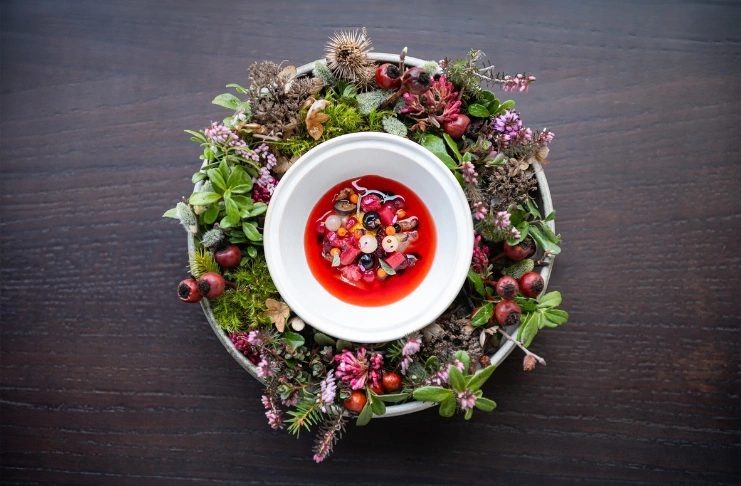
By spring, the menu changes completely all over again. One example is Siega’s spring salad, served as a pre-dessert. It combines preserved vegetables, berries, fruits, and flowers with apricots sourced from local farmers, celebrating the first ingredients of the new season.
Despite the restrictions the kitchen places on itself, the food is anything but limited. Mountain herbs, berries, and preserved ingredients create layers of flavor that surprise many guests. Sorrel, sea buckthorn, and white currants add brightness, while butter, herb oils, and fermentation bring richness and depth.
Even the water is carefully considered. Throughout the meal, guests are served BWT Diamond Mineralized Water, selected to complement the food. It’s another example of how every detail at Atelier Moessmer is designed to reflect the restaurant’s philosophy.
A Philosophy That Grows Outward
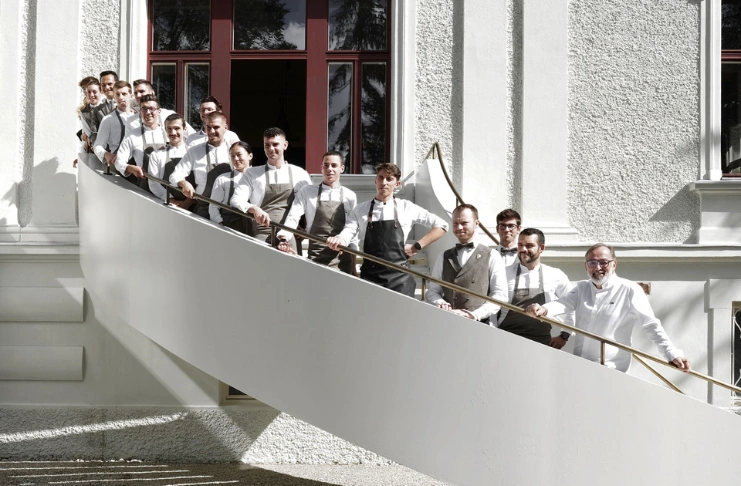
Atelier Moessmer may be Niederkofler’s flagship restaurant, but it is only one part of a much larger movement.
He also runs AlpINN on the summit of Plan de Corones, a vessel of contemporary style with the same mountain-only philosophy operating at altitude. He took over a Renaissance building in Rasun-Anterselva called Ansitz Heufler and turned it into an alpine refuge with a trattoria and stube that interprets Cook the Mountain in a less avant-garde register.
He has strategic direction over Horto in Milan as well, where a related concept called Ora Etica requires every ingredient to come from within an hour of the city’s Duomo. Then, there is Care’s, his annual international symposium, where chefs, producers, and thinkers gather to exchange ideas about what ethical cooking actually demands in practice.
Niederkofler has even taken the philosophy into education by helping create a university degree program focused on mountain food and wine studies, ensuring these ideas can be passed on to future generations.
At its core, all of this can be traced back to a simple question he began asking guests in 2008: Why did you come here?
The answer helped him realize that people were coming for the mountains, the landscape, and the culture as much as the food itself. From that point on, he believed the cuisine should reflect its surroundings as honestly as possible.
That commitment also extends to supporting local producers. Niederkofler often works closely with young farmers and artisans, helping them gain confidence in their craft. One example is a young cheesemaker from Mühlwaldertal who once doubted whether his products were good enough for a restaurant of this caliber. Today, his cheese is one of the kitchen’s key ingredients.
As Niederkofler puts it, “Mentoring young talent is more than support. It’s mutual growth. I learn as much from them as they do from me.”
Three Hours & Then You’re Back Beside the Fire
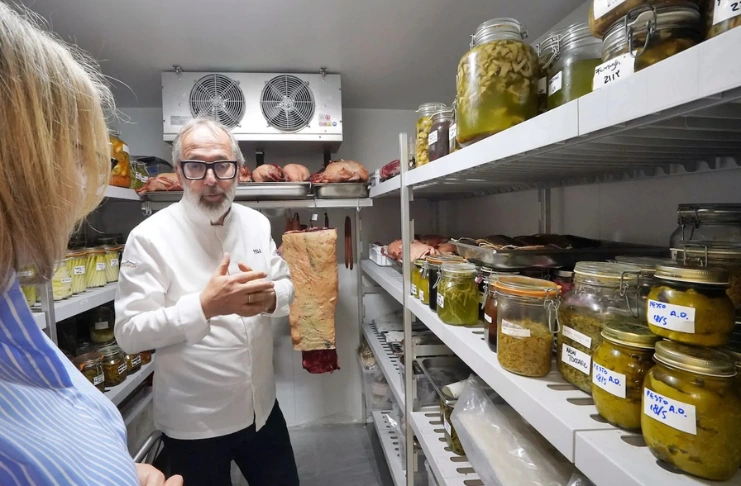
The meal at Atelier Moessmer runs around three hours. It ends in the lounge where it began, with apple cider donuts and coffee, and the fire still going. Gerges manages the dining room and the wine list with the same understated precision that runs through everything here. The tasting menu is priced at €320 without drinks. The wine pairing is €220. The non-alcoholic pairing, which is genuinely worth considering given how carefully it’s constructed, is €160.
What you leave with is harder to price. Niederkofler shares in a recent interview: “Food is not just pleasure. It’s a responsibility. Every plate, every decision in everyday life has an impact on our health, on the people who produce it, and on nature. If we choose more consciously, we all gain.”
The Dolomites have been here for millions of years. Niederkofler has been cooking in them for decades. What he has built at Villa Moessmer in Brunico is the fullest expression yet of what happens when a chef stops trying to bring the world to the mountain and starts letting the mountain speak for itself.
The mountains have never been so enchanting.