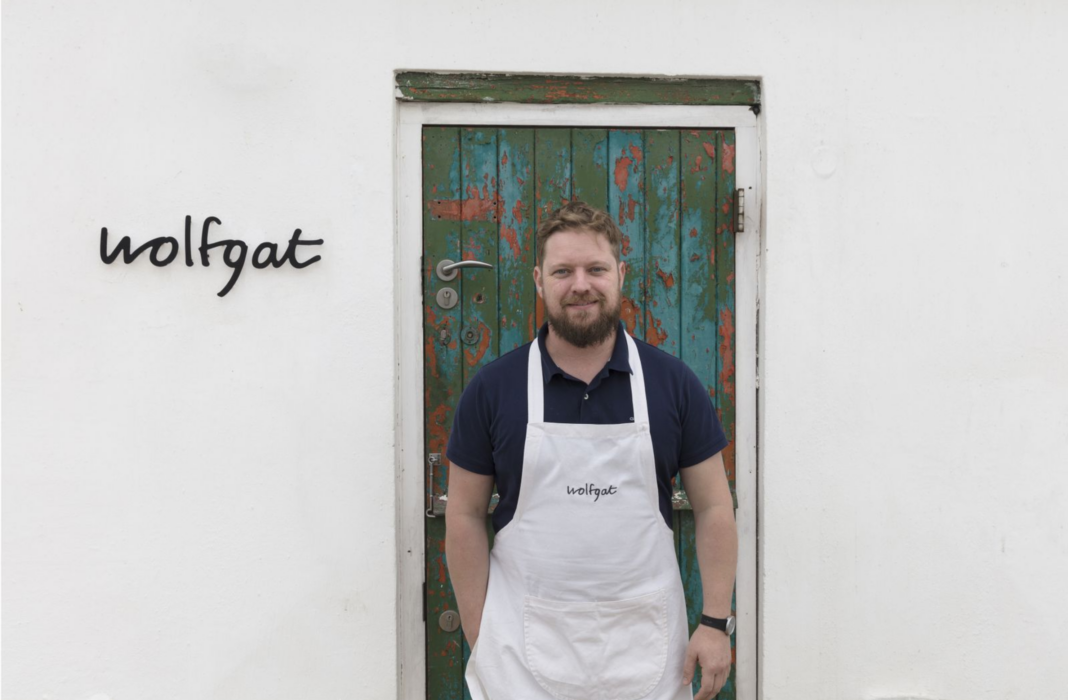

“We never dreamed of making the shortlist, let alone winning,” said Kobus van der Merwe, four days after his 20-cover restaurant in a Paternoster fishing cottage, Wolfgat, was named Restaurant of the Year at the inaugural World Restaurant Awards in Paris. He’d gone up against restaurants, he says, “we literally hero-worship,” and came home with the top prize. Isn’t that telling?
How a Food Journalist Ended Up Here
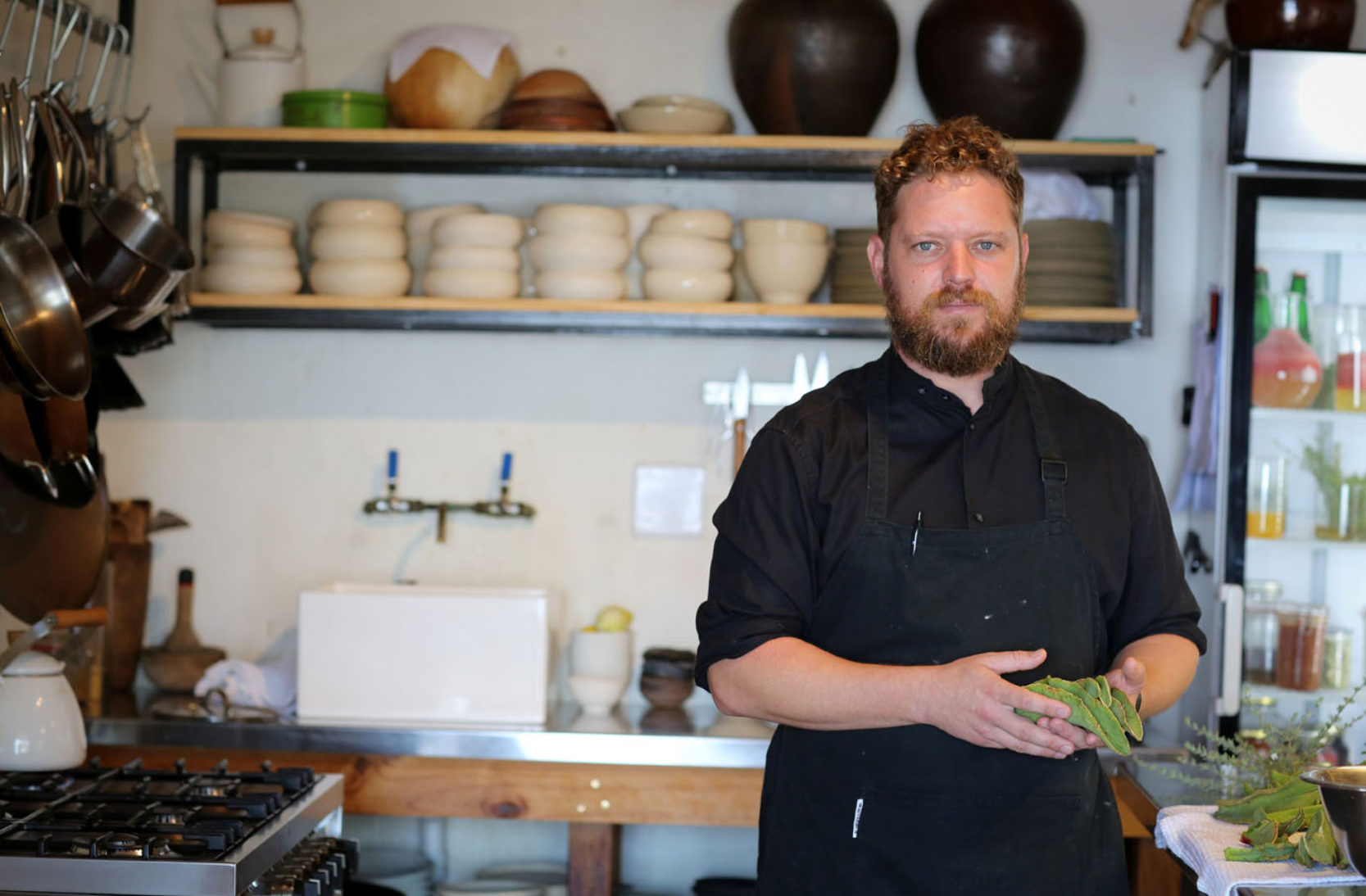
Van der Merwe didn’t train in professional kitchens. He left a media job to help his parents run their country store in Paternoster, after they’d finally settled in the village they used to visit on holiday. His first restaurant, Oep ve Koep, opened in 2010, and that’s where he started developing what he calls “Strandveld cuisine,” named after the hardy shrubs and succulents that grow wild in the rocky hills and coastal flats around the village.
Wolfgat was launched in 2016, inside a 130-year-old whitewashed cottage above the sea, named for the cave just below it.
As you arrive here, you won’t find any signage or any kind of big-deal architecture. The dining room is low-ceilinged and open-plan, kitchen and table sharing the same space, the Atlantic sitting right there through the window. Everything is too “plain,” but that’s the point.
What’s On the Menu?
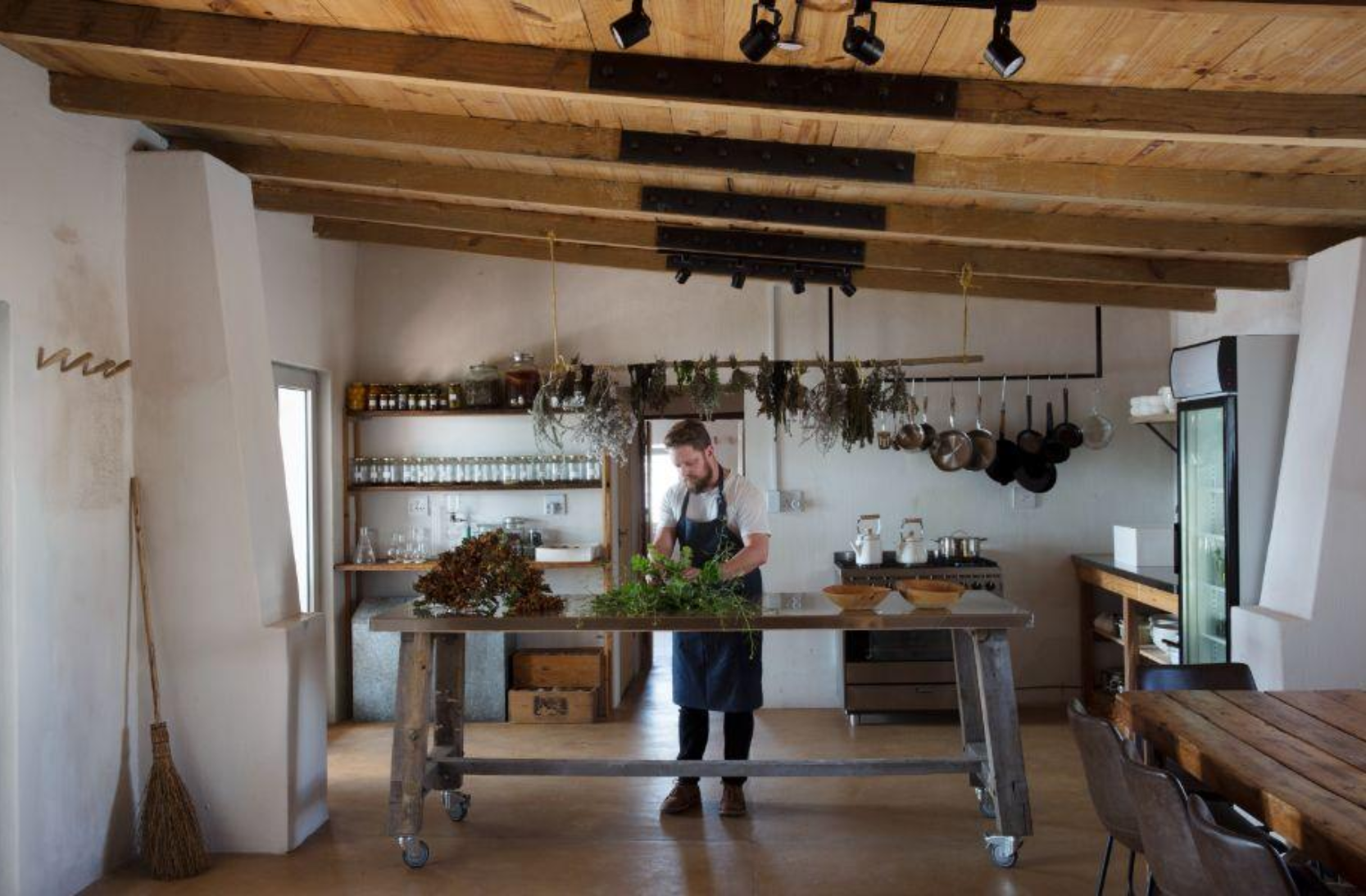
Almost everything you eat here comes from the coastline, be it seaweed, wild herbs and succulents, fish, etc. “We are inspired by the West Coast landscape, with its dramatic seasonal transformation, and unique Strandveld Fynbos plant kingdom,” van der Merwe said. “Dishes are adapted according to the weather and the season, led by what we find on our daily exploration of the coastline.”
You might get Rooibos tea-smoked yellowtail with dune spinach and buttermilk rusk. Or fresh bread with bokkom butter, made from salted, dried fish, and infused herbs. That bokkom butter has its own small history: it traces back to a recipe in C. Louis Leipoldt’s 1933 book Kos vir die Kenner, first served at Oep ve Koep. Van der Merwe explains the version at Wolfgat: “The pan with bokkom-infused butter residue in which we prepared this dish became a favorite guilty staff snack in the kitchen. In the style of Scarpetta, we would soak up the bokkom butter with pieces of freshly torn farm bread. It was so addictively delicious, we decided to share this with our guests.”
There are limpets too, foraged along the shore, cooked much the way fishing families here have always cooked them, linking whatever’s on your plate to the people who lived on this coast long before any of us. Archaeologists found evidence that limpets were part of the diet of the earliest inhabitants of the Wolfgat cave itself. As for the famous Cape Bream, it “is the species most often caught by the local small-scale fishers,” van der Merwe says. “In the Wolfgat cave excavation, which had early human occupation as recently as 2,000 years ago, they only found the bones of one fish species: Cape bream.”
Even tjokka, the local calamari once used mainly as bait, gets its due. “For me, our excellent local tjokka is far superior to any of the imported, and often chemically tenderized, calamari so commonplace in local eateries,” he says. “We scorch-score fillets of tjokka, as well as its tentacles, in a very hot cast iron skillet, so it takes on those lovely smoky, nutty flavors.”
One thing, though, you won’t find here is fuss on the plate. “These are often textures, shapes, and flavors that people haven’t encountered before, so I like to keep things raw and unprocessed, particularly the wild foods,” van der Merwe says. “We are constantly editing our dishes, taking things away rather than adding complexity. I love the clarity that comes with three or four bold elements on the plate, elements that work together yet speak for themselves.”
Because so much of it is unfamiliar even to South African diners, “such as indigenous succulents and herbs, those elements in the dishes are mostly served raw, or with minimal manipulation. Our kitchen is deliberately unindustrial. We like our dishes to showcase the unique ingredients.”
The People Who Make it Wolfgat
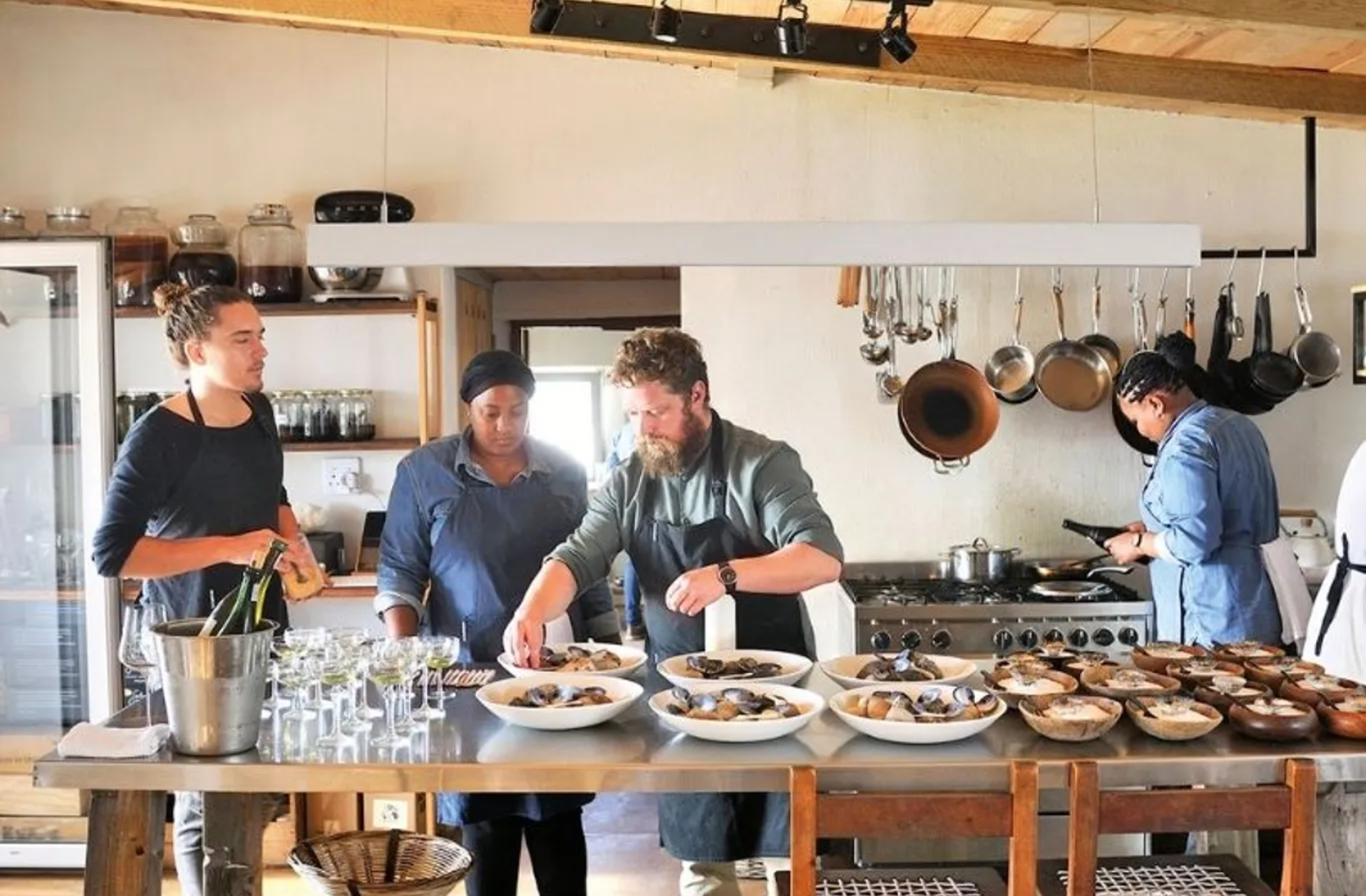
If you sit at the pass or wander near the kitchen, you’ll notice pretty quickly that this particular restaurant runs a lot like a family that happens to cook for a living.
Rochelle Karolus, the most senior chef, started 14 years ago as a shop assistant at Oep ve Koep and now fillets the Cape bream herself. Neville Cloete does daytime security and caretaking, and also bakes the restaurant’s askoek sourdough in a makeshift foil-lined tent, then turns up at the Tietiesbaai jazz festival on his days off, making roosterkoek by the hundreds. Emily Williams started as a waitress at Oep ve Koep and now bakes the bread and makes the ice cream. Alicia Bester runs the scullery and the crockery, forages dune spinach, and makes a clam parfait that writer Tony Jackman called “worthy of a Michelin star.”
Everyone forages, not just the chefs. Derek Shaw does most of it and slices the Cape bream; Rochelle picks bietou flowers and wild fennel; a team member known as She-Earl picks slangbessies and kei apples; Emmerson Bester handles the seaweed and the wine while pulling in kiesieblaar, wild sage, saltbush, and vygie leaves.
On this, Van der Merwe shares, “We’re only one team that does everything, and we have only two double shifts in a week, so we still deem our family time very important.”
Why It’s Still Here & Still the Same
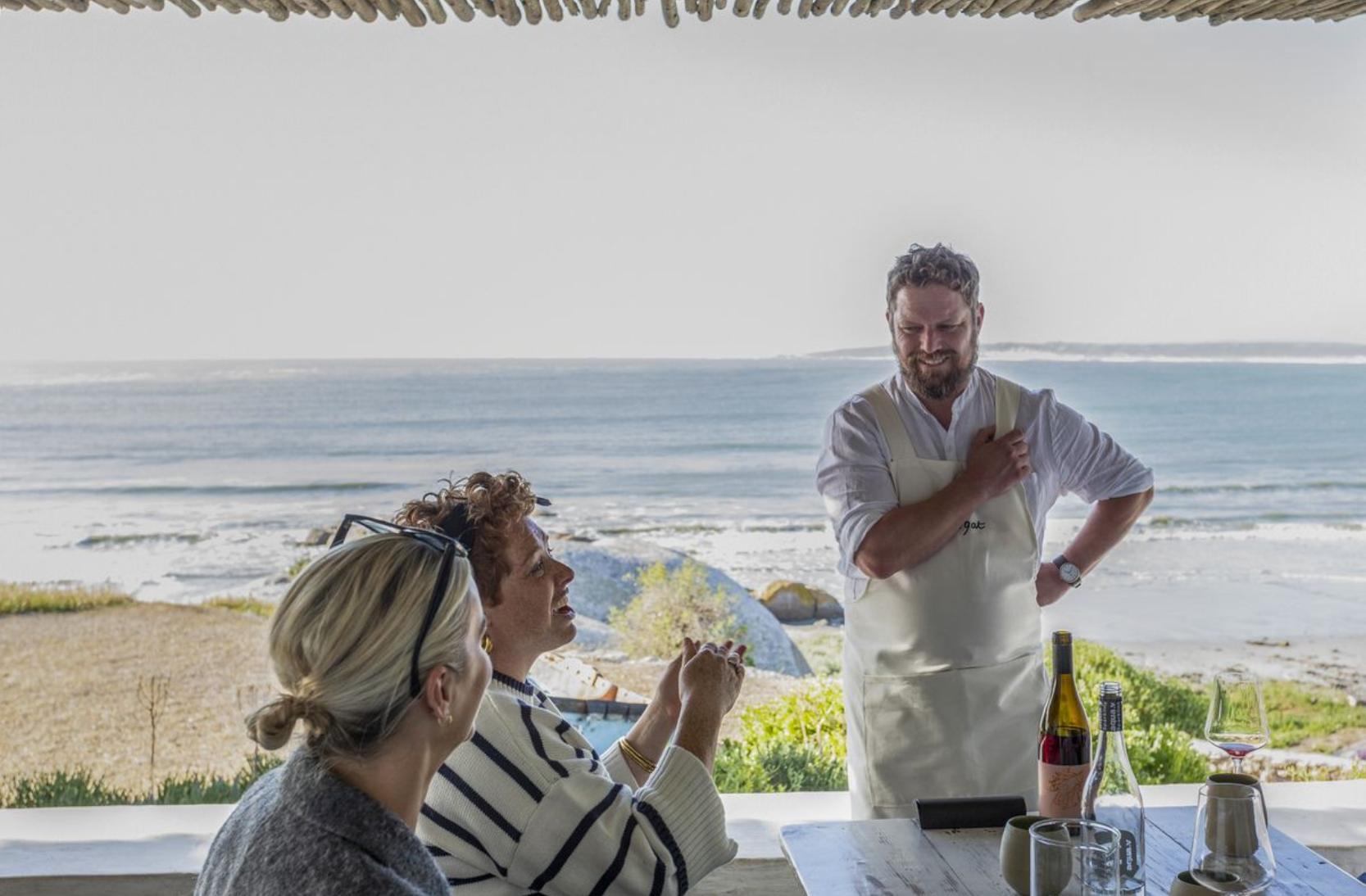
You’d think winning the world’s attention might change what a place like this wants to become. It hasn’t, not for van der Merwe. “The only thing I’m hoping that will change is that our bookings will roll over into winter, which are our quieter months,” he said not long after coming back from Paris. “But other than that, nothing will change. We’ll carry on doing what we’re doing and continue to evolve our menu because that’s why we were recognized in the first place.”
He’s never wanted to take Wolfgat anywhere else. “We certainly don’t aspire to be in the city because the West Coast is our muse and I can’t see Wolfgat existing anywhere else.”
On the trends, “we deliberately try not to follow any trends, which can be so fickle and short-lived,” he says. “We want the ingredients to shine and keep the combinations simple but interesting. We want to continue challenging guests in an interesting way with textures and tastes and lighting new pathways in the brain.”
And he’s careful not to romanticize the foraging itself into something it isn’t. “It’s important to realize what amazing indigenous bounty we have,” he says, “but I want to stress that it’s not encouraged to start picking in the wild because we obviously don’t have the abundance that we used to. At the restaurant, we do pick things in the wild, but this is always done with the landowner’s permission.” The West Coast is a water-stressed stretch of coastline, and weather is the real constraint here, which is why the team pickles and bottles ingredients through winter, when they’re abundant, to carry the kitchen through leaner months.
Writer Tony Jackman went back five years after the award and found the place essentially unchanged, calling it “an island of sanity and serenity” amid a village otherwise being pulled apart by development. Watching Van der Merwe plate food alongside his team, he said, “He’s not doing anything differently because he won a prize. He won a prize because he does things so astonishingly differently.”
“It feels like we opened Wolfgat yesterday, so the West Coast is still our muse, and we continue to grow, innovate, explore, and discover,” concludes Merwe, and that’s actually the whole story, if you’re looking for one. Nothing here was built to impress anyone standing outside it. It was built for the coast right in front of it, and for whoever’s willing to make the drive.