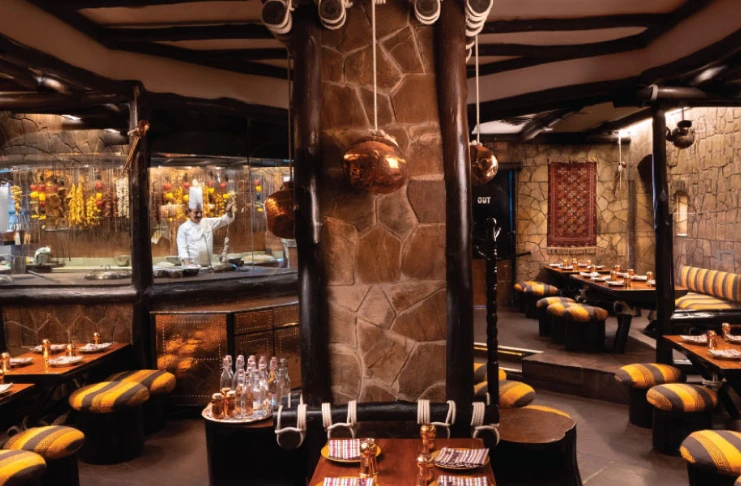

Upon taking a seat at Bukhara, the first thing that catches your attention is something that isn’t there. There is no cutlery lying on the table, but only an apron comes by. You’re expected to dine with your bare hands. This is what you get in a place where Bill Clinton, Hillary Clinton, Bruce Springsteen, Roger Federer, and Arnold Schwarzenegger have all dined, along with several other leaders of the world.
This has been Bukhara since the day it started in 1978.
Born in the Diplomatic Quarter
Bukhara Restaurant, established in the ITC Maurya Hotel in New Delhi’s diplomatic district, opened in 1978 and was a celebration of the cuisine of the North West Frontier, the challenging but culturally rich region that encompasses contemporary Afghanistan, Pakistan, and the northwest of India. The idea was not to recreate the food with elegance or modern techniques. The idea was to import the food itself, complete with its clay ovens, into a dining room and allow it to speak for itself.
The room that was designed to contain it reflected the idea. Stone walls. Tables with log tops. An open kitchen where patrons can see chefs prepare food with the intensity of experience accumulated over decades in the tandoor. According to The World’s 50 Best Discovery, the stone walls and tables with log tops “conceal the sophistication of the food.” Bukhara would not have considered their food sophisticated; they would have thought it authentic.
The Menu That Did Not Change
For over four decades now, the Bukhara menu has remained unchanged. This isn’t inaction; it is a stance.
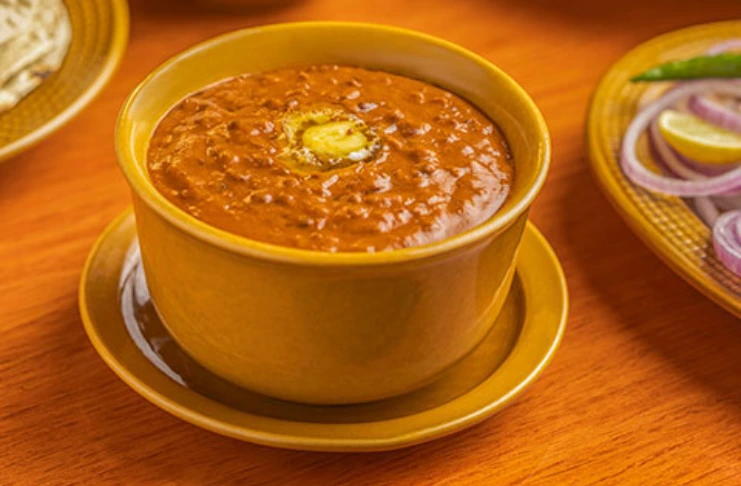
The Dal Bukhara, slow-cooked black lentils prepared for more than sixteen hours before it makes its way to the dining table, has been on the menu since the restaurant opened. The Sikandari Raan, the Naan Bukhara, cooked in a special tandoor oven, and the Murg tandoori, the whole chicken marinated in yogurt and spices and then cooked at high temperatures in a clay oven, have been constant menu items. According to ITC Hotels, the food in Bukhara Restaurant is prepared with “mastery in the traditional art of grilling, with focus on clay oven cooking.” This results in “succulent tandoor-cooked kebabs, vegetables and breads.”
The open kitchen isn’t about showmanship; it’s about making the cooking process visible. The guests watch as the items get skewered, get charred, get timed – and the food is cooked in a way that retains its fiery texture.
47 Years of Staying Exactly Right
Bukhara marked its 45th anniversary in 2023 and 47 years in 2025. During this period, it has received the Golden Fork Award, made the list of the 50 Best Restaurants in the World, been included in Asia’s 50 Best Restaurants, and been awarded names such as Iconic Restaurant and Legacy Restaurant by Luxe. It has always been known as the favorite dining spot for heads of state and world leaders, not for hosting purposes but as the place where men of significance prefer to dine while in Delhi.
What makes a restaurant like Bukhara survive for almost five decades is not reinvention. It is dedication. The menu was created because it was the right choice, and the team’s judgment is that nothing needs to change because nothing is wrong.
The Apron and What It Means
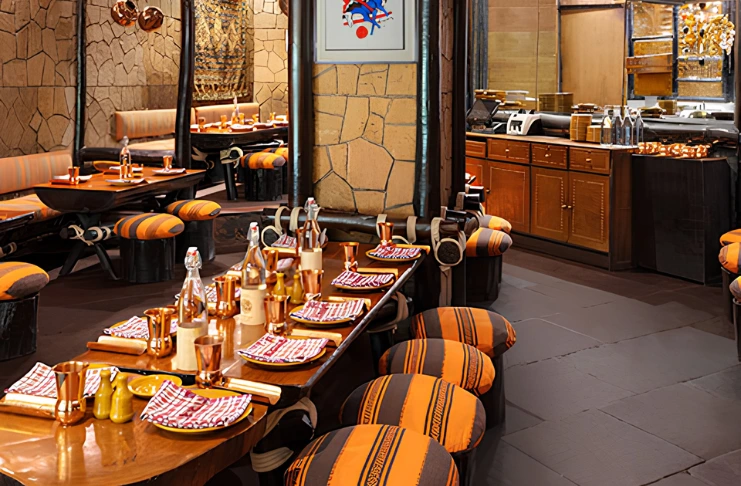
The apron that precedes the arrival of the food is possibly one of the most sure gestures in fine dining in India. It states that the meal demands your complete engagement. You will use your hands. You will get your fingers dirty with sauce. You need to eat using your hands.
The ITC Hotels describe this custom as “breaking bread together”, the core idea that has been behind the spirit of hospitality for North West Frontier all along. In Bukhara, this idea has survived through changing regimes, fashions, and decades of new restaurants opening in Delhi. The apron is the most durable object in the restaurant.