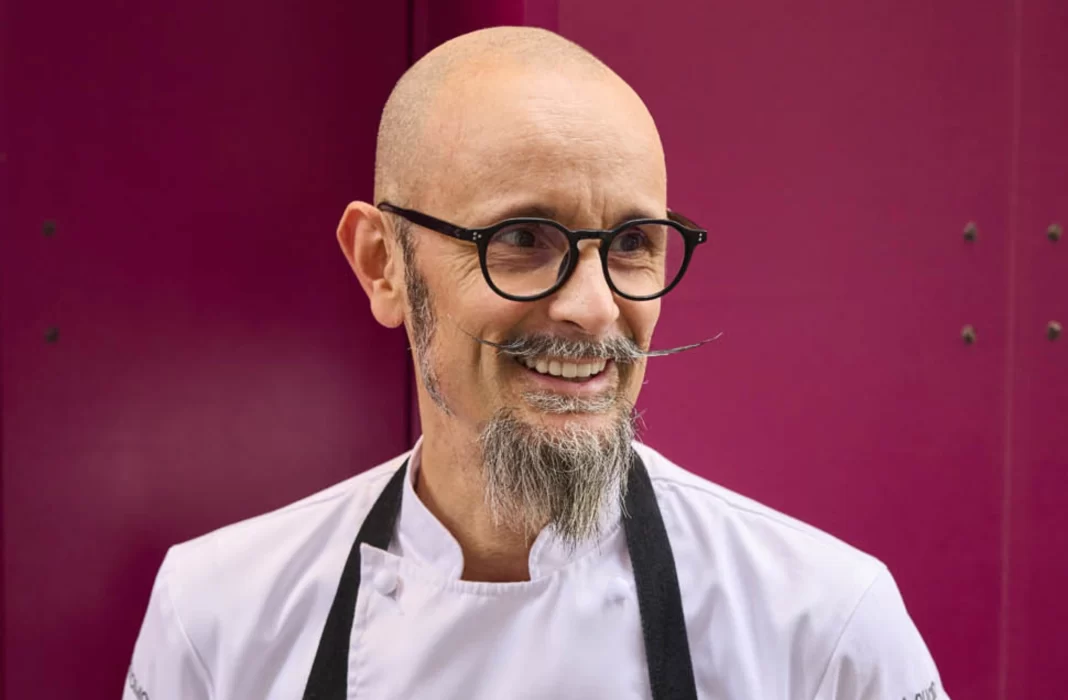

“We have to get to the top quickly. This area needs it and deserves it. Do you understand, Crippa? Do you understand, Crippa? Do you understand, Crippa?”
That was what Bruno Ceretto told a young chef who had just been handed the keys to a restaurant above the family’s wine cellar in Alba.
Crippa understood. In fact, twenty years in at Piazza Duomo, three Michelin stars and a place on the World’s 50 Best Restaurants list later, it’s safe to say he understood very well.
The Opening of the Restaurant
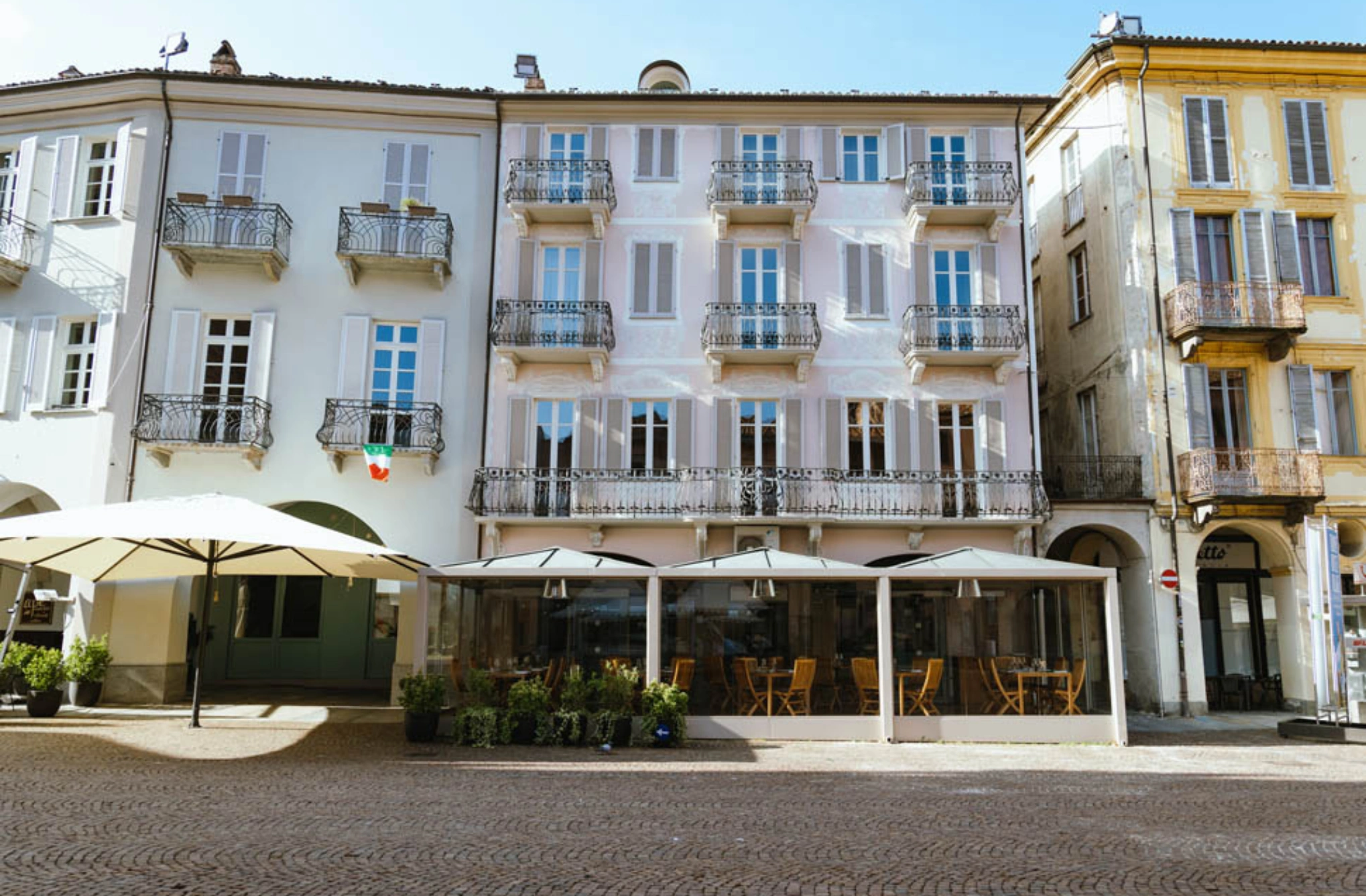
Enrico Crippa was born in Carate Brianza in 1971 and grew up in Viganò Brianza. He inherited his love of bicycles from his father and his passion for markets and good food from his grandfather. After completing his degree in hospitality, he trained with Gualtiero Marchesi in Milan and worked with some of the then top European chefs.
In 1996, Marchesi opened his restaurant in Kobe, and Enrico Crippa spent three years there gaining experience.
In the early 2000s, young Crippa met the Ceretto family, who were looking for a talented chef to entrust with a restaurant. Carlo Cracco had suggested his name for the same.
And while he was at it, Crippa demanded his own vegetable garden alongside the restaurant, and the Ceretto family gave him a large piece of land from the Nebbiolo vineyard.
Finally, in 2005, he opened Piazza Duomo in Alba, in collaboration with the Ceretto family, and went on to earn three Michelin stars. The first in 2006, the second in 2009, and the third in 2012. He was later awarded the green star in 2022 as well.
The Garden in Question
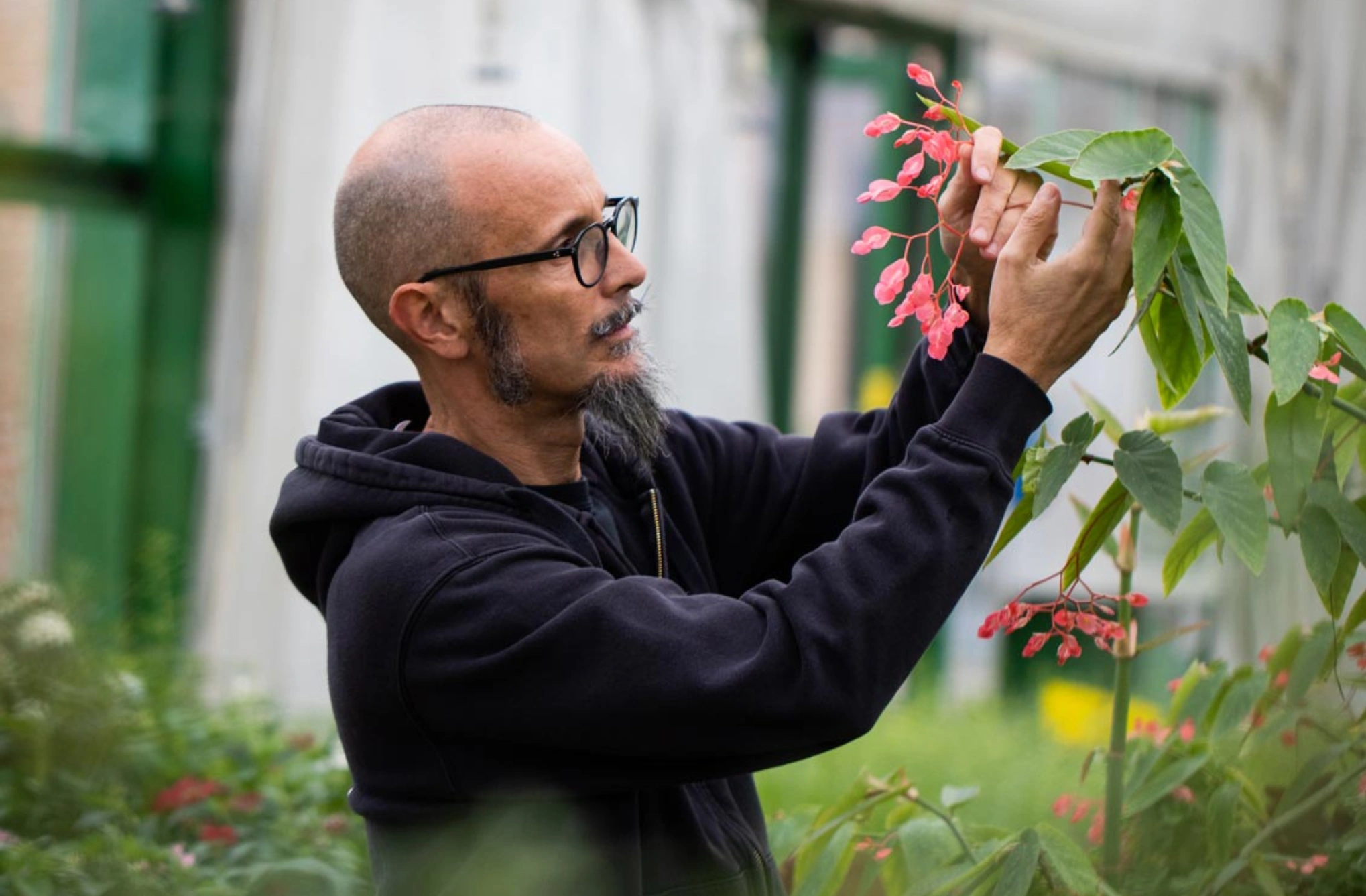
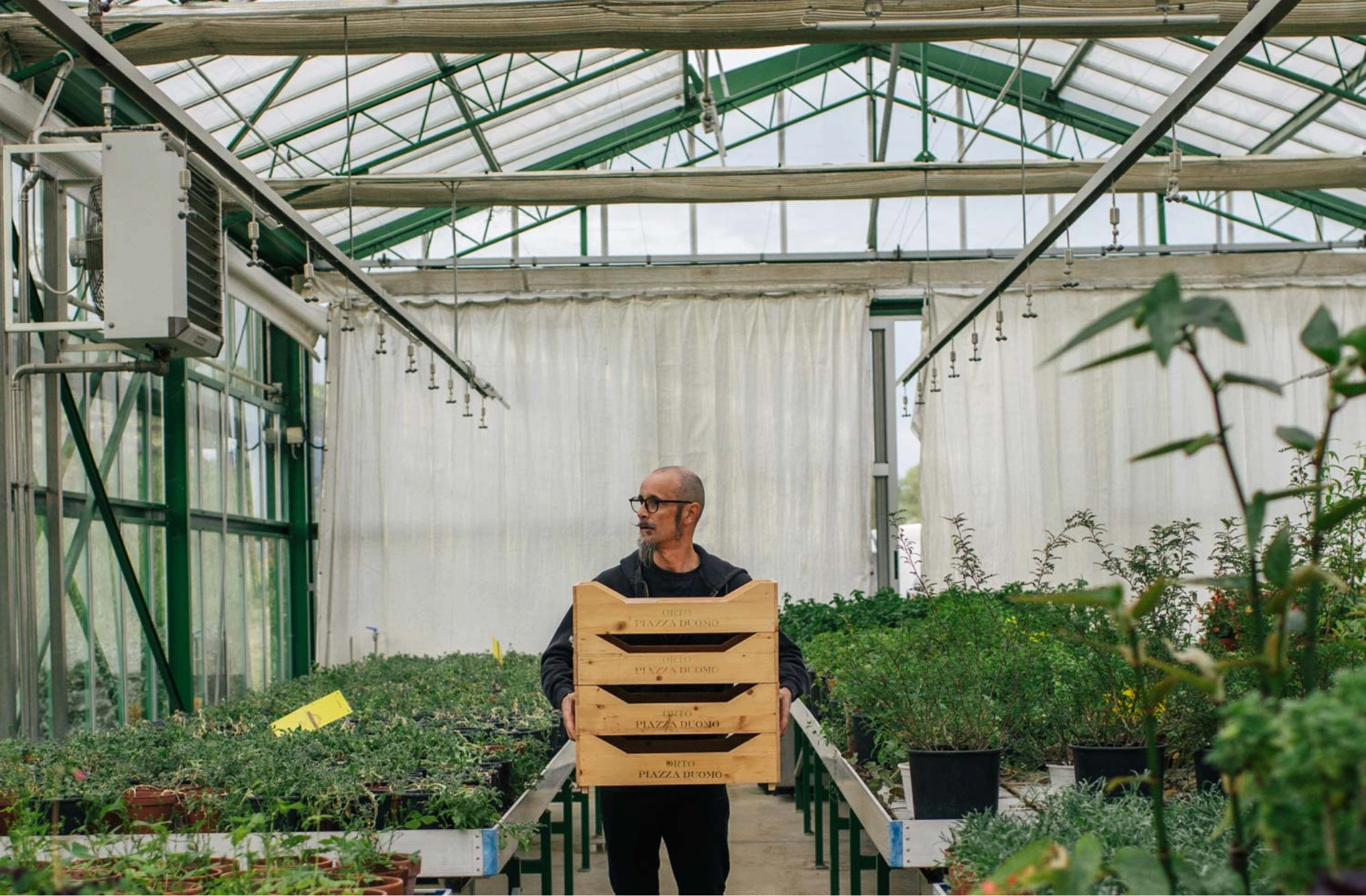
A few kilometers from Piazza Duomo’s dreamlike marshmallow-pink dining room, on Monsordo Bermardina Estate, is a garden that spans three hectares outdoors and 500 square meters indoors. Here grows around 400 varieties of vegetables from every continent.
“Every morning, Chef Crippa personally harvests the freshest ingredients, finding not only the components but also the inspiration to craft dishes that celebrate nature’s beauty and diversity.” Those ingredients are then delivered to the kitchen with minimum handling, with up to three deliveries a day. This process ensures absolute freshness and uncompromising quality.
Andrea Cuomo shares, “A few years ago, I was visiting that garden. It was a winter day, and it was freezing cold. I saw a white van pull up quickly and park. A focused Crippa got out and didn’t respond to my greeting. He began feverishly searching the greenhouse for a plant that would speak to him and say, ‘Take me, I’m ready.'”
The garden is now in the hands of Andrea Mastropietro, a head gardener from Venaria who came to the estate with a degree in dietetics and a family history in agriculture. He manages 4 hectares of garden together with his team, and much of his job centers around research he carries out with Chef Crippa on seeds and plants, in order to make the garden an increasingly sustainable and circular green oasis.
If He Were a Painter…
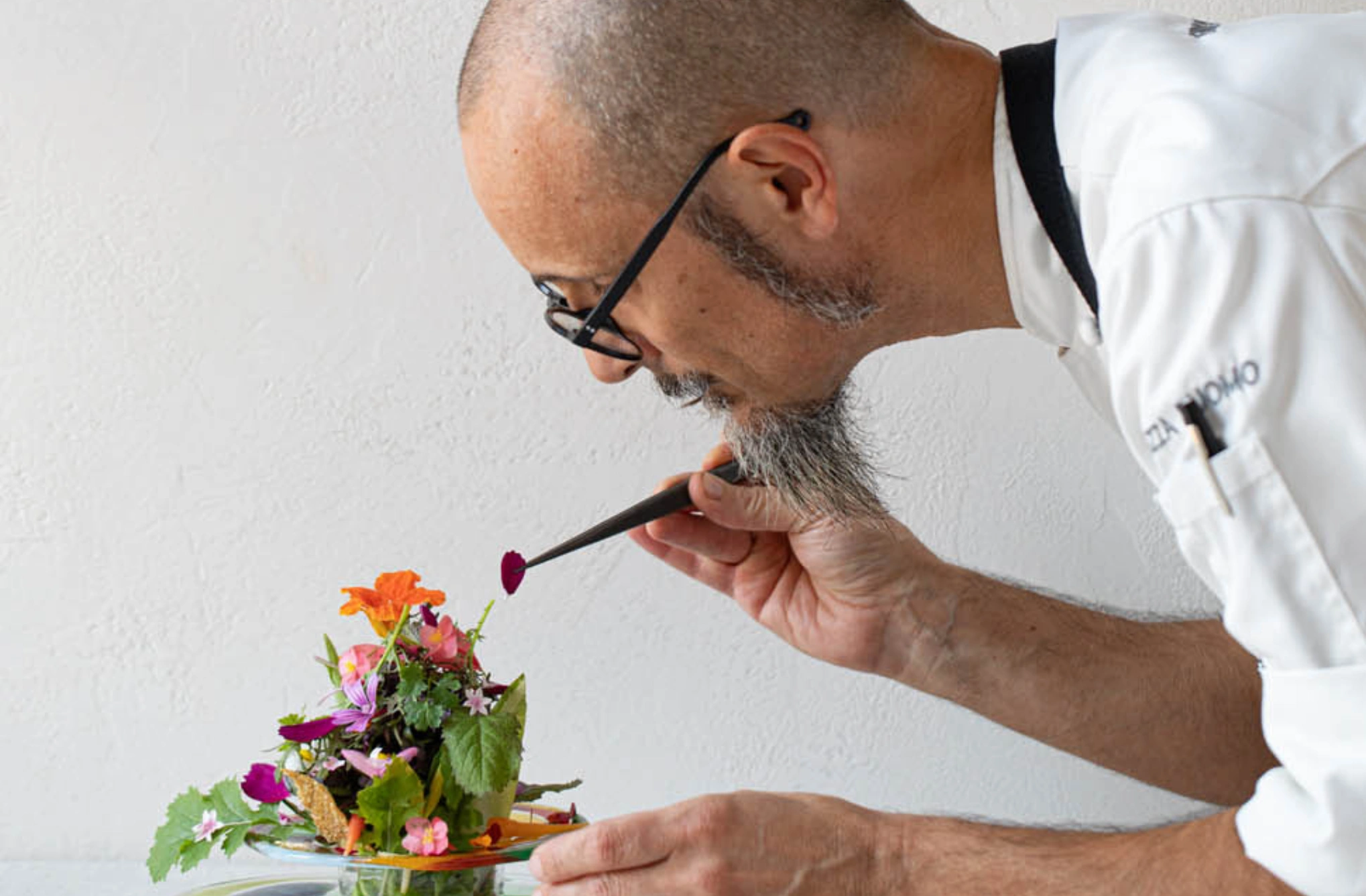
Crippa names his signature dish, a salad, 21…31…41…51…, after the number of vegetables in it on any given day.
According to the restaurant’s own team, their welcome course now runs to around 100 small plates throughout the year, rising to 127 in summer. Crippa himself says, “If he were a painter, the garden would be his palette, and vegetables would be the colors.”
The other aspect of “painting” is seen in the architecture of Piazza Duomo. “It all started thanks to our collaboration with our architect and interior designer, Bill (William) Katz, who used to set up exhibitions for American avant-garde artists. He installed exhibitions for artists such as Francesco Clemente, Jasper Johns, and Robert Indiana, and introduced them to us.” A mini exhibition organized by Roberta Ceretto during the Truffle Fair opened with an evening event at the restaurant, and, in Crippa’s words, “From that first event onwards, I had the idea of trying to reproduce drawings and sculptures on a plate. That’s how the first session came about.” Over time, the artists Anselm Kiefer, Kiki Smith, and Marina Abramović followed.
Out of that grew Art Bites, a limited edition of four surprise courses that can be combined with other dishes, available for lunch on Wednesdays, Thursdays, and Fridays from January to September for €170.
Translating a canvas into food, Crippa admits, “you have to try to open the diner’s mind to why there is this subtle similarity to the work, thanks also to the story told by the wait staff. But basically, you keep banging your head against the wall to get as close as possible visually, with edible ingredients and natural colors. It’s not always immediate: sometimes it is, other times it takes months, for example, with the Cod or the Mondrian Scallop.” He adds, “Then there must also be a balance of flavors: the three things must go together, so the sauce underneath is made with butter, fish stock, and ginger with a spoonful of spring onion. It goes well with saffron and onion, and this sweetness, which is also a little pungent, the bitterness of the red cabbage is not out of place, and so you have created a balance.”
The resulting dish is a small, edible museum.
For example, Antoni Gaudí’s mosaics at Park Güell inspired Crippa to create a dish of marinated egg yolk, parsley sauce, tomato béarnaise, sea urchin, and bitter orange, topped with shrimp and nori. Paul Klee’s “The Rose Garden” inspired a Carnaroli risotto creamed with butter and beetroot, with Sanremo shrimp and cosmos flowers. You can see the famous Van Gogh’s fields of flowers in milk, colored naturally with mint, rose, chamomile, pea, and licorice.
On that, Crippa says, “Cooking is not art, but it comes close to art.”
“My Crooked Pan”
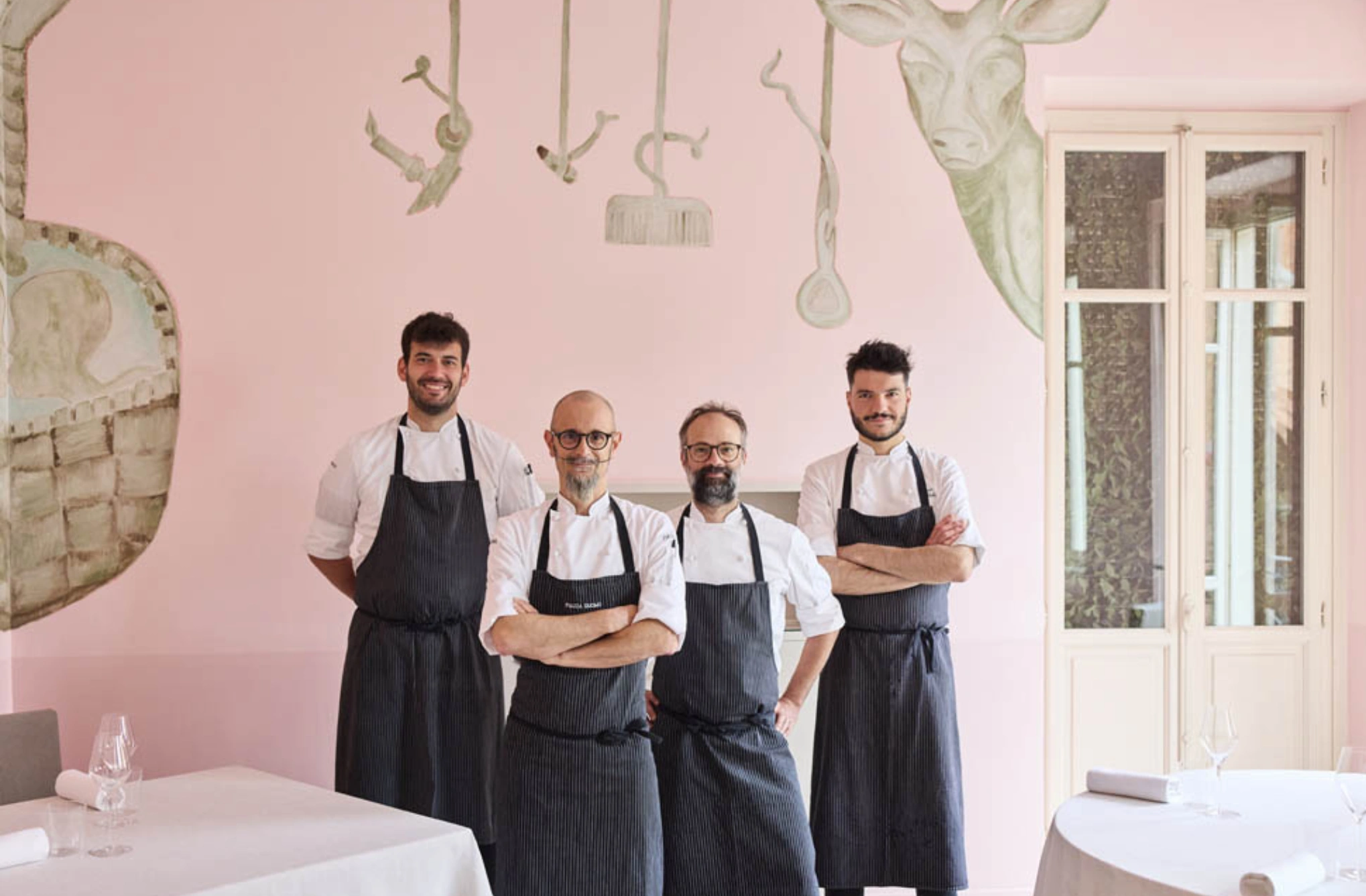
Ahead of the 50 Best ceremony in Turin, Crippa was asked how important travel and international relations are to a chef’s career.
His answer was that “the less I move, the better I feel, because I am with my crooked pan that I know I have to put on the stove in a certain way, and I know that here I find the raw material that I say. It is true that if you go elsewhere with other ingredients, your inventiveness can be stimulated, but I need to know a product well, to feel it, to touch it, to understand what I can do and not do. If you stay at home, it becomes a little more difficult.”
Staying put, for him, is the whole method.
As for what he’d like to let people experience at his restaurant, he says, “I would like something indelible to remain in the hearts of the people who have passed through Piazza Duomo, for the Langhe, for Piedmont, for Italy. That they can realize that we are in a fantastic territory, in a beautiful nation, rich in any product, special people, fantastic wines.”