

The thing is, these days, no matter how good espresso you brew, how great your ambiance is, or how much cash you spend on marketing your cafe, there is still zero guarantee that your foot traffic (especially the paying foot traffic) will be good too. Nowadays, folks decide where to grab their next cup on their phones, well before they step into your shop. And coffee marketing (a well-strategized one) is how you stand out. This article lists eight strategies that you can start using right from this month and expect good results + common mistakes that you should be avoiding while doing so.
What You’ll Learn
- How do you make your coffee shop stand out in a competitive market when there’s another one down the street?
- Which marketing channels actually turn new customers into loyal customers?
Why Marketing Matters for Your Coffee Business in 2026
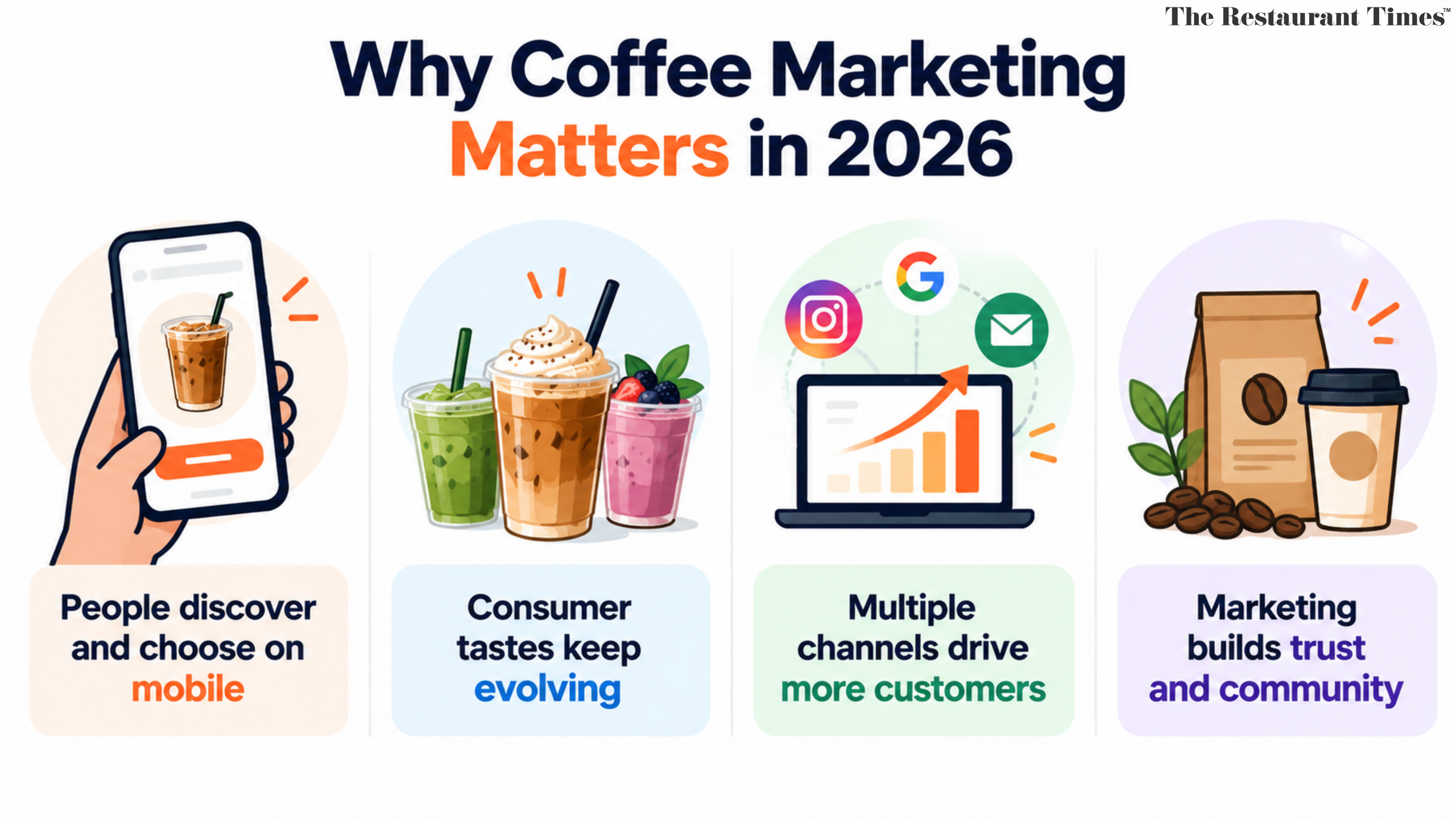
You need not persuade anyone to drink coffee – not today, never in the future. The real debate is which brand X person readily chooses when they really want to buy a coffee. And the thing is, this competition is no longer just a street thing anymore…people discuss what brands they like, which one they will avoid, etc., online.
With mobile phones making up around 51.48% of global web traffic, if your website menu looks like a blurry PDF or your Google listing is outdated, you’re likely to lose potential customers before they even get a taste of your carefully-brewed drink.
Consumer preferences are always evolving too, and coffee businesses need to keep up with those changing preferences, whether it’s iced beverages or wellness blends. Marketing is essential for identifying these trends and letting people know you have what they crave. Plus, there’s another reason to take marketing seriously: using multiple digital channels together can significantly boost conversion rates, so relying solely on an Instagram page could be a risky move (It’s 2026, after all).
Lastly, trust is key. Today’s coffee drinkers want to know who roasted the beans they are about to purchase, how exactly they were sourced, and if your coffee shop genuinely feels like a community they want to be part of.
Marketing is your way to consistently convey all of this. Through proper branding, maybe via adding a logo to your cups and making them using sustainable materials, engineering your menu board, website, or social media, you can ensure that any newcomer who comes across your brand can understand what you do differently and why they should choose you over your competitors in just a few seconds. Brands that are able to do this well raise their perceived value by multiple folds, which is all the more important when you know that you and your nearby competitors are all vying for the same morning crowd.
INDUSTRY INSIGHT
| The National Coffee Association’s 2026 National Coffee Data Trends reports show that 66% of American adults drank coffee on a given day, a level that has held steady since 2022. Specialty coffee has also overtaken traditional: 47% of US adults had specialty coffee in the past day, compared with 42% for traditional coffee. Cold coffee reached 21% of past-day drinkers, up from 16% in 2022, and past-week espresso-based drinks climbed from 40% to 45%. Now the catch. IBISWorld puts US coffee and snack shops at roughly $75.5 billion in 2026, yet the industry grew just 0.2% this year. Demand is steady while growth is flat, which means most new customers will come from winning them away from competitors, like the coffee shop next door, and that’s a marketing job. |
Coffee Shop Marketing Strategies That Work
1. Start with a USP people can repeat
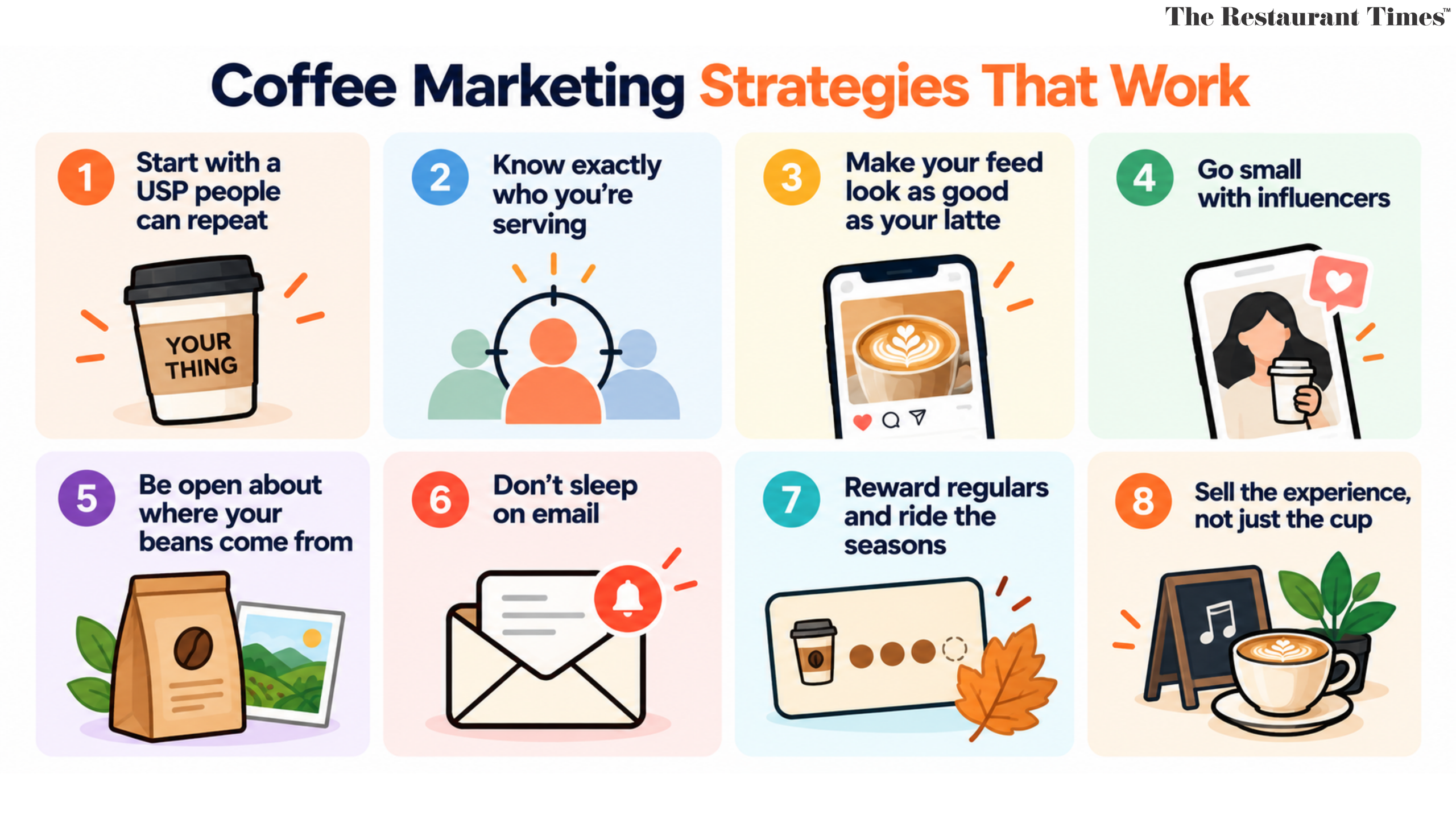
A unique selling proposition defines your brand’s distinctiveness, and it’s the foundation for effective marketing campaigns. Without one, every ad you make sounds like every other coffee shop’s ad. Beans & Brews, for example, specializes in high-altitude roasted coffee. That one line gives them a story, a reason for the price, and branding they can print on every cup sleeve.
Your USP doesn’t have to be about the beans, either. Some coffee shops use resident cats to attract customers, and it works because nobody else on the block has one. A clear USP helps coffee businesses stand out in a crowded market, so find your thing and say it everywhere.
2. Know exactly who you’re serving
Most successful coffee businesses run basic market research before they guess. Market research helps define your target demographic, which includes age, lifestyle, and spending habits. Once you understand demographics, you can adjust your menu and promotions to fit, and identifying your ideal customers improves your marketing strategy across the board.
Coffee brands often segment their market based on diverse consumer motivations, and each segment responds to a distinct brand identity:
- Mass market: emphasize convenience and speed.
- Specialty coffee enthusiasts are those people who are willing to pay more for single-origin beans and artisan roasting.
- Premium buyers and home-entertainers: This group leans on aspirational branding.
- Health-conscious drinkers: highlight functional and wellness benefits.
Pick one or two segments and focus your marketing message on them instead of trying to please everyone.
3. Leverage social media: make your feed look as good as your latte
Visual storytelling and social media content are vital for engaging coffee consumers, and since most of them are on mobile, short video and strong photos do the heavy lifting. Show what customers love: the pour, the steam, the latte art, the iced drink sweating in the sun. Cold and iced coffee are popular with younger consumers right now, so lead with them in your social media posts if that’s your crowd.
Back it up with social media ads and other targeted digital advertising, which is essential for reaching diverse consumer segments. A morning commuter needs a different message than a weekend home-entertainer. And if you’re short on hours, use AI. In fact, 68% of marketers find AI useful for automating marketing tasks. It takes over administrative tasks like scheduling and caption drafts so you keep your creative direction over your AI marketing efforts.
4. Go small with influencers
Collaborating with micro-influencers is a low-cost strategy with outsized reach. If you go by the numbers, influencer marketing generated US $20 million for Emma Chamberlain Coffee in 2023.
This works because influencer marketing brings in authenticity that younger audiences mostly find themselves relating to more closely, and a local creator with a few thousand loyal followers feels like it gives a much more real vibe than a celebrity selling the same thing.
One warning: coffee brands must align with influencers carefully to avoid alienating customers. If the partnership feels forced, or the creator promotes five other brands that week, your audience will notice.
5. Be open about where your beans come from
Transparent product storytelling builds brand trust among coffee drinkers. Sustainability and ethical sourcing are key marketing focuses for coffee brands right now, and ethical sourcing appeals to socially conscious customers. Share the farm, the roaster, and the process, so customers see a direct link between the farm and their cup. Put it on bags, menus, in-store branding, and your website. Just keep it honest and only claim what you can back up.
6. Don’t sleep on email
Email marketing can significantly enhance customer engagement for coffee businesses, whether you’re sending a weekly menu update or pitching your beans to local offices and grocers. Cold outreach works better than most people expect: 80% of buyers accept sales meetings through cold emails, and 77% of buyers respond favorably to them. That 77% positive response rate makes email campaigns one of the highest-value, lowest-cost ways to land wholesale accounts. Keep it short, mention something specific about their business, ask for one thing, and add urgency with a limited-time tasting offer.
7. Reward regulars and ride the seasons
Loyalty programs can increase customer retention significantly, and a simple punch card or app-based points system is enough to start. Pair it with seasonal drinks, which can contribute up to 25% of fall sales and give your marketing campaigns a natural hook. Launch your autumn special early, give loyalty members the first taste, and you’ve given them a reason for repeat visits every few days.
8. Sell the experience: how experiential marketing creates regulars
Experiential marketing creates a memorable customer experience around your brand, and the best coffee businesses rely on storytelling and immersive rituals to engage customers. Think cupping nights, latte art classes, or a morning ritual that becomes part of their daily life. Community-driven marketing strategies also strengthen connection in the coffee industry, so host a local artist, back a neighborhood event, or put up a community board. Customers who feel part of something become loyal customers who don’t need a discount code to return.
Common Mistakes Coffee Businesses Make
Skipping the USP. If you sound like the coffee shop across the street, customers will treat you like it.
Marketing to everyone. No defined demographic means a vague marketing strategy and wasted money.
Relying on one channel. Conversion rates improve when your digital marketing combines social, email, and ads.
Choosing influencers by follower count. Fit matters more than reach, and a mismatch can alienate your audience.
Ignoring mobile. With 62% of web traffic on phones, a clunky mobile website costs you sales.
Overclaiming on sustainability. Transparency builds trust, and vague green claims erode it.
Never measuring results. Track which posts, emails, and offers have a direct link to foot traffic, then do more of what works and drop the rest.
KEY TAKEAWAYS
| – Define your USP first. Every marketing strategy builds on it. – Research your market, then speak to one or two segments clearly. – Use several digital marketing channels together: visual social content, targeted ads, and email. – Choose micro-influencers who genuinely fit your brand, and be transparent about sourcing your beans. – Keep customers coming back with loyalty programs, seasonal drinks, and community-focused experiences. |
Frequently Asked Questions
1. What is the best marketing strategy for a new coffee shop business?
Start by figuring out your unique selling proposition (USP) and who your ideal customers are. Then,
- Play around on social media with some trendy reels and eye-catching carousels
- Partner with a few local micro-influencers
- Set up a simple email list.
For any new business, I’d advise you to use multiple digital marketing channels together rather than betting all of it on one.
2. Is email marketing still worth it for coffee shops?
Absolutely! Email can really boost customer engagement, and cold outreach gets a 77% positive response rate, which makes it super useful for landing wholesale and office accounts.
3. How do loyalty programs and seasonal drinks help a café grow?
Seasonal drinks can account for up to 25% of sales in the fall, plus they give you something fresh to promote. Loyalty programs can greatly enhance customer retention, so together they attract new customers while keeping regulars coming back for repeat visits.