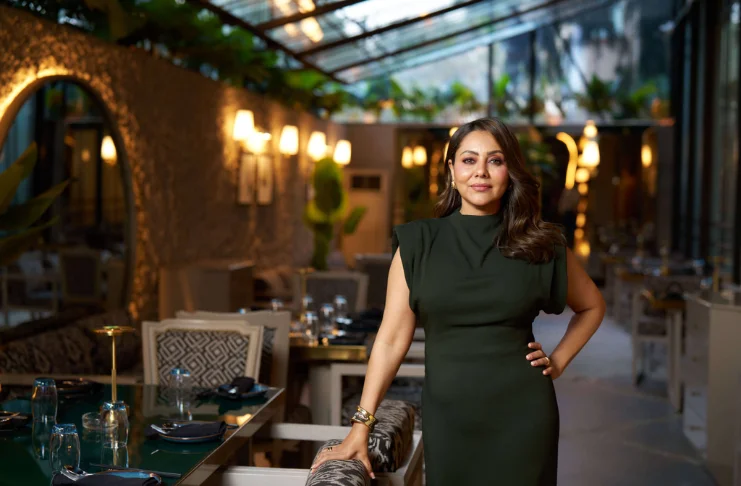

The shimmering door at Pali Hill in Bandra is an elegant green one, surrounded by black-and-white backlit onyx. It is too big to be called a fittingly sized one, but it is so elegant and graceful that it makes other doors pale in comparison.
This is one of those doors that can make you stop right before turning the handle.
And yes, there is a reason for all of this because Gauri Khan has designed this entire thing.
The Idea Behind the Name
Torii is the Japanese word for a gate at the entrance to a Shinto temple, signifying a transition from the normal to the spiritual world and a change in nature.
This is why Khan named his restaurant Torii, as Torii symbolizes the demarcation between two worlds. “In Japanese, the word torii represents the gateway to a Shinto shrine,” Khan said at the launch. The restaurant, she explained, was always meant to be “the doorway to a food haven.”
Why Gauri Khan Opened a Restaurant
Over the years, the lady has dedicated herself to interior design for some of the most famous people in India and beyond. Khan has designed restaurants for her clients, and each time she designs one, she has discovered something more about restaurant interior design, which she thinks works and which does not.
As such, working closely with her clients has led her to demand much more than she gets from the briefs. “Once I began designing restaurants, it got me thinking how I could be more involved in this industry, which I find exciting,” she said at the launch of Torii. “With Torii, we wanted to create a sophisticated and glamorous restaurant and bar where quality is seen in everything, from the food to the drinks and, of course, the design.”
She started the business alongside restaurateur Abhayraj Kohli, MD of the Pritam Group, who holds a Master’s Degree in Hospitality from Cornell University. He owns restaurants, including Indyaki, Please Don’t Tell, The Roll Company, Grandmama’s Café, and many other ventures in Mumbai. Tanaaz Bhatia, the founder of Bottomline Media, also joins in forming the business team.
The Space: Restrained Glamour at 4,500 Square Feet
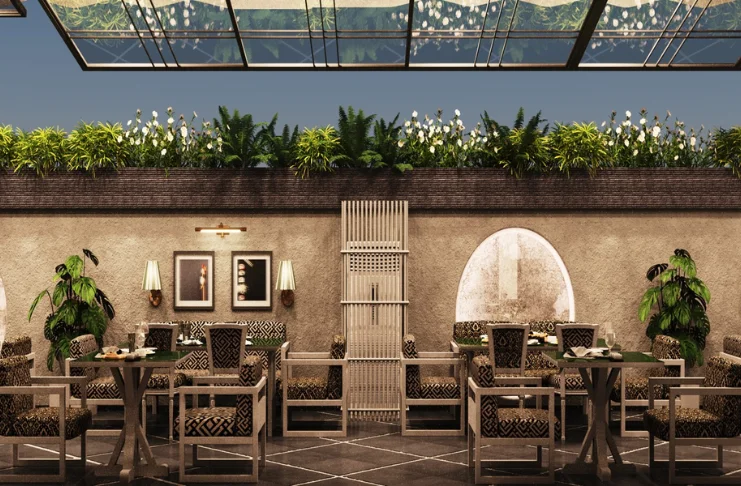
The total area covered by Torii is 4,500 square feet, subdivided into three parts. Firstly, there is the entrance area, which includes the lounge with the green island bar. Secondly, there is an al fresco dining area with large mirrors and plenty of greenery. Lastly, there is the indoor dining area, which features a distressed mirror ceiling and a red lacquer table.
As guests enter, they pass the onyx-framed green door and are immediately greeted by a large koi fish entwined with the restaurant’s name. “A koi fish symbolizes luck, prosperity, and good fortune in Japanese culture,” Khan has said. The choice of imagery was not decorative first. It was symbolic first, and decorative as a consequence.
The color palette consists of gold, black, white, red, and green. All of them have their own significance. Red symbolizes celebration; it is the color of prosperity across Asia because it is a symbol of life. Green stands for balance. Gold symbolizes luxury. This is what creates the restrained glamour pointed out by Khan, and the term deserves some serious thinking about. Restraint glamour is not the understatement of elegance. Instead, it is warmth and luxury in perfect harmony and balance, where neither of them overshadows the other.
The inclusion of metal accents, a wealth of greenery outside the space, fluted glass windows, a ceiling mirror, and customized abstract paintings on canvas was specifically chosen to accomplish one thing only. This was to create a space where sophistication was not necessarily about coldness, welcoming was not associated with a lack of class, and luxury was visible and tangible at once.
The Menu: Pan-Asian, Latin-Inflected, Serious About Flavor
The head chef of Torii’s kitchen is Chef Stefan Gadit, a Michelin-trained chef who draws on influences from his Canadian background and his rich international culinary experience.
Gadit has been clear about his philosophy for space. “Here, the purpose is to savor the food; not simply eat and go home,” he told Knocksense in an on-the-record conversation about the menu’s development.
The menu takes you on a journey through the territories of Pan Asia, with a touch of Latin America. Maki rolls share space with carpaccio and tatakis. Tempura and salad sections balance out the grill station. Dumplings, wok dishes, rice, and noodles occupy the center part of the menu. The bar list is sophisticated and fun, made for guests who take their cocktails as seriously as their meals. The chef-arranged five-course tasting menu stands side by side with the full à la carte menu for those who prefer to trust their culinary experience to Gadit.
The restaurant seats 85 people – large enough to make a destination, yet small enough to offer impeccable service.
Why It Works
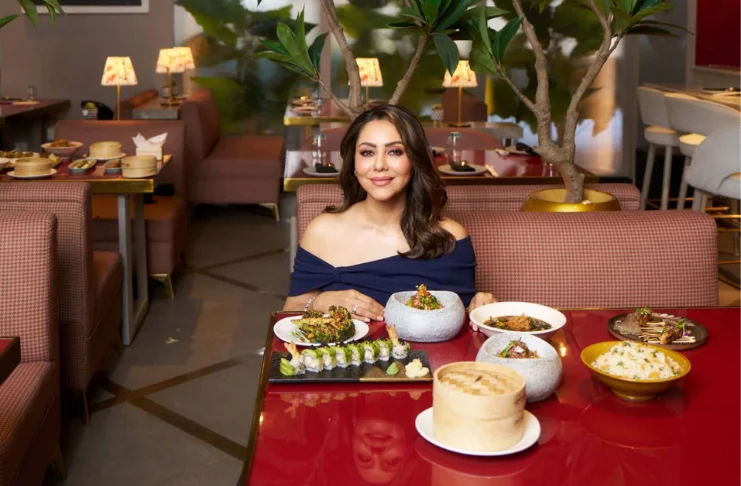
What stays standing amid such fierce competition as in Mumbai is the restaurant that knows what it is. Torii knows what it is. It is glamorous, and it does not try to hide its glamour. Torii is design-driven, and it does not try to mask this fact. Torii is not a place you visit from time to time; it is a venue created for a particular occasion.
The gate is open. There is something beyond it, definitely worth walking through.