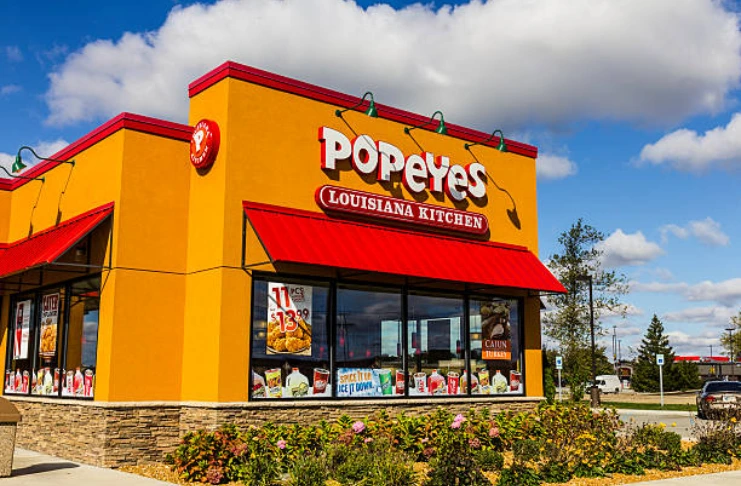

The restructuring of one of Popeyes Louisiana Kitchen’s largest franchise operators underscores a broader trend reshaping the restaurant industry: financial pressures are accelerating franchise consolidation as operators seek scale, operational efficiency, and stronger balance sheets.
According to reporting by Nation’s Restaurant News, bankrupt Popeyes franchisee RRG Holdings has received court approval to sell the majority of its restaurant portfolio as part of its Chapter 11 restructuring process.
The transaction includes the sale of 79 Popeyes restaurants to multiple franchise operators, while several remaining locations are expected to be sold through separate transactions as bankruptcy proceedings continue. The sales are subject to customary closing conditions and approvals from both the bankruptcy court and Popeyes’ parent company, Restaurant Brands International (RBI).
The restructuring follows RRG Holdings’ Chapter 11 bankruptcy filing earlier this year after the company struggled with rising operating costs, mounting debt obligations, and declining financial performance.
That trend extends well beyond Popeyes.
Across North America, Europe, and parts of Asia-Pacific, restaurant brands have seen growing consolidation among franchisees as scale becomes an increasingly important competitive advantage. Larger operators are generally better positioned to absorb commodity price volatility, invest in digital capabilities, and navigate evolving regulatory requirements.
For franchisors, financially stronger franchise networks also reduce operational risk.
Restaurant Brands International, which owns Popeyes alongside Burger King, Tim Hortons, and Firehouse Subs, has consistently emphasized franchise health as a cornerstone of long-term brand performance. Maintaining well-capitalized franchise partners enables brands to accelerate restaurant development while protecting guest experience and operational consistency.
The restructuring also highlights the evolving role of Chapter 11 proceedings within the restaurant sector.
Rather than signaling permanent closures, bankruptcy increasingly serves as a restructuring mechanism that allows viable restaurant assets to remain operational under new ownership. Employees often remain in place, restaurants continue serving customers, and franchise agreements are transferred to new operators capable of investing in long-term growth.