



The quality of your staff defines the quality of your restaurant. A well-trained team is the backbone of your restaurant’s operational consistency, guest satisfaction, and long-term profitability.
Yet many operators underestimate what effective training really looks like. They think they’re set after just onboarding a candidate. But real training constitutes culture, accountability, and execution at every shift.
This guide offers a comprehensive restaurant staff training manual, an actionable checklist, and a clear framework to help you build, train, and retain a high-performing team.
What Makes the Foundation of Restaurant Training Success?
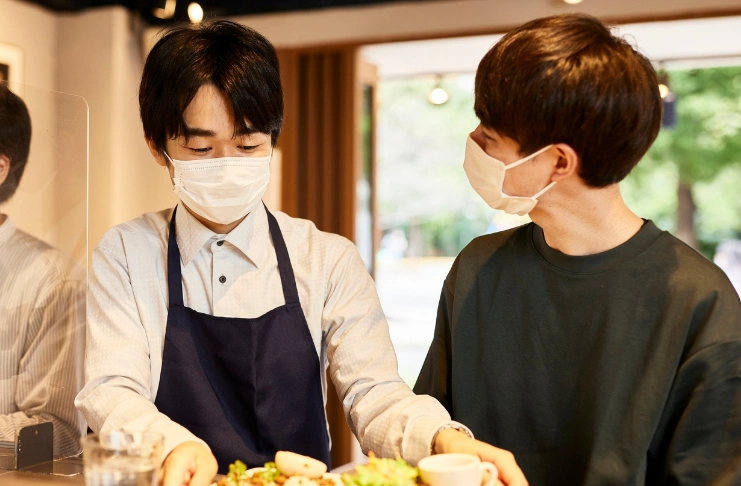
Developing an effective restaurant training course begins with an understanding of what challenges your specific employees face in modern times. High turnover (around 79.6%), varying skill level of new recruits, and fast-paced restaurant atmosphere make restaurant training particularly complex.
However, establishments that overcome these challenges through systematic approaches to employee training see significant returns on their investment.
The restaurant training manual is the backbone of any serious restaurant staff training program. This provides consistency across all training by ensuring every team member has a similar knowledge base, regardless of who trains them.
Without this standardized approach, training quality varies widely, leading to significant differences in service delivery and customer satisfaction.
Research actually proves time and again that restaurants with formalized training programs do better than those restaurants that do not have structured systems. They have lower labor turnover, higher customer satisfaction scores, and better profitability.
Indeed, investment in staff training pays dividends in terms of customer loyalty, reduced recruitment costs, fewer operational mistakes, and enhanced reputation in the marketplace.
How Do You Assess and Understand Your Training Needs?

Prior to creating a restaurant-specific training solution, it is necessary to conduct a needs analysis. The more specific you are to your concept, target market, method of service, or level of complexity, the more precise your needs analysis, which will result in a specific restaurant training solution. A restaurant is not like another restaurant; it is like a restaurant, which is like another restaurant, dependent on concept.
From a technical standpoint, this process for assessment would entail assessing the performance of existing staff, loopholes in the provision of service, and customer feedback trends. It would also enable the training component to concentrate on those areas that significantly affect performance.
You must also factor in regulatory requirements, local health codes, and industry best practices in designing the training methodology.
Bear in mind that menu complexity is a factor that affects training. For instance, if the menu includes many wine varieties, complicated food preparation methods, and special dietary requirements, the training on the menu would be more complex than in a restaurant that has fewer menu choices.
Similarly, restaurants with multi-unit operations face challenges of ensuring both consistency and local adaptations in their training documents.
How Do You Build an Effective Restaurant Staff Training Manual?

The development of a detailed training manual requires careful planning and systematic organization. This document serves as the primary reference for all staff training activities and must be comprehensive enough to address every aspect of job performance while remaining accessible and practical for daily use.
Establishing Company Foundation
First, it is important to lay down essential elements of your restaurant. These elements will dictate what operations should be undertaken. Your restaurant’s mission statement will act as a guiding principle for employees on what they do. In fact, it is not corporate doublespeak. It is more of a tool to make informed decisions on what to do in particular situations.
Your values for your restaurant business need to be developed into more specific behaviors that can actually be observed by your staff members. Take the value of hospitality, for instance. A possible definition of the behavior of hospitality might entail manners during receiving, receiving complaints, and resolving complaints.
Your company history and background information can be incorporated as a way for new members of the team to understand the journey and the vision for the future of your restaurant.
Staff members who understand your restaurant’s story are more likely to create memorable dining experiences and become ambassadors for your brand, sharing positive experiences with customers and contributing to the overall guest experience.
Defining Roles and Responsibilities
Develop job descriptions to prevent confusion and assign responsibility around your organization.
Each role needs to be documented separately in a way that details the responsibilities, performance, and progression for each position. The benefit of doing this will be several-fold, as it will help guide the hiring process, training, and performance management.
Your front-of-house operations involve multiple roles that require distinct skill sets and training approaches. Your servers need extensive customer service training, menu knowledge, and sales skills.
The skills needed by the host include crowd control, knowledge of how reservations work, and conflict resolution. Food runners have to know concepts of timing, food and service delivery, and service delivery concepts.
Kitchen staff require different skill sets with a focus on food prep, safety procedures, and quality control processes. Your line cooks require skills related to cooking procedures, food processing, and plating procedures.
Student personnel need familiarity with storing, portioning, and preparing foods. Dishwashers must understand sanitation procedures, equipment operation, and workflow efficiency.
Management roles require a thorough understanding of all operational areas, plus leadership, financial management, and regulatory compliance knowledge.
Your managers must also be equipped to train others, handle emergencies, and make decisions that protect both customers and your business. Their training must cover technical skills, interpersonal abilities, and strategic thinking capabilities.
Implementing Safety and Compliance Standards
Food safety represents the most critical component of your restaurant training program. The World Health Organization (WHO) states that unsafe food can cost restaurants about $110 billion annually in productivity and medical expenses. How can you prevent such a loss?
Ensure that your employees know how to handle food safely. This will not only protect your consumers from food poisoning, but it will also save you from lawsuits. Make sure they know how to handle food at proper temperatures.
Your training manual needs to cover hand washing procedures with temporal specifications, the use of gloving techniques, and personal hygiene guidelines. The prevention of cross-contamination involves comprehensive techniques for handling various foods, cleaning and sanitizing equipment, as well as designating separate areas for preparation.
Temperature monitoring includes understanding dangerous zones, storage practices, and documentation procedures.
Awareness of allergens has become a growing necessity, thanks to a higher number of customers who have food restrictions and allergies. The staff education you provide must incorporate information on allergens, the danger of cross-contamination, and effective communication strategies when customers ask regarding the contents of your products.
How Do You Develop Comprehensive Training Checklists?

Training checklists provide structure and consistency to the employee training process while ensuring complete coverage of essential topics. These tools serve as roadmaps for trainers and documentation for completed training activities.
Well-designed restaurant training checklists break complex processes into manageable steps that can be completed systematically.
The checklist format allows for easy tracking of progress and identification of areas requiring additional attention. Trainers can quickly assess which topics have been covered and which still need completion. This systematic approach prevents important topics from being overlooked during busy training periods when interruptions are common.
New Employee Onboarding Systems
The onboarding process determines the tone for the entire term of employment with the restaurant. A good onboarding checklist helps create consistency in introducing new employees to the company culture, policies, and practices, irrespective of the staff strength and lack of time. It helps create good first impressions and enables faster inductions into the staff.
Paperwork completion serves as the paperwork basis for the new employee process, dealing with employment paperwork, taxes, and policies.
Not glamorous, but necessary, proper documentation protects both the individual as well as the business. During this stage, the introduction of the employee handbook should take place. Questions should be answered.
Facility orientation familiarizes new employees with their work environment, including safety equipment locations, emergency procedures, and basic navigation.
This tour should cover both customer and employee areas, explaining the purpose and importance of different spaces. Security procedures, including alarm systems and cash handling protocols, require specific attention during this orientation.
Team introductions provide an opportunity for the new employees to begin their relationships with co-workers while learning some of the reporting structures and lines of communication. Introductions within the team should include an explanation of roles and samples of how positions would relate to each other in service. The development of mentor relationships at the onset of onboarding allows for a continued system of support beyond formal training sessions.
Daily Operations Protocols
Daily Operations Checklists ensure consistency in the performance of routine tasks and reinforce training. Checklists include opening procedures, service standards, and closing tasks pertinent to each job. The frequent repetition of using checklists instills habits and reinforces concepts learned in training by applying them to real situations.
Opening procedures set the stage for successful service, ensuring that all systems are on and properly prepared.
Kitchen opening checklists include equipment turn-ons, temperature checks, and prep work organization. Front-of-house opening activities include dining room preparation, activation of the POS system, and updates to the reservation system.
Checklists for the service period assist in keeping the standard level going, even during peak hours when there is a high level of stress, which can result in taking shortcuts. They ensure that workers do not fail to carry out important procedures, such as checking the temperature or the cleaning process, as well as customer service procedures.
The closing procedures help in ensuring that all systems are shut down properly in preparation for the next service period. Kitchen closing procedures involve cleaning of equipment, food storage, and management of inventory. The front of house procedures involve cash reconciliation, cleaning procedures, and security system activation.
Quality Assurance Monitoring
Quality assurance checklists help in carrying out a systematic appraisal of the training process and point out where there is a need to make improvements in the training concepts in the way in which these are carried out in the customer service delivery process.
Evaluating customer service checklists involves appraising designated behaviors and interactions associated with delivering optimal dining experiences. Such evaluation focuses on greeting techniques, order accuracy, time responses, and problem-solving efficiency, among other factors.
Observational checklists enable managers to give focused feedback on actual performance rather than impressions.
Food quality checklists are important to ensure that preparation procedures, as well as food presentation, comply with set standards. Food quality checklists include standards regarding serving size, food temperature, food consistency, and food safety procedures.
This helps detect any training deficiencies prior to the effect on customer satisfaction.
The kind of checklist used to ensure cleanliness and sanitation is to ensure that the staff are following appropriate procedures in the maintenance of safe and clean conditions. Such checklists include hand washing practices, surface sanitizing, and the effectiveness of equipment cleaning. Recording the results of these checklists ensures proof of due diligence in health maintenance.
INDUSTRY INSIGHT
| Food safety training becomes an essential factor for restaurant success. Foods meta-analysis indicated that planned training can enhance the knowledge of food handlers by 1.24 effect size values, attitudes by 0.28 values, along with practices by 0.65 values. However, while 88% of firms feel they offer their personnel adequate training concerning food safety, only 40% beleve their staff follow it correctly on the floor. Effective training could be defined as a training process where trainees master the training topics at a specific threshold or percentage after the training process. Personalized learning related to particular roles increases the chance of intervention from 22% to 82% when safety is on the line. But motivation is important as well. Firms with mature upskilling processes report nearly double the rate of highly motivated employees. In this industry, where 600 million foodborne illnesses occur every year, improving compliance with the training is imperative. Effective training programs are always personalized, and they should be driven by the culture. |
What Training Methods and Implementation Strategies Are Most Effective?

Effective restaurant training programs employ a variety of methods to meet different learning styles and ensure the highest retention. Theoretical knowledge combined with practical application ensures staff members can successfully transfer learning into job performance.
Restaurant owners are able to design programs that better achieve desired outcomes through an understanding of the strengths and limitations of various approaches to training.
Hands-On Learning Approaches
On-the-job training gives instant practical experience in the real work environment where the newly recruited employees must perform their duties. With this method, feedback and adjustment are allowed in real time, plus build confidence through gradual competence development.
This approach is particularly valuable in the fast-paced restaurant environment for developing a person’s timing and multitasking abilities.
Shadowing allows new employees to observe best practices from experienced staff members while asking questions and receiving guidance. This mentorship approach transfers knowledge in the institution that may not be captured on paper while building relationships that support ongoing development.
Successful shadowing is about picking the right mentors who are proficient both technically and attitudinally.
Progressive responsibility assignment enables new workers to be assigned more intricate tasks as their skills progress. This measure helps avert burnout while fostering confidence through the success of more difficult tasks. Monitoring the new employee helps supervisors ensure that workers are assisted when needed while promoting autonomy.
Simulation exercises give a chance to practice difficult situations without jeopardizing customer satisfaction or safety.
Role play activities enable the staff to be ready for difficult situations with customers, emergencies, or complex service needs. Such activities boost the employees’ confidence and problem-solving skills, which are directly applicable while performing their jobs.
Structured Learning Programs
Classroom-style training sessions allow for comprehensive coverage of policies, procedures, and concepts that require detailed explanation. These sessions work particularly well for topics like food safety, customer service principles, and company policies that benefit from interactive discussion and clarification.
Structured sessions offer the advantage of delivering the same information to all the participants while allowing time for questions and group learning.
Modules in training break down tough subjects into manageable pieces amenable to being addressed systematically over time. Thus, rather than being flooded with too many ideas at once, trainees can assimilate the subject matter adequately prior to moving along further. This also makes modifications easier with no need for revamps in the whole program.
Regular training sessions provide ongoing reinforcement of key concepts while introducing new procedures or menu items. These sessions demonstrate an ongoing commitment to staff development while ensuring that skills remain sharp and current.
Besides, regular sessions create room for team-building activities and cross-training initiatives.
Interactive workshops engage participants in hands-on activities, discussions, and problem-solving exercises. The mode of delivery changes from passive to active learning, where information retention and application are enhanced.
Workshop formats are especially effective for developing communication skills, teamwork, and creative problem-solving.
Technology-Enhanced Training
E-learning platforms supply the ability to effectively train employees, while the proper delivery of training content is given to every staff member. Online training components enable the staff members to gain training according to their own time.
Such learning platforms also offer tracking tools, which record completion and measure understanding through quizzes and evaluations.
Video demonstrations of procedures will be more effective at teaching what needs to be done than written tutorials, particularly when it comes to more complex procedures such as cooking or using equipment.
Visual learning can also fascinate the employees, as it also provides effective examples of performing the tasks in the correct way. Videos can also be stopped wherever needed for complete understanding.
Mobile applications will facilitate just-in-time learning, giving instant access to information when needed during working hours. Quick lookup services will also allow workers to get answers without interrupting services. Notification services will help alert workers to new procedures, menus, or announcements.
Virtual reality training, while still emerging, offers immersive experiences for practicing high-stakes scenarios without real-world consequences.
Emergency response training, difficult customer interactions, and complex service situations can be simulated safely while providing realistic practice opportunities. As technology costs decrease, VR training may become more accessible for smaller establishments.
Which Specialized Training Focus Areas Are Essential?

Different positions within restaurants require specialized knowledge and skills that go beyond general orientation and basic job functions.
An extensive training program fills the following needs through the inclusion of specific modules for the development of expertise in focused areas. The expertise helps in providing each employee with appropriate training related to the effect on his or her work.
Customer Service Excellence
Customer service training is the backbone of an exceptional dining experience, which translates into consumer satisfaction and loyalty. Any training at this level encompasses more than courtesy but also includes customer psychology, non-verbal communications, and consumer memory engagement at its core.
Employees are trained to anticipate, exceed, and follow through after service failure.
The development of communication skills emphasizes verbal and non-verbal methods to improve customer service. The development includes topics such as tone of voice, non-verbal communication, active listening, and effective response to different types of customers. Such skills are critically important in customer service as well as in internal communication within teams.
Problem-solving methods empower employees with effective ways of addressing customer complaints and service failures. They not only offer apologies but also learn to investigate causes, provide relevant solutions, and check customer satisfaction.
This strategy tends to win the loyalty of dissatisfied consumers to become vocal supporters of the restaurant’s commitment to service recovery.
Upselling and suggestive sales skills can help staff increase the average ticket and improve customer experiences through proper recommending techniques.
Their training incorporates timing, merchandising knowledge, and ways of making suggestions that are of value rather than coming across as pushy and inappropriate. When done correctly, suggestive sales can increase both profitability and customer satisfaction.
Menu Knowledge and Food Education
“Menu training can provide staff members with a full understanding of ingredients, preparation procedures, and flavors that can then be recommended and detailed accurately,” according to Shareil on restaurant technology and food service operations.
Such knowledge is imperative when it comes to relating dishes to customers’ preferences, clarifying the way certain dishes are prepared, or when dealing with any dietary issues or allergies. All these contribute towards a greater dining experience when staff members are well-informed or educated.
Ingredient sources and quality information allow employees to communicate an interesting story about the quality aspect of this restaurant.
Awareness of local vendors, organic methods, and natural seasons of availability enhances the presentation of menu information. The information will help in differentiating the facility from competitors, especially among consumers who appreciate fairness and truth in the conducting of business.
Wine and beverage knowledge improves the dining experience by suggesting proper pairings and service methods. Trainees acquire knowledge and facts related to wine, beers, mixers, and mocktails.
Knowledge about even basic drinks can greatly raise employee confidence as well as customer satisfaction with the drinks offered.
Allergen awareness and diet accommodation training can help staff members serve customers with dietary restrictions in a way that is safe and does not contribute to cross-contamination or the use of incorrect ingredients. Such training can include information on common allergens and proper communication protocols.
Kitchen Operations and Food Preparation
The kitchen sector requires specific skills related to culinary techniques, kitchen safety, and kitchen quality standards that focus on efficiency and productivity. cuisiniers
This training involves knife handling techniques, cooking techniques, portion size management, and plate preparation. Such aspects directly influence the quality of food as well as the control of costs.
Preparation methods training ensures consistent execution of recipes while developing an understanding of timing, sequencing, and quality indicators. Staff learn to recognize proper doneness, seasoning levels, and presentation standards that meet customer expectations. This knowledge enables quick quality assessment and correction before dishes leave the kitchen.
Equipment operation and maintenance training helps to ensure safe and effective use and prolong the life of equipment used in a commercial kitchen setting.
Employees learn startup, shutdown procedures, basic troubleshooting skills, as well as some maintenance procedures that ensure the equipment is working properly by keeping it maintained.
Inventory control and culinary cost management training allow kitchen employees to comprehend the financial aspects of decisions on portion control, waste management, and usage of ingredients.
This knowledge fosters partnership between the management and employees in managing the costs while ensuring the quality of the food. Employee knowledge of food costs helps them make educated decisions about replacements or changes.
Management and Leadership Development
Management training includes leadership, operational, and decision-making skills that help manage and coordinate a team effectively for a business to succeed. Management training includes conflict resolution, managing performance, and communication skills, which help create a positive team culture and sustain standards and accountability.
Financial management courses can assist managers in learning more about cost control, budget analysis, and profit analysis, which can then influence operational decisions that involve a balancing act between customer service and financial considerations.
Understanding the key performance indicators enables the manager to make proactive changes.
Regulatory compliance training focuses on educating managers about the legal aspects of employment, health, and safety laws. Such knowledge will ensure that the business remains within the confines of the law while ensuring a safe and equitable workplace is maintained. Keeping abreast of new laws and updates, however, is essential.
Employee development and coaching techniques will also allow the manager to personally develop employees while finding ways to grow future leaders. This will involve learning various techniques for employee evaluation, goal attainment, and employee motivation. Coaching will decrease employee turnover costs while increasing overall employee performance.
How Do You Measure Training Success and ROI?
In order to be effective, restaurant-specific training needs to be evaluated on a precise scale to measure its efficiency. These measurements will not be restricted to basic completion rates but will include impact on performance as well.
Data-driven evaluation helps to improve by providing evidence of the relevance of training investment to the stakeholders.
Performance Metrics and Analytics
Customer satisfaction scores provide direct feedback about training effectiveness through ratings and reviews that reflect actual service experiences. Systematic tracking of satisfaction metrics before and after training implementation reveals a correlation between training efforts and customer perceptions. This data helps identify specific training areas that produce the greatest impact on customer experience.
Operational efficiency measurements include order accuracy, service speed, and error rates that reflect staff competency and training effectiveness. These metrics provide objective data about training impact while identifying areas requiring additional focus or different approaches.
Regular monitoring enables quick identification and correction of performance issues before they impact customer satisfaction.
Average order value, labor, and profits can measure the effects of training spending on a business financially. When a worker is well-trained, the end results will be greater sales proceeds through effective upselling coupled with cost savings through efficiency and minimized wastage. Such cost-saving factors can justify training expenditures within a few months after implementation.
The rates of employee turnover and the value of the turnover information the effectiveness of training in building a satisfying environment for longevity.
Effective training exercises can result in better retention rates because of the creation of confidence and career development opportunities that boost employee satisfaction. This cuts down on expensive training and recruitment costs.
Customer Feedback Integration
Online review analysis provides systematic insight into customer perceptions of service quality and staff performance. Tracking specific comments about service, food quality, and overall experience helps identify training successes and areas requiring improvement. This feedback provides real-world validation of training effectiveness from the customer’s perspective.
Mystery shopping programs offer an objective evaluation of service delivery and training implementation through professional assessments.
These evaluations provide detailed feedback about specific procedures, customer service techniques, and operational standards that may not be apparent through internal observation. Mystery shopping results help identify gaps between training content and actual performance.
Comment cards and survey programs provide structured feedback collection that enables systematic analysis of customer experiences.
Well-designed surveys can isolate specific aspects of service delivery to identify training areas producing the greatest impact on satisfaction. Regular survey administration enables tracking of improvement trends over time.
Social media monitoring captures unsolicited customer feedback that provides an authentic insight into perceptions of service quality and staff performance.
This organic feedback often reveals aspects of the customer experience that structured surveys might miss while providing opportunities for direct response and service recovery when issues arise.
Continuous Improvement Processes
Regular training program evaluation involves a systematic review of content, methods, and outcomes to identify improvement opportunities. This evaluation considers staff feedback, performance metrics, and changing business needs to ensure training remains relevant and effective. Periodic program updates ensure that training keeps pace with industry developments and business evolution.
Staff feedback collection provides valuable insight into training effectiveness from the participant’s perspective. Surveys, focus groups, and informal discussions reveal which training methods work best, which content proves most valuable, and which areas require additional attention or different approaches. This feedback guides program refinement and improvement.
Industry benchmarking compares training programs and outcomes against similar establishments to identify best practices and improvement opportunities.
This external perspective helps avoid complacency while introducing innovative approaches that other successful restaurants have implemented. Benchmarking also helps establish realistic performance targets and expectations.
Technology integration updates ensure that training programs incorporate new tools and methods that improve effectiveness or efficiency. Regular assessment of available technologies, from learning management systems to mobile applications, helps identify opportunities for improvement while ensuring that training methods remain current and engaging.
How Do You Create a Sustainable Training Culture?

Building a sustainable training culture requires more than implementing initial programs; it demands an ongoing commitment to learning and development that becomes embedded in the restaurant’s operational DNA. This culture treats training not as a one-time expense but as a continuous investment in staff development and business success.
A sustainable training culture begins with a leadership commitment that demonstrates the value of learning through actions, resource allocation, and consistent messaging.
When management prioritizes training and development, staff members recognize its importance and engage more fully in learning opportunities. This commitment must be visible through both formal programs and informal coaching that occurs daily.
Recognition and reward systems that acknowledge training achievements and skill development encourage continued participation while demonstrating that learning is valued and rewarded.
These systems might include certificates, bonuses, advancement opportunities, or public recognition that celebrates employee growth and development. Consistent recognition creates positive associations with learning that encourage ongoing participation.
Establishing clear career development pathways shows staff members how additional training and skill development can lead to advancement opportunities within the organization. These pathways motivate continued learning while helping retain talented employees who might otherwise seek growth opportunities elsewhere. Clear progression routes also help with succession planning and internal promotion strategies.
Knowledge-sharing initiatives encourage experienced staff members to mentor newcomers while contributing to overall team development.
Formal mentorship programs, peer training opportunities, and knowledge-sharing sessions tap into institutional expertise while creating collaborative learning environments. These initiatives also help preserve important knowledge when experienced employees leave.
Conclusion
A well-trained team isn’t just efficient—it’s the foundation of exceptional guest experiences. Use this manual to standardize, streamline, and elevate every aspect of staff training. Consistency starts here.
Frequently Asked Questions
1. How do you train restaurant staff?
Restaurant staff training involves a systematic approach combining orientation sessions, hands-on practice, mentorship, and ongoing education. Begin with company policies and safety protocols, progress to job-specific skills through shadowing experienced employees, and reinforce learning through regular coaching and feedback sessions.
2. How to train existing staff?
Training existing staff requires identifying skill gaps through performance evaluations and customer feedback, then implementing targeted training sessions, cross-training opportunities, and refresher courses. Focus on new procedures, menu updates, and advanced techniques while building on their existing experience and knowledge base.
3. Which method of training do most restaurants use?
Most restaurants employ a combination of on-the-job training and initial orientation sessions that encourage continuous learning. This hybrid approach provides theoretical knowledge through structured classroom-style sessions while offering practical experience through supervised work alongside experienced staff members in real service environments.
4. How do you manage restaurant staff well?
Effective restaurant staff management combines clear expectations, consistent communication, fair scheduling practices, regular performance feedback, and recognition of achievements. Create positive work environments through team building, career development opportunities, and prompt resolution of workplace concerns and conflicts.
5. What should be in an employee handbook for a restaurant?
A restaurant employee handbook should include company mission and values, job descriptions, safety procedures, dress codes, scheduling policies, disciplinary procedures, benefits information, emergency contacts, and regulatory compliance information. It serves as a comprehensive reference for workplace expectations and procedures.
6. What are the staffing requirements for a restaurant?
Restaurant staffing requirements vary by establishment size, service style, and operating hours. Generally include servers, kitchen staff, hosts, managers, and support roles like bussers or food runners. Requirements depend on seating capacity, menu complexity, service style, and peak-volume expectations.
7. What should an employee handbook contain?
An employee handbook should contain company policies, workplace rules and expectations, safety procedures, benefits information, disciplinary procedures, dress and grooming standards, scheduling policies, communication protocols, and legal compliance information relevant to the workplace and industry.
8. How enforceable is an employee handbook?
Employee handbooks are generally enforceable when properly written, clearly communicated, and consistently applied, especially when employees acknowledge receipt and understanding. However, enforceability varies by jurisdiction and specific policy language. Consult legal counsel to ensure compliance with local employment laws.
9. What is a training checklist?
A training checklist is a systematic tool outlining specific tasks, skills, or knowledge areas that must be completed during employee training. It ensures training consistency, tracks individual progress, provides documentation of completed training components, and helps identify areas requiring additional attention.
10. Which type of training is most important for a restaurant server?
Customer service training is most critical for restaurant servers, encompassing communication skills, problem-solving abilities, menu knowledge, and techniques for creating positive guest experiences. This training directly impacts customer satisfaction, tip income, repeat business, and overall restaurant success.


