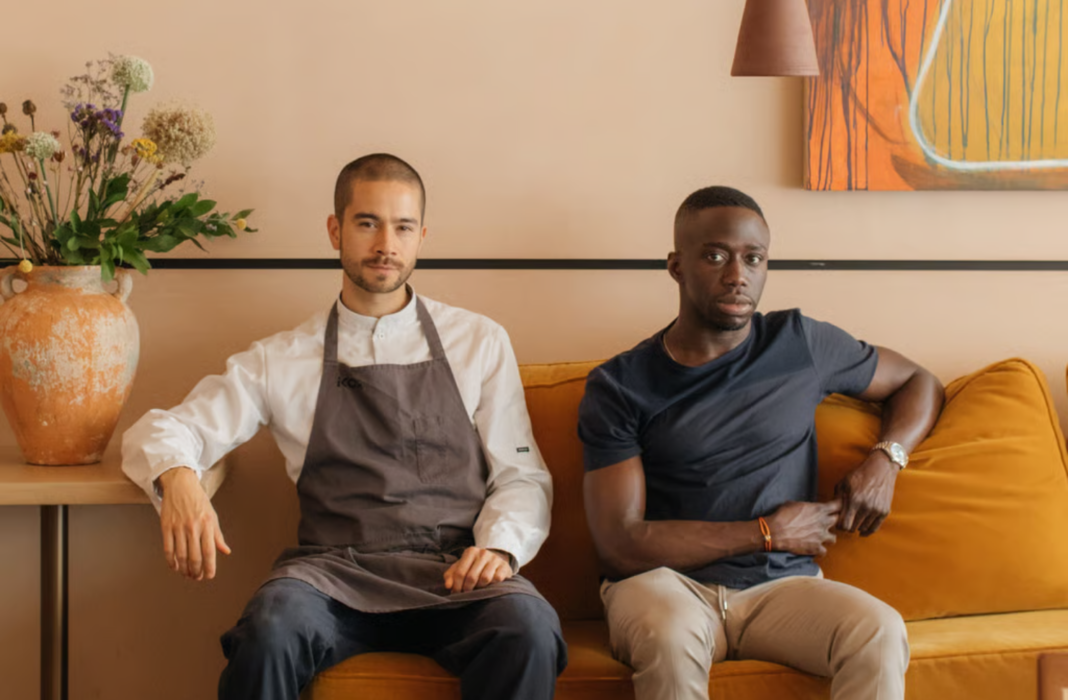

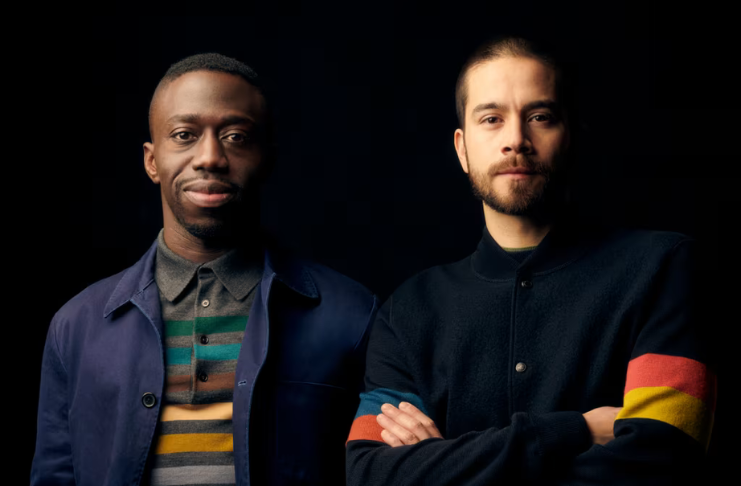
Iré Hassan-Odukale grew up in a neighborhood called Ikoyi – an affluent suburb of Lagos, Nigeria. Jeremy Chan, on the other hand, was born in England to a Chinese father and a Canadian mother, raised in Hong Kong and the United States, educated at Princeton in languages and philosophy, then briefly explored finance in Spain before finally entering the food business. The two had been friends since they were fifteen. They had lived together. And it was in that shared flat that Iré discovered, with some significance, that Jeremy could cook.
“Probably finding out that Jeremy could cook very well when we lived together,” Iré told Lestrange, when he was asked about his biggest stroke of luck. “If I didn’t, we might not be here. We’ve known each other since we were 15. So, over 20 years now. It’s crazy.”
They opened Ikoyi in 2017, named, abstractly, after the place Iré came from, though Jeremy later clarified his own relationship to the word: “For me, the word has no attachment to Nigeria, other than an abstract sound that I like. I think ‘Ikoyi’ yields to so many cultural interpretations.”
The restaurant’s logo, he explained, was drawn from an article about fractal geometry in early African art about “how housing developments, braiding, face painting, and all types of early cultural arts in Sub-Saharan West African cultures had very complex geometries that mimicked nature.” He found it remarkable and wanted to put that kind of geometry into food.
| “This restaurant is a soul poured out into a room. It’s my vision of a beautiful architectural space, with comfort mixed in with a little brutality and precision.” – Jeremy Chan, SCMP, 2023 |
The original Ikoyi was a small room in St. James’s. Although the kitchen was super cramped, something about the food — the Scotch bonnet heat, the hyper-seasonal British produce, the West African spices — caught people. Not everyone, but that was, in a sense, the point.
The food, and The Refusal to Explain It Simply
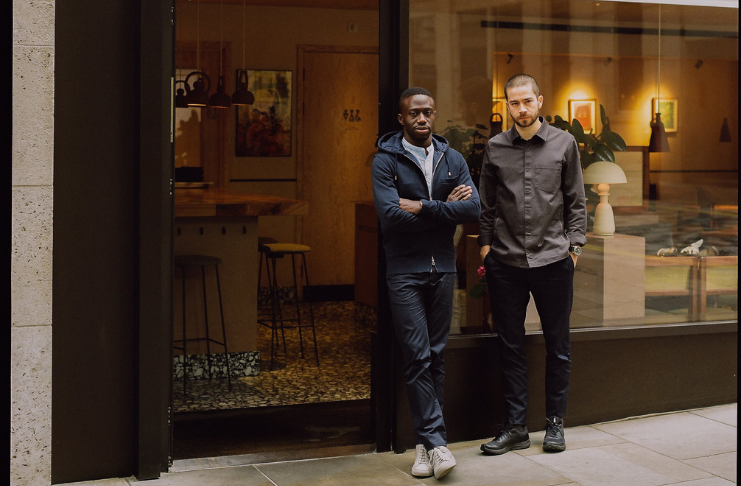
In the early years, Ikoyi was often misread as a West African restaurant, which frustrated Chan. “I don’t cook based on a specific cuisine,” he told GQ in 2023. “I just make things with feeling and respect.”
Iré, too, shared: “I think we felt we had to claim it was West African in order to fill a gap in the market in London, and ultimately because my heritage is West African, but we are so much more than that.”
Neither of them wanted a label. As Jeremy said, “As soon as we label something, we’re limited to whatever attachments people have to that label, and it kills the scope of our creativity.”
So Ikoyi became, instead, itself — an English-produce-driven kitchen using global spices, primarily from West Africa, to make food that Time Out’s food editor Leonie Cooper recently described as “an otherworldly experience.”
The spices are, of course, the center of it all. “We use chili in every single dish,” Jeremy said, “otherwise it doesn’t have our stamp on it.”
| “Ikoyi builds its own spice-based cuisine around British micro-seasonality: vegetables slowly grown for flavor, sustainable line-caught fish, and aged native beef. Our kitchen serves guests an interpretation of produce in its optimal state, harnessing as much flavor as possible while respecting the true nature of the ingredient.” |
The menu changes constantly, or even dramatically, every few weeks, with daily dish changes based on produce availability. There is no fixed menu. Guests don’t know what they’re eating until they sit down.
“Even though people might be intimidated by coming to a restaurant with no fixed menu,” Iré explained, “we do guarantee that each dish has big flavor and is tasty and comforting.”
The Room They Moved To Together
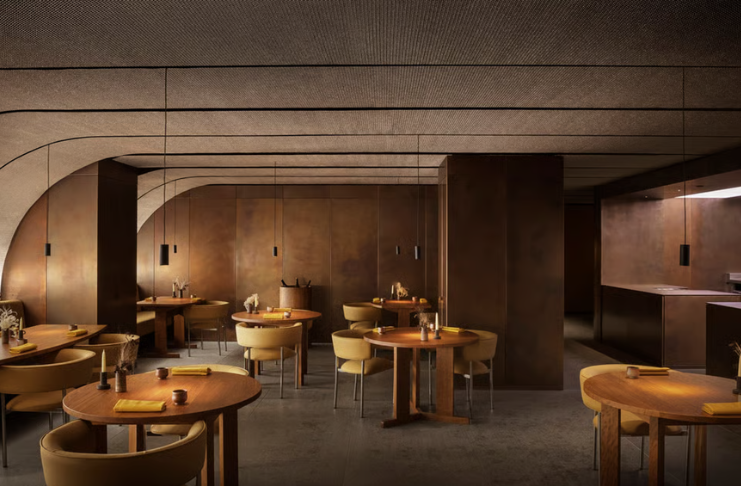
In December 2022, Ikoyi moved to a new, larger space at 180 The Strand. Chan spent the six weeks of the transition project managing the construction, by his own admission, “like a psycho.” He told SCMP: “I’m born with a sickness — I won’t stop until it’s done.”
The new space, which fits 28 diners, was designed with Danish architect David Thulstrup (who, btw, also created Noma’s interiors), and Chan and Hassan-Odukale were involved in every decision.
Chan described the overall aesthetic as invoking “Gothic cathedrals, tunnels, and the feeling of a lantern on the inside.” Each of the restaurant’s lights has been individually programmed to dim or brighten separately throughout the day. The precision is, in other words, total. “Obviously, it’s not humble because it’s ambitious and very expensive to come and eat here,” Chan told SCMP, “but we do it with a humble attitude: we’ve designed it to make our guests feel amazing, not for us to look amazing.”
The Operations to Hold It All
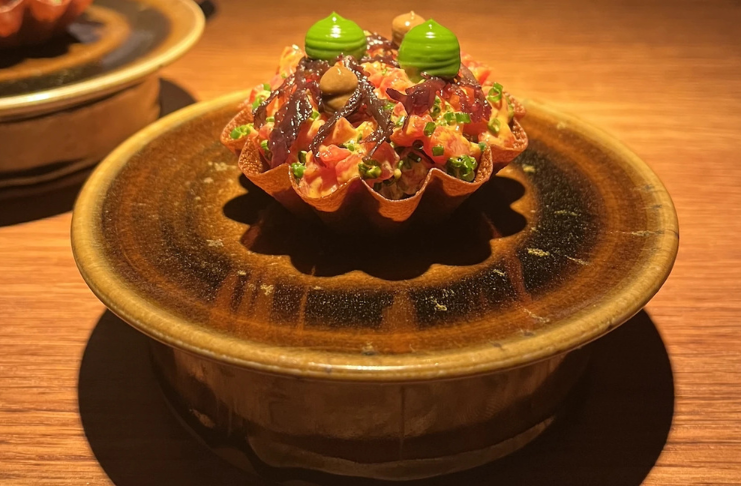
Ikoyi is not open on weekends. Monday lunch is off, too, because that time is reserved for prepping for the whole week.
“We wanted to experiment and create a lifestyle for our team that was more in line with ‘normal people,'” Jeremy told GQ. “We’ve organized everything with the principles of logic: how can we make our lives easier? How can we do things faster?”
When the kitchen runs, “No one is talking. Head down. Very zen,” Jeremy told Observer. “Fun as a way to describe feeling enlightenment and connection, yes. But fun as banter and laughs, no.”
New dishes go straight on the menu. There is no formal R&D period, no extended testing phase, no waste. “We get excited by the thrill of making something new,” he explained ahead of a California pop-up. “
| “We’re not too proud or egotistical. When mistakes happen, we try to learn from them; we don’t ignore them. We know that we will never be perfect, so we need to stay on top of things. I think by not being complacent, we have created such a solid foundation.” — Jeremy Chan, FOUR Magazine |
Iré is the managing director (front-of-house), the person who holds the relationship between the kitchen and the table. According to the World’s 50 Best description of Ikoyi, the service style is “deliberately unobtrusive. The theory behind an arms-length approach is to let the food speak for itself, like a piece of art in a gallery. Then, if the guest wants to know more details about any element on the plate, the team is perfectly well-versed to explain.”
Iré said, “Whether it’s sourcing the best ingredients available, welcoming guests with warmth, or little details in the design, we try to make sure everything has been considered.”
What Integrity Looks Like at Ikoyi
When Ikoyi appeared on the World’s 50 Best list, Chan’s reaction was — characteristically — complicated. “Mixed feelings,” he told Observer. “On one hand, the idea of being recognized as one of the best restaurants in the world is really amazing, but it’s not something I planned for, and it’s not something I think about in my daily life.”
What he’s most proud of, he said, is “having uncompromising integrity when it comes to my creativity, and giving guests something really unique. Sometimes we do extraordinary things, but we don’t post about it, and we don’t do a lot of PR on the innovation side of the restaurant.” He compared it to a tree falling in the forest. “I feel like that happens every day. We make things, and we do things, and we see things here that aren’t translatable to media. They’re real-life experiences.”
This is the operating principle behind Ikoyi’s longevity. Jeremy articulated it to FOUR: “My personal view is to do your absolute best in every aspect. Give the best quality, offer the best service, add your own original stance, stick to it, refine it, and be consistent. If you try to anticipate big cultural changes, then you become a bit all over the place and don’t gain customer loyalty or consistency.”
| “Having a loyal client base is what really matters, and if you continue to build those kinds of relationships, then you will really be understood for your integrity and honest hospitality rather than trying to stay in the marketing rat race, which, in my opinion, doesn’t have much longevity to it.” — Jeremy Chan, FOUR Magazine |
He called it, at the end of that same interview, “being the tortoise and not the hare.” Seven years in, that tortoise is ranked first in the world by Food & Wine’s Tastemakers Awards 2026, “not simply for technical perfection, but for a special point of view” that “reflects the movement of ideas, ingredients, and influence across borders.”
In Three Words
When asked by Google Arts & Culture to define the Ikoyi experience in three words, the two men listed –
Iré Hassan-Odukale – Unique, Warm, Mind-blowing
Jeremy Chan – Love, Passion, Integrity
Notice how there is no overlap in how they described Ikoyi, which is perhaps the most honest thing you could say about a partnership built over twenty years.