
On 11th February, a restaurant that ranked 16th globally posted a few lines on its social media:
| Good evening, We would like to inform you that March 22, 2026, will be the final day of service for the restaurant Lido 84. This extraordinary journey, which began on March 21, 2014, has been filled with emotions, personal and professional fulfillment, and prestigious milestones. We would like to thank everyone who has sat at our tables and who, over the years, has inspired us and helped us grow. We are deeply grateful to all the collaborators and suppliers who, throughout this time, worked tirelessly behind the scenes with quality, consistency, and loyalty. Guided by a strong sense of duty as a core value, they helped build this remarkable journey. But above all, we thank the hundreds of young people with hearts of gold who came and went over these twelve years, working closely alongside us and sharing our path… with the hope that we were able to leave them with something meaningful for their lives and passions. We close this chapter with peace and joy for the future, opening ourselves to new ideas that may one day become the seeds of a new project. We will leave this enchanting place, which will forever remain in our hearts, hoping that it may continue to stand as an icon of Lake Garda and of Italian excellence around the world. Thank you, thank you, thank you! |
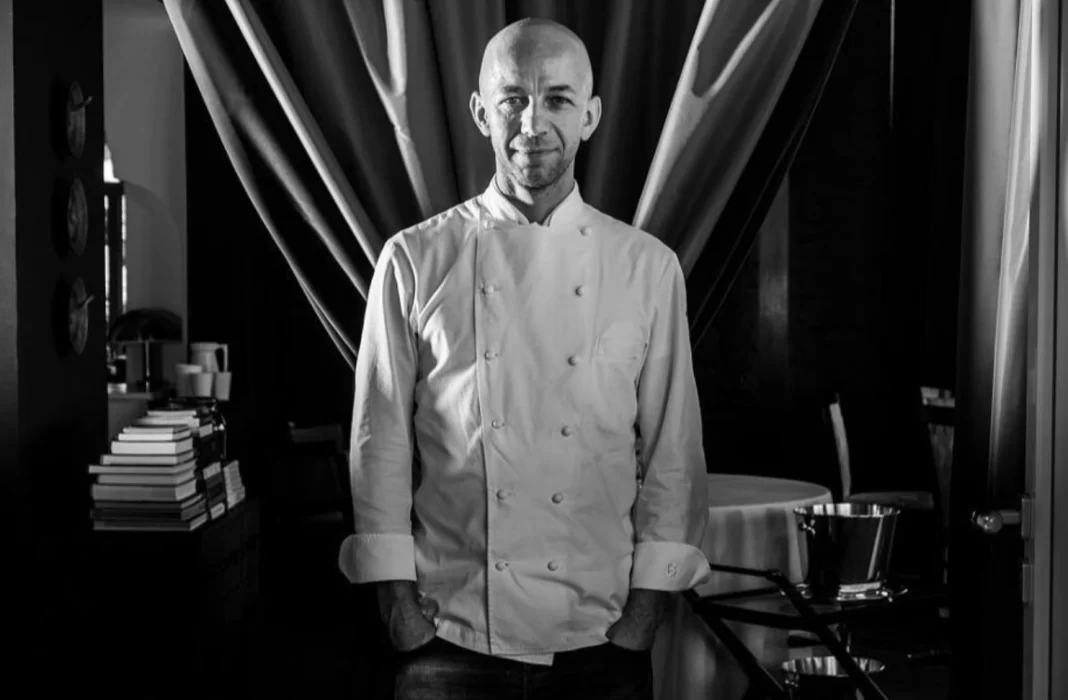
Just that, really. After 12 years of operation, brothers Riccardo Camanini and Giancarlo Camanini announced their departure from the restaurant in the same unhurried manner with which they built it in the first place.
And while I had been meaning to write about Lido 84 for months now, that post made me pause, rethink. Should I write about a restaurant only after it has announced its closure? Maybe. But in the case of Lido 84, it felt deeply necessary because some stories tend to leave a mark far beyond the lifespan of the dining room itself.
The Space
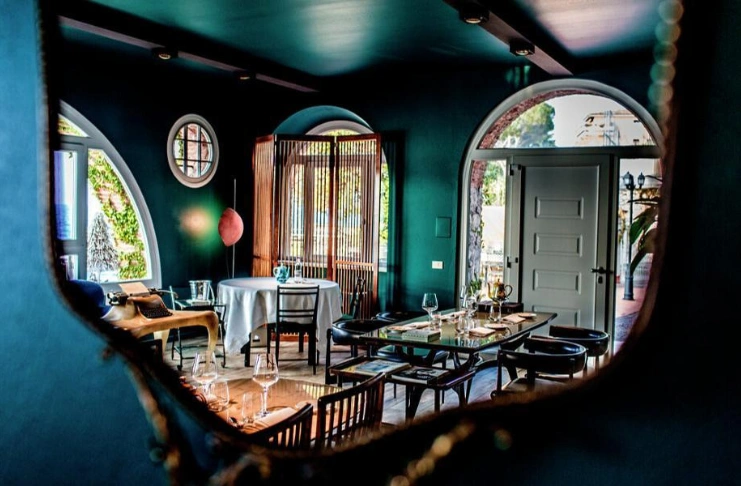
Before we get to the food, you have to understand where Lido 84 actually was, because, in a way, it is impossible to separate the two.
Gardone Riviera is on the western shore of Lake Garda. It is a town surrounded by camphor trees, oleanders, faded villas, and “stillness” that makes afternoons stretch longer than they should. The Camanini brothers bought an old lido here in 2013. It was, then, a family beach club of the postwar Italian variety.
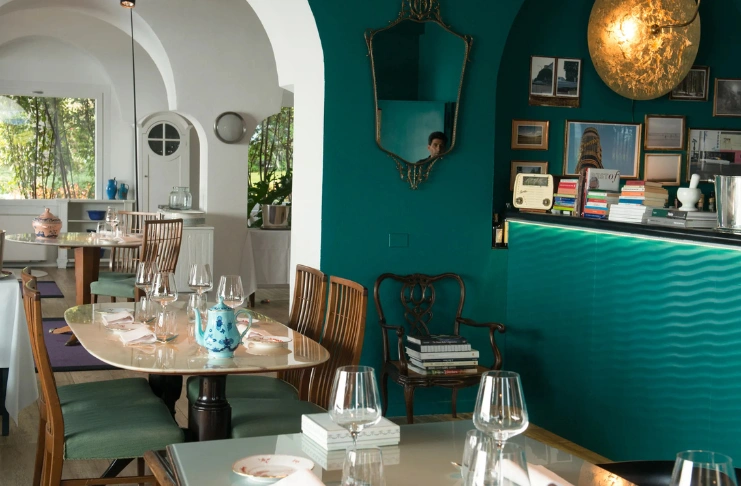
They barely touched its exterior. Inside, though, they built a dining room with 1960s art deco references, contemporary art on the walls, and large glass panels that opened toward the lake, framing the distant ruins of La Rocca di Manerba.
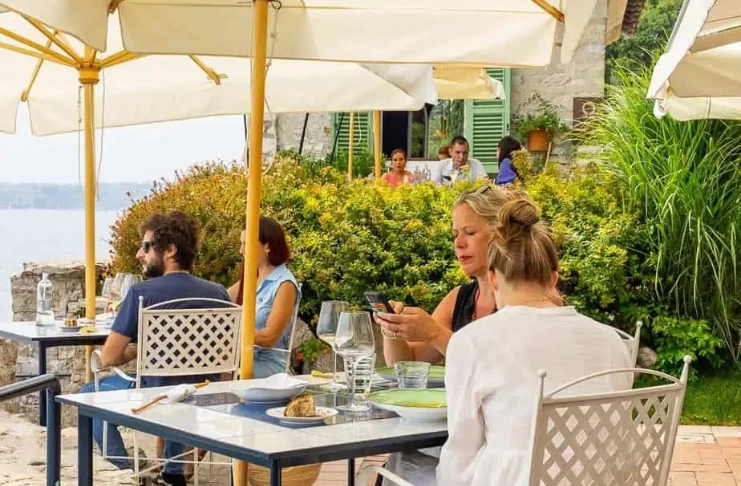
Interestingly, most people still preferred to dine on the terrace. They sat outside, directly over the water, under a pergola in summer, watching the light move across Lake Garda toward Verona. Guests here lingered over the last of their wine and then disappeared mid-afternoon toward their private dock in a Riva Aquarama. Everyone waved at each other, and nobody knew why.
It was that kind of place.
Riccardo’s Kitchen
Riccardo Camanini did not cook Italian food in the way that phrase is usually understood. He cooked food that was deeply, specifically Italian in its ingredients and its thinking, and completely his own in everything else. He had trained under Gualtiero Marchesi, the father of modern Italian cuisine, and then under Raymond Blanc in England, and then with Alain Ducasse and Jean-Louis Nomicos in France.
He came back to Garda and spent years going through old recipe books, local markets, talking to farmers and fishermen, before finally building a cuisine that tasted unmistakably of that lake, that town, that season.
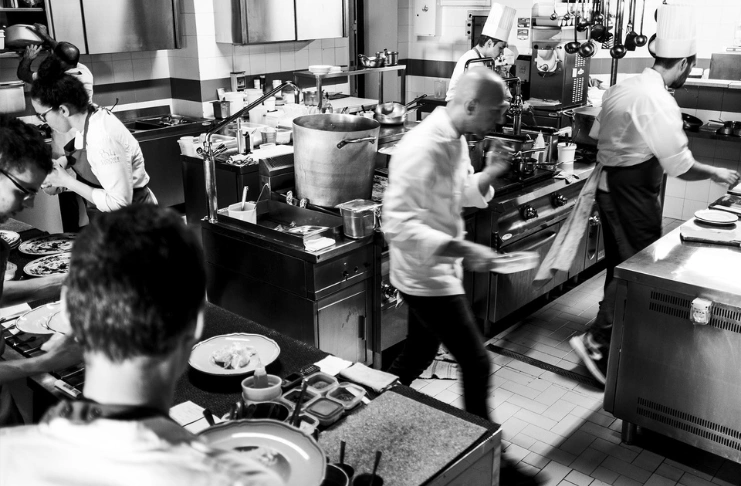
He did not allow timers in his kitchen. His cooks were expected to know when something was ready by touch, smell, and sound. Chefs rotated through every station every two months. He did not believe in internships either because, in his view, you need at least two years inside a place before you truly understand it. Every member of his kitchen brought dishes out to the tables themselves, explained what was in them, & answered questions.
The line between kitchen and dining room was, by design, almost invisible.
The Serving
The most famous dish at Lido 84 was the Rigatoni Cacio e Pepe en Vessie. The pasta was cooked inside a pig’s bladder with pecorino, salt, and black pepper, using a method borrowed from the way Romans carried food on marches between states.
The bladder had to be assessed by touch during cooking, pressed, and felt to judge whether the rigatoni inside was ready. The juices inside formed an emulsion with the cheese as the cooks gently shook it. The resulting dish was, as always, as creamy as it could get.
There was also this marinda tomato and pistachio fusilloni that diners still describe as among the best pasta they have ever eaten. It was spaghettoni in salted butter with crumbled yeast, inspired by something Riccardo ate as a child.
Almost everything on the menu seemed tethered to the landscape around the restaurant. Fish came directly from the lake. Herbs were foraged nearby. Local stracchino and sardines became risotto. Raw mountain milk was used to make Fior di latte gelato. Basically, almost every ingredient used here was sourced locally.
The nine-course Oscillazioni menu was in every sense the more experimental route, but even the à la carte had a quality of surprise to it, especially because they tasted more of what they were supposed to be than you could have ever expected.
Giancarlo’s Room
You cannot write about this restaurant without writing about Giancarlo. He ran the front of house as if the most important thing in the room was whoever he was talking to right then.
He knew returning guests’ dislikes from previous visits because Riccardo kept notes. He talked the way old friends do when they are genuinely glad to see you. His team knew when to arrive at a table and, more importantly, when to leave it alone. It is a specific skill, and it is rarer than great cooking.
What the World Made of It
In 2019, World’s 50 Best gave Lido 84 the One to Watch Award. In 2021, the restaurant debuted on the full list at number 15, taking the Highest New Entry Award in the same breath. By 2022, it had climbed to number 8. In its final full year, it sat at 16.
For several years after Massimo Bottura entered the 50 Best hall of fame, Riccardo Camanini was the highest-ranked Italian chef on that list. Gambero Rosso gave the restaurant its Tre Forchette, their most prestigious recognition.
Michelin gave it one star, and since then, every November, for years, people in Italian food circles said the same thing: this is surely the year for a second. It never was.
The restaurant’s revenue in 2024 was 2.43 million euros. The business wasn’t going down in whatever way you see it. It closed merely because the people running it decided to do so, on their own terms, with serenity, as they put it.
Why It Mattered
There are some restaurants that are technically excellent and leave you cold. There are also restaurants with just the right atmosphere and average food. Lido 84 was on another level. It was a place that felt like it had been built by people who genuinely loved feeding people, who had thought seriously about what a meal could be, who wanted the experience to be educational and sensory and warm all at once, without it feeling, at any point, like any of those things were being performed.
It was also persistently itself, and perhaps that is the bigger reason Lido 84 mattered.