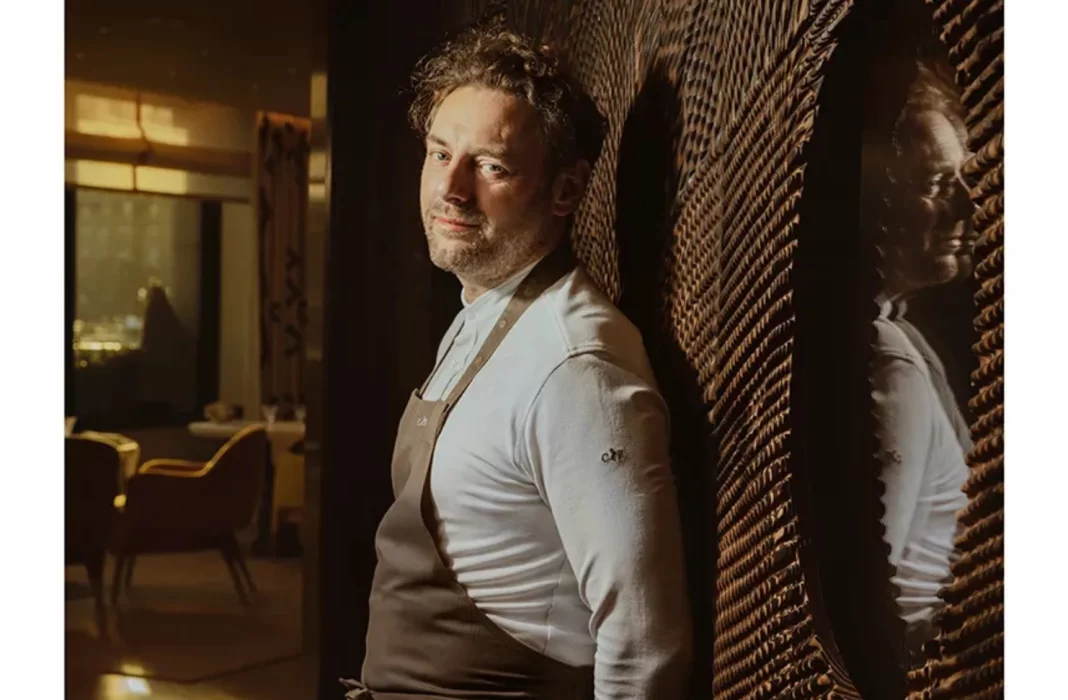

I don’t think anyone goes to a restaurant to get emotional. But recently, a woman dined at Plénitude, and mid-course, she turned to the service team with tears in her eyes: “I don’t know you, but I love you.”
She wasn’t embarrassed about it. Neither were they.
And that is perhaps the most honest way to describe Plénitude. Yes, it has three Michelin stars to its name, but the customer perception will still win any day.
The restaurant we’re covering today is a 30-seat room on the first floor of the former La Samaritaine building, and if you ask its chef-patron, Arnaud Donckele, what happens inside, he’ll start with sauces, and who can even complain?
The Perfume-Wearer in Question
Donckele remembers this one incident when he froze on a street because of a stranger’s perfume. That scent was warm, fleeting, and was gone before he could even place it. In his own accounts, “It was like love at first sight, but in secret, in passing. You turn around, and it’s just — wow. It’s like a ray of sunshine.”
Arnaud Donckele might just be someone who experiences the world through sensation. The French call it sillage. It’s the aroma trail that follows the perfume wearer. Donckele has spent years, in the very same manner, chasing its culinary equivalent.
It was at Plénitude that he finally found it, surprisingly, through sauces.
He says, “Today I feel like less of a chef, more of a saucier,” and there’s no irony in that. The fish on the plate, the chicken, the langoustine, they are, in his own words, “condiments for the sauces.” When a dish arrives at your table, you are asked to taste the sauce first on its own. The idea is that you understand what it is before you understand what it does. That you meet the soul before you meet the body.
“Sauce gives the dish its soul,” Donckele says. “It is a liquid that conveys emotion and honesty. You can’t cheat. I consider it the heart of the recipe, no less than the meat, fish, or vegetable that it accompanies; or that accompanies it.”
This is what he means when he talks about his craft, and if it sounds philosophical, that’s because it is. This man writes his sauces the way poets write, with a hundred possible ingredients, many of which you’d never guess were there.
A single sauce might contain Buddha’s hand citrus, Chardonnay vinegar, langoustine butter, pumpkin seed oil, smoked herbs, and sea minerals. Each blend is titled like a poem: Corail d’Hespéride, Bois Tison, Ode à l’Iode. None is ever made exactly the same way twice. The same herbs harvested in the morning will taste different from those harvested in the afternoon. “And I love that,” he says.
Setting the Stage
The evening at Plénitude is sort of a drama, and you are not the audience. You are, as restaurant director Alexandre Larvoir quietly insists, one of the actors.
You are brought first through the wine cellar for a simple conversation. “This provides an opportunity for us to make the first real connection with people,” Larvoir explains. “To get to know them, maybe to make them laugh.” By the time you arrive at your table, the evening will seem like it started to “breathe.”
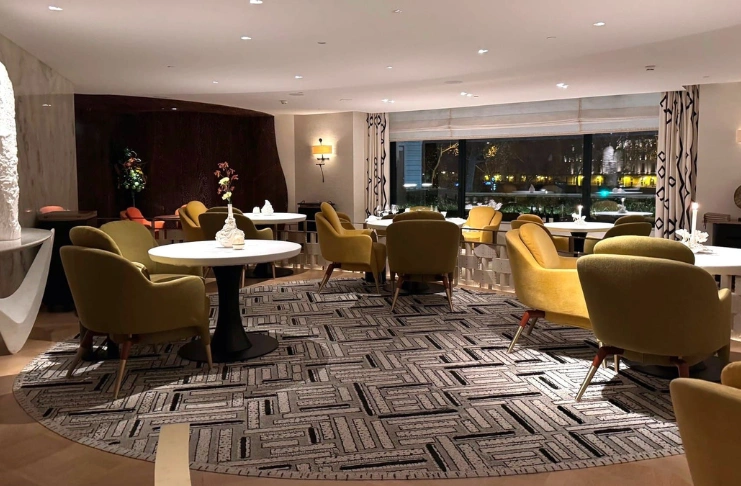
The room itself is hushed and warm with its cream walls, sculptural white centerpieces, and mustard-olive armchairs. The pacing of the service syncs with the atmosphere around it, and yet, not a single moment feels wasted.
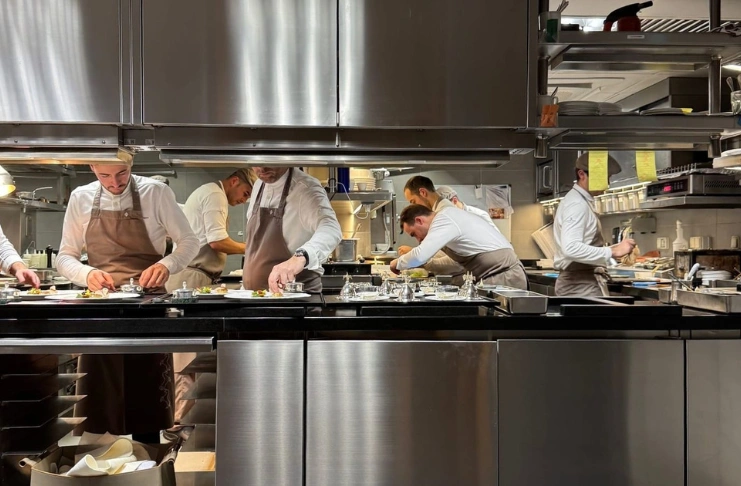
Midway through the Symphonie menu, you are escorted to the kitchen, where you are seated at the chef’s table and served a small palate-cleanser directly by the brigade. At the same time, you may expect Donckele to appear briefly. Finally, you return to your table.
Later, hidden panels in the dining room wall are opened. You step inside a secret cheese cave (a small, intimate room lined with rare vintage crockery). Here, you choose your own plate and cheeses and carry them back to your table yourself.
“What is beautiful is the movement,” Larvoir says. “Guests move around the restaurant, and they become actors in the drama of the evening. They are not just passive.”
The Sweetness Comes Last & It Comes From Normandy
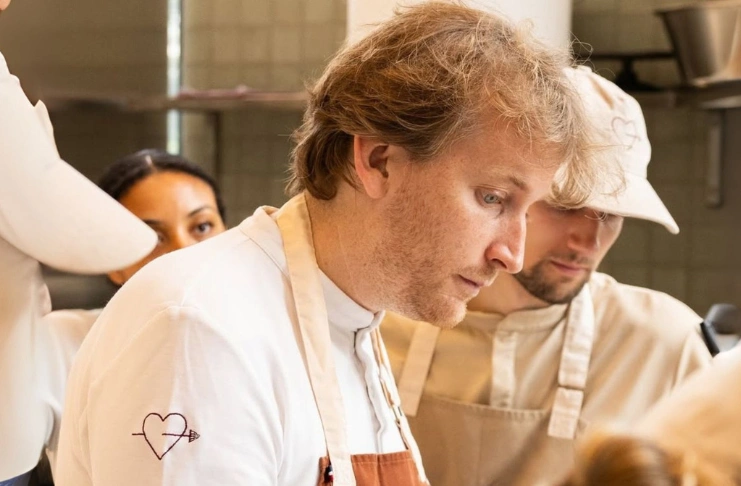
The final act of the Symphonie is performed by Maxime Frédéric, who was awarded World’s Best Pastry Chef 2025, and he has been at Plénitude since the beginning.
If Donckele is the poet of sauces, Frédéric is the poet of memory.
He grew up on his grandparents’ farm in Normandy, famous for dairy cows, improvised apple cakes, and homemade yogurt. “We would sit on the counter, our feet dangling in the sink, and mix the dough without worrying about the mess,” he remembers. “I think that’s where the spark came from.” Milk was his first ingredient. Teurgoule, i.e., a traditional Norman dessert (a slowly baked rice pudding with cinnamon), was his first ever lesson in patience and simplicity.
He shifted to Paris via Le Meurice, where he became Cédric Grolet’s right-hand man, and then to the George V, before joining Donckele’s team at Plénitude six years ago. And yet, he says, “it still feels like the beginning.”
His vacherin (meringue petals arranged into a rose) is a tribute to his grandmother Rosa, who used to mould flowers from chocolate and sugar. It remains on the menu today. His millefeuille, which took three years of working and reworking, is now considered one of the great French pastry benchmarks that uses butter, sugar, pastry, cream — nothing more, nothing less, brought to absolute purity.
“It’s indulgent but light, and you can really taste the butter and sugar,” he says, which sounds like an obvious thing to say and is, in fact, the hardest thing in the world to achieve.
When Frédéric’s desserts arrive, they almost feel like a letter from someone who knew what you needed before you did.
After dessert, Larvoir’s team offers their diners an ascent to the tenth floor of the hotel. Paris at night, the Eiffel Tower lit against the dark, the city breathing below you.
This is, of course, not on the menu. It is simply what happens when a restaurant understands that an evening should end the way a good conversation ends, with something worth carrying home.
Donckele’s Expectations of His Team
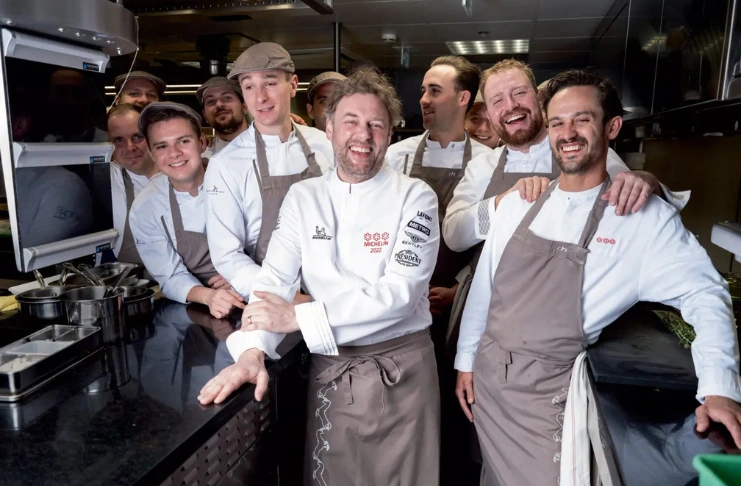
Most restaurants ask their teams to be professional. Donckele, on the other hand:
“I ask my kitchen team to cook as if they are cooking for the people they love most in the world,” he says. “It is the same for the service team. I want them to bring everything they can to the guest, to be truly generous. This is when magic happens.”
That word, generous, comes up again and again when people talk about Plénitude. Here, generosity doesn’t mean serving large portions or anything of sorts, but the willingness to give of yourself without withholding. Larvoir says, “The warmth that the team brings is sometimes unexpected. Our guests can often get quite emotional during their experience with us. We are sincere. It’s not a performance.“
This is rare. In a dining scene where hospitality often feels extra choreographed, Plénitude manages to feel (genuinely) like people who are glad you came. Team members are encouraged to bring their own personalities to the table. Donckele himself, son of charcutiers from rural Normandy, speaks of wanting to bring “a bit of countryside spirit – something you wouldn’t expect to find in a luxury hotel.”
Three Stars and Still Searching
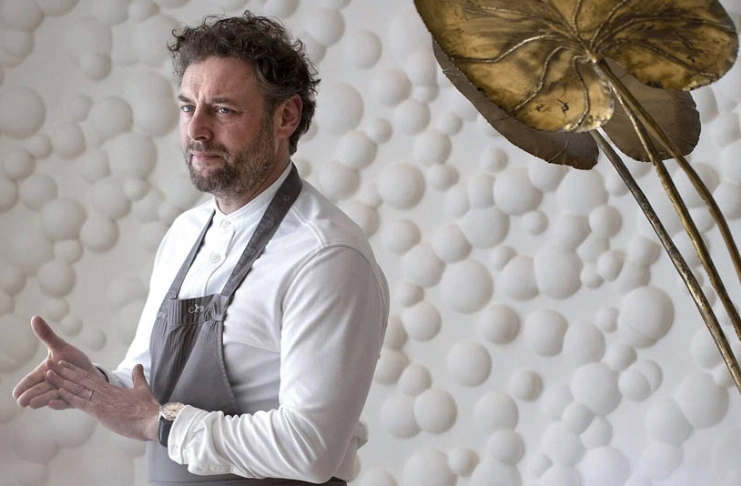
Plénitude opened in 2021. By 2022, it had three Michelin stars. In 2023, it entered The World’s 50 Best Restaurants. In 2024, it won the Gin Mare Art of Hospitality Award. Gault & Millau awarded it five toques and a 19/20.
These are indeed extraordinary numbers. They are also, ultimately, beside the point.
What matters is what Donckele said on the night he found out about the three stars: “In the kitchen, we are often demonstrating, amazing. Today, I don’t want to impress anymore. I want to move.”
That’s precisely the ambition of Plénitude – to move.