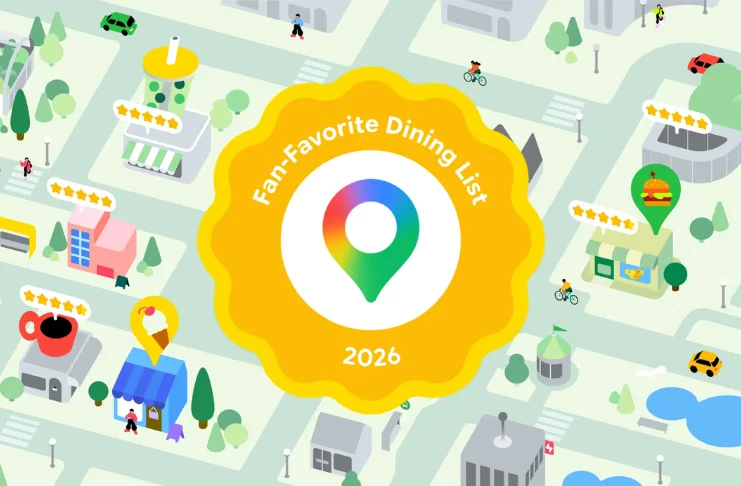

Google Maps has launched its first Fan-Favorite Dining Lists, using reviews, ratings and aggregated requests for directions to highlight popular restaurants, emerging food trends and dining destinations across 10 cities worldwide.
Announced on October 8, the lists cover Atlanta, Chicago, London, Melbourne, Montréal, New York, San Francisco, Santiago, Seattle and Tokyo. The interactive hub lets users explore restaurant recommendations by occasion, value and trending food items, offering a new way to discover dining options through Google Maps data.
The lists draw on different signals of consumer interest, including the restaurants people most frequently navigate to, places with strong reviews and destinations associated with specific dining occasions. Categories include essential stops for meals and treats, recommendations for celebrations or affordable dining, and food trends appearing in customer reviews.
Google’s inaugural findings point to a mix of nostalgia and local food culture. In New York, mentions of frozen yogurt in reviews rose 320% year over year, while Montréal saw an 84% increase in cinnamon-bun mentions. In Tokyo, mochi mentions increased 168%. The company also identified growing interest in ingredients and dishes such as matcha, ube and beef tallow across its featured cities.
The launch reflects the increasingly important role that digital discovery platforms play in connecting restaurants with customers before a visit takes place. Google Maps is not simply a navigation service in this context; its reviews, directions and search behaviour can also help reveal which dining destinations attract consumer attention.
For restaurant businesses, these signals may offer useful context on how customers discover places, what they value and which food trends are gaining visibility. However, the lists should not be treated as a comprehensive ranking of restaurant performance: Google’s methodology combines several signals, and the published selection covers only 10 cities.
The most-navigated-to restaurant in each city also varies widely, ranging from Katz’s Delicatessen in New York and Pequod’s Pizza in Chicago to Fallow in London, Higher Ground in Melbourne and Seafood Buffet Dining Ginza Happo in Tokyo. The variety highlights how dining discovery remains strongly shaped by local food cultures rather than a single global restaurant trend.
For operators, the practical takeaway is to treat online reputation and location information as part of the customer experience. Accurate business profiles, current opening hours, useful menus, strong service and thoughtful responses to feedback can all influence how a restaurant appears to potential guests.
The Fan-Favorite Dining Lists also give diners a way to save recommendations directly in Maps and explore places by occasion or interest. Google has positioned the initiative as a guide built from real-world behaviour rather than a conventional critic-led restaurant ranking.
As discovery becomes more data-driven, platforms such as Maps can shape which restaurants enter a customer’s consideration set. The new lists formalise that role by turning aggregated discovery signals into a consumer-facing dining guide.