

Believe it or not, plant-based food has become a dining expectation for most people out there.
Nearly half of all U.S. restaurants now feature plant-based options on their permanent menus. 66% of U.S. consumers are engaged with plant-based foods, indicating the mainstream acceptance of these options. And perhaps 88% of those consuming plant-based proteins do not even identify as vegan or vegetarian. They are just everyday diners making everyday choices.
Moreover, the global plant-based food sector was valued at $14.2 billion in 2025 and is set to reach $15.9 billion by 2026-end, with 12% year-over-year growth.
As Nil Zacharias, Founder and CEO of Plantega, notes, “The popularity of plant-based options in food service continues to surge. This is driven by factors such as broader cultural awareness around the benefits of consuming plant-based foods, better-tasting and versatile products that can be adapted into a range of menu items, and the ability to present the products in a familiar environment and context, which reduces the barrier to trial for diners.”
That’s why we’ve made a list of plant-based menu trends that are influencing the trajectory of dining.
What You’ll Learn
- Organic trends that are reshaping restaurants in 2026 and beyond.
- How operators can build profitable, consumer-driven plant-based menus that keep diners coming back.
Trend 1: Moving Away From Meat Imitation/Meat Alternatives/Meat Substitutes
For years, all plant-based food offerings did was fool people. The closer a burger could taste like beef, the better. That logic, however, is losing ground.
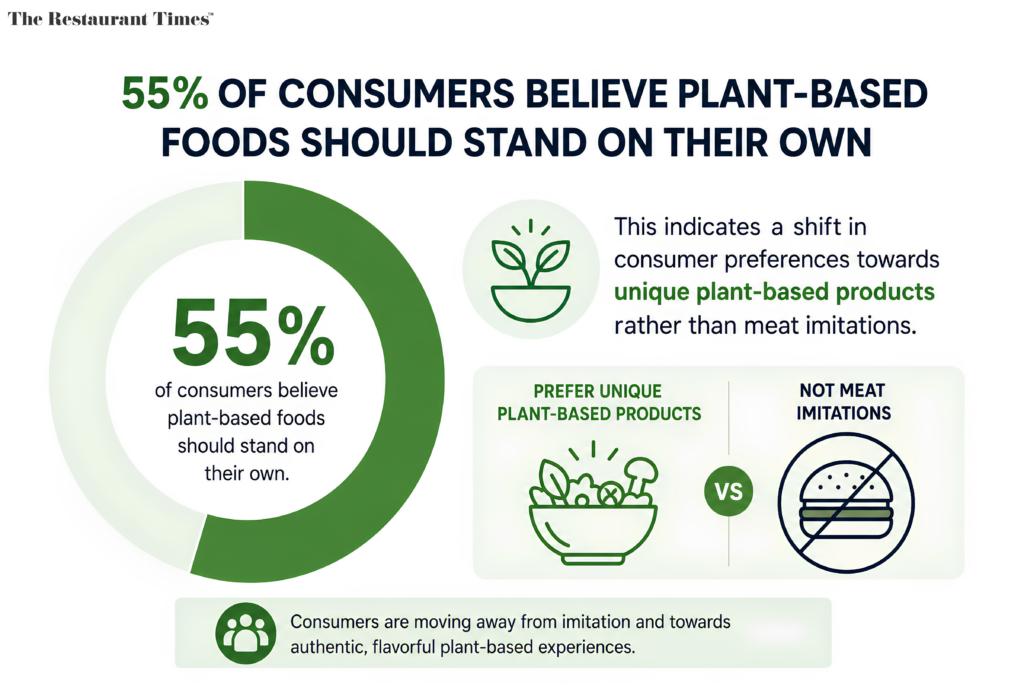
By 2026, the focus of plant-based products is shifting away from imitation meat towards unique offerings like mushroom-based proteins and falafel-style products that celebrate the inherent qualities of organic ingredients. Around 55 percent of consumers believe plant-based foods should stand on their own, indicating a shift in consumer preferences towards unique plant-based products rather than meat imitations.
Chefs are increasingly emphasizing whole, unprocessed plant ingredients, utilizing innovative cooking techniques to enhance flavor and texture, moving beyond traditional meat substitutes. More and more menus now include jackfruit, king oyster mushrooms, and fermented legumes. Diners are opting for plant-based dishes that incorporate authentic heritage and global flavors, reducing the sacrifice associated with meatless choices.
This shift matters much for foodservice operators who want to build menus for longevity.
Trend 2: Emerging Plant-Based Proteins
The conversation around “protein” in plant-based food has been more in the news this year. Everyone was previously getting soy and pea protein. Now, there are even more alternatives.
Emerging plant-based proteins, such as mycoprotein and algae-based proteins, are gaining traction for their sustainable and versatile applications in creating new culinary experiences. Mushroom-based proteins are finding their way onto restaurant menus for good reasons. They are genuinely one of the very interesting protein sources with deep umami and a texture that holds up under heat. Fava beans, lentils, and lupini are following, each offering a distinct flavor profile without the processing load of isolates.
The vegan food market is projected to grow from $24.5 billion in 2026 to $52.6 billion by 2033, at a CAGR of 11.5%. A meaningful share of that growth will come from formats built around these newer plant proteins rather than the first-generation meat alternatives that defined the category.
Breakfast is the fastest-growing plant-based meal occasion, and emerging proteins are showing up there in the form of high-protein wraps, grain bowls, and savory plant-based starts.
Trend 3: Hybrid Products Are Changing How Diners Think About Meat Consumption
The binary between eating meat and not eating meat is no longer in 4k. Hybrid products that blend plant and animal proteins are gaining popularity, with consumer acceptance for products containing 25 to 50 percent plant content increasing due to their familiar taste and texture.
Blended products, such as chicken-mushroom nuggets and half-plant sausages, have seen a steady increase in popularity, with some formats growing by more than 20 percent year over year, driven by flexitarian consumers. Blended burgers and other hybrid formats, for example, allow kitchens to reduce the proportion of meat in a dish without having to ask diners to make a values-based decision at the point of ordering. The meal tastes good and happens to use less meat at the same time.
The demand for organic menu items is being driven by flexitarian consumers, who prefer options that fit into their everyday eating habits rather than strict diets. Hybrid products meet those consumers where they actually are, which is neither at the vegan end of the spectrum nor “just-meat”, but somewhere right in the middle, open to change if the food is satisfying.
Trend 4: Clean Labels Are Becoming a Non-Negotiable Part of Consumer Expectations
About 64 percent of consumers want plant-based products with less processing, leading companies to cut additives and shorten ingredient lists. Consumers are increasingly favoring whole, recognizable ingredients like lentils, chickpeas, and mushrooms over isolates or synthetic blends in organic products. Thus, food product innovation teams are reformulating products to reduce the number of ingredients and avoid overly processed textures, focusing on nutrient-dense, familiar foods.
For your record: A plant-based dish built around whole grains, legumes, and vegetables, with a readable ingredient list, now commands more consumer trust than a highly engineered alternative that chases a meat benchmark. Notice, we mentioned “readable ingredient list” – That basically means having a clean label on your product so consumers know exactly what they are buying in the first place.
As for the case of Impossible Foods, its technology helped legitimize plant-based alternatives for mainstream consumers, and Burger King’s Impossible Whopper (launch of which contributed to the brand’s best quarter of sales growth in four years) demonstrated that plant-based meals could sit comfortably on a fast-food menu.
INDUSTRY INSIGHT
| Speaking in an education session at the virtual IFT show dubbed ‘2025, the Third Wave of Plant-Based Eating,’ Barb Stuckey listed the five key reasons cited by consumers choosing to eat plant-based foods more often. They were: 1. General health benefits: 65% 2. Better for the environment: 48% 3. I feel better when I eat plant-based foods: 46% 4. To lose weight: 30% 5. Animal welfare: 26% She confirms: More people [are] choosing to eat plant-based foods because they think it’s better for the environment, especially among younger consumers, whereas for older consumers it’s more about health.” |
Trend 5: Environmental Concerns and Health Benefits Are Driving Demand Together
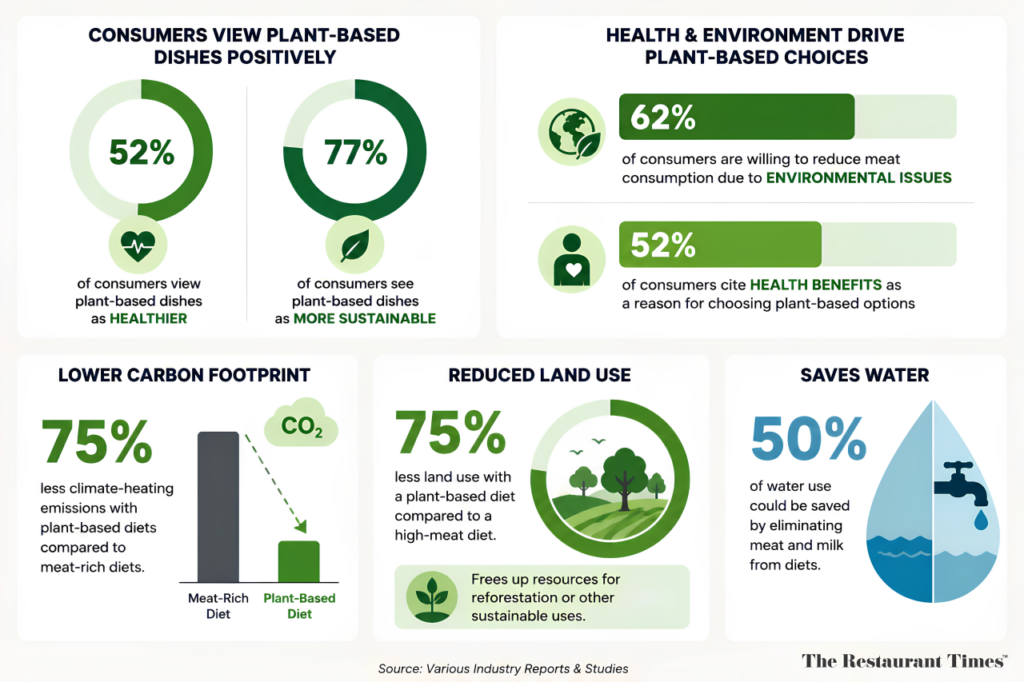
52% of consumers today view plant-based dishes as healthier, while 77% see them as more sustainable. Health and environmental concerns are significant motivators, with 62% willing to reduce meat consumption due to environmental issues and 52% citing health benefits as a reason for choosing plant-based options.
Moreover, plant-based diets have a significantly lower carbon footprint compared to meat-rich diets, potentially leading to up to 75% less climate-heating emissions. Adopting a plant-based diet can reduce land use by 75% compared to a high-meat diet, freeing up resources for reforestation or other sustainable uses. Plus, eliminating meat and milk from diets could save at least 50% of water use. Maybe that’s why more and more consumers are now selecting restaurants based on ethical sourcing and low-carbon footprints, which drives the adoption of plant-based options.
On the human health side of things, plant-based diets are strongly associated with a lower risk of heart disease, high blood pressure, and stroke, contributing to improved cardiovascular health.
Research suggests that plant-based diets may lower the risk of certain cancers, with vegans showing a 24% reduction in overall cancer risk compared to omnivores.
Diners increasingly view plant-forward eating as a part of active physical wellness. Animal welfare considerations are also climbing as a motivator, particularly among younger consumers.
Trend 6: Less Meat Doesn’t Mean Less Indulgence [Comfort Food Is Getting a New Face]
One of the more commercially important shifts happening right now is the reinvention of comfort food.
Restaurants are reinventing comfort foods into nutrient-dense formats, such as plant-based loaded fries and vegan loaded pizzas. Organic options are increasingly becoming mainstream in restaurants, with a steady rise in mentions across global menus, especially in indulgent categories like creamy pastas and stacked burgers.
Approximately 22.7 percent of consumers cite poor taste as the primary reason for avoiding plant-based foods, highlighting the importance of flavor in consumer preferences.
Cafes and bistros are incorporating fermented, gut-friendly ingredients like kimchi, sauerkraut, kefir, and miso into dishes, adding depth that processed plant-based alternatives often lack.
Restaurants are also integrating plant items into main menu sections rather than isolating them in a vegan corner to promote sustainable behavior.
Trend 7: The Next Generation of Plant-Based Innovation is Built for Flexitarian Consumers
What the plant-based sector used to do, maybe wrong at first, was try to convert committed meat-eaters. The more effective strategy has always been to design for flexitarian diets instead.
FYI, flexitarian consumers don’t want to replace meat. They want to eat less meat without it feeling like a concession. Plant-based dishes designed for that mindset (satisfying, high protein, globally influenced, built from recognizable plant ingredients) are outperforming those premised on the idea that no one will notice the difference from beef.
48% of US restaurants now offer plant-based food options, a significant increase of 62% in the last 10 years. Younger consumers are primarily driving this demand because plant-based meals align with their views on animal welfare, environmental impact, and human health.
At the end, you have to understand that the plant-based category has moved past its hype peak, and that’s actually useful for operators. What remains right now is a category with genuine consumer demand, improving product quality, and clearer commercial signals than existed five years ago.
KEY TAKEAWAYS
| – The rise of hybrid formats, which combine plant and meat proteins, is seen as a new category in the food industry, appealing to consumers who want to reduce meat consumption without giving it up entirely. – Plant-based meat alternatives are evolving beyond imitation, with whole plant-based ingredients and new protein source options helping restaurants stay aligned with changing customer preferences, and consumers expect more authentic flavors. – The rising demand for plant-based dining is fueled by environmental benefits, health concerns such as reduced risk of cardiovascular disease, and a growing consumer desire for cleaner, more sustainable menu choices. – Successful plant-based launches require collaboration between foodservice teams to create flavorful, profitable dishes that compete with mainstream products, helping restaurants remain relevant in an expanding market. |
Frequently Asked Questions
1. How do restaurants implement plant-based menu options?
The best way to implement an organic menu is to start with familiar dishes made with high-quality plant-based ingredients and introduce them gradually. Then, monitor customer preferences and refine recipes based on their feedback.
2. Should plant-based items be a separate menu section or integrated?
You don’t have to. In fact, most operators now integrate plants into the main menu rather than isolate them. This reflects what consumers expect and encourages more customers to naturally try plant-based dishes.
3. How do you train kitchen staff on plant-based preparation?
You should train your foodservice teams on ingredient handling, cross-contamination prevention, and cooking techniques for different protein sources, from mushrooms and legumes to simple tofu scrambles, while also covering alternatives to dairy and dairy products.
4. Are plant-based menu items more profitable than traditional items?
Yes, they can be profitable. Many plant-based dishes use lower-cost ingredients while meeting rising demand. When combined with efficient sourcing, they can have a positive impact on both margins and sustainability goals.
5. How do you market plant-based menu items effectively?
We’d advocate you to focus on flavor first, then highlight the environmental benefits, health advantages, and quality ingredients.