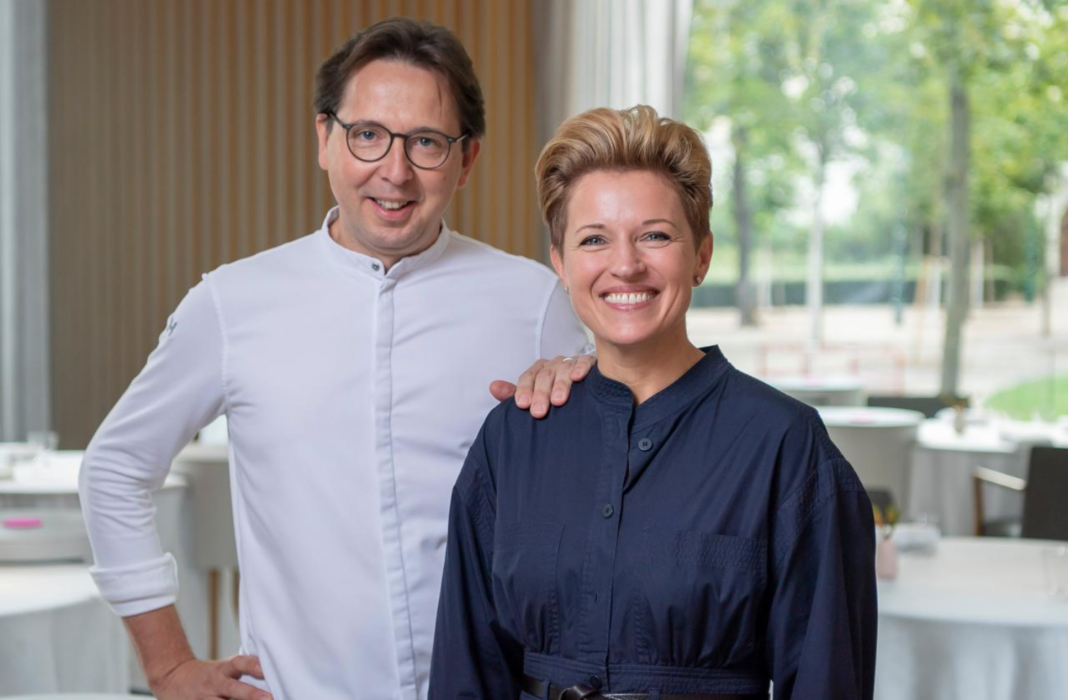

“We are always hungry for a goal, but not driven.”
That is what Heinz Reitbauer said when asked to describe the restaurant he runs with his wife, Birgit, in Vienna’s Stadtpark, a place that has held its position among the World’s 50 Best Restaurants for years and finally earned its third Michelin star in 2025.
On the Long Journey
Reitbauer, born in 1970, took over Steirereck from his parents in 2001. He does not claim to be an innovator of any sort. “As chefs, we are at the last station of a very long journey that began in the distant past,” he says. “It is based on the work and creativity of those who were eager to learn new ways because the old ones were no longer enough for them. Their findings and experience form the basis for our actions and oblige us to treat each other with respect and to keep up-to-date development.”
As for his perspective on success itself, he says it’s “a desirable process with a defined goal. Success has many faces in the truest sense of the word. And all of us as a team see it as a responsibility as well as an opportunity.”
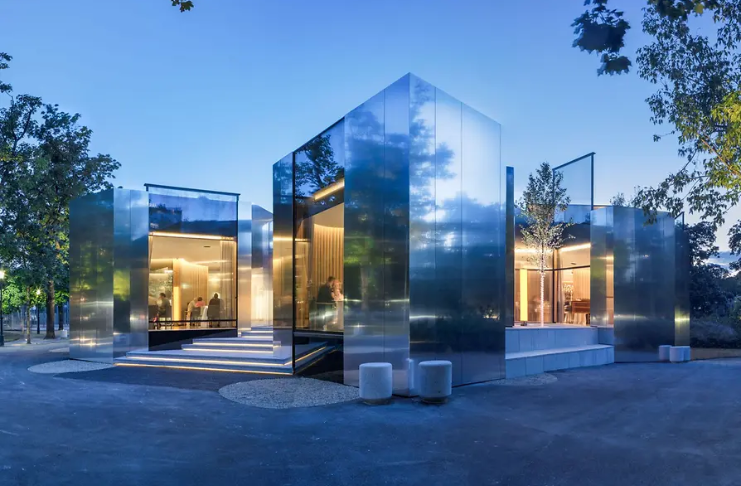
The restaurant moved into its current home, a converted former dairy in the Stadtpark, in 2005. The original building dates from 1904, and a striking mirrored glass extension was added later, its walls raised in the summer months to create semi-al-fresco dining among the park’s greenery.
Regionality as DNA
Reitbauer sources up to 80 percent of his ingredients from within a 150-kilometer radius, working with more than 200 local producers. “For us, the food, its quality, and the season are always the starting point for everything,” he says. “Our DNA lies in the regional product diversity and in the joint further development of these. And it should ultimately reflect the uniqueness of our country or the regions. This variety creates a multi-layered and authentic cuisine.”
Because “at the end of the day, I believe we can only produce a cuisine that is authentic, sustainable, and noteworthy in the long term if we engage with the products that are available in our country.”
Much of that engagement for Reitbauer happens completely away from the kitchen. “We have always spent our summers in the alpine pasture; this is our family vacation. We live at around 4593 feet (1400 meters) and are self-sufficient, cooking what we find in the forest.”
He loves everything about mushrooms, in particular. “It always bothered me that I didn’t know half of the mushrooms I found. At some point, I taught myself a lot, and it really fascinated me,” he says. “I can now identify 30 different edible mushrooms around our inn in Styria throughout the year. And of course they all taste very different. We’ve learned a lot about those. They really enrich our cuisine.” One favorite, sheep polypore, he describes as growing in large numbers near the inn, “somewhat similar to the hedgehog mushroom, but much finer, more elegant and beautifully white.”
He wants that knowledge to reach the table as well. “I believe that a visit to a restaurant should always be something special, and when there are elements that surprise the customer, it is always something special,” he says. “But by a surprise moment, we actually mean we also like to enrich the guest, to bring them something they haven’t seen before, so that maybe they get to know a little bit more about the country, about the product.”
Sustainability, in his view, is inseparable from what he intends to do at Steirereck. “We can no longer escape this issue; we have to engage with our land and face our farming methods. As a restaurateur and chef, we definitely have the opportunity to act as a messenger here.”
The dining room itself, he points out, is the rare place where people still sit long enough to hear it. “Where do people still have time today? When they sit in the restaurant for two or three hours, you really have the opportunity to address things!”
A Kitchen for Celebrating the Seasons
Behind the seasonal, research-driven menu at Steirereck is a full-fledged database.
During a 2012 renovation, Reitbauer digitized the entire kitchen’s institutional memory. “We entered every recipe into a database, and we now have six and a half thousand recipes saved! Every dish, every step, every detail is documented meticulously, right down to the video,” he shared.
Yes, it was laborious, but the payoff is a kitchen that’s always in sync with the seasons.
“We can always fall back on the knowledge that we’ve accumulated over the years. When a new season starts, the system tells us what product combinations we’ve had in the past, and we get a lot of suggestions for additional possibilities. That’s why digitalization has been a very important building block in our kitchen for many years.”
The Pogusch: Back to the Roots
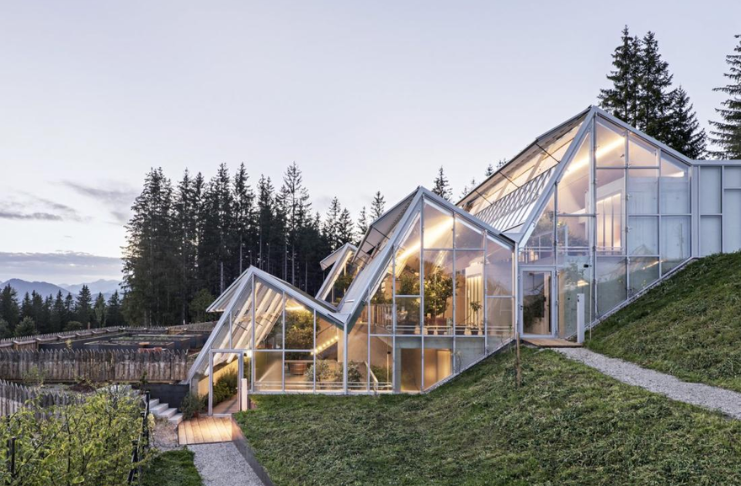
The Reitbauers’ second act is the Steirereck am Pogusch, an alpine inn in Styria that Heinz’s parents and Heinz himself built up from a stone house dating to 1616. Birgit, who runs the property with Heinz, affirms, “The Pogusch must not become a trend story under any circumstances. This place is intended for the long term. A matter of course.”
The couple spent years deliberating before adding glass houses with hotel rooms and treehouses. “We invested one to two hours almost every day for three years to think about the project,” Heinz says.
Even their architects felt the weight of that deliberation. “For PPAG architects, who won the competition, we are a demanding partner,” Birgit says. Heinz says, “We are the worst builders you can imagine!”
The idea of sleeping among plants came from a desire for an alternative to wallet-whipping luxury. “We wanted to go back to the roots gastronomically and also offer a place to sleep that is not on the high-priced level, but still something special,” Birgit says. “The idea of the bed in the glass house was born. It smells great. It is interesting for people who have a connection to nature.”
Guests who help in the kitchen, plucking, sorting, washing, or peeling, pay less for their stay. “The challenge of our time is to convey this aesthetic, love, and craftsmanship. People who sleep in a glass house understand this best,” Heinz says. Birgit sees something bigger driving the interest. “Because dissatisfaction is rising. Many people use it to awaken memories of their childhood. With grandma, when they didn’t come home until half past nine because they had built something in the forest.”
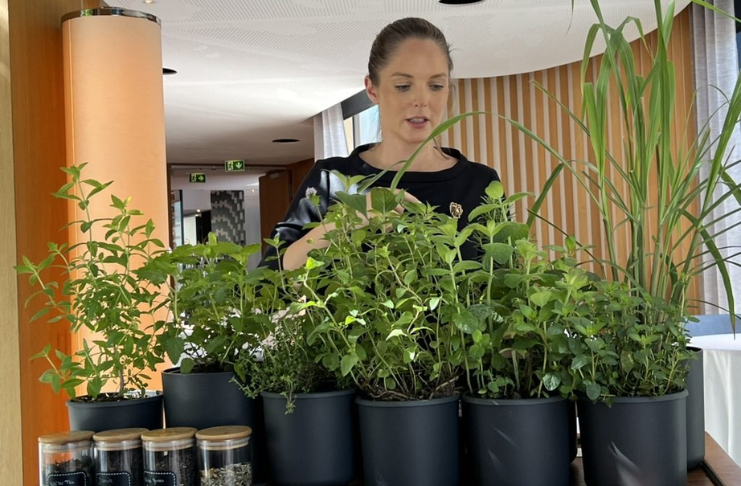
Around the property, the Reitbauers have planted 400 different edible plants and more than 110 old orchard trees, working with specialists across the country to fill in what they don’t already know. “We’re just laymen because we do so many things,” Heinz says. “We only know two-thirds of it ourselves; with the rest we had no idea what the thing could do at all. How can we process it? It’s a process. The kitchen is in constant change. Always on the move. Always creating. We create 120 new dishes a year,” Birgit says. Heinz puts the alternative in stark terms: “If we don’t change anything, the only thing left is work. And it’s a lot of work for everyone. Worst of all, you’re tired in the evening and realize that nothing has moved.”
Asked where he finds inspiration after decades at the top, Reitbauer points, “In peace. We work seven days a week. We are only on the road to enjoy and recharge our batteries. We really don’t look at anything anymore. Everything we cook or do, we get from ourselves.”