

The global fast casual has revolutionized the dining experience. Patrons can now sample tastes from all corners of the earth without waiting or paying much.
For operators, this concept combines food storytelling with efficient service. For the patron, it is an easy way to explore new tastes.
In this guide, we will look at what the concept is, the concepts behind it, and how to create one.
What You Will Learn
- Definition of Global Cuisine Fast Casual and its differences from other restaurant formats
- International Concepts and Chains that have influenced the development of the sector
- Reasons for its continued growth, including statistics from industry studies
- Planning menus and daily special dishes as a general manager
What Is Global Cuisine Fast Casual?
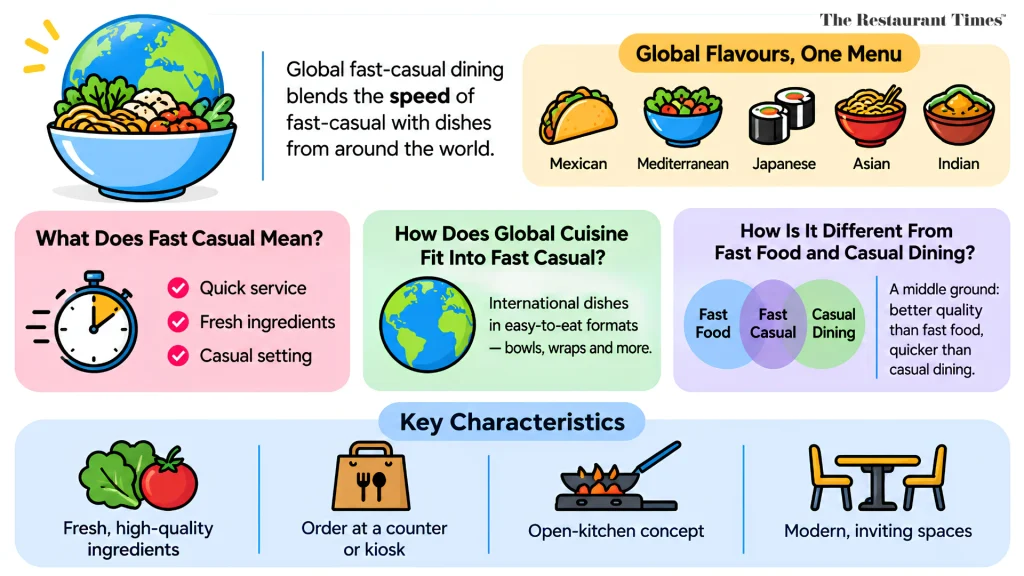
Global fast-casual dining involves the merging of fast-casual restaurant attributes with dishes from different national cuisines. Global fast-casual dining is good for individuals who need something quicker than quick-service restaurants but still don’t want to spend much time waiting for their meal, as in conventional restaurants.
Different cuisines from other countries around the world are reflected in the menus of such establishments. They may include Mexican, Mediterranean, Japanese, Korean, Indian, Middle Eastern, and Southeast Asian cuisines, among others. Dishes can include burrito bowls, ramen, grain bowls, curries, wraps, and fusion tacos.
The two sections below outline the components of this hybrid restaurant style. The first part describes the characteristics of the fast-casual service model.
What Does Fast Casual Mean?
Fast casual is a dining style based on speed, freshness, and casual ambiance. Fast casual dining emphasizes fresh ingredients and food prepared to order.
The services provided are quite basic. Fast casual dining establishments usually do not provide table service. In fast-casual dining, customers order their food at a counter or kiosk.
There are many restaurants that also have features that instill trust and comfort among the diners:
- An open-kitchen concept is common in fast-casual dining.
- Many fast-casual restaurants feature modern, inviting dining spaces.
How Does Global Cuisine Fit Into Fast Casual?
Global cuisine works well because international cuisine is easily adapted into counter foods, bowls, and wraps. Global cuisine is a major trend in fast-casual restaurants, including Mexican, Mediterranean, and Asian cuisines.
Fast-casual restaurants integrate different flavors and cuisines. A customer can enjoy Mediterranean bowls at lunchtime and hand-pulled noodles at dinnertime at the same speed and price point.
How Is It Different From Fast Food and Casual Dining?
It lies between the two. Fast casual combines elements of fast food and casual dining.
Fast casual meals are considered to be higher quality and less processed than fast food meals. Fast casual pricing lies between fast food and casual sit-down restaurants.
| Feature | Fast Food | Fast Casual | Casual Dining |
|---|---|---|---|
| Service | Counter | Counter or kiosk | Full table service |
| Preparation | Standardized | Made to order | Made to order |
| Perceived quality | Lower | Higher, less processed | Higher |
| Setting | Basic | Modern, inviting | Sit-down |
Which Global Cuisine Fast Casual Concepts Lead the Category?
Several concepts show how different cuisines fit the model. Each one gives people a clear reason to visit.
Which Mediterranean and Asian Concepts Stand Out?
Mediterranean and Asian concepts are prevalent in many urban areas. Cava originated in DC and quickly grew to NYC.
Honeygrow has 30 outlets since its inception in 2012. Xi’an Famous Foods focuses on hand-pulled noodles, demonstrating the potential power of a single dish in branding.
Which Latin and Mexican Concepts Matter?
Latin dishes have a structure that guests know. For example, burritos and quesadillas are among the self-build structures, while Mexican dishes are the food types that create the categories.
Sophie’s Cuban Cuisine has 10 locations and 20 years of industry experience. This shows that sustainability is achievable without national franchises.
| Cuisine | Example Concept | Signature Detail |
|---|---|---|
| Mediterranean | Cava | Started in DC, expanded to NYC |
| Asian | Honeygrow | 30 locations since 2012 |
| Asian | Xi’an Famous Foods | Hand-pulled noodles |
| Cuban | Sophie’s Cuban Cuisine | 10 locations, 20 years |
| Mexican | Burrito and quesadilla concepts | Build-your-own formats |
What Does an Expert Say About Guest Behavior?
Competition in the foodservice sector is not limited to other food brands alone. Competition exists between restaurants and supermarkets, ready-to-eat foods, and even home cooking. This shift in consumer behavior has made value, convenience, and the dining experience more important to restaurants than ever.
EXPERT INSIGHT
| “We’re not losing them to the competition. We’re losing them to grocery and food at home.” |
This quote from Chipotle’s CEO in 2024 highlights a critical problem for restaurant brands: customers don’t necessarily choose one restaurant over another. Sometimes, they choose to cook at home because it is cheaper and easier.
For international fast-casual restaurants, it will be necessary to provide more than just dishes from different cuisines. They also need to ensure that what customers get is unique to the restaurant and can’t be easily achieved at home. This could include quality, uniqueness, convenience, or something else that isn’t easily achievable at home. Pricing should also make sense to the customer when comparing restaurant expenses with groceries.
In the end, the best proposition gives customers a reason to eat out.
Why Is Global Cuisine Fast Casual Growing?
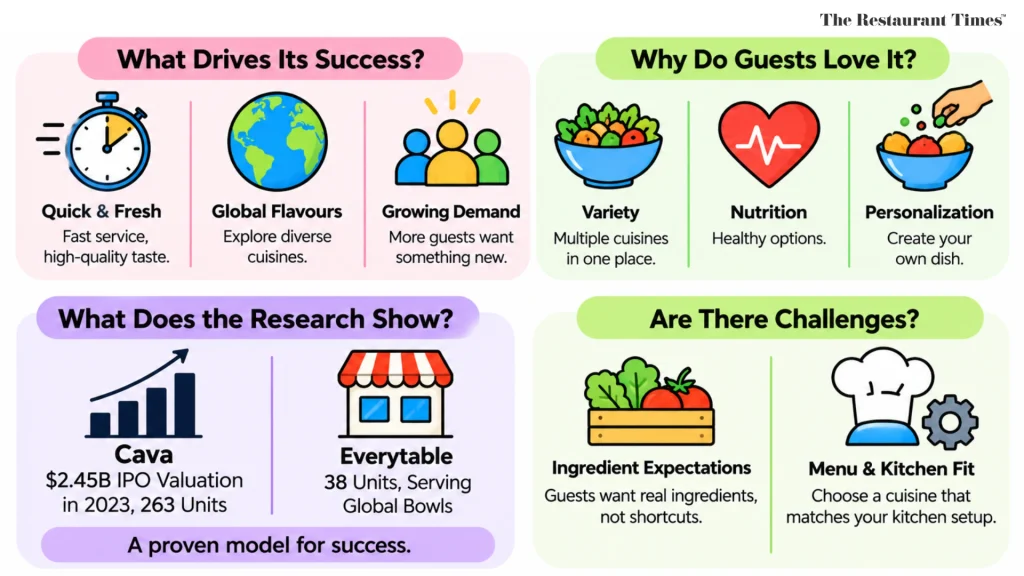
The factors that explain why the global cuisine fast-casual concept is successful lie in its ability to unite multiple features that appeal to customers. Nowadays, customers are seeking dishes that can be prepared quickly but still retain freshness and a high-quality taste. Global cuisines can also offer exotic menu options and attract customers seeking something unusual rather than regular fast food.
The benefits this concept can deliver to the restaurant operator include differentiating the brand from competitors, meeting the needs of various customer segments, and shifting consumer preferences. A properly selected menu with multi-purpose products, quick cooking, and customized dishes can help the operator run the business efficiently.
Still, the concept itself will not guarantee growth in this segment. The operator will have to consider other important factors, such as local preferences, food quality, and a reliable supply chain. The following parts will describe the consumer trends that make this segment popular.
Why Do Guests Love Global Cuisine Fast Casual?
Guests prefer this idea for the reason that it offers variety, nutritional value, and personalization. Fast-casual dining has grown in popularity because of its quick service and healthy food options.
One of the main distinguishing features of the fast-casual dining concept is the ability to personalize your order, with options to create your own dish.
What Does the Research Show About Concept Success?
Industry research shows a proven positive result for brand execution. It shows that Cava is an IPO company that was valued at $2.45 billion in 2023 and operates 263 units.
According to the research, Everytable is a for-profit fast-casual company with 38 units serving global bowls. Fast-casual dining is redefining the restaurant industry.
Does the Model Have Real Challenges?
Yes, and they should be prepared for that. Customers expect genuine ingredients, but mass procurement tends to push teams toward standard suppliers.
According to the research, another thing to consider is whether the cuisine is compatible with preparation and assembly processes. A company should select a cuisine according to kitchen capabilities.
What Does a General Manager Need to Run a Global Cuisine Fast Casual Restaurant?
A general manager turns the concept into a daily routine. The sections below cover menu planning, guest experience, and learning resources.
How Should a General Manager Plan the Menu and Daily Specials?
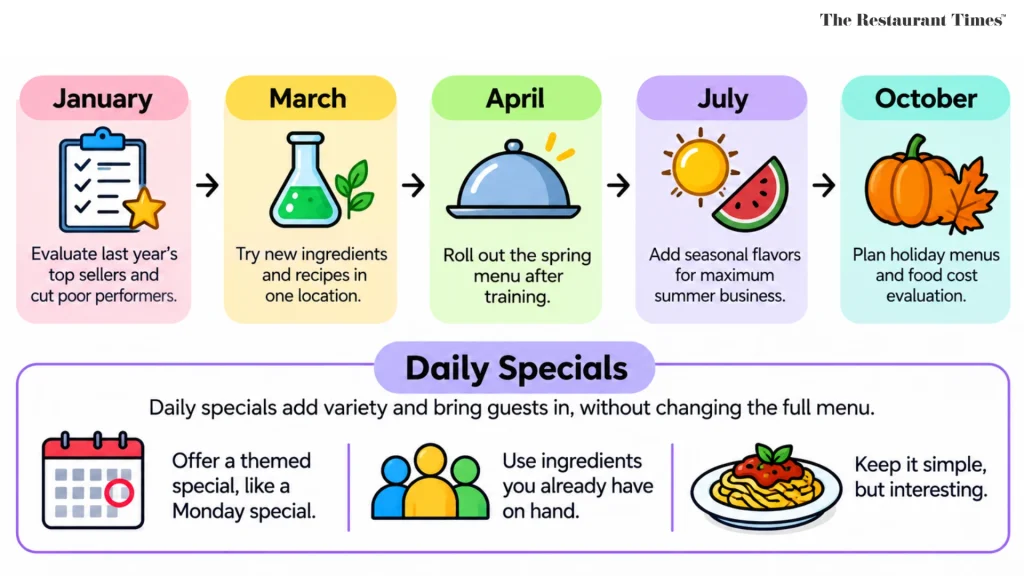
The general manager needs to plan his menu according to the calendar. This is how you keep things simple but interesting without having a full menu all year round:
- In January, evaluate last year’s top sellers and cut down on poor-selling items.
- In March, try out new ingredients and recipes in just one place.
- In April, roll out the spring menu after completing training.
- In July, add some seasonal flavors for maximum summer business.
- In October, plan holiday menus and food cost evaluation.
Daily specials help to spice up the business without altering the menu. A Monday special will ensure that even during the off days, customers come to the restaurant. Use the ingredients you already have on hand.
How Should a General Manager Shape the Guest Experience?
Be quick and clear in the order-taking process. Keep your counter or kiosk clear for guests, and prepare the build-your-own menu quickly.
Train your employees to explain new products clearly. This helps create a friendly atmosphere and helps guests choose the food they like. Open kitchens also help, as guests can watch the cooking process.
Where Can Operators Learn More About the World of Fast Casual?
Operators can use different kinds of media sources to get the information and experience they need. For example, in July 2026, an episode of “Sandwich Wars” on the Fast Casual Nation podcast covered menu strategy, feedback loops, and catering.
The operator can attend a June workshop in Boston on branding and menu choices for fast-casual restaurants. Bloomberg interviewed Panera founder Ron Shaich, discussing the challenges and opportunities in the industry.
The operator can attend the webinar or a session where a CEO or chef shares their success story. It is also helpful to use the newsletters from trade publishers.
How Do You Start Building a Global Cuisine Fast Casual Concept?
Choose the food type you would like. Ensure that your kitchen can make this food type easily with a few people working there.
Then test your menu at one business first. After your idea has been proven, scale the whole process and show it to other general managers.
KEY TAKEAWAYS
| – GFC provides fresh, made-to-order dishes with international flavors and menu pricing halfway between fast food and casual dining. – Mediterranean, Asian, Mexican, and Cuban cuisines prove that going deep on one cuisine is the way to create a brand for the long run. – Why? Customization, healthful items, and an up-to-date atmosphere. – A general manager with a seasonal menu planning process, smart use of daily specials, and effective training will make a concept a success. |
Frequently Asked Questions
1. How much does it cost to open a global cuisine fast-casual restaurant?
Opening a fast-casual restaurant offering global cuisine in the USA can cost approximately $150,000 to $500,000, or more, depending on location, restaurant size, kitchen equipment, interior design, licenses and permits, and labor costs.
The average cost includes:
- Lease/renovation – 50,000 to 200,000
- Kitchen equipment – 40,000 to 100,000
- Furnishing & Interior – 15,000 to 50,000
- Licensing and permits – 5,000 to 15,000
- Inventory – 5,000 to 15,000
- Technology POS – 3,000 to 10,000
- Marketing and staffing pre-opening – 10,000 to 25,000
- Working Capital – 30,000 to 75,000
You can save costs by leasing restaurant space, buying second-hand equipment, and keeping a concentrated menu.
2. What are the best global cuisine fast-casual franchise opportunities?
Options to consider include Chipotle Mexican Grill, CAVA, QDOBA, Nando’s, and Panda Express. However, the optimal choice will depend on many factors, such as franchise availability in your area and your investment amount. Remember that not all companies provide traditional franchises in other countries.
3. What menu design works best for global cuisine fast-casual?
A focused, customized menu is most effective and should include globally inspired dishes in familiar forms such as bowls, wraps, tacos, and rice dishes. Use common ingredients, clearly identify dietary choices, and use signature sauces/flavors to keep things varied without complicating the cooking process.
4. What are the operational challenges of global cuisine fast-casual?
Common operational challenges include sourcing authentic ingredients, maintaining consistent flavors, adapting preparation methods, managing food costs, training staff, ensuring food safety, and adapting recipes across countries.
5. What is global cuisine in the fast-casual restaurant industry?
Global cuisine refers to food ideas inspired by various countries and cultures. In the fast-casual industry, examples include Mexican burritos, Mediterranean wraps, Japanese rice bowls, Korean dishes, Indian curries, and others.
6. How big is the global cuisine fast-casual market?
The global cuisine fast-casual market does not have an officially agreed-upon market size estimate because different research firms categorize it differently. Nevertheless, the global fast-casual restaurant market size stood at around $150.96 billion in 2025. It is expected to rise to $161.96 billion in 2026 and reach $251.38 billion by 2032.